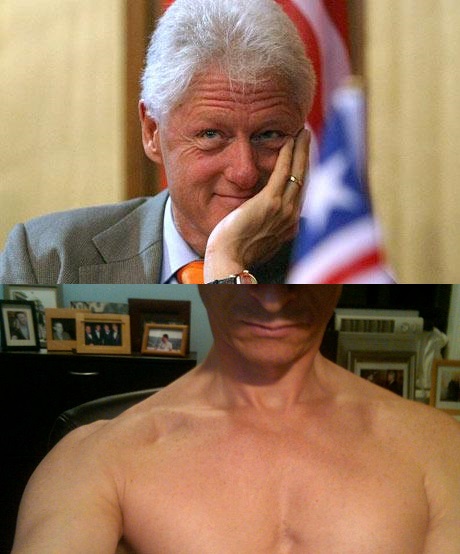
Let’s Be Clear: President Clinton’s Conduct Was WORSE Than Anthony Weiner’s

This won’t make some people happy, but it is true.

Who's more unethical? It's no contest.

Who’s more unethical? It’s no contest.

I always feel like Michael Corleone at times like these: just when I think I am finally through with having to point out the miserable ethics record of Bill Clinton, he (or his shameless supporters) puuuull me back …

The New York Post is reporting that…

“Bill and Hillary Clinton are angry with efforts by mayoral hopeful Anthony Weiner and his campaign to compare his Internet sexcapades — and his wife Huma Abedin’s incredible forgiveness — to the Clintons’ notorious White House saga…’The Clintons are upset with the comparisons that the Weiners seem to be encouraging — that Huma is ‘standing by her man’ the way Hillary did with Bill, which is not what she in fact did,’ said a top state Democrat…’The Clintons are pissed off that Weiner’s campaign is saying that Huma is just like Hillary,’’ said the source. “How dare they compare Huma with Hillary? Hillary was the first lady. Hillary was a senator. She was secretary of state.'”

My reaction to this?

Good!

Karma’s a bitch. Continue reading

“It’s A Cook Book!”

Nobody listens to me...

Nobody listens to me…

The issues at the core of the Anthony Weiner debacle—which is not the conduct of the ex-Congressman/absurd NYC mayoral candidate/sick puppy, but the fact that so many, like Dan Savage, Huma Abedin (Weiner’s wife, Hillary’s apprentice, carrier of the Clintonian ethisc virus),  Andrew Sullivan, and apparently 16% of New York Democrats still argue that his conduct doesn’t disqualify him from elected office—-are ones which I am especially passionate about, because they are the very issues that launched this blog’s predecessor, the Ethics Scoreboard:

1. There is no division between private unethical conduct and public unethical conduct. It is a false construct designed to assist scoundrels in getting elected. Private conduct is as reliable an indicator of trustworthiness as other prior conduct.

2. Leaders in a democracy should be held to an exemplary level of conduct, not the average or common conduct of those they seek to lead.

3. Some instances of unethical conduct have “signature significance“for the individual involved, meaning that contrary to the common rationalization that “anyone can make a mistake,” there are some things that ethical people never would do even once, and thus the fact that an individual does do it is persuasive evidence that they are generally untrustworthy.

Thus I believe Weiner’s story is more important than the mere sordid political drama involved: if people pay attention, if people learn, if people can get by their partisan biases and convenient ethics misconceptions, maybe we can begin establishing a better, more sensible, beneficial standard for our elected leaders, who, perhaps you have noticed, are, as a group, an embarrassment to the legacy of July 4, 1776. I don’t have illusions that I have any influence, and it is unseemly to say “I told you so,” but sometimes I feel like one of the doomed heroes in science fiction/horror scenarios who end up screaming “They’re already here! You’re next!” or “It’s a cook book!” to unheeding crowds blithely proceeding to their own destruction.

Yesterday the news surfaced that should be the smoking gun on Anthony Weiner’s corrupt character that readers of this blog, at least, did not require to render a verdict—that Weiner’s conduct was not just an irrelevant personal quirk, that his initial lying about it was proof of a corrupt character, and that he is no more trustworthy than John Edwards, Lance Armstrong, Ryan Braun or anyone else who lies to the public to keep its trust. Maybe it will convince Dan, Huma, Andrew and the rest that Anthony Weiner is too corrupt—never mind sick—to lead. If it doesn’t, I think that is signature significance about them. Continue reading

The State Department Wins A Jumbo With The Kerry Yachting Caper: Reflex Lies, Corrupt Culture

"Hey, what are you going to believe, the photo or what we tell you?"

“Hey, what are you going to believe, the photo or what we tell you?”

Tell me again how there is no reason to believe that the Obama Administration tried to mislead us regarding Benghazi.

And I’ll laugh in your face.

Nicely, of course.

Today the State Department, faced with a network offering undeniable proof that State was lying about the whereabouts of Secretary of State John Kerry during the collapse of the Egyptian government, a certified international crisis, admitted that its leader was on his boat recreating “briefly,” as had been previously reported by a CBS producer who saw him. This was not before, however, the State Department did what the Obama Administration has shown that it will do routinely and reflexively when it senses that it has screwed up: lie, lie, lie.

From CBS: Continue reading

The Ethics Incompleteness Dilemma and MLB’s Melky Cabrera “Solution”

Who cares what Melky wants?

[ When we last visited the messy Melky Cabrera situation, people were clamoring for baseball to rule Cabrera ineligible for the National League batting championship he seemed destined to win because the Giants outfielder had been suspended for the rest of the season for testing positive for steroids. The suspension froze his average, then as now leading the NL, and because he had already amassed sufficient at bats to qualify for the title, this meant that 1) he would benefit from what was supposed to be a punishment and 2) the most prestigious of all baseball season titles would be won by a proven cheater. I explained why taking the title away from Melky would be unethical as well as unwise:

“…There is a very good reason why the Constitution bans ex post facto laws—laws that make something illegal retroactively, so someone can become a criminal for something they did that was legal when they did it. Allowing such rules is an invitation to an abuse of power, culminating, in the worst case scenario, with the modern day equivalents of the Russian or French Revolutions, where people are executed for “crimes” that were not crimes at all. Even cheaters have rights, and one of them is to know what their risks are when they cheat. Cabrera knew that he risked suspension, a loss of millions in income, and permanent harm to his reputation and career. He did not know that he risked not winning a batting championship if he qualified for it, or being put in the stocks, being exiled to Portugal, or having his children subjected to human medical experiments. Should a player suspended for performing enhancing drug use after testing positive be disqualified from winning a batting championship that season? That seems fair and reasonable, but because Major League Baseball didn’t think of it when they were making the rules, it would be unfair for Cabrera to be subjected to such a penalty, which would embody the inherently unfair principle of an ex post facto law. Some people just can’t process this. People just shouldn’t get away with intentional bad conduct, they say. …Such people are unwittingly willing to dismember the bedrock principle of due process, which requires that we know by what rules and laws our conduct society will use to judge our conduct, and that we know what the penalties for violating them will be, or at least have a the opportunity to find these things out. No, of course it’s not fair for Melky Cabrera to win a batting championship by cheating, but a society that allows him to be penalized in ways he could not have anticipated using a rule imposed after the fact is an unfair society, and ethics is ultimately about building a more ethical society.”

Bud Selig, the Commissioner of Baseball who is always as likely to make a terrible decision as a good one, said that he would not take any action on the matter. But that was not the end of the story…]

Yesterday, Major League Baseball announced that Melky Cabrera would not be eligible for the batting title after all. Continue reading

Ethics Dunce: Suspended Giants Outfielder Melky Cabrera (And Not For The Reason You Think)

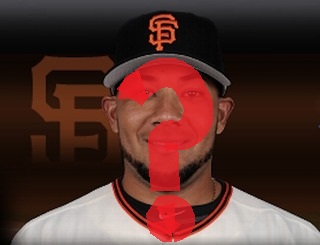
Who is “Melky Cabrera” really?

Melky Cabrera shocked Major League Baseball by getting caught mid-season using banned metabolic steroids, it’s true. It is also true that this marks him for all time as a cheater, and something of an idiot, since the penalties for PED (performance enhancing drug) use are devastating to a baseball player’s reputation and wallet, and because, unlike when Barry Bonds was breaking records and racking up MVP trophies while being juiced, the game has belatedly decided that it isn’t going to let games, championships and records be distorted by chemical means.

Melky, however, is special among baseball’s cheaters. Only he, as far as we know, decided to attempt an elaborate internet deception to try to duck responsibility after he had been caught.

From today’s New York Daily News: Continue reading

The Congressional Black Caucus Walkout: Racial Bias, and Nothing But

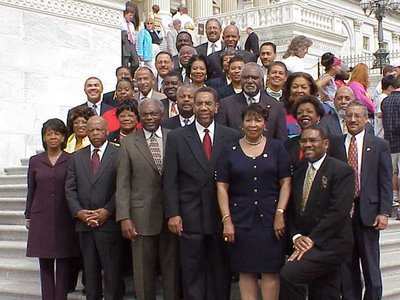
Of course, they would also be staging a walk-out if a white AG was being held in contempt.

The Congressional Black Caucus  plotted to walk out of Thursday’s contempt of Congress vote regarding Attorney General Eric Holder’s stonewalling regarding legitimate oversight of the deadly Fast and Furious fiasco, and did, taking most of the other Democrats along. In so doing, the CBC, as if there was any doubt, unequivocally demonstrated its virulent racial bias, which interferes with its ability to discharge its duties in a fair, honest and legitimate matter.

The CBC had circulated a letter explaining its supposed rationale, which oddly manages never to mention that Eric Holder is African American. Yet it is unimaginable that the Congressional Black Caucus would stage a walk-out if Holder was the white Attorney General appointed by a white President. This is politics, but it is also dishonesty and naked tribalism. It should not be, pardon the expression, whitewashed, or allowed to proceed without calling it what it is—racial bias in the halls of Congress, where none belongs.

Here is the offensive and disingenuous letter being circulated by the CBC—with some commentary by me in brackets: Continue reading

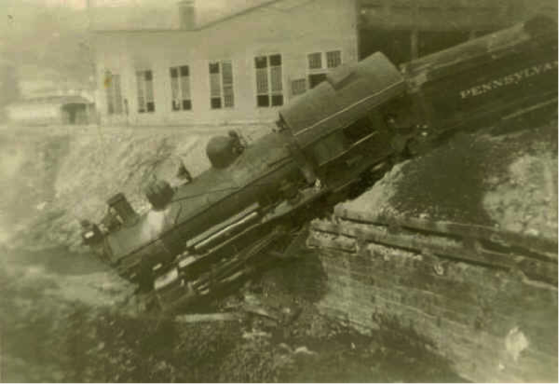
Fast and Furious: AG Holder’s Ethics Train Wreck

Let’s get a few things settled.

If you look closely, you can see Eric Holder in his engineer cap.

Fast and Furious is a true scandal, not a trumped-up distraction, just as Watergate wasn’t a “third-rate burglary.” When the U.S. government intentionally allows laws to be broken, secretly seeds violent crime in a neighboring country and gets both foreigners and Americans killed as a result, that’s a scandal any way you cut it. The U.S. Congress has an oversight role to play after such a fiasco, and getting to the bottom of what went sour is its duty, regardless of how much enjoyment partisan Congressmen appear to have making Administration officials sweat. Any politician or member of the media who suggests otherwise is trying to manufacture a cover-up and intentionally misleading the public. The mantra that “this is a waste of time when Congress should be doing the nation’s business” was used by Republicans during Watergate, Iran-Contra, and the Valerie Plame affair, and by Democrats during Whitewater, Lewinsky, and now, as Fast and Furious is finally bursting out of the hole of obscurity where the biased media tried to stuff it. A badly managed, law-breaking Justice Department isn’t trivial, and when utterly stupid, reckless operations like Fast and Furious come to light, it is essential that there be full disclosure and accountability. The voices trying to bury this scandal do not have the best interests of the United States or the public at heart. Let’s start with that.

Fast and Furious was so jaw-droppingly dumb that its very stupidity is almost a boon to defenders of Attorney General Holder’s department, since the normal reaction to such facts is that some crazy Republican must have made up the whole thing. Unfortunately, this really happened.  In 2009, the US government allowed Arizona gun sellers to illegally sell automatic weapons to suspected criminals. Then ATF agents (Bureau of Alcohol, Tobacco, Firearms and Explosives)  were directed to  allow the guns to “walk” across the border and be delivered to the Mexican drug cartels. The House Oversight Committee’s report explains, “The purpose was to wait and watch, in hope that law enforcement could identify other members of a trafficking network and build a large, complex conspiracy case…. [The ATF] initially began using the new gun-walking tactics in one of its investigations to further the Department’s strategy.”

Gee. What a great plan! What could possibly go wrong?

Oh, only everything.

1,608 weapons ended up in the bloody hands of Mexican criminals. The ATF lost track of them, until they turned up at shootings and crime scenes. Many Mexicans, though we don’t know how many, died from being shot by the planted guns, and when a US federal agent, Border Patrol Agent Brian Terry, was killed by one of them in battle with drug-runners, the fiasco became public. (ATF whistle-blower also helped.) In a sensible, fair, ethical system, the next steps would follow like Summer follows Spring:

  • The news media would give the story major coverage  and do its own, unbiased, competent investigation.
  • The Administration would express horror and regret, and set about its own internal investigation.
  • Both parties of Congress would aggressively seek answers, and make certain that systemic failures were exposed and responsible individuals were identified.
  • Those responsible would resign or would be fired.

But we do not have a sensible, fair, ethical system, at least as it is currently functioning. As a result, the Fact and Furious mess has become an ethics train wreck that appears to be gathering steam. The evidence so far: Continue reading

No Boating Accident: The NBC 911 Scandal, and the News Media’s Dilemma

Yup...boating accident! George Zimmerman looks cute in this photo, don't you think?

NBC completed its internal investigation into why the middle of the audio of George Zimmerman’s 911 call was edited out, making him sound like a racist. To recap, here is what was on the recording:

Zimmerman: This guy looks like he’s up to no good. Or he’s on drugs or something. It’s raining and he’s just walking around, looking about.

Dispatcher: OK, and this guy — is he black, white or Hispanic?

Zimmerman: He looks black.

And here’s the version played on NBC, MSNBC, and posted on the MSNBC website:

Zimmerman: This guy looks like he’s up to no good.  He looks black.

This was no boating accident: this was the Great White shark of intentional news media misrepresentation and tape doctoring, in the middle of a racially charged incident, with one man dead and his killer being subjected to credible death threats, and irresponsible demagogues accusing him of a hate crime. Continue reading

Attorney General Holder, Fast and Furious, and Congressional Perjury

"Oh, NOW I see where the confusion is...AG Holder thought the Congressman was asking about when he saw the MOVIE called 'The Fast and Furious.' It's an honest mistake. The Attorney General loves his Netflix!"

It is looking increasingly likely that Attorney General Holder lied to Congress on May 2, 2011, when he was asked by House Oversight Committee Chairman Darrell Issa about when he knew about the Bureau of Alcohol, Tobacco, Firearms and Explosives’ Fast and Furious gun-running fiasco. In this he is following a grand tradition among U.S. Attorney Generals: the last one, Bush crony Alberto Gonzalez, almost certainly lied under oath to Congress too.

Fast and Furious was a botched gunrunning enforcement operation in which illegal guns that the Bureau of Alcohol, Tobacco, Firearms and Explosives intentionally allowed to be smuggled into Mexico ended up being used to kill an Immigration Customs Enforcement agent and a U.S. border patrol guard.  Holder was called before Issa’s committee in a typical “what did the top guy know and when did he know it?” inquiry. In response to the latter part of that question, Holder told the Committee that he was “not sure of the exact date, but I probably learned about Fast and Furious over the last few weeks.”

CBS and Fox News have uncovered a series of e-mails and memos that show unequivocally that this was not true. Continue reading

Comment of the Day: “The Washington Post Flunks Integrity, Conflicts, and Trustworthiness”

I do want to hold the line on featuring Comments of the Day that I think exemplify awful ethical reasoning, as opposed to those that are provocative and enlightening, to a minimum. This one, however, is too rich to ignore. It is the defense of an apparent journalist for the ethics-busting behavior of the Washington Post in the recent Jose Antonio Vargas incident using a dizzying array of alibis and rationalizations, including “they’re better than most,” “people don’t care,” “you have to cheat to stay in business,” “they are better than the alternative,” and others. It also resorts to the time-honored “who are you to judge?” and “you couldn’t do a better job.”

If this is typical of how journalists view their profession’s ethical obligations—and I think it is—the comment explains a lot. You can read my lin-by-line response after the original post. Here is the Comment of the Day, by okonheim: Continue reading