Buy a ticket, Barry.
A full complement of baseball’s steroid class is among the 37 players on the 2013 Hall of Fame ballot, so it was predictable that a new round of arguments would surface claiming that it is unfair, illogical, inconsistent or otherwise unseemly to exclude Barry Bonds and others from enshrinement. Predictable but frustrating: the arguments in favor of Bonds are arguments against maintaining ethical values, in baseball, sports, and American society. It is also an annoying debate to engage in, and I have been engaging in it in various forms for many years, because Bonds’ defenders typically represent themselves as modern, reasonable, and realistic, while anyone making the quaint argument that cheating on a grand scale should earn shame rather than honors is mocked as judgmental, sanctimonious and naïve. As ever, I am a glutton for punishment, and since otherwise wise and perceptive commentators like NBC Sports’ Craig Calcaterra choose to ally themselves with Bonds, I really am obligated to point out what a corrupt, illogical and unethical position it is. If I and people like me don’t persist in this, we’ll have cheating approved as a cultural norm before we know what hit us.
Calcaterra has been supporting Bonds as a Hall of Fame candidate for a while now, but the title of his latest essay, “It’s Lunacy To Keep Barry Bonds and Roger Clemens Out of the Hall of Fame” is a gauntlet that begs to be picked up. “Bonds and Clemens,” Craig writes, “ are two players who, in a just world, would be unanimous selections for induction…” I find this an indefensible, even shocking, statement, both before and after the writer attempts to defend it. In a just world, a member of a profession who achieved his prominence in part by breaking the law and the rules, as well as lying about it, should be accorded the highest honor that profession has! What an astounding point of view.
For simplicity’s sake, I’m going to leave Clemens out of this, in part because I can see a Hall of Fame voter credibly deciding that there isn’t enough evidence to conclude that The Rocket really did use performance enhancing drugs on the way to forging one of the top five pitching careers of all time, and in part because I suspect Craig of pairing Bonds and Clemens to make his various rationalizations more pallatable than they would be in defense of Bonds alone. Belief in Roger’s steroid cheating rests entirely on the testimony of a proven liar and slime-ball, his former trainer. MLB’s Mitchell Report sided with the trainer, and I’m inclined to as well, but Clemens’ unfitness for the Hall of Fame, unlike Bonds (and Mark McGwire, Rafael Palmeiro, and some others), is not an open-and-shut case.
I give credit to Craig for not raising my least favorite of the Bonds defenses, that he has to be regarded as innocent because he has not been “proven guilty.” Calcaterra is a lawyer, and he understands the over-use and misuse of that cliché, as well as how it only applies when “guilty” means “you’re going to jail.” Indeed, he begins by conceding the obvious, that the evidence that Barry Bonds used steroids is overwhelming, which it is.
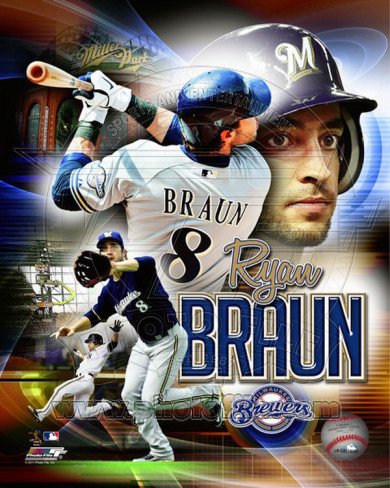
His first argument, however, is terrible. Under the ironic heading “Baseball Bonafides,” Calcaterra begins by reciting Bonds’ (and Clemens’) impressive list of achievements, which taken at face value show Barry Bonds to be one the best of the best, not just a qualified Hall of Fame baseball player, but an epitome of a Hall of Fame player along with such legends as Babe Ruth, Walter Johnson , Ted Williams and Willie Mays. “Put simply,” Craig says in conclusion, Bonds is an “immortal.” But he’s not-–not if he cheated, not if he achieved his historic status by corrupting his sport and lying to team mates and fans. And, as Calcaterra admits at the outset, this he did. As a result, the fact that Bonds won a record seven Most Valuable Player Awards is irrelevant. He cheated to win some of those awards. He gets no credit for them. In Bonds’s case, “baseball bonafides” are not bona fide at all. Continue reading →






 Ethics Alarms