Undercutting the “Nerd Defense”

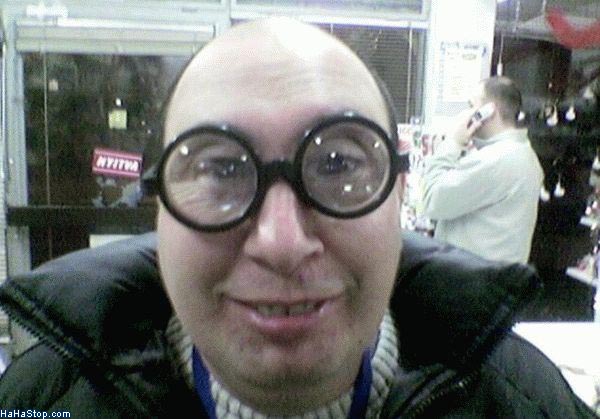
“A killer? Him? Come on, look at him. He couldn’t hurt a fly!”

More than a year ago, Ethics Alarms discussed the ethics of a current criminal defense tactic employed by lawyers with clients accused of violent crimes, putting them in nerdy glasses:

“It’s not a guarantee, but  the Daily News report says that criminal defense lawyers “swear by the gimmick, believing the right spectacles can make a sinister-looking murder suspect seem like a perfect gentleman.” “Glasses soften their appearance so that they don’t look capable of committing a violent crime,” veteran lawyer Harvey Slovis told the paper.”I’ve tried cases where there’s been a tremendous amount of evidence, but my client wore glasses, dressed well and got acquitted.” Cordero, who was represented by Slovis, wore bifocals throughout his trial, but threw them away the moment he was free.”

I’ve quizzed lawyers about the ethics of this tactic in my CLE classes, and they nearly unanimously agree that the tactic crosses no ethical lines that can be drawn with appropriate precision. I’m not so sure. I think it goes beyond merely giving your axe-murderer a shave and a haircut so he doesn’t look like an axe murderer, and edges into the realm of intentional deception. Apparently some courts may agree. Continue reading


The Damage Incompetent Pundits Do: Criminal Defense Misconceptions

See? I WARNED you not to listen to Mercedes Colwin!

A couple of months back, I flagged some outrageously mistaken commentary on Sean Hannity’s radio talk show given out by Mercedes Colwin, who is a lawyer but prone to howlers whenever she shows up on Hannity or Fox News, which I suspect favors her for qualities that have nothing to do with her law practice. On the occasion that roused my ire, Colwin suggested that she could not defend a criminal client who told her he was guilty, because she was “an officer of the court.”

This is pundit malpractice grafted to legal incompetence: a defense attorney MUST maintain a client’s legal innocence whether the attorney knows the client is guilty or not, and being an officer of the court has nothing to do with it.

Colwin, who was discussing the Casey Anthony trial, represented herself as an expert and then reinforced the most persistent and most damaging popular misconception about the legal system, which is that there is something unethical about defending guilty criminal clients. The system has to be held to a high standard of due process, and even an “obviously” guilty defendant must be proven guilty with admissible evidence beyond a reasonable doubt. Defense attorneys are there to make sure the state meets its burden of proof by making the strongest argument for their clients’ innocence as possible, whether the defendant has confessed his or her guilt or not. For one thing, a defendant often doesn’t know if he is legally guilty, even if he “did it.” For another, even if he did it, the state still has to prove it.The defense’s job in to make sure it does, Continue reading

Ethics Dunce: Criminal Defense Lawyer Gerard Marrone

If defending the Constitution means you can't look in the mirror, you're in the wrong profession.

Levi Aron was charged this week for abduction and death of Leiby Kletzky, an 8-year-old Brooklyn boy who disappeared while walking home from a Jewish day camp last week. Surveillance video showed the child  asking a stranger, alleged to be Aron, for directions and then getting into his car. A city-wide search for the missing child ended when police found the boy’s body parts, leading to Aron’s arrest.

Now Gerard Marrone, one of the two lawyers defending Aron, has withdrawn from the representation. There is, in theory, nothing wrong with that. A lawyer can withdraw from any representation for good cause, as long as the withdrawal doesn’t harm the defendant. Marrone’s withdrawal, however, was done in such a way that it almost certainly harms the defendant, because the lawyer told the press why he was withdrawing.

“I have three little boys,” he told the Daily News,“You can’t look at your kids and then look at yourself in the mirror, knowing that a little boy, who’s close in age to my eldest son, was murdered so brutally.” Continue reading

The Case of the Excessively Flexible Lawyer

A Louisville lawyer named Keith Kamenish wants to defend Dion Neal, a drug dealer, against a murder-for-hire charge.  A police informant wearing a wire recorded a hit man as he said  that he was paid by Neal to kill a competitor for him. “I put 36 slugs in that nigger’s face and stood on his head,” the independent contractor boasted, according to a transcript of the conversation filed in court. “The whole head collapsed!”

Nice.

The government is trying to get Kamenish kicked off the case, and here is why: the guy whose head collapsed, LaJuante “B.B.” Jackson, was a Kamenish client at the time of his murder. Jackson was shot just four weeks after Kamenish got Jackson released on bond on a state drug charge; the lawyer’s blood- stained business card was found in Jackson’s wallet. Continue reading

Comment of the Day: “Unethical Blog Post of the Week: ‘But What About Caylee?”’

As comments, accusations and retorts featuring the Ethics Alarms All-Stars were flying around on the blog in reaction to the Casey Anthony verdict and my reaction to some of those reactions (here, here, here, and here), Lianne Best came through with an  especially measured take, one that was immediately cheered by other commenters.

There is nothing wrong with feeling deeply, and emotions are important; after all, Mr. Spock had limitations as a leader. When emotion rather than analysis drives public opinion, however, there is a risk of real harm: those attempting objective analysis may be vilified, marginalized or ignored, and rash, reckless decisions and consequences can result.  (I could, but won’t, argue that the 2008 presidential election was a classic case in point.)  Lianne cuts to the real issue deftly. Here is her Comment of the Day:

“I too often find myself embroiled in emotional opinion, with no basis in facts. It’s easy here: an adorable and completely innocent, dependent little girl was killed. Virtually every human, particularly parents, want to see that vindicated, justice found and brought. That somehow makes it better. But you know what? It doesn’t make it better to go racing off on just a blazing gut reaction, not when people’s lives are affected by our lack of thought and analysis. I was a juror in a kidnapping and murder trial. It was an immensely difficult two weeks, and the decision was agonizing. Luckily, it was also popular; it would have been awful to suffer through loud, manic public criticism of our reasoned decision on top of the process … loud, manic public criticism by people who weren’t there, who knew less (or at least differently) than we did. We have a jury system for a reason, 12 people found Casey Anthony not guilty (13 if you count the alternate juror) and we have to trust them.

“Personally, I appreciate Jack’s cooler head prevailing when my mother’s heart is shrieking.”

Marcia Clark, Exploiting the Anthony Verdict for Her Own Sake

Marcia Clark. OK, this really isn't Marcia, but the real picture of her doesn't look like her either.

Marcia Clark’s article on the Casey Anthony verdict is so tainted with obvious conflicts of interest that it should have been rejected by The Daily Beast…or rather would be rejected by any website more selective and less shameless than the Daily Beast. This would be any fair site that does not deal in over-the-top opinion as a matter of course.

Marcia, like her colleague Chris Darden, is a rather tragic figure these days. The former lead prosecutor in the O.J. case is struggling to make it as a pundit, freshly botoxed and rendered almost unrecognizable so as to be fetching in those close-ups. After she sold the inevitable cash-in book about the Trial of the Century, she has wandered in the C-List celebrity wilderness, and will soon join Newt Gingrich and William Shatner as a celebrity novelist. She will be remembered, quite correctly, as the prosecutor who botched the O.J. murder trial, even if we give Darden an assist for the gloves debacle. (Why cable news shows insist on recycling failures as experts is an enduring mystery, the mystery being “how can the producers look themselves in the mirror after choosing recognizable flops over less well-known but more accomplished authorities?”)

But Clark apparently saw an opportunity in the Casey Anthony verdict to rehabilitate her tarnished reputation, and grabbed it. The result is “Worse Than O.J.!”, a new low in self-serving analysis. Continue reading

Unethical Blog Post of the Week: “But What About Caylee?”

Sad but true: the trial's purpose was not to find justice for Caylee.

If I responded to even one out of a hundred ethically muddled, logically addled posts by the hoard of bloggers in cyberspace, I’d have time for nothing else. Now and then, however, I am directed to a post that typifies the kind of free-floating, fact-starved gut sentiment that rots public discourse in America and that helps keeps the public confused and panicked.

In this case, I was directed to the post by the blogger herself, who managed to annoy me by accusing my post on the Casey Anthony jury of being callous to the victim in the case, two-year old Callie. I re-read my post; there wasn’t anything callous toward the child in any way. Puzzled, I went to the blogger’s page, a blog by someone who calls herself wittybizgal, and called Wittybizgal. Sure enough, there it was: an anguished lament about the verdict in the Casey Anthony trial entitled, “But What About Callie?”

The post is frightening, because I am certain that this kind of non-reasoning is epidemic in the United States, nourished by touchy-feely bloggers, pundits and columnists and made possible by the ingrained habit of having opinions without knowledge. Since their opinions are not supported by facts or reasoning, they can’t be debated. If you aren’t persuaded, you’re just mean, that’s all. That’s no way to decide what is right and wrong, but it certainly a popular way. Here is wittybizgal’s argument, one fallacious step at a time: Continue reading

Ethics Dunce: Mercedes Colwin

It's a mystery: why would Fox News choose her as a legal analyst?

Attorney Mercedes Colwin, an attorney and Fox News commentator, just committed pundit malpractice while discussing the Casey Anthony verdict on Sean Hannity’s radio show. Her professional biography says that she has practiced criminal defense law. If so, she has done so laboring under some serious legal ethics misconceptions.

Said Colwin, in response to Hannity’s query about her past representation of guilty defendants:

“If my client says he did it, then I can’t defend him. I can’t then go into court and say he’s innocent; I’m an officer of the court, Sean!”

What??? Wrong, wrong, outrageously wrong, inexcusably wrong! And also: ARRRRRGHHHHH! Continue reading

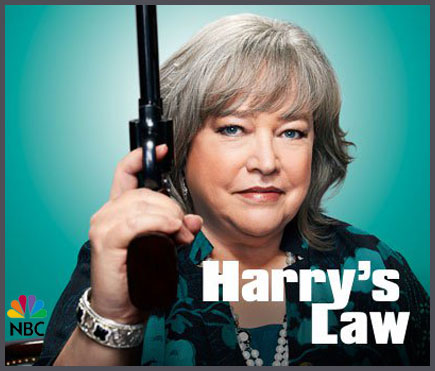
“Harry’s Law” Is A Legal Ethics Mess

When it comes to legal ethics, "Harry" is no straight-shooter.

As I have noted before, TV has one of its more ethically-sophisticated legal dramas to date in CBS’s “The Good Wife.” Oh, the lawyers (and their investigators) are frequently unethical, all right, but the show has seldom represented unethical conduct as ethical, or implied that it would be defensible if it came to the attention of the bar. In contrast, the new NBC Kathy Bates drama “Harry’s Law” has already ticketed itself for the Dumb Lawyer TV Show Hall of Shame, grossly misleading its audience about what constitutes a lawyer’s ethical duties. (Other recent admittees to the Hall: James Woods’ “Shark,” the Kathleen Quinlan drama “Family Law,” Steven Bochco’s embarrassing “Raising the Bar,”and every legal show created by David Kelley.) Continue reading