Aaron Hernandez And The Weird Legal Doctrine Of Abatement Ab Initio

The predator priest, the corrupt CEO, and the murderous Patriot, all innocent because they’re dead….

Massachusetts judge Judge E. Susan Garsh ruled that the state’s law required her to vacate the 2015 murder conviction of former New England Patriots star Aaron Hernandez. Because Hernandez’s appeal was pending when he committed suicide in his cell, she said,  the common law doctrine known as abatement ab initio applied: a defendant’s death before an appeal erases his conviction. Prosecutors argued that Hernandez’s purpose in hanging himself on April 19 was to to void his conviction, but Judge Garsh responded that she was bound to follow state law anyway, especially since Hernandez’s motives were unknown. She had presided at the trial in which a jury found Hernandez  guilty beyond a reasonable doubt of the murder of semi-professional football player Odin Lloyd.

The fact that some legal and ethical puzzles have proven unsolvable despite troubling lawyers, judges, legislators and scholars for decades (and sometimes centuries) is one of the best proofs I know for The Ethics Incompleteness Principle, which holds that no rule or principle makes sense in all circumstances, and that human beings are incapable of articulating perfect laws and rules that will work as intended in every case. Abatement ab initio is a classic example.

Abatement is the dismissal or discontinuance of a legal proceeding “for a reason unrelated to the merits of the claim.” It is available in both a civil and  criminal context. Traditionally, the death of a criminal defendant following conviction  but before an appeal can be made mandates abatement. The effect of  the doctrine is to discontinue all proceedings  and to dismiss the appeal as moot, overturn the conviction, and dismiss the indictment. The deceased defendant reverts back to his status before being charged. In the eyes of the law, he is innocent…again. Continue reading

A Facebook Case Study In How People Cripple Their Ability, And Ours, To Make Ethical Distinctions

I inadvertently stumbled over a provocative Facebook post by a friend of a friend of a friend. My friend is a principled and intelligent liberal: apparently I stumbled on to a chain where each link was a little more detached from reality and reason.

The stranger’s post involved the story from two weeks ago, in the aftermath of the collapse of a crucial  highway bridge in Atlanta. Investigators found the the collapse was caused by a fire.There were no deaths or injuries caused by the fire and the explosion it sparked , but i  severed the vital roadway that runs north-south through downtown Atlanta and carries 250,000 vehicles daily, City Fire Department investigators arrested three homeless people on suspicion of involvement in the fire. Eventually only one was charged:  Basil Eleby, a homeless man, was arraigned on charges of first-degree arson and criminal damage to property. He had many previous drug and assault arrests, according to Fulton County jail records.

To this my friend’s friend’s friend—his name doesn’t matter—responded,

Three people are now under arrest for the fire that led to the freeway collapse in Atlanta – 3 homeless people. I predicted this. But rather than seek out revenge on these 3 for the tremendous inconvenience they’ve caused, can we take a moment to realize that no person reading this has ever known the reality of sleeping under a bridge. None of us have been compelled to light a fire under that same bridge in order to keep our bodies warm.

And can we please have a conversation about funding mental health for the homeless? And can we please have a conversation, not based in shame, not based in revenge, about getting homeless people off the street?

Yes, these 3 folks have done something that has inconvenienced many people. Lighting that fire is something they have probably done countless times before. Can we take this as an opportunity to deal with the real problem? It gives me no satisfaction that the person charged with the worst of this situation will have his homelessness solved by a jail sentence.

Now, I’m sure this individual is a really kind, compassionate individual. I’m also sure he’s the kind of person who is always saying things like “Why is anyone going hungry in the richest country in the world?” to the vigorous head-nodding of his friends, and his friends’ friends. (I am willing to bet money that he was a passionate Bernie Sanders supporter; probably Occupy Wall Street too.) This kind of statement, however, is policy and ethics static. It literally makes people stupid, and leads them away from useful, objective, dispassionate analysis, not towards it.  It is an irresponsible Facebook post.

Of course, it is also flagrant virtue-signalling and grandstanding. Now everyone knows that this guy is oh so compassionate and such a good Christian, who rejects revenge, and wants us to apply the Golden Rule to the poor and the weak. Applause, please. Yes, you’re a wonderful human being. Unfortunately, thinking like this impedes policy solutions to problems, by simplifying them and dumbing them down into their most emotionally distracting components, while pretending that hard truths don’t exist. Continue reading

New Jersey Tries An Ethics Experiment

bail-reform

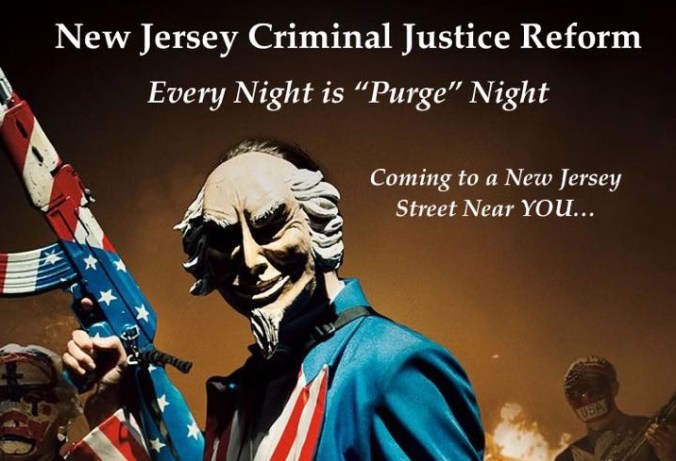
New Jersey, a state for which many would say ethics itself would be a novelty, has taken the lead in a truly revolutionary criminal justice experiment that resolves an ancient ethical dilemma in favor of mercy and compassion. Beginning on January 1 this year, New Jersey  judges are expected to release all but the most dangerous and untrustworthy defendants pending their trials, often with certain conditions, rather than  to require cash bail as a condition of avoiding jail.

In 2014, voters decided to amend New Jersey’s Constitution and virtually eliminate bail, responding to a national movement to reform a system that has always discriminated against poor defendants. Although bail requirements are usually modest for most offenses (a bail bondsman typically charges a defendant 10% to post the entire bond), many defendants are still unable to pay even small amounts. Then they wait in jail, often losing their jobs and causing hardship for their families. Continue reading

A British KABOOM! The Man In The Tiger Suit

Tony, Tony, Tony. We're so disapointed.

Tony, Tony, Tony. We’re so disappointed.

Pieces of my head are on the ceiling, thanks to the violent cranial explosion caused by this story, a KABOOM! from across the pond. Usually my head isn’t so sensitive to non-American unethical conduct, but this, as you shall soon see, is special.

Andrew Holland, 51, a Welsh bus driver, was accused of owning an extreme porn video featuring a woman having sex with a tiger. He had been arrested and charged over the video, which he claimed friends gave him as a joke. Holland lost his job, was targeted with hate mail from vigilantes, and he suffered a heart attack that he says was caused by the stress of the case.

Then, after inflicting all of this on Holland,  prosecutors  looked at the video closely, and, for the first time, with the sound turned on. Oops. That was no tiger—that was a man in a tiger suit. The big clue was when they they heard the randy tiger,  in the throes of sexual ecstasy, growl out,

“That’s grrrrrrrrrreat!

Yes, just like Tony the Tiger, the Frosted Flakes icon, except that in Great Britain they are called “Frosties.” Continue reading

Comment of the Day: “Incomplete Ethics Observations On George Zimmerman’s Acquittal”

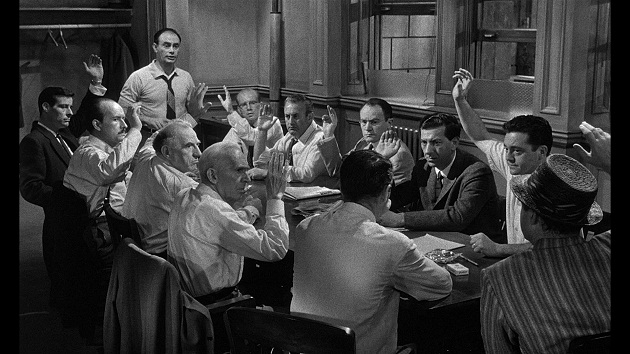
The defendant found "not guilty" in "12 Angry Men" was also probably guilty...

The defendant found “not guilty” in “12 Angry Men” was also probably guilty…

Charles Green, a treasured commenter on this blog and wise man, manages to perfectly illustrate, in this comment on the post “Incomplete Ethics Observations On George Zimmerman’s Acquittal,” how completely confused and misguided the liberal establishment and the public generally has become regarding race and justice in this country, and how the Martin case has metastasized the problem.  I’ll let Charles have his say, and return at the end.

“This is the Red State revenge for the OJ verdict. Both were infuriatingly irksome to the opposing party; narrowly legal in the “letter not the spirit” sense of the law; and wildly at odds with decency.

“Jack, you really must stop this silly “if he was white” line of argument. There is no racial equivalency between minority and majority cultures, and in particular between black and white in this culture; you simply can’t substitute one variable for the other and expect logical connections to obtain. Continue reading

So Wrong It Defies Belief: The Green Bay Police Heist

Maybe the public and the media are finally waking up to the astoundingly un-American abuse of power that are the  civil forfeiture laws,  which allow property and cash to be seized as helping to facilitate a crime, and later are divvied up between the police and the state. There are some promising signs. Libertarians like Radley Balko have been trying to ring the ethics alarms on this horrendous example of government misconduct for years, and the Institute for Justice continues its lonely battle to defeat the most egregious offenses, but George Will just used the trumpet of his weekly column to expose the Caswell family motel scandal, which Ethics Alarms discussed in February here. Now comes a tale of civil forfeiture from Wisconsin that is so brazen that it defies belief, and also compels the following question:

How can this happen  in America? Also this one: If the government will use its power to steal money and property from law-abiding citizens, and no effort is made on the part of national government leaders to do anything to stop it, how can at least 50% of the American public continue to advocate giving more power and money to a government that obviously cannot be trusted with either?

The first question is frightening in its implications.

The second is a mystery, on par with “What happened to the Mary Celeste?” Continue reading