Comments of the Day: “A New York Times “Expert” Thinks It’s Wrong To Make Informed Judgments About Who Is Fit To Be An American…”

I’m featuring two Comments of the Day on the same post, the discussion of whether legal immigration to the U.S. should be more carefully limited by the culture and characteristics of the nation of origin, as the Trump immigration policies seem to be heading. The discussion among the commentariate has been excellent; indeed it was difficult narrowing the COTD field down to just two.

First up is the Comment of the Day by CEES VAN BARNEVELDT on the post, “A New York Times “Expert” Thinks It’s Wrong To Make Informed Judgments About Who Is Fit To Be An American…”

***

The primary criteria for allowing immigration should be…

  • a) whether an immigrant would be able to become a good US citizen
  • b) whether the immigrant fills an economic and cultural need for the USA

Take for example Sergey Brin. He was born in 1973 in the Soviet Union, and immigrated with his parents to the USA in 1979, during the Cold War. He is one of the two founders of Google. I would say this his immigration is a success story on both criteria. The Soviet Union at the time was the main adversary (some say enemy) of the United States at the time.

This means that we need to be careful with solely looking at country of origin as a criteria for immigration eligibility. We may want to exclude immigration from certain countries, however allow immigration on humanitarian grounds for those who flee the country due to persecution (e.g. Christians from Iran, Jews from Nazi Germany), and seek asylum.

Continue reading

No, Calling Out Somali-Americans For Their Unethical Conduct Isn’t “Racist”

Long ago, Jimmy Carter led a public embrace of the bonkers fallacy that all cultures are equally admirable and that the United States needed to become more “multi-cultural.” That was a disastrous turn in the American journey, and I am happy to say that I recognized it immediately at the time, along with many others of course. Carter’s fact-free conceit, one of his many disastrous moves in his rotten Presidency, gave us the illegal immigration wave, Spanish language prompts in phone trees, DEI, McDonald clerks who can’t speak understandable English and persistent ethnic underclasses, among other maladies.

Christoper Rufo, in his City Journal entry, “It’s Not “Racist” to Notice Somali Fraud: The recent scandal reveals an uncomfortable truth: different cultures lead to different outcomes,” writes clearly, persuasively and correctly about a truth that American once grasped but increasingly do not thanks to poor education and “it isn’t what it is” propaganda.

He writes in part,

“First, a description of the facts should not be measured as “racist or not racist,” but rather as “true or not true.” And in this case, the truth is that numerous members of a relatively small community participated in a scheme that stole billions in funds. This is a legitimate consideration for American immigration policy, which is organized around nation of origin and, for more than 30 years, has favorably treated Somalis relative to other groups. It is more than fair to ask whether that policy has served the national interest. The fraud story suggests that the answer is “no.”

Second, the fact that Somalis are black is incidental. If Norwegian immigrants were perpetrating fraud at the same alleged scale and had the same employment and income statistics as Somalis, it would be perfectly reasonable to make the same criticism and enact the same policy response. It would not be “racist” against Norwegians to do so.

Further, Somalis have enormously high unemployment rates, and federal law enforcement have long considered Minneapolis’s Little Mogadishu neighborhood a hotspot for terrorism recruitment. We should condemn that behavior without regard to skin color.

The underlying question—which, until now, Americans have been loath to address directly—is that of different behaviors and outcomes between different groups. Americans tend to avoid this question, rely on euphemisms, and let these distinctions remain implied rather than spoken aloud. Yet it seems increasingly untenable to maintain this Anglo-American courtesy when the Left has spent decades insisting that we conceptualize our national life in terms of group identity.

The reality is that different groups have different cultural characteristics. The national culture of Somalia is different from the national culture of Norway. Somalis and Norwegians therefore tend to think differently, behave differently, and organize themselves differently, which leads to different group outcomes. Norwegians in Minnesota behave similarly to Norwegians in Norway; Somalis in Minnesota behave similarly to Somalis in Somalia. Many cultural patterns from Somalia—particularly clan networks, informal economies, and distrust of state institutions—travel with the diaspora and have shown up in Minnesota as well. In the absence of strong assimilation pressures, the fraud networks aren’t so surprising; they reflect the extension of Somali institutional norms into a new environment with weak enforcement and poorly designed incentives.

The beauty of America is that we had a system that thoughtfully balanced individual and group considerations. We recognized that all men, whatever their background, have a natural right to life, liberty, property, and equal treatment under the law. We also recognized that group averages can be a basis for judgment—especially in immigration, where they can help determine which potential immigrant groups are most suitable and advantageous for America.

Well, bingo. Continue reading

The Ethics Alarms 2025 “It’s A Wonderful Life” Ethics Companion

2025 INTRODUCTION

Once again, the annual Ethics Alarms posting of my guide to watching the 1946 classic is in Thanksgiving week, first, because I concluded a few years ago that it is a Thanksgiving movie, and second, because I personally need the movie right now. It’s a Thanksgiving movie because a man learns through divinely orchestrated perspective that he has a lot to be thankful for, even if it often hasn’t seemed like it in his life of disappointments and dashed dreams. He’s married to Donna Reed, for heaven’s sake! He has nothimg to complain about.

I just finished re-reading last year’s version and making some additions and subtractions. You know what? It’s worth reading again. I wrote the thing, and I still get a lot out of it.

Last year was a particularly gloomy one for me, and I’m afraid my annual introduction reflected that. It was hard for me to even watch “It’s a Wonderful Life,” which was my late wife’s favorite movie (well, tied with “Gone With the Wind” and “To Kill a Mockingbird”) last year, and, though I have had 364 days more to get used to existence with out her, I’m more resigned than better.

This year, in September, I had an “IAWL” moment when a lawyer whom I had only known for a few days pulled me aside at a gala celebration of the 52nd year of continuous operation of a student theater group I had founded my first year in law school. He said that his two young children, who I could see playing in the courtyard, wouldn’t exist if I hadn’t started the organization  where he met his wife, and he wanted to thank me.

The reunion of lawyers who  participated in the over 150 plays, musicals and operettas produced by the group revealed that dozens of lasting marriages and their children had been an unanticipated result of the unique organization, the only graduate school theatrical group in the U.S. “Strange, isn’t it?,” Clarence says to George as the metaphorical light finally dawns. “Each man’s life touches so many other lives. When he isn’t around he leaves an awful hole, doesn’t he?”

I’m not celebrating Thanksgiving this year for too many reasons to go into, but I guess I’m thankful that I’m here instead of a hole. It’s a lowly measure of success, but I’ll take it.

Grace so loved the final scene when Harry Bailey toasts, “To my big brother George, the luckiest man on earth!” and everyone starts singing  “Auld Lang Syne.” She always started crying, and, to be honest, I think I’ll skip that part this year. When I watched it last year, it almost killed me. 

Besides, Billy Crystal (actually Nora Ephron, who wrote his lines) pretty much ruined “Auld Lang Syne” for me with his observations in “When Harry Met Sally.” The song really doesn’t make any sense, it just feels right. One might say the same thing about “It’s A Wonderful Life.”

I won’t, however.

PREFACE

Frank Capra must have felt that the movie was bitterly ironic. It was a flop, and destroyed his infant project with some other prominent directors to launch a production company called “Liberty” that would give directors the liberty to put their artistic visions on the screen without interference from the money-obsessed studios. “It’s A Wonderful Life” was the first and last film produced by Liberty Studios: it not only killed the partnership, it just about ended Capra’s career.

James Stewart was, by all accounts, miserable during the shooting. He suffered from PTSD after his extensive combat experience, and the stress he was under shows in many of the scenes, perhaps to the benefit of the film.

It is interesting that the movie is scored by Dmitri Tiompkin, a Russian expatriate who is best known for scoring Westerns like “Red River” and “High Noon.” He wasn’t exactly an expert on small town America, but his trademark, using familiar tunes and folk melodies, is on full display. Clarence, George’s Guardian Angel (Second Class), is frequently underscored with the nursery rhyme “Twinkle Twinkle Little Star” because he is represented by a star in the opening scene in Heaven. The old bawdy tune “Buffalo Girls” is another recurring theme, an odd one for a wholesome film, since the buffalo girls were prostitutes.

Donna Reed is a revelation in the film. She is best remembered as the wise and loving Fifties mom in “The Donna Reed Show” (in the brilliant satiric musical “Little Shop of Horrors,” doomed heroine Audrey singing about her dream of domestic bliss “somewhere that’s green” sings “I cook like Betty Crocker and I look like Donna Reed.”) But she was an excellent dramatic actress, and Hollywood did not do her talents justice. She was also, I am told by my freind and hero Paul Peterson who played her young son Jeff, as nice and admirable in person as she seemed on the show.

Lionel Barrymore, once described by a critic as an actor who could overact just by sitting still, is nonetheless a memorable villain. It was no coincidence that he was known at holiday time for playing Scrooge in an annual radio prouduction of “A Christmas Carol.” Barrymore was an alcoholic like his two siblings, John and Ethel, both regarded more highly as actors but less able to work reliably through their addiction. Lionel was in a wheelchair for his latter career; he wouldn’t have been if he had been born a few decades later. He needed hip replacements and those weren’t possible for his generation. As a result, he is the only memorable wheelchair-bound film actor of note.

Thomas Mitchell, George’s pathetic Uncle Billy, was one of the greatest Hollywood character actors of his or any other era. He is memorable in many classics, including “High Noon,” “Gone With the Wind,” “Mr. Smith Goes to Washington,” “Stagecoach” and more, while also starring in several successful Broadway plays.  On stage he created the role of the rumpled detective “Columbo,” his final role.

The cop and the cab driver, Bert and Ernie (names borrowed by “Sesame Street” in a strange inside joke) were played by Ward Bond, another prolific character actor who shows up in key roles in too many great movies to list, and  Frank Faylen, who made over 200 movies with IAWL being the only certified classic. Both Bond and Faylen found their greatest success on TV, Bond as the cantankerous wagonmaster and star of “Wagon Train” and Faylen as the apoplectic father of highschooler Dobie Gillis in “The Many Loves of Dobie Gillis.” I don’t think any character on TV made my father laugh as hard as Faylen’s “Herbert T. Gillis.”

Now that the introductions are over with, let’s go to Bedford Falls…but first, a stop in Heaven…

1. A Religious Movie Where There Is No Religion

Continue reading

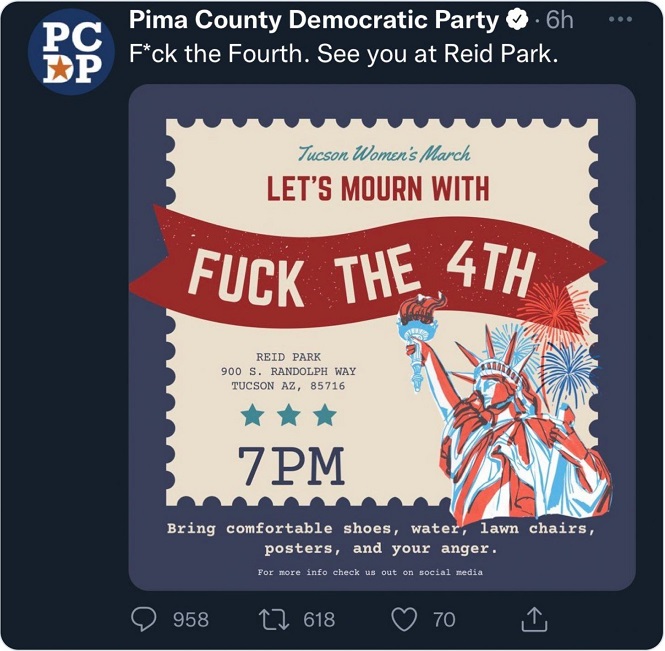
Announcement: “Fuck” Has Been Officially Upgraded From Taboo Obscenity to Mainstream Colloquialism

This battle was lost long ago.

“Wheel of Fortune” has launched a new “What the Fun?” category because it implies “fuck.” The One Million Moms group is disgusted and outraged. “The once family-friendly ‘Wheel of Fortune’ game show is no more,” its site declared on October 30. “Unfortunately, the recently added puzzle category ‘What the Fun’ aims at a mature, modern audience with insinuated profanity making it no longer suitable for family viewing.”

“It is not the show it was with this implication of the f-word,” it continued. “Parents will have to explain to their children that the primetime program they were once allowed to watch is no longer a clean show.” The page included a link for a petition on which to pledge never to watch the show again unless the category is eliminated. More than 12,500 have signed.

Imagine a life so devoid of meaning and so full of discretionary time that one can organize a campaign to change a “Wheel of Fortune” category.

I have news for the conservative group, and by now it is old news. “Fuck” is now just acceptable naughtiness, and not the taboo obscenity it once was. Ditto “shit.” There are lots of reason why this has happened, and things like “What the Fun” are a big one.

Continue reading

Believe It or Not! The Murder Wasn’t The Most Disturbing Aspect Of The Charlotte Stabbing

It seems incredible, but Ukrainian refugee Iryna Zarutska’s murder on a Charlotte light rail train was not the most disturbing aspect of her murder by a deranged man who just decided to kill her for no discernible reason. Nor is the fact that the killer had been arrested 14 times and turned back into the streets as part of the Mad Left’s urban “de-incarceration” agenda the worst aspect of the story, or even the deliberate burying of the event by the mainstream media, which felt that the public didn’t need to know this occurred because it undermines so many Axis narratives (gun control, how safe Democrat-run big cities are despite all evidence to the contrary, “Black on white crime? What black on white crime?,” the virtues of public transportation). And it isn’t the fact that so many Americans have been brainwashed that many (including commenters on this blog) have defended the media’s censorship of inconvenient reality.

No, I have concluded upon watching the various surveillance camera videos that the worst aspect of the incident is that even after the young woman was stabbed and was bleeding out in her seat, not one of her fellow passengers lifted a finger to try to save her life.

That’s some community you have there, Charlotte. Be proud…

Continue reading

Again, Hall of Fame Ethics, and Again, Ethically Inert Sportswriters Want To Elect Steroid Cheats

I know I’ve written a ridiculous number of posts about the logical, institutional and ethical absurdity of electing baseballs’s steroid cheats to the Hall of Fame in Cooperstown, but I have sworn to slap this down every time it rears its metaphorical ugly head until my dying day.

The 2025 Baseball Writers’ Association of America voted Ichiro Suzuki (one vote shy of being a unanimous selection), CC Sabathia and Billy Wagner into the Hall. Three quick ethics notes on this. First, whoever it was who left Suzuki off his ballot should be kicked out of the association using the equivilent of the Ethics Alarms “Stupidity Rule.” He is not only a qualified Hall of Famer, but belongs among the upper echelon of Hall of Famers with the likes of Ty Cobb, Babe Ruth, Ted Williams and Rogers Hornsby.

Second, I have no problem with CC Sabathia making the Hall, but that he was elected just a couple of months after Red Sox star Luis Tiant was rejected by a veteran’s committee, probably ending his Hall of Fame chances for good, shows just how arbitrarily the standards for Hall admission are applied. Tiant was objectively better than Sabathia, a bigger star, and while CC was a flashy presence on the mound, Tiant was more so. Luis (or “Loooooie!” as he was known in Fenway Park) died last year, and had said that if they weren’t going to let him into the Hall while he was alive, they shouldn’t bother after he was dead. Maybe the voters were just honoring his wishes…

Continue reading

Comment of the Day: “Ethics Verdict: When Your Town Is Being Overrun, It’s Not Racist To Use The Term ‘Overrun.’” [Corrected]

Proving that even banned commenters have their uses, Chris Marschner offered a persuasive and enlightening rebuttal of the contention by a quickly-banned new commenter here that accounts of the problems visited on Springfield, Ohio by an overwhelming influx of Haitian immigrants were tainted by racism.

Chris’s Comment of the Day combines two comments that were piggy-backed in the thread, and here they are, inspired by the post, “Ethics Verdict: When Your Town Is Being Overrun, It’s Not Racist To Use The Term ‘Overrun.’”

***

Reuters did a good job spinning the actual data. Medicaid skyrocketing in the last three years; wage growth grew only after the pandemic and dropped faster than a neighboring town’s starting in 2022. Housing costs rose three times faster than in the US as a whole. Unemployment has been rising faster than in neighboring areas and the US as a whole.

Reuters makes the point that wage growth stayed above 6% longer than Dayton or the overall economy, but failed to say that it became more volatile as migrants moved in, dropping faster and farther than either Dayton or the US.

The story also makes statements like “false claims” by residents at community meetings and white supremacist protests during a jazz festival. Both statements are inflammatory and included no evidence to support the claims made.

Reuters has a progressive bias in all its reporting. Reuters wrote:
“More recently, Vance and other Republicans have amplified false claims aired by some residents at weekly city commission meetings. City commissioners in their public comments have pushed back, noting that the vast majority of Haitians are in the country legally and have a right to live where they choose”

The first statement states that locals are liars and the last statement fails to acknowledge that their legal status is exactly what the complaint is about. If Joe Biden had made an executive order giving temporary legal status for anyone in the world, anyone showing up would be here legally. At issue is the administration’s role in creating a massive influx of people who have not had to go through our normal processes to ensure they will not be a charge on society.

They continued,

“It is still a jarring increase from around 3,500 in just a few years – too fast to be reflected yet in Census data and the equivalent of 1.6 million or so new arrivals to New York City. There are growing pains – indeed outright tension – as a result, with sometimes ugly rhetoric at city commission open comment periods. A small group of white supremacists marched through town during a jazz festival in mid-August. For many local civic and business leaders, however, the advantages of having more people to fill jobs, start businesses, and buy goods and services are not lost.”

Continue reading

The Legitimate and Important Ethics Conflict Behind the Springfield Cat-Eating Controversy

As he does so often, Donald Trump accepted something he read or heard as gospel truth and repeated it as fact, this time in a Presidential debate, and was promptly ‘factchecked” and subsequently ridiculed. The back-ground: a large number of Haitian “migrants,” who may or may not be here legally, seem to have ended up in Springfield, Ohio. One resident complained that they were eating pet geese and cats, her claim went viral, and the meme-makers have had a field day…

…as you can see.

Continue reading

Baseball Gets the Gambling Scandal It Deserves.

Shohei Ohtani is, when healthy, the best baseball player alive as well as the most remarkable. No one since Babe Ruth (and no one before Babe either) managed to be a star slugger and an ace pitcher simultaneously, and Ruth never filled both roles in equal measure in the same seasons like Ohyani has. It may well be that the imported Japanese star isn’t as great a hitter as Babe or as overpowering a pitcher either, but never mind: he’s star quality on the mound and at the plate, and that is unprecedented.

The undisputed most valuable player in baseball signed a massive free agent contract with the best team in baseball (and, after the despicable Yankees, the best known), so Major League Baseball was confident that it had hit the metaphorical jackpot. And then…disaster struck.

During a Seoul, South Korea, series between the Dodgers and San Diego Padres, it was revealed that Ippei Mizuhara, Ohtani’s interpreter since 2013 who followed the star to the United States in 2018, had been illegally gambling on sports; a law enforcement investigation of a bookie uncovered his activities. Ohtani’s name was bank transfers to the bookie to cover Mizuhara’s gambling losses, but Mizuhara insisted that his boss and friend knew nothing about the gambling. The Dodgers fired Mizuhara and the official story coming from Ohtani’s lawyers was that Mizuhara had been stealing money from Ohtani.

Continue reading

The Latest Chaos in Haiti Brings Into Focus a Taboo Ethics Subject

Once again, Haiti is in the throes of violence and upheaval. It has ever been thus. While the nation Haiti shares the island of Hispaniola with, the Dominican Republic, has been relatively thriving (the key word is “relatively”) Haiti is in almost perpetual chaos. Florida is expecting another mass flotilla of refugees fleeing the hell-hole, and make no mistake, Haiti is a hell-hole. Under current law, and certainly under the warped Biden administration’s immigration policies, it is hard to imagine any scenario where thousands of Haitians do not enter the American populace.

Here is the ethics dilemma that it is politically incorrect to mention above a whisper: Haiti has a toxic, violent, ugly and undemocratic culture that has been ossifying for centuries. People who come from bad cultures, and this is a truly terrible culture, tend to have values and behavior traits that are antithetical to American society. Many in our “Imagine” subculture refuse to accept the fact that any culture is inferior to any other culture; hence they oppose “assimilation,” celebrating multi-culturalism instead. Multi-culturalism eventually metastasized into the DEI religion, and the success of the United States as a nation and a culture has been built on a once-solid foundation embodying the principle that immigrants come here to become Americans, with all the values and priorities that implies. Much of the division and cultural rot we are witnessing in the 21st century is a direct result of several decades of undermining that foundation.

Continue reading