Now THAT Was A Rape Culture…

http://www.youtube.com/watch?v=RzfqQx_Ku7E

I just happened to be surfing past the  Broadway Channel on Sirius XM, and found myself startled at the tone of the lyrics of that Hit Parade smash from the 1956 musical, “The Most Happy Fella,” by the great composer/lyricist Frank Loesser, “Standing on the Corner (Watching All The Girls Go By)”—especially at the end:

Saturday, and I’m so broke
Haven’t got a girl, and that’s no joke
Still I’m living like a millionaire
When I take me down to Main Street and I review the harem parading for me there..

Standing on the corner watching all the girls go by
Standing on the corner underneath the springtime sky!

Brother, you can’t go to jail for what you’re thinking
Or for the “Woo!” look in your eye
You’re only standing on the corner watching all the girls
Watching all the girls, watching all the girls
Go by!

Nobody saw anything wrong with these sentiments in 1956. It was fun, it was cute, it was innocent! A bunch of guys hanging out, leering and ogling women as they walked on the sidewalk, with “woo”—that is, lust— in their eyes and illegal thoughts in their brains, and periodically wolf-whistling at “the harem.”

Sometimes we forget—sometimes women especially forget—that our culture’s ethics regarding sexual etiquette and respect does advance, and has, as much as self-serving activists would have us believe otherwise.


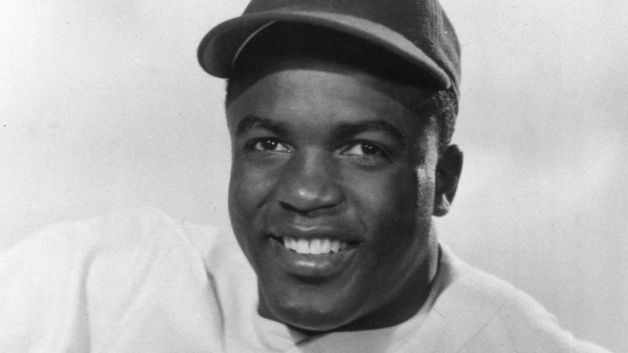
Maybe The Best Reason To Remember April 15…Number 42

jackie-robinson

A lot has happened on April 15.

Leonardo De Vinci was born…Abraham Lincoln died…Apollo 13 had the accident that almost destroyed it, but that triggered one of the great triumphs of the space program…Lee surrendered, ending the Civil WarThe Beatles disbanded…I didn’t get my taxes in on time….

I would argue however, and will, that as culturally important as any of these events was that sixty-eight years ago, in 1947, Jackie Robinson became the first black man to play major league baseball in the modern era. This represented a cultural change that allowed the United States to take a giant step forward toward healing the self-inflicted and almost fatal wound of slavery, and it took a man of surpassing courage and character to do it. (Two men, really: the other was Dodgers GM Branch Rickey.)

Today all MLB players will wear Robinson’s number 42 to honor him. If you haven’t seen the movie “42, or if your children haven’t seen it, this is a good day to get a sense of what Jackie went through as he broke the color line.  You can check out Robinson’s baseball stats here,  and learn about the civil rights work he did after his playing career, in the too-short life that was left to him here. He’s in the Ethics Alarms Heroes Hall of Honor, of course, and his entry there has more about his life as well as some good links.

The main thing is, remember him.

Many years ago, I had a conversation with a close friend—smart, accomplished, engaged, educated, about 26 years old at the time. She had no idea who Jackie Robinson was. Nobody, then, now or ever, should reach adulthood in the United States without knowing and understanding what Robinson did, and our nation’s debt to him. There is an ethical  duty to remember, and to respect.

Thank you, Mr. Robinson.

Thank you.


Ethical Quote Of The Month: Sgt. Shane Ortega

Trans Military Service Member

“You have to exercise patience with people, but people are not going to understand the subject overnight.”

—-Sgt. Shane Ortega, helicopter crew chief in the Army’s 25th Infantry Division, speaking to the Washington Post about his legal battle with the U.S. military, which continues to classify him as a woman despite his transition to a man.

The reason we say that “hard cases make bad law” is that the toughest cases fall between the cracks in rules and regulations, and they all have cracks. The law seeks consistent precedents, so anomalous fact patterns threaten the integrity and efficiency of otherwise effective laws and rules that work well in the vast majority of situations. Yet those hard cases usually indicate flaws in policies, rules and laws, and sometimes point to the need for change.

Often, an organization, especially a bureaucratic one like the military, will deal with such disruptive cases by simply looking past the actual facts, and treating them “by the book.” Ortega represents a particularly glaring instance of this phenomenon, which in his case not only harms his career, but also makes the military appear rigid to the point of absurdity.

Yet, as his Ethical Quote of the Month indicates, he understands. Change is painful, and it takes time. Continue reading

Proof Of Evolving Ethics Enlightenment: Bert The Cop Would Have Shot Walter Scott In The Back Too

For those who think that our ethical sensitivities don’t evolve for the better over time, I prescribe a careful viewing of that family classic, “It’s A Wonderful Life.”

At the film’s climax, George Bailey, the self-sacrificing hero who has been granted his inadvertent wish to see what the world would be like if he had never been born, finds the love of his life and (in the life he has given up for this dystopian hell) the mother of his children now unmarried, alone and working as a librarian despite the fact that she looks like Donna Reed. He embraces her, and since she’s never met him in this alternate reality, she screams, believing she is being sexually assaulted by a madman. Kind, jovial police officer Bert is summoned to quell the ruckus, and George, who is a bit upset, punches him in the face to avoid arrest, and runs away. Bert then takes out his pistol and fires it at George repeatedly.

He’s a lousy shot.

In 1946, when audiences first saw this film, nobody thought there was anything unusual about Bert’s professional conduct. Many, many films right through the 1960s show police officers, “good guys,” even ones not trapped in a strangely mean alternate reality like Ward Bond’s Bert, shooting at fleeing suspects or criminals. That was considered appropriate police procedure then, and the public, society and U.S. culture saw nothing amiss. You were expected, as a good citizen, to submit to a police officer’s lawful authority. If you resisted arrest and ran, then it was fair and reasonable for the officer to shoot you, ideally after a “Stop or I’ll shoot!” warning. Indeed, many people were shot, and killed, this way. If it was news, it wasn’t on the front page, and it wasn’t considered any kind of an outrage.

Now consider the public and media reaction to Michael T. Slager’s shooting of Walter Scott. We now know that Scott was resisting arrest: he had a bench warrant out on him for non-payment of over $18,000 in child support, and Slager was trying to bring him into custody. Instead of doing as the officer demanded, Scott resisted and ran. Burt would have shot at his back too; the difference is that Slager is a better shot, and George was faster. Slager, however, is completely reviled across the country; even his own lawyer found him so repugnant that he refused to represent him.

That represents a massive shift in cultural values in a little over half a century. Continue reading

Missouri’s Unethical Food Stamps Bill

Sometimes you just need a good lobster. I'm from Boston. Trust me on this.

Sometimes you just need a good lobster. I’m from Boston. Trust me on this.

Years ago, my wise and wonderful first year Contracts professor at Georgetown Law Center, the late Richard Alan Gordon, made a permanent impact on my conscience with a spontaneous rant. He was discussing a case involving a welfare recipient who had been sued by a Washington department store for failing to keep up with installment payments on a Hi-Fi system. The court voided the contract, saying that it was unconscionable for the store to intentionally create incentives for poor people to spend public assistance money on “non-essentials” like music systems. (I wish I remembered the name of the case, but then I only got a C+ in the course.)

As the students nodded their heads in agreement with the opinion, Professor Gordon cut them short and thundered (I am copying from faded old notes: Dick’s rants were always eloquent and memorable, and I began reconstructing them after class for posterity):

“Outrageous! Who are you, or a court, or a government, or any authority to tell another human being that feeding his body is more important than feeding his soul? Music is “non-essential”? I suppose that means that literature, culture, inspiration, wisdom, knowledge…or a moment of joy, the thrill of discovery, experiencing a concert, admiring a great work of art, or sharing an intimate and timeless moment with the love of your life is “non-essential” too! Neither the law nor any court nor a government authority has a right to dictate what is essential to any human being, whether he is receiving public assistance or not. Being poor imposes its own cruel restrictions on liberty and autonomy. Imposing more still is both an abuse of power and a violation of basic human rights. This is an assault on human dignity.”

Continue reading

Ethics Musings On The Project Veritas Cornell Video

1. I am deeply conflicted about how to handle the results of James O’Keefe’s “undercover video” operations when they hit gold like this. His methods are dishonest, Project Veritas does not treat his targets fairly, and publicizing his work just ensures that he will do more of it, and that imitators will follow in his slimy footsteps.

2. On the other hand, it makes no sense to apply an ethics blog exclusionary rule, and pretend that the videos don’t show what they show, when what they show is enlightening.

3. I’m not entirely certain that this video shows what it shows. It may show Cornell’s assistant dean for students, Joseph Scaffido, slipping into automatic sales mode, and neither paying attention to what comes out of his mouth nor applying critical thought. Surely he knows–please, please, tell me he knows!— that a pro-ISIS group on any American campus, especially a high-profile and prestigious one like Cornell’s, would be a public relations nightmare.

4. What should we want to happen to Scaffido? If he’s fired, he has lost his job because of tricks and lies, and because he trusted a stranger. That seems unfair. Yet if Cornell just shrugged this off, it is guaranteed to upset parents and alumni. What kind of people are teaching today’s college students at Cornell? Are they really this stupid? How many people like Scaffido are in positions of authority, or worse, tenured professors? Isn’t this obviously a problem? Continue reading

Transgender Ethics: Epic Trailblazer Malpractice In New Hampshire

Ex-N.H. state legislator, Stacy Laughton, a.k.a Barry Laughton.

Ex-N.H. state legislator Stacie Laughton, a.k.a  felon Barry Laughton.

Trailblazers have an ethical obligation when they presume to break a social or occupational barrier to a marginalized group’s participation and equal treatment. Simply put, their duty is to make the bias that has created the barrier and necessitated the “trail” look ignorant, cruel, foolish and unfair. A trailblazer does not have to be a shining star, though it helps, but must be capable of at least doing a solid, average, generally acceptable job., even in the grudging judgment of bigots.

This is because a trailblazer who does a poor job or displays character traits that are objectively inadequate for a role model, which a trailblazer inevitably becomes, risks adding to the barrier he or she just breached for those who follow behind them. The ethical requirement for trailblazers is the same as the traditional edict for doctors “First do no harm.” Being a trailblazer, however, is not easy, and since failure is catastrophic for the group a trailblazer represents, there is a duty not to attempt such a high-risk, high-profile cultural role unless the trailblazer is first, reasonably convinced that he or she the resources of talent, ability, fortitude, character and courage to succeed, and second, willing to accept and overcome the added stress of relentless attention and criticism.

There have been excellent trailblazers, cultural heroes all. Jackie Robinson, the first black Major League baseball player to break the color barrier is the template, but there are many other successes: Justice Thurgood Marshall, John F. Kennedy, the first Catholic President of the U.S., Amelia Earhart, Diane Crump, the first female jockey, the late Ed Brooke, the first black U.S. Senator since reconstruction, and too many more to mention. There have also been some miserable failures. The worst trailblazer was probably Shannon Faulkner, who fought in the courts for two years to force The Citadel to accept female cadets, then, after she was victorious, showed up fat and unprepared, and washed out in just one week as millions of dubious vets said, “See? What did we tell you?” Then there was Carol Moseley Braun, the charismatic, promising African-American Democrat whon Illinois voters elected as the nation’s first black female Senator, only to turn out to be thoroughly corrupt.

More recently, we have seen other trailblazers fall short, like Michael Sam, the first openly gay player drafted by the NFL.  Is there a celebrity gay marriage that has not ended in a quick divorce? Most have been failures, reinforcing the belief that gays are promiscuous and unsuited for a real marriage. Most vividly of all in the realm of trailblazer malpractice, we are reminded of the disheartening and tragic examples of Barack Obama, and Eric Holder every day.

Still, in the annals of epic trailblazer fiascoes, it would be hard to top the story of Stacie Laughton, New Hampshire’s first openly transgender state legislator, who was elected in 2012 as one of three House members for Ward 4 in Nashua. Continue reading

Comment of the Day: “Why The Sweet Briar College Fight Matters”

Sweet Briar2

Ethics Alarms has been graced with a wave of new commenters, prompted by this post and its predecessor, “The Sweet Briar Betrayal.” The issue is the ethics of a college board surrendering to adversity without a fight, with millions in the bank, a beautiful campus, and an important mission, and doing so before fully informing and involving the larger college community, especially alumnae. I opined that the board had an ethical duty to both  mission and the school itself not to euthanize Sweet Briar College prematurely, at very least, not before a last ditch capital fundraising campaign.

Thousands of readers seemed to agree, and my posts on the looming Sweet Brier closing have become part of the effort to promote and coordinating a growing movement by concerned alumnae and others to reverse the board’s decision. A few, in contrast, accused me of being unfair to the board, arguing that it has taken an unpopular but responsible course, and was courageous to do so. SBCFan2000, a new  commenter who arrived in the crowd of Sweet Briar supporters, reinforces my assumptions in this revealing Comment of the Day: Continue reading

Why The Sweet Briar College Fight Matters

sweet-briar-collegeEthics Alarms has been besieged by interest in the threatened Sweet Briar College closing, with the recent post on the topic already the third most viewed essay in the history of the blog. I was surprised; I shouldn’t have been. From an ethics and societal perspective, what the controversy stands for is as important as any covered here. It is also central to the nation itself.

When a business fails, the casualties include ambitions, opportunities, dreams, financial resources, community assets, and jobs. That is serious and tragic. Non profit organizations, however, exist to turn ideas into reality, to strengthen them, bolster them, and prove that they deserve to survive and flourish. The death of Sweet Briar will also mean the loss of ambitions, opportunities, dreams, financial resources, community assets, and jobs. Far more important, however, is that it will mean the death of an idea, or at very least the serious wounding of one.

This is why non profit boards should not be, as they so frequently are, merely comfortable curriculum vitae-stuffers  and networking forums for prominent dilettantes. Non profit boards are stewards of ideas, and they must also be willing and able to be warriors in defense of those ideas, if an idea is imperiled. It is not a job for the faint of heart, and the consequences of failure, or, as in the case of Sweet Briar, fearful and premature capitulation, are catastrophic, not just for the organization, institution and its constituents, but the entire U.S. culture.

Sweet Briar exists to nurture a particularly vital idea, the mission of training young womenContinue reading

March 1 Is “Remember What Drugs Cost Society Day”

Belushi

The District of Columbia is poised to completely legalize pot, which will be the most ringing of government endorsements of  societally destructive personal conduct, in a malfunctioning culture that should not be placed at further risk. This overwhelmingly black, poor, educationally-challenged and struggling population needs competent, trustworthy leadership and an injection of values.  It is a community, after all, that idolized the late Marion Barry, a mayor who smoked crack on the job, and never apologized for it. It’s not surprising that the adults in the District would tell the young African-Americans that it’s cool to spend their your money to get stupid, to avoid clear thought rather than practice it.

Every March 1, I watch this old clip (below) from Saturday Night Live  (it’s not on YouTube, so I can only link to it) , featuring the great, and thanks to recreational drugs, late John Belushi. It unfailingly makes me laugh out loud. It also makes me furious that a talent like this gave himself so little time to entertain us, because he killed himself with an insatiable appetite for illegal drugs.

For me, March 1 is “Remember What Drugs Cost Society Day.” Those arguing for our government placing a societal  seal of approval on these costs have yet to persuade me that it is ethical, wise or even sane to not just accept them, but to multiply them by a number unknown.

Here’s John Belushi (1949-1982), enlightening us about March around the world.