“Walking Dead” Ethics: Hypocrisy, Substance Abuse And Survival

"The Walking Dead"...as always, providing abundant ethical dilemmas to chew on...

“The Walking Dead”…as always, providing abundant ethical dilemmas to chew on…

If you can stand the periodic spectacle of shambling, rotting flesh and heads being lopped off or split down the middle, AMC’s “The Walking Dead” still provides the most daring and interesting ethics storylines available on television.

The latest episode, titled “Indifference,” raised two gutsy issues that are unpopular in today’s culture to the point of taboo. It was revealed that Carol, previously the simpering and tragic mother of the now dead, zombified and executed little girl Sophia, has morphed into a stone-cold pragmatic survivalist who advocates killing on instinct when the threat is sufficiently severe. In addition to teaching methods of mayhem to the children entrusted to her instruction in the grim, abandoned penitentiary where our heroes have fortified themselves against the roaming zombie hoards, Carol summarily executed two members of the community who were fatally ill with a pernicious virus on the grounds that they threatened the safety of the rest. For this, Rick, the sheriff-turned farmer alleged leader of the non-zombies, orders her out of the prison.

Strange. In a world without doctors, medicine and hospitals, where the objective is simply to survive long enough for some remote miracle to rescue humanity, a runaway virus is as much of a threat as a maniac with a hatchet. Rick and the rest have long ago accepted the necessity of killing members of their group who are bitten by zombies, since they are certain to “turn”after death and start indiscriminately eating people. True, the preferred method is to withhold execution until the second after the living become undead after becoming unliving, but this is a distinction without a difference. Carol is quite right that a breathing, doomed, virus-carrier is as much of a threat to the group—perhaps more—as a newly-minted brain-muncher. Why is her strong action in defense of the group, a defensible utilitarian act, reason for exile? Continue reading

The Hopelessly Muddled Ethics Of Halloween Costumes

anna-rexia

“Anna Rexia”

Clearly, we need some rational ethics standards for Halloween costumes, but I doubt that we will ever have any unless political correctness is removed from the equation. The holiday is by its very nature in bad taste with a heavy dose of defiance. The tradition is all about invoking the things that frighten us, with death being tops on the list. Trivializing death or mocking it is any way is guaranteed to offend somebody. My solution: if it offends you so much, don’t participate in Halloween. Boycott it. Don’t give out candy. Let everyone else—you know, those enough to distinguish reality from make-believe and satire from insults—have a good time once a year.

Once Halloween is transformed into Halloweenie, as so many of the political correctness police would have it, it isn’t Halloween, and isn’t fun. We have properly purged the vandalism that once part of the ritual, and if every possibly offensive disguise and costume is deemed socially unacceptable, all we have left is an annual event where kids dressed in blinking lights (to avoid accidents) get non-sugar candy, fruit, dental floss or contributions to charities while dressed up as non-offensive politicians, Greenpeace captains, cartoon characters, occupations and maybe insects. Then parents x-ray the candy and limit how much of it the kids can eat. As for adults, they not only have to wear costumes that won’t offend their friends and fellow party goers, but also costumes that won’t offend somebody, somewhere, when an officious jerk at a party takes a photo with his phone and posts it for the world. What fun. Continue reading

Trapped In The Land Of Liars

Liars“In a certain town there are two tribes—one  always tells the truth; the other always lies. A stranger arrived in the town and asked one of the natives whether he was a Truth Teller or a Liar. The native answered, but the stranger didn’t hear the answer. The stranger then asked two other natives who overheard this conversation, what the first man had said. The first replied, “He said he was a Truth Teller.” The second replied, “He said he was a Liar.”

—-Old Brain-Teaser

Senator Dick Durbin (D-ILL)  posted this on his Facebook page:

“Many Republicans searching for something to say in defense of the disastrous shutdown strategy will say President Obama just doesn’t try hard enough to communicate with Republicans. But in a ‘negotiation’ meeting with the president, one GOP House Leader told the president: ‘I cannot even stand to look at you.'”

Durbin, the #2 Democrat in the Senate, much like the #1, Harry Reid (and the GOP #1, Sen. Mitch McConnell, and…but I’m getting ahead of myself) is a serial shiv-master, adept at making explosive and unfair partisan accusations. This one is typically irresponsible and despicable, because he tells the tale of inexcusable disrespect to the President of the United States but does not attach it to any one individual. Unethical. Cowardly. If he’s going to blow the whistle, he has an obligation to blow it and point, so the accused can defend himself. The Golden Rule demands no less. Of course, this method indicts all GOP leaders, which is Durbin’s design.

The Illinois Senator is also not very bright, and thus his account, which is also based on hearsay so he actually cannot know if it is true or not, does not prove what he purports it to prove. The President’s obligation to negotiate and communicate is independent of what any one lawmaker thinks or how that lawmaker may act. Durbin’s argument is the Tit for Tat rationalization: bad conduct by Republicans…or just this one Republican…justifies the President not doing his job. Dumb. Unethical. Unfair.

Ladies and Gentlemen, I give you Sen. Dick Durbin!

But wait, there’s more!

Republicans at the meeting Durbin referenced denied his charge, but we would expect that no matter what happened.  The amazing thing is this: Asked about the alleged incident at a press briefing, White House spokesman Jay Carney, who didn’t have to say anything, replied that he had investigated Durbin’s story, and “it did not happen.” Continue reading

Case Study: The Botched DP, Baseball, Ethics Evolution, and “Getting It Right”

manager-mike-matheny-argues

I know this is a long essay.

Yes, it involves baseball.

Bear with me. I think it is worth your time.

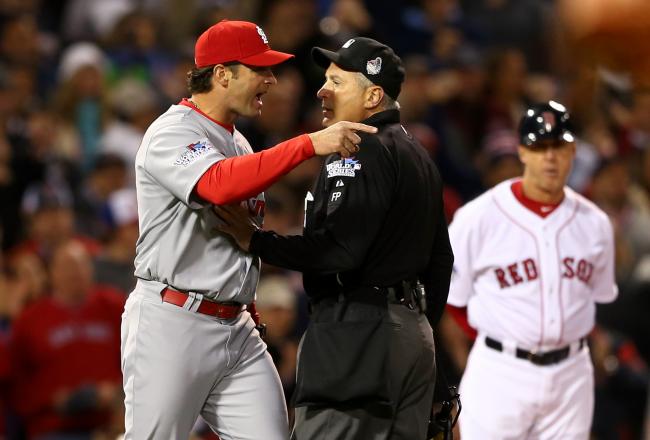
Last night, in Game 1 of the 2013 World Series, embarrassingly kicked away by the St. Louis Cardinals and won handily by some team called the Boston Red Sox,  an intricate ethics drama appeared, allowing us to see the painful process whereby a culture’s ethical standards evolve and change in response to accumulated wisdom, altered attitudes and changing conditions. An obviously mistaken umpire’s call was reversed by the other umpires on the field as the Cardinals manager argued not that the original call had been correct, but that reversing it was a violation of tradition, established practice and precedent….in other words, doing so was wrong, unfair, unethical because “We’ve never  done it this way,” a variation of the Golden Rationalization, “Everybody does it.”   You should not have to appreciate baseball (but if you don’t, what’s the matter with you?) to find the process illuminating and thought-provoking. Continue reading

Ethics Dunce: Fat-Bashing Film Critic Rex Reed

melissa_Elle

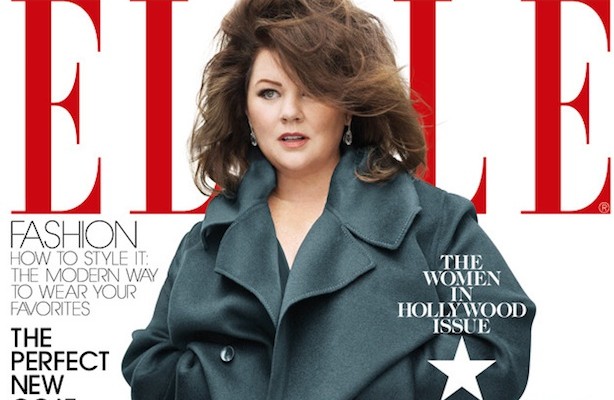
Actress Melissa McCarthy stole the film “Bridesmaids” right out from under its better known stars, including the screenplay’s author, Kirsten Wigg. In that film, her hit CBS sitcom “Mike and Molly,” and subsequent films (of varying quality), McCarthy has shown that she is s versatile, appealing comedienne with deep dramatic resources. Film critic Rex Reed, however, is mostly concerned with her weight, which is usually a component of the characters she plays and the quality, other than her talent, that sets her apart from the standard issue, impossibly thin, fit and sexy Hollywood actress.

In his withering review of her latest comedy “Identity Thief,” Reed causally refers to McCarthy as a “female hippo” and reduces her career to this: “Melissa McCarthy (Bridesmaids) is a gimmick comedian who has devoted her short career to being obese and obnoxious with equal success.” Called on his fat-bashing, Reed responded, “I have lost entirely too many friends to obesity-related diseases to pretend Ms. McCarthy’s alarming obesity is anything to applaud.”

There are two aspects of this that are striking. One is that Rex Reed, who played the pre-op Myra Breckenridge in the awful movie version of Gore Vidal’s gender-bending, and considered scandalous at the time, satiric novel (Raquel Welch, now over 70, was post-op), is still alive and reviewing, albeit obscurely until, as now, he writes something outrageous. At one time—40 years ago? Longer?— Reed was considered the most quotable and one of the most influential film critics; now, to say he is passé would be a compliment.

The other striking aspect of this incident is this:  while the culture will turn with unforgiving venom on any public figure who derides individuals for their color, sexual orientation, malady or disability, any of which would be considered cruel, bigoted, and hateful, deriding individuals because their weight doesn’t meet with aesthetic norms—among which are now out-sized breasts on otherwise fat-free frames and sharply chiseled abdominal muscles, a look that was literally freakish until the dawn of Nautilus and personal trainers—-still is largely regarded as justified and acceptable. Continue reading

The Strange, Conflicted, Unethical Holiday We Call Columbus Day

"Yes, it seems like a catastrophe now, but some day creatures called human beings will celebrate this day..."

“Yes, it seems like a catastrophe now, but some day creatures called human beings will celebrate this moment…”

What are we celebrating on Columbus Day, and is it ethical to celebrate it?

When I was a child, I was taught that we were celebrating the life of Cristoforo Columbo, popularly known as Columbus, who was convinced, against the prevailing skeptics of the time, that the Earth was round rather than flat, and in the process of proving his thesis, made the United States of America possible by discovering the New World in 1492. Virtually none of what we were taught about Columbus was true,  so what we thought we were celebrating wasn’t really what we were celebrating. Columbus wasn’t alone in believing the world was round: by 1492, most educated people knew the flat Earth theory was dumb. He blundered into discovering the New World, and by introducing Spain into this rich, virgin and vulnerable territory, he subjected millions of people and generations of them to Spain’s destructive and venal approach to exploration, which was, in simple terms, loot without mercy. The Spanish were like locusts to the Americas; South and Central America are still paying the priced today. Surely we aren’t celebrating Columbus’s complicity in that. Continue reading

Grassy Knoll Ethics: How Deception Breeds Distrust

UmbrellaMan2

We once again must squarely face the hoary  quote from Walter Scott’s epic poem Marmion: “Oh what a tangled web we weave when first we practice to deceive.” It is hoary because it is true, and this month’s Smithsonian Magazine reminds us of how true it is, recounting how well-intentioned deceptions by the news media regarding evidence in the assassination of President Kennedy helped create a conspiracy theory that will not die, and that may have begun the slow, relentless deterioration of America’s trust in its own government that has reached dangerous proportions today.

Frame 313 of Abraham Zapruder’s accidental record of one of the pivotal moments in U.S. history gave him nightmares, and when he sold the rights to his amateur movie to Life Magazine, he insisted that frame be withheld from the public, and not published. “We like to feel that the world is safe,” documentary maker Errol Morris explains in the article.“Safe at least in the sense that we can know about it. The Kennedy assassination is very much an essay on the unsafety of the world. If a man that powerful, that young, that rich, that successful, can just be wiped off the face of the earth in an instant, what does it say about the rest of us?” I understand, but withholding the truth is not the way to make the world seem safer. As the story of the conspiracy shows, it is how we end up trusting no one. Continue reading

Ethics Quote Of The Week: Washington Post Columnist Michael Gerson

casino_large

“Most theorists of self-government have maintained that certain modest virtues are necessary to democracy and free markets: deferred gratification, diligence, a prudent concern for the future. There is an ongoing American debate about the degree to which government can or should promote such virtues. But here is an extraordinary case of government actively undermining the moral underpinnings of market capitalism for its own benefit. It holds out the promise of sudden wealth without work or productive investment, engaging in a purposeful and profitable deception. A corrupting fantasy becomes a revenue stream, dependent on persuading new generations to embrace it. Perhaps we have given up on government as a source of moral improvement. Does this mean we must accept a government that profits by undermining public virtues? Nearly 20 years ago, William Galston and David Wasserman wrote, “While history indicates that gambling is too ubiquitous to suppress, moral considerations suggest that it is too harmful to encourage. The most appropriate state stance toward gambling is not encouragement, but rather containment.”’

——- Washington Post op-ed columnist Michael Gerson, on the implications of a new report by the Institute For American Values titled, “Why Casinos Matter.” Continue reading

Baseball Ethics And The Pitcher’s Fake Challenge: It’s All About Yu

Pitcher Yu Darvish plays Lucy...ethical?

Pitcher Yu Darvish plays Lucy…ethical?

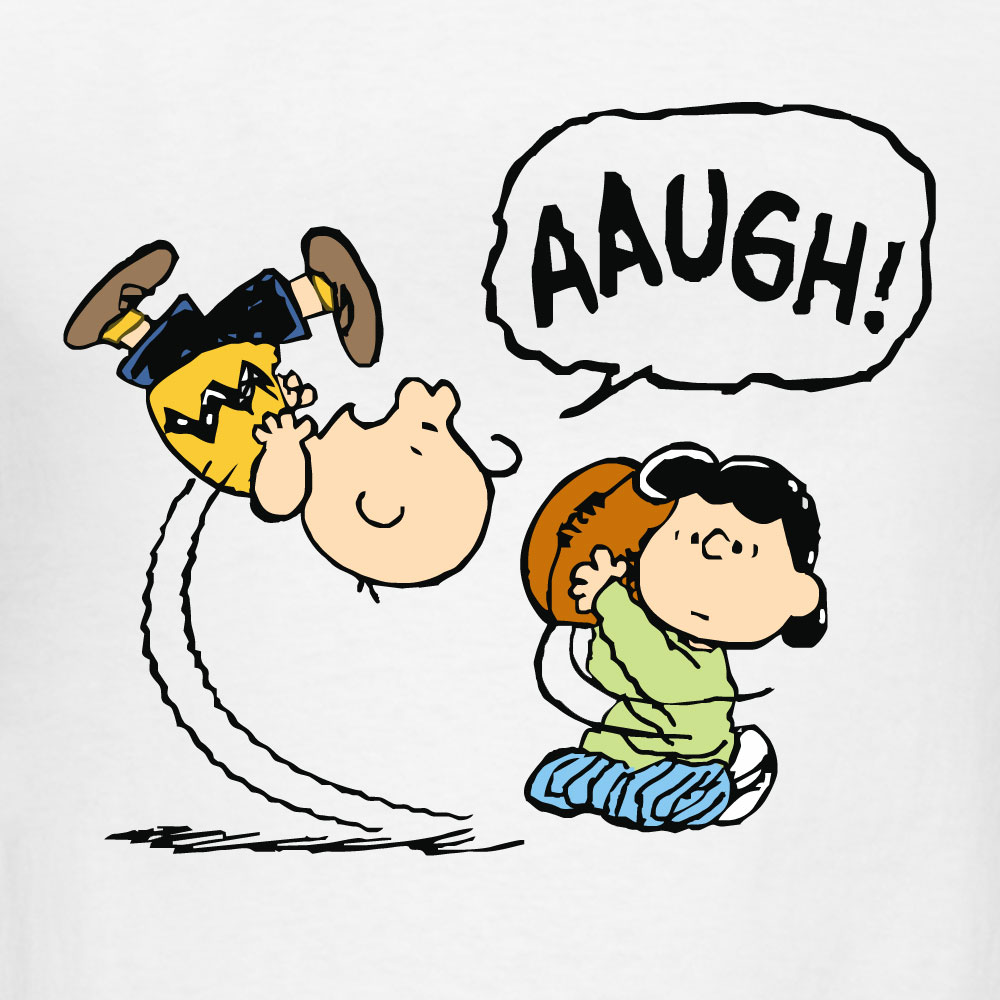
Texas Ranger ace Yu Darvish, in addition to being the only Japanese-Iranian major league baseball player and an Abbot and Costello routine come to life (“Who won the game?” “Yu did!” “Who did? “Not Who, Yu!”  “Me?” “Not you…Yu!” ), is apparently something of a trickster. In Saturday’s crucial game between the Rangers and the Oakland A’s, Darvish was facing A’s slugger Josh Donaldson, who had earlier in the season accused Darvish, a true flame-thrower, of being afraid to throw him his fastball. Darvish took up the challenge and as he prepared to throw his pitch to the Oakland thirdbaseman, shouted, “Fastball!” This, in the tine-honored traditions of the game, means that a pitcher is telling a batter that he can’t hit his best pitch, even when he knows what’s coming. It means, literally, “OK, hot shot, see if you can hit this, ’cause I’m throwing it right past you!”

Then Darvish threw Donaldson a curve.

The ruse didn’t work, for Donaldson got a hit. Still, Oakland’s dugout erupted, as the A’s expressed their belief that this was “bush league,” meaning an act consisting of unprofessional and unsporting conduct not specifically prohibited by the rules but nonetheless unfair and not worthy of big league players. Continue reading

“Mild Pedophilia” and Richard Dawkins’ Ethical Blind Spot

"Bobby, do you thinkthere's anything wrong with mild pedophilia?"

“Bobby, do you think there’s anything wrong with mild pedophilia?”

When you are a public intellectual and your primary mission is using reason and scholarship to enlighten the public, you have an obligation to guard scrupulously against making careless,  irresponsible or easily misunderstood statements that will be accepted as inspired wisdom by the less analytically able. Or to be more direct, if you are Richard Dawkins and because of some serious neural malfunction you really think that there is such a thing as “mild pedophilia,” you want to ever to be taken seriously again, shut up about it.

Dawkins, for reasons only known to himself, used a wide-ranging  interview to airily wax on about what he regards as his contact with a harmless child-molester.  Reminiscing about his  days at a boarding school,  he recounted how one of his schoolmasters “pulled me on his knee and put his hand inside my shorts.” Noting that other children in his school peer group had been molested by the same teacher, he concluded: “I don’t think he did any of us lasting harm.”
The world’s most famous atheist explained, “I am very conscious that you can’t condemn people of an earlier era by the standards of ours. Just as we don’t look back at the 18th and 19th centuries and condemn people for racism in the same way as we would condemn a modern person for racism, I look back a few decades to my childhood and see things like caning, like mild pedophilia, and can’t find it in me to condemn it by the same standards as I or anyone would today.”

What (in the name of Holy Hell) is “mild pedophilia”? Dawkins went on to say that the most notorious cases of pedophilia involve rape and even murder and should not be bracketed with what he called “just mild touching up.”

“Mild pedophilia”?Just mild touching up’? This from one of the most respected minds in the cosmos? Continue reading