Reader John Owens supplies perspective and expertise on carnivals and local fairs in his Comment of the Day regarding the post “Ethics Quiz: The Peculiar Ethics of Carnival Games.” Here it is: Continue reading
culture
Hypocrites of the Year: The NCAA

Emmert: “Never again will the NCAA be blamed for the results of the culture we encourage and support. We hope.” (Or words to that effect.)
What’s wrong with the NCAA’s epic sanctions against Penn State in the wake of the Jerry Sandusky pederasty scandal? I’ve been thinking about this for a couple of days, and I’ve concluded that the answer is “Just about everything.”
Most of the focus of the media and pundits have been on the “punishing the innocent” complaint. As a general rule, I detest aversion to punishing the innocent as a justification for inadequately punishing the guilty or otherwise avoiding necessary steps to address problems; it’s a rationalization for encouraging unethical, exploitive, illegal and even deadly conduct. This toxic rationale has caused incalculable harm across the globe; it currently abets illegal immigration, out-of-wedlock childbearing, and the international crimes of dictators. The United States, within our lifetimes, may drive itself into financial collapse by adopting the theory that it is unfair and unethical to “punish” the expectant beneficiaries of entitlements that the nation can no longer afford by reducing benefits, or by taxing wealthy citizens who opposed the profligate spending in the first place. As Ethics Bob writes in his post about the Penn State sanctions,
“Accountability for wrongdoing often brings down the innocent along with the guilty. Think about the workers at Enron, Arthur Anderson, or MCI-Worldcom, who lost their jobs when their bosses’ malfeasance destroyed their companies… there is no way of punishing the guilty without harming people close to, or dependent on them. Even a mass murderer–when he is sent away his mother suffers along with him. When Al Qaeda militants are killed, their family members often die with them.”
Bob isn’t making an invalid “everybody does it,” argument, but a practical, “that’s the way the world works” argument. If we believe in accountability, we have to accept the fact that the innocent will often be collateral damage. It isn’t fair, but this is utilitarianism at its most persuasive. Allowing wrongdoers to prosper is ethically worse.
If the NCAA sanctions against Penn State were otherwise appropriate, I wouldn’t have a problem with the collateral damage. They aren’t appropriate, however. The sanctions are unethical. Continue reading
Justice for the Nicholas Brothers [Corrected (1/27/25)]
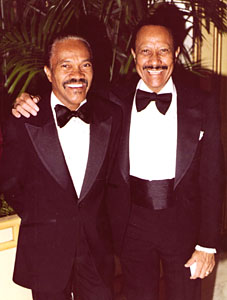
At the Sun Valley Lodge, there is a television station devoted to playing the 1941 film “Sun Valley Serenade” on a loop. It is a genuinely awful movie, starring John Payne of “Miracle on 34th Street” fame, Norwegian ice skater Sonia Henie, and Milton Berle, although it does show the famous ski resort in the days when guests used to be towed around the slopes on their skis by horses. Last time I was in Sun Valley to give a presentation, I watched about half the film in disconnected bites, since I never can sleep on such trips. This time I finally saw the whole thing. At about 3 AM, as Glenn Miller was leading his band in the longest version of “Chattanooga Choo-Choo” in history, Fayard and Harold Nicholas suddenly flipped onto the screen, and Sun Valley Serenade briefly went from fatuous to immortal.
If your reflex response to that last sentence was “WHO??“, you are part of the reason for this post, and also in the vast and deprived majority of Americans. As I went among my future audience of lawyers and their spouses yesterday morning, happily informing them that the terrible movie playing around the clock in their rooms included the dance team called “the unforgettable Nicholas Brothers” in more than one tribute, I learned that none of them had any idea what I was talking about, and many of these individuals were old enough to have been able to see Fayard and Harold in a theater. The Nicholas Brothers were, you see, the greatest tap-dancers who ever lived, and the most amazing dance team that ever will be. Continue reading
The University of Montana, Campus Rape, and the Penn State Disease
 The Justice Department is investigating this issue, so I am hardly going to get to the bottom of it in a blog post. But there is obviously a rape and sexual assault problem at the University of Montana, and to conclude that the administration is a large part of the problem doesn’t take much of investigation. This certainly appears to be a school suffering from the Penn State disease, in which the values of the institution place public relations, spin and, once again, football above the welfare of past, present and future victims.
Let us just begin with this salient fact: and President Royce Engstrom still has his job. In February, a student who was a Saudi national was accused in two campus incidents, one involving a rape, and another involving sexual assault. Records show that the first action taken by the administration, in the person of now-retired UM Dean of Students Charles Couture, was to alert the accused, advise him, and suggest that he get out of Dodge before he could be arrested—which he did, fleeing to Saudi Arabia. The police didn’t learn about the complaints for a week, and by then the alleged student rapist was long gone. Then Engstrom had the jaw-dropping gall to tell the press that this was a good thing, and that his staff had acted in a “timely” and “appropriate” fashion. “We can let people know we have dealt with these (alleged assaults) and that particular perpetrator is gone,” Engstrom said.
In a word, unbelievable. Continue reading
“Walking While Female”: What’s The Matter With Men, Anyway?
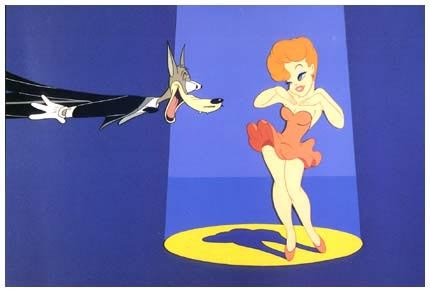 I just finished reading some of the posts on a Washington, D.C. site called Collective Action for Safe Spaces, and found myself simultaneously amazed, shocked, repulsed and depressed. Based on the posts from female victims of random acts in broad daylight raging from harassment to sexual assault, the unethical male treatment of women like prime grade beef on the hoof is far, far more common than I assumed, and raises a genuine question about what kind of values our culture teaches its men.
What would ever lead a man to decide that it was acceptable to pinch a woman’s derriere in a crowd? Or a cyclist to shove his hand up a woman’s skirt as he zipped by? Or a photographer to aim his zoom lens camera at multiple women’s busts in public? Apparently this conduct is so commonplace that many, even most, women don’t bother to report it, reasoning that the police have better things to do.
You know what? They don’t. Either the police have to enforce a woman’s right to enjoy life and appear in public without being sexually molested, or we need to pass laws the allow anti-harassment enforcement by women and the men, if there are any, who possess a sense of decency and are willing to act decisively to stop the predators—and by that I mean breaking their faces. I cannot imagine anything more important than maintaining the cultural standard that harassing women, touching them without permission and making unwanted and unasked for sexual remarks to them is not merely rude and boorish, but a violation of basic human rights.
If this nation is really raising a bumper crop of men who think otherwise, and we seem to be, it is time for women and men alike to be vigorously non-partisan in rejecting and shunning writers, public figures, entertainers and next door neighbors who make it obvious in their speech and conduct that they believe women exist on earth for their denigration and pleasure. To pick the obvious example, Bill Maher has repeatedly referred to women on his HBO show “Real Time” as cunts, twats, bitches, and other misogynist terms. What message does is send that he keeps getting nominated for a Emmy? Why have Dan Rather, Charles M. Blow, Paul Begala, Andrew Sullivan, Catherine Crier, Michael Steele, and Eliot Spitzer—wait, scratch Eliot; I know the answer in his case—-appeared on Maher’s show, licked his boots, and endorsed his sick frat boy attitudes toward women and giving spiritual nourishment to our rising young rapists?
We have no ethical standards unless we are willing to stand up for them, enforce them, and refuse to tolerate anything less. It is dangerous to “walk while female” because both men and women do tolerate such despicable, primitive, joy obliterating conduct.
_____________________________________________
Facts: Collective Action
Source:Washington Post
Graphic: Parterre
Ethics Alarms attempts to give proper attribution and credit to all sources of facts, analysis and other assistance that go into its blog posts. If you are aware of one I missed, or believe your own work was used in any way without proper attribution, please contact me, Jack Marshall, at jamproethics@verizon.net.
Banning the Privacy Bomb

Yes, I think posting this photo is a lousy thing to do to your dog, too.
The stories come out routinely, and the opposing opinions are predictable. A boorish date dumps a woman via arrogant e-mail, which is promptly forwarded to thousands, making him a national laughing stock and pariah. A movie star sends an angry and mean-spirited message to his teenage daughter, who places it in the hands of the celebrity-devouring media…which then use it to savage the star’s reputation. A Harvard law student takes an e-mail sent by a friend and fellow-student as a follow-up to a contentious discussion about race, and forwards it to minority advocates on campus, who then condemn the “friend” as a racist. A model live-tweets her encounter with the married actor sitting next to her on a flight, as he engages in awkward flirtation. In each case, defenders of the punitive distributor of the embarrassing communication argue that the victim deserved it, while critics of the conduct insist that it is a betrayal of privacy and trust.
We need to decide, as a culture, whether we believe that reasonable expectations of privacy should be respected or not; indeed, whether they should survive or not. Those who endorse, defend and encourage the kind of conduct in these incidents and many more are, whether they realize it or not, fouling the nest of our national culture and community, making not just privacy, but also friendship and intimacy, almost impossible. Continue reading
When Your Genius Is A Dunce: The Depressing Self-Outing of Rays’ Manager Joe Madden
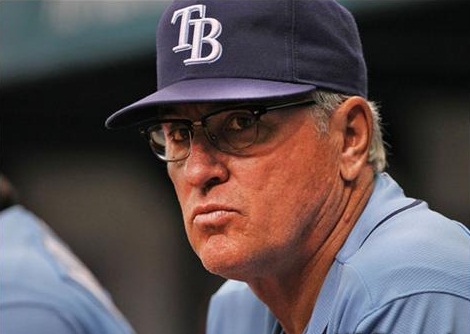
I trusted you, Joe. You broke my heart..
Organizations and institutions tell us a lot about themselves by the individuals they hold up as exemplary. To cite an example much on my mind these days, the conservative blogosphere’s canonization of the late Andrew Breitbart, master of the intentional half-truth, makes me dubious about its reliability and integrity. On the other side of the spectrum, the fact that so many Democrats, and especially Democratic women, worship Bill Clinton reflects horribly on their values and tolerance for hypocrisy. Now, in the wake of Roger Clemens’ well-deserved acquittal for denying under oath acts that he almost certainly did, we have strong confirmation that a prominent individual Major League Baseball holds up as exemplifying, in the immortal and irritatingly pretentious words of “Terence Mann” about that corn field in Iowa, “all that once was good and it could be again”* is in truth an Ethics Dunce, and a big one at that. His name is Joe Madden, the American League’s 2011 Manager of the Year, and I am disappointed and depressed. (Yes, I have named Joe an Ethics Hero in the past.) Continue reading
The Importance of American Culture

Pericles delivering his famous funeral oration
By necessity, Ethics Alarms often ventures into the realm of culture, because ethics defines a culture as surely as culture determines ethical standards. This, unfortunately, make politics unavoidable as well, because politics are the means by which laws, primary tools of culture as well as the products of it, get made.
In The New Criterion, Roger Kimball has written a thoughtful essay about the current stakes in America as our culture evolves. He discusses politics and Pericles, and makes his own orientation (classic conservative) clear, and proudly clear at that. It is also an essay with great relevance to ethics. I recommend it highly. Here are some excerpts. The link to the whole article is at the end. Continue reading
How To Make A Wanetta Gibson
Reader Fred Davison sent me this video of two teenage girls being interviewed by a Florida TV reporter regarding their theft of a 9 year-old Girl Scout’s proceeds from the sale of cookies. If it went viral in 2009, I missed it; if it didn’t, it should have. And although the crime is old news, it is an enduring warning, and a current cause for alarm:
Those who wonder how a young girl like Wanetta Gibson could have casually fingered an innocent boy with who she had been necking in a school corridor and sent him to jail for rape can get some of their answers from the two frightening creatures shown in the video. They have no comprehension of right and wrong. Their parents obviously couldn’t imbue them with any values, and their teachers, if they mentioned ethics at all, did it so fleetingly, ineptly or incoherently that it made no impression at all. They obviously have never been influenced by any church, religion or moral code. They lack empathy, respect for others, regard for fairness or justice, and most of all, shame. Continue reading
The Right Kind of No-Tolerance Policy: Will Obama Get A Halo For Prison Rape Reform?
If backing gay marriage earns a rainbow halo, stopping prison rape at least warrants this….
The Justice Department just announced the first comprehensive federal rules aimed at “zero tolerance” for sexual assaults against inmates in prisons, jails and other houses of detention. The new policy has teeth in it, decreeing that states that don’t take adequate measures to prevent sexual assault on prisoners will lose federal prison funds. This initiative was disgracefully long in coming, but begins the repair of the human rights atrocity going on in the nation’s prisons literally since the first cell door clanged shut. It is the right kind of “no-tolerance” policy, because allowing prisoners to rape other prisoners—it is estimated that at least 10% of all inmates experience sexual assault—-should never have been tolerated. That it has also been used by law enforcement and popular culture to enhance the deterrent power of imprisonment, essentially making rape a culturally and governmentally sanctioned element of the penal system, should weigh heavily on the national conscience for years to come. It was un-American, as vile a desecration of the principles of our country as torture. Continue reading
 Ethics Alarms