[As promised, here is the Ethics Alarms Christmas package, lightly revised, last posted three years ago]
I don’t know what perverted instinct it is that has persuaded colleges and schools to make their campuses a Christmas-free experience. Nor can I get into the scrimy and misguided minds of people like Roselle Park New Jersey Councilwoman Charlene Storey, who resigned over the city council’s decision to call its Christmas tree lighting a Christmas Tree Lighting, pouting that this wasn’t “inclusive,” or the CNN goon who dictated the bizarre policy that the Christmas Party shot up by the husband-wife Muslim terrorists had to be called a “Holiday Party.” Christmas, as the cultural tradition it evolved to be, is about inclusion, and if someone feels excluded, they are excluding themselves. Is it the name that is so forbidding? Well, too bad. That’s its name, not “holiday.” Arbor Day is a holiday. Christmas is a state of mind. [The Ethics Alarms Christmas posts are here.]
Many years ago, I lost a friend over a workplace dispute on this topic, when a colleague and fellow executive at a large Washington association threw a fit of indignation over the designation of the headquarters party as a Christmas party, and the gift exchange (yes, it was stupid) as “Christmas Elves.” Marcia was Jewish, and a militant unionist, pro-abortion, feminist, all-liberal all-the-time activist of considerable power and passion. She cowed our pusillanimous, spineless executive to re-name the party a “holiday party” and the gift giving “Holiday Pixies,” whatever the hell they are.
I told Marcia straight out that she was wrong, and that people like her were harming the culture. Christmas practiced in the workplace, streets, schools and the rest is a cultural holiday of immense value to everyone open enough to experience it, and I told her to read “A Christmas Carol” again. Dickens got it, Scrooge got it, and there was no reason that the time of year culturally assigned by tradition to re-establish our best instincts of love, kindness, gratitude, empathy, charity and generosity should be attacked, shunned or avoided as any kind of religious indoctrination or “government endorsement of religion.” Jews, Muslims, atheists and Mayans who take part in a secular Christmas and all of its traditions—including the Christmas carols and the Christian traditions of the star, the manger and the rest, lose nothing, and gain a great deal.
Christmas is supposed to bring everyone in a society together after the conflicts of the past years have pulled them apart. What could possibly be objectionable to that? What could be more important than that, especially in these especially divisive times? How could it possibly be responsible, sensible or ethical to try to sabotage such a benign, healing, joyful tradition and weaken it in our culture, when we need it most?
I liked and respected Marcia, but I deplore the negative and corrosive effect people like her have had on Christmas, and as a result, the strength of American community. I told her so too, and that was the end of that friendship. Killing America’s strong embrace of Christmas is a terrible, damaging, self-destructive activity, but it is well underway. I wrote about how the process was advancing here, and re-reading what I wrote, I can only see the phenomenon deepening, and hardening like Scrooge’s pre-ghost heart. Then I said… Continue reading →
I detest memes, but like all other rules, there are exceptions. Sometimes, only a meme will do.
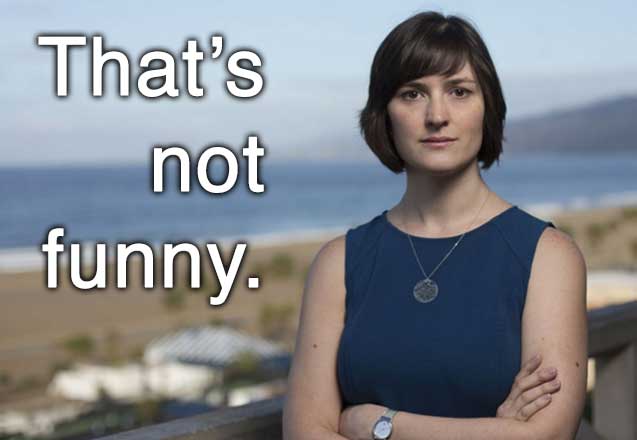
Of the many warpings and distortions of a healthy culture we have seen emanating from the ideologically extreme, one of the more insidious is the antagonism towards humor. This episode speaks for itself.
Fisayo Eniolorunda, the club’s event organizer, wrote in an email, “Attached is a short behavioural agreement form that we will ask for you to sign on the day to avoid problems.”
Problems like actually being funny, apparently.
The “behavioral agreement” states,
“This comedy night… aims to provide a safe space for everyone to share and listen to Comedy. This contract has been written to ensure an environment where joy, love, and acceptance are reciprocated by all. By signing this contract, you are agreeing to our no tolerance policy with regards to racism, sexism, classism, ageism, ableism, homophobia, biphobia, transphobia, xenophobia, Islamophobia or anti-religion or anti-atheism. All topics must be presented in a way that is respectful and kind. It does not mean that these topics can not be discussed. But, it must be done in a respectful and non-abusive way.”
Respectful of whom and not abusive in what way? Oh, never mind. The agreement is a joke itself. What does “love and acceptance” have to do with humor? Does Fisayo Eniolorunda know what “Comedy” is? Of course comedy doesn’t have to be cruel or mean, but then an audience that would lay out such rigid standards can’t be trusted to judge what cruel, mean, respectful, non-abusive, safe—lordy, especially “safe”–or funny is. These are subjective standards being judged by people who are so besotted with ideological mania, virtue-signaling addiction and political correctness that they can’t be trusted. Continue reading →
Once again I am posting the Ethics Alarms Ethics Guide to Frank Capra’s 1946 masterpiece “It’s A Wonderful Life,” perhaps the greatest ethics movies of all time, as this blog’s official welcome to the holiday season. The film is commonly thought of as a Christmas movie, but it really is a Thanksgiving story. Unfortunately, the movie is so well known, so much imitated, so familiar in its tropes and cliches that we really don’t think about it very hard. We should.
The movie is exactly the kind of important shared cultural touch-point that I am advocating when I emphasize the importance of cultural literacy to our nation’s connective tissue. The film teaches about values, family, sacrifice and human failings unlike any other: its power and uniqueness disproves the assertion, made in one online debate here this year, that new cultural creations inevitably and effectively supersede older ones. No, they really don’t, and like copies of copies, eventually the cultural values conveyed get fainter and less influential. “It’s A Wonderful Life” would be an excellent basis for a middle school ethics course. I haven’t seen a better, richer film for that purpose come along since, and I’ve been looking.
I am also constantly amazed at how many people haven’t seen the movie. My son’s girlfriend admitted that she hadn’t at dinner today. A few months ago I gave a DVD to a pharmacist at our local CVS after I made a reference to the film and he had no idea what I was talking about. He said he would wait until the holidays to watch it with his family. I hope he does: he left the job soon after. There are some classic movies that parents have an obligation to make sure their children see. This is one. Despite the many ethics complexities and nuances that the film glosses over or distorts, its basic, core message is crucial to all human beings, and needs to be hammered into our skulls at regular intervals, far more often than once a year.
What I wrote about this message in an earlier posting of this opus still seems right to me:
Everyone’s life does touch many others, and everyone has played a part in the chaotic ordering of random occurrences for good. Think about the children who have been born because you somehow were involved in the chain of events that linked their parents. And if you can’t think of something in your life that has a positive impact on someone–although there has to have been one, and probably many—then do something now. It doesn’t take much; sometimes a smile and a kind word is enough. Remembering the lessons of “It’s a Wonderful Life” really can make life more wonderful, and not just for you.
I wondered about posting the guide again this year, as this feels like a year in which Ethics Alarms lost old readers rather than gained new ones. Then I read it again, and it reminded me of some important things I had forgotten, and I wrote it. I also, as is my yearly habit, edited and added to the commentary a bit. I’m smarter this year than I was last year, and I bet you are too…especially if you’ve been reading Ethics Alarms, just from figuring out how I’m wrong.
I hope you all had a terrific Thanksgiving, and that the holiday season is joyous for all.
And here we go:
1. “If It’s About Ethics, God Must Be Involved”
The movie begins in heaven, represented by twinkling stars. There is no way around this, as divine intervention is at the core of the fantasy. Heaven and angels were big in Hollywood in the Forties. The framing of the tale seems to advance the anti-ethical idea, central to many religions, that good behavior on earth will be rewarded in the hereafter, bolstering the theory that without God and eternal rewards, doing good is pointless.
Yet in the end, it is an ethics movie, not a religious one. George lives a (mostly) ethical life, not out of any religious conviction, but because step by step, crisis after crisis, he chooses to place the welfare of others, especially his community and family, above his own needs and desires. No reward is promised to him, and he momentarily forgets why we act ethically, until he is reminded. Living ethically is its own reward.
We are introduced to George Bailey, who, we are told, is in trouble and has prayed for help. One has to wonder about people like George, who resort to prayer as a last resort, but they don’t seem to hold it against him in Heaven. The heavenly authorities assign an Angel 2nd Class, Clarence Oddbody, to handle the case..He is, we learn later, something of a second rate angel as well as a 2nd Class one, so it is interesting that whether or not George is in fact saved will be entrusted to less than Heaven’s best. Some lack of commitment, there— perhaps because George has not been “a praying man.” This will teach him—sub-par service! Good luck, George!
2. Extra Credit for Moral Luck
George’s first ethical act is saving his brother, Harry, from drowning, an early exhibition of courage, caring and sacrifice. The sacrifice part is that the childhood episode costs George the hearing in one ear. He doesn’t really deserve extra credit for this, as it was not a conscious trade of his hearing for Harry’s young life, but he gets it anyway, just as soldiers who are wounded in battle receive more admiration and accolades than those who are not. Yet this is only moral luck. A wounded hero is no more heroic than a unwounded one, and may be less competent as well as less lucky. (This is not an observation that one should make in public, as President Trump learned when he made a lifetime enemy of John McCain.)
3. The Confusing Drug Store Incident.
George Bailey’s next ethical act is when he saves the life of another child by not delivering a bottle of pills that had been inadvertently poisoned by his boss, the druggist, Mr. Gower, who is addled by grief and drink after learning about the death of his own son. George’s act is nothing to get too excited over, really—if George had knowingly delivered poisoned pills, he would have been more guilty than the druggist, who was only careless. What do we call someone who intentionally delivers poison that he knows will be mistaken for medication? A murderer, that’s what. We’re supposed to admire George for not committing murder.
Mr. Gower, at worst, would be guilty of negligent homicide. George saves him from that fate when he saves the child, but if he really wanted to show exemplary ethics, heshould have reported the incident to authorities. Mr. Gower is not a trustworthy pharmacist—he was also the beneficiary of moral luck. He poisoned a child’s pills through inattentiveness. If his customers knew that, would they keep getting their drugs from him? Should they? A professional whose errors are potentially deadly must not dare the fates by working when his or her faculties are impaired by illness, sleeplessness or, in Gower’s case, grief and alcohol.
One could take the position that Mr. Gower “just made one mistake.” But trustworthy professionals don’t get to make such mistakes, not and still be trusted the next time. Trust is easily destroyed, and should be.
Mr. Gower also slaps George on the head several times. Today hitting a child like that is regarded as child abuse by a parent; when another adult hits a child, it’s grounds for arrest. This is one of many examples of evolving societal ethics in “It’s A Wonderful Life.” When the film was made, Mr. Gower’s conduct in beating a child employee was considered forgivable. If the local pharmacist slapped my son, I’d swear out a criminal complaint, and he still might end up shambling bum like Mr. Gower in the film’s alternate reality section.
4. The Uncle Billy Problem.
As George grows up, we see that he is loyal and respectful to his father. That’s admirable. What is not admirable is that George’s father, who has fiduciary duties as the head of a Building and Loan, has placed his brother Billy in a position of responsibility. As we soon learn, Billy is a souse, a fool and an incompetent. This is a breach of fiscal and business ethics by the elder Bailey as well a classic conflict of interest, both of which George engages in as well, to his eventual sorrow.
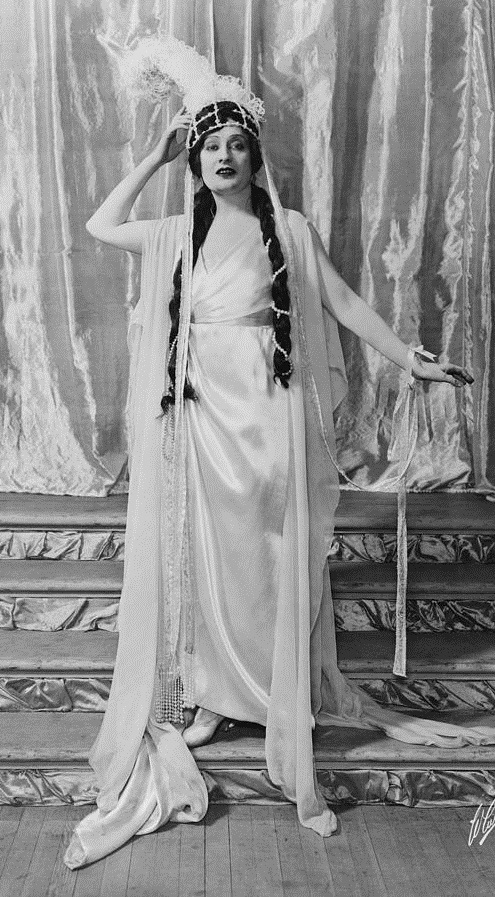
I learned about Nora Bayes (1880-1928) while mounting a production of a “lost” musical, George S. Kauffman’s Hollywood satire “Hollywood Pinafore,” which was essentially a parody of Gilbert & Sullivan’s classic, “H.M.S. Pinafore.” Nora was mentioned in a laugh line in the script, so the 1941 show assumed that the audience knew who she was. I had never heard of her, so I did some research. She was a fascinating character, and a huge vaudeville and Broadway singing and comedy star, household name huge. “Over There” was one of her biggest hits; another was “Shine on Harvest Moon,” which she wrote with her second husband (she ultimately had five), Jack Norwith. He also wrote “Take Me Out To The Ball Game,” another Bayes standard. According to one online biography, Bayes Bayes “provided some flamboyant, indeed extreme, examples of the broad social changes happening in the United States in the early twentieth century, namely the questioning of traditional roles for women as well as the challenges to male political and economic power that marked the women’s movement of the time.”
I almost wrote about her in April. As regular readers here know, I believe it is the our duty to honor the memories, accomplishments and cultural influence of past figures in American history, because the more we remember, the more we learn, and the wiser and more ethical we are. Somehow Nora Bayes, famous as she one was, had been in an unmarked grave for 90 years. On April 21, a group of Nora Bayes enthusiasts placed a granite headstone over her plot. The New York Times told the strange tale here.
Now I think of Nora Bayes every time I hear “Over There,” “Shine on Harvest Moon,” and “Take Me Out To The Ball Game.” Maybe you will too.
1. Truth in labeling. Major League Baseball has sent a team to Japan to play a series of exhibition games against a Japanese All-Star team, reviving a long-time tradition that had been suspended for several years. As you may know, the U.S. was critical in introducing baseball to Japan, and sent several major stars there to help get the sport established. Playing in Japan is mostly a lark for the American players, but the games are taken very seriously by the Japanese. In the first two games, the MLB All-Stars have lost, greatly pleasing the locals.
I don’t begrudge the Japanese fans their David and Goliath fantasies, but calling the U.S. team “All-Stars” is misrepresentation. For example, one of the pitchers who got clobbered in the last game, a 9-6 contest that began with the Japanese team jumping out to a 9-0 lead, was a Red Sox pitcher named Brian Johnson. I like Johnson, a crafty swing-man who had some good moments last season, but he’s a lifetime 6-6 pitcher who was left off the Red Sox post-season roster, and will have to battle to stay in the majors next season. I know you can’t sell tickets if the U.S. team is called the “All the players we could talk into coming to Japan Team,” but that’s what it is.
2. Tit for Tat may be funny, but it’s not ethical. Representative Dan Crenshaw, the veteran who was mocked last week on Saturday Night Live for his disfiguring war wound, appeared on the show last night to mock the appearance of his tormenter, Pete Davidson. Crenshaw was unusually poised for a pol on a comedy show, and the bit successfully got Davidson and SNL, which had been widely criticized for its nasty routine, off the hook. Clever. Successful. Funny. Still wrong, however. This represents an endorsement of Donald Trump ethics, as well as the endlessly repeated rationalization for the non-stop ad hominem attacks the President has inflicted on him daily by the news media and others. The President famously—infamously around here—has always said that if you attack him, he’ll attack you back harder. His haters argue, in turn, that their tactics are justified by his. This is how the culture got in the escalating spiral to Hell it is in. I don’t blame Crenshaw: if he hadn’t accepted the invitation to get funny revenge on Davidson, he would have looks like a petty jerk. Nonetheless, he has now officially become part of the problem, not just a victim of it.
3. Stop making me defend President Trump Dept. You see, I am kicked around on Facebook for not just falling meekly into line and declaring that everything Donald Trump does is an outrage and proof that he should be impeached. I tell you, it’s tempting. The mass bullying campaign to herd everyone into the undemocratic effort to overthrow an elected President using relentless criticism and flagrant double standards has been effective in stifling others, and it also serves as a kind of mass cultural hypnosis. I don’t like defending Trump. He is doing serious damage to his office, as are his unhinged foes, who are apparently willing to destroy the nation, democracy, and the Constitution to “save” it from him. But I will not be intimidated out of pointing out the revolting pettiness, hypocrisy and unfairness of his critics. Two examples surfaced yesterday. Continue reading →
I almost added the above scene from the Monty Python troupe’s masterpiece “The Life of Brian” to the previous post. Has sensitivity to the demands and travails of the LGBT community rendered this satire offensive? Should it be considered offensive? If satire targeting people who demand that they have a right to do the impossible is offensive, is satire doomed in a woke world?
Following in the tradition of this recent post, with the intent of clarifying the political correctness rules so I know what I am defying, Ethics Alarms presents the following poll based on the video clip above:
“How old would you be if you didn’t know how old you was?” said Leroy “Satchel” Paige, the greatest Negro Leagues pitcher of them all, and —who knows?—maybe the greatest pitcher of all time, in any league. Imagine: Paige wasn’t allowed to play against white players in the Major Leagues until 1948 when he was over 40, and he still was hard to hit. Satch is a great symbol for the ageless and those of us in denial: he pitched in his last Major League game in his 60’s, throwing three scoreless innings against the Boston Red Sox. Paige’s whimsical idea that age is just a state of mind has now been carried to its illogical conclusion by Dutch citizen Emile Ratelband, a “positivity trainer” who calls himself a “young god,” and who has asked a local court to legally change his birthday from March 11, 1949 to March 11,1969, the BBC reports.
Heck, why not? If someone with a Y chromosome and all of their original external organs can say they “identify” as a female and use the ladies room, join the Girl Scouts, and have the protection and support of the law and the woke, why not declare age simply a matter of attitude and mind over matter? It’s just the next frontier in the politically correct realm of reality denial, and I would say, and I know Satchel Paige would say, if how someone feels is sufficient to legitimize that defiance of concrete reality, treating age as similarly flexible is more than reasonable. Just a stroke of a pen by a judge, and poof! You’re as young as you feel. Continue reading →
I’m headed to Boston this afternoon for one of my semi-monthly ethics seminars for new Mass. bar admittees. I have been having bad luck with keeping up on the blog while traveling of late, so I’m going to post a two-part Warm-Up to try to avoid falling too far behind.
1. Maureen Dowd made my head explode with her ridiculous profile of Gary Hart—you know, Donna Rice, “Monkey Business”—so I’m going to rely heavily on Ann Althouse’s analysis which parallels mine. Her head is just more resilient, apparently. [Tangent: I wonder how Ann’s traffic is doing? I have noticed that progressive commenters have virtually disappeared from her blog as well, where a couple of years ago they were equally represented. I don’t consider Althouse a conservative at all: she is relentlessly objective and non-partisan, and mostly serves as the web’s best bullshit detector. She has, however, defended the President against unfair attacks and hypocrisy, and called out the news media for fake news, fake headlines, and bias. That’s asking for a boycott, apparently.) Hart makes this statement:
“If all that stuff had not happened and if I had been elected, there would have been no gulf war. H.W. wouldn’t have been president. W. wouldn’t have been president. Everything would have changed. I don’t say that to aggrandize myself. It’s just, history changed. And that has haunted me for thirty years. I had only one talent and it wasn’t traditional politics — I could see farther ahead than anybody.”
I could write a long essay about this arrogant nonsense with my eyes closed. Ann had the same instant reaction I did: Funny, you weren’t able to foresee that daring reporters to check on your martial virtue would result in your being caught adultery-handed in Clintonesque trysts, you big dummy. (My words, not Ann’s.) And if hindsight is 20-20, hindsight aternate future readings are even better. Gary needs to study Chaos Theory a bit more closely, and watch that old Star Trek episode. For all he knows, his election would have resulted in the world being taken over by Mole People.
Althouse also flagged the Dowd section where the Queen of Snark writes,
“As we fantasize about a parallel universe, where America is not a joke and our president cares about other human beings, the same questions keep swirling in our heads. What has happened to this country? Can he be stopped? When will it end? How the hell did we get here?”
Wow, Talk about bias making you stupid. To many of us who are at least as smart as Maureen, America is a joke when it embraces open borders and edicts by international organizations, when it warps the Constitution by declaring that men and police can be guilty until proven innocent if a member of a favored group accuses them, and allows a partisan news media to control public opinion. It’s not a very funny joke, though. Some trenchant comments on Ann’s post:
“I don’t know why I’m still surprised by liberals’ inability to do any real soul-searching. You’d think by now, after many hundreds of “how did we get here, why aren’t smart people like me listened to by the stupids?” articles, I’d give up hope that they will ever open their eyes and see what’s right in front of them. But then I remember, I’m a pollyanna. I can’t give up on anybody.”
***
“It would seem obvious to me that Trump does care about human beings, but not the ones Dowd think he should be caring about. And maybe her friends consider America a joke, and maybe that’s why we got were we are..”
***
“Dowd’s perspective is Technocratic. Society needs to be supervised by an educated elite. Democracy is just mob rule that will lead to ruin. But, we have to put on a facade so that the deplorables will accept our edicts. So we do the election thing, but the real rules are set behind the scenes by career bureaucrats. Politicians and the medias’ job is to set the agenda and influence popular opinion towards the “correct” attitudes”
Over at Campus Reform, the conservative site dedicated to spotlighting left-wing bias on college campuses, reporter Grace Gottschling has been issuing some provocative, if not exactly surprising, reports on the partisan tilt of some schools’ administration and staff. There have been three so far. Most recently, she determined that 98.4 % of University of Missouri administrators and 97.6% of faculty donated to Democratic Party candidates or causes. Previously, her research covered the University of Oregon, where 100% of administrators, and 99.95% of faculty have donated to Democrats—she found that a grand total $35.17, .0005% of the political contributions of 201 faculty members, went to Republicans—and the University of Texas, where the numbers were 96.1% of administrators, and 93.5% of faculty supporting Democrats.
Gottschling doesn’t say it–her reports just lay out the facts—so I will. It is impossible, literally impossible, for students to receive a balanced, objective and responsible education in institutions with such unbalanced and ideologically uniform campus cultures as these. Culture’s power over human beings has been accurately described as resembling water’s relationship to a fish: it influences everything in the lives of the people in it, often with their never being aware that they are dependent on it and controlled by its limitations. You can choose your own analogies, but active indoctrination into political beliefs and partisan values is hardly necessary when uniform attitudes are all around students, displayed in subtle and not-so subtle ways, every day, all day, in class and out. Continue reading →
1. To get this out of the way..I watched every second of every inning on last night’s longest post-season baseball game in history, as any loyal, ethical baseball fan is obligated to do. It was worth it, too, even though my team lost. The game was the sports equivalent of The Odyssey, “War and Peace,” “King Lear,” “The Ring Cycle,” “The Ring Trilogy,” “Nicholas Nickleby” or “The Seven Samurai,” a complex morality and adventure tale that had suspense, disappointment, wonder, exhilaration , humor and tragedy, heroes and villains. Such games reward all of the time and suffering a fan puts into following baseball seriously. It is worth the investment.
It is a wonderful example of the incompetent variety of criticism I call “Wanting to change what you haven’t taken the time to understand.” I get it: the authors don’t like baseball, and barely pay attention to it., or, in the alternative, they are just seeking clicks. In any event, you can’t argue with people who say that the problem with opera is that it’s too often in a foreign language, or that the problem with hip hop is that it isn’t music, and shouldn’t, or that the problem with our democracy is that people can say things that upset other people. And you shouldn’t argue with them. They don’t respect the topic enough to be educated about it.
2. Of course, baseball games ARE too long, and the overwhelming reason is TV ads, which add about a half hour to every game, and more to post-season games. The disgusting response of Fox is to stick 10 second commercials into a split screen during the game, like between batters. Here’s a slugger walking to the plate in a tense situation, and half the screen is devoted to a quickie plug for “Ralph Breaks The Internet.” I hope fans are burning up social media attacking this greedy new form of broadcast pollution.
3. How is this possible? In a #MeToo Mad era when simply being accused of sexual assault without proof is deemed by even lawyers who should know better as sufficient justification to inflict serious and permanent consequences on the accused, Mike Tyson is the star of an animated TV show, is cast in movies, and is now shopping a TV show, based on the ex-boxer’s life as a marijuana grower and marketer, starring him and called “Rolling With the Punches.” Continue reading →
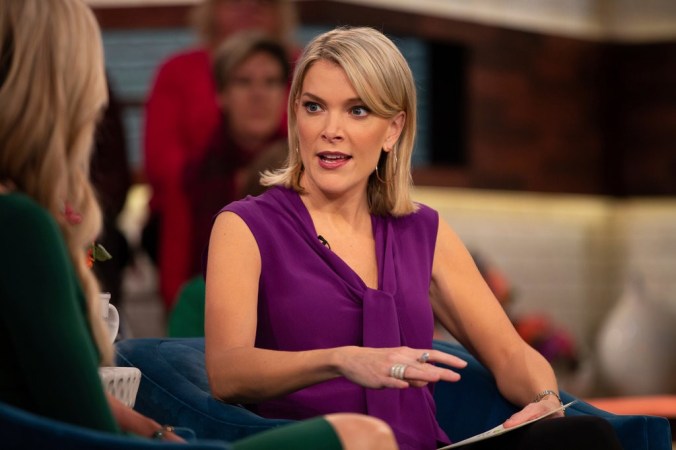
You know, one could make a strong argument that the misadventures of a richly compensated morning TV host is not worth thinking about, arguing about, or even paying attention to. The problem is that in trivial events vital enlightenment often reside. We ignore the Megyn Kelly mess at great risk. There are many ethics lessons there.
The Megyn Kelly fiasco started long before her self-immolation over the now-radioactive topic of Halloween costumes, but let’s begin there. In case you missed it (that is, you have a life), Kelly was using her special segment of the “Today Show” to moderate a round-table discussion of how, as she put it, “the costume police are cracking down” on Halloween costumes. The former Fox News host and Donald Trump irritant decided to emulate the President and blunder into a political correctness minefield.
“What is racist?” she mused. “You do get in trouble if you are a white person who puts on blackface on Halloween, or a black person who puts on whiteface for Halloween. Back when I was a kid, that was O.K., as long as you were dressing up as a character.” Then she talked about the travails of Luann de Lesseps, a member of the cast of the Bravo reality show “The Real Housewives of New York,” who was criticized for dressing up as Diana Ross, complete with skin-tone. Megyn found the criticism passing strange.
By the end of the week, Kelly had issued a tearful on-air apology and others on social media. She had been condemned by “Today” colleagues and NBC News chairman Andrew Lack, went even further at a midday staff meeting, saying,“There is no other way to put this, but I condemn those remarks.There is no place on our air or in this workplace for them.”


 Ethics Alarms