Fox News’ War on Women’s Hair

Did Walter Cronkite ever pose like this, Megyn?

I can’t stand this any more.

I just watched Fox news trot out five, count them, five comely, bleached blonde talking heads in a row. Some were radio hosts, were news readers, some were columnists, but none of them would have been out of place in a Maxim feature on “the Babes of Cable News,” or perhaps “The Stereotypical Babes of Cable News.” How demeaning and unfair to women, how warping for young women seeking careers in broadcast journalism, and how insulting to men!

The percentage of blondes on Fox defies random statistics, and when the rare brunette appears as a change of pace, it is clear that the Fox talent bookers just moved down from “head” to another part of the anatomy to compensate. I know that CNN Headline News has its pin-up morning gal Robin Meade, but the station’s parent at least employs Candy Crowley. I want to see female journalists, experts and commentators who are old, who are fat, who are homely; who are flat-chested, have crossed eyes or bad skin, and who are perceptive, professional and able. Fox’s cynical bias toward the young, shapely, blonde and beautiful is obnoxious, archaic, and offensive. Even its serious and talented women, like Megyn Kelly, have allowed themselves to be packaged as Playmates.

Enough. I don’t care how many pigs watch Fox. There’s no excuse for this.

__________________________________

Graphic: Gentlemen’s Quarterly

Ethics Alarms attempts to give proper attribution and credit to all sources of  facts, analysis and other assistance that go into its blog posts. If you are aware of one I missed, or believe your own work was used in any way without proper attribution, please contact me, Jack Marshall, at  jamproethics@verizon.net.
Unethical Ethics: How Business and Government Encourage Unethical Thinking In Their Ethics Training

Show us the way, O Wise and Ethical One!

Jack Abramoff, the corrupt lobbyist turned federal prisoner, then author and now ethics expert, will be giving a lecture on government and personal ethics at The University of Texas at Austin’s business school on May 2. This is not as unusual as it seems. My biggest competitors are felons and disbarred lawyers—they literally step right out of professional disgrace, and sometimes jail, into the lecture circuit. They are draws, and in a field like ethics, which is often prescribed as substitute for barbiturates, this is irresistible to professional development programmers and conference organizers. It also attracts the participants that most need real ethics training, but who seek what these fake ethics presenter usually have to offer:  real life-based advice on what you can’t get away with. This lesson has about as much to do with ethics as it does with Parcheesi, but unfortunately, that’s what is generally regarded as practical ethics.

Characters like Abramoff don’t have ethics alarms; they have survival alarms.  Business schools, politicians and the media still believe that aiming reforms at those alarms, in the form of tougher rules and enforcement, will make business and government more ethical. Think about it: the cultures will still be unethical; the people in them will be just as unethical, but because proven scofflaws and ethics corrupters like  Jack Abramoff will explain where they went wrong, all these people with dead ethics alarms, further deadened by absorbing  the wisdom of the most corrupt of a corrupt breed, will stop behaving unethically.

Good plan. Continue reading

Ethics Quote of the Day: The Editorial Board of the Washington Post

“Sadly, even before the sessions on health-care reform had ended, some liberals were preemptively trying to delegitimize a potential defeat at the court. If the justices strike down the individual mandate to purchase health insurance, they said, they will prove themselves partisan, activist and, essentially, intellectually corrupt. We share in the disappointment that the justices on both sides of their ideological divide are, for the most part, so predictable. That’s not, in the ideal world, how judging is supposed to work. But we also think there’s a kind of cynicism, or at least intellectual laziness, in asserting that this is an easy or obvious call — that no justice could possibly strike down the mandate out of honest, reasoned conviction.”

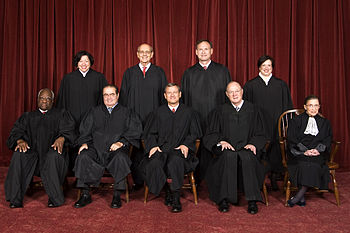
The Editors of the Washington Post in this morning’s superb, balanced and fair editorial entitled “Civics Lesson From

the Supreme Court.”  The Post leaves no question that it supports the individual mandate as necessary—at least now, after the fact of

"Biased political hacks!! The ones who disagree with us, that is..."

Obamacare’s passage into law—because “no American should go without health care, and that society as a whole should be willing to pitch in toward that end.”  But the editors also properly chastise the cynical and cowardly political calculations by the bill’s supporters that placed the constitutionally-dubious mandate in the position to jeopardize the whole law, as well as criticize the unethical phenomenon that Ethics Alarms discussed here-–the preemptive effort by Democrats and their pundit allies to blame the rejection of Obamacare, if it occurs, on “judicial activism” and political bias by the conservative justices. Continue reading

Greg Smith’s Urgent Ethics Alarm

“Today is my last day at Goldman Sachs. After almost 12 years at the firm — first as a summer intern while at Stanford, then in New York for 10 years, and now in London — I believe I have worked here long enough to understand the trajectory of its culture, its people and its identity. And I can honestly say that the environment now is as toxic and destructive as I have ever seen it”

This, says Greg Smith, is how the leadership of Goldman Sachs sees its clients.

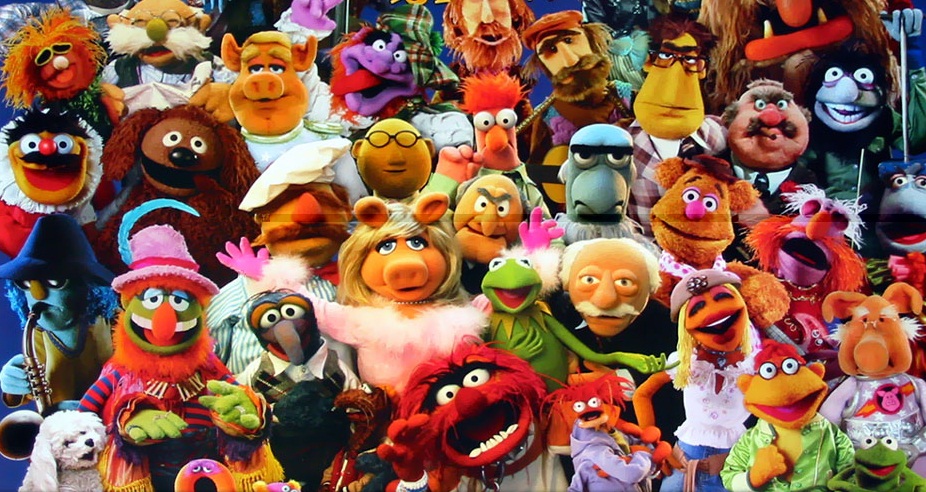
With that, Goldman Sach’s executive Greg Smith began his remarkable op-ed in the New York Times, sending his former employers into crisis mode, panicking investors, and setting the financial, political and journalistic worlds buzzing. Obviously, it was an exposé about ethics as much as anything else.  Smith described a corporation-wide breach of trust with clients, a culture in which leadership openly derided those the company pledged to serve as “muppets,” and apparently, sheep to be sheared:

“It makes me ill how callously people talk about ripping their clients off… I don’t know of any illegal behavior, but will people push the envelope and pitch lucrative and complicated products to clients even if they are not the simplest investments or the ones most directly aligned with the client’s goals? Absolutely. Every day, in fact.”

Smith cites a breakdown in leadership, resulting in a corruption of values: Continue reading

“The Good Wife” Ethics Addendum: Why Misrepresenting the Legal Profession’s Standards Does Real Harm

Sure, it was a comedy, but how many people believe that Jim Carrey's compulsively lying lawyer was not that far from the truth?

A comment from reader Penn on my post about “The Good Wife’s” recent misrepresentation of legal ethics standards got me thinking, and what it got me thinking was that I was too easy on the show.

Penn asked why I waste my time watching programs that raise my blood pressure, and there are two answers. The first is what I wrote back: it’s not a bad show; in the past it has been a very good one, even from the legal ethics perspective. I have used several scenarios from episodes in seminars.

The second answer, which I didn’t mention in my response to Penn, is the more important one, however. Good show or not, millions of Americans get their information about the legal profession from the portrayal of lawyers and law on TV and in movies. From these fictional sources, they think they know that most lawyers are liars, that they allow their clients to lie, that they put witnesses on the stand who they know will lie under oath. The public thinks that lawyers abuse the law, don’t earn their fees, don’t give a damn about their clients (unless they are sleeping with them), switch sides routinely and confuse juries to release serial killers on more victims. Continue reading

Unethical Quote of the Week: Roxanne Dunbar Ortiz

“Passionate, organized hatred is the element missing in all that we do to try to change the world. Now is the time to spread hate, hatred for the rich.”

—-Roxanne Dunbar Ortiz, a retired professor from Cal State East Bay, addressing a rally this weekend of the Occupy Oakland  group, which fought police in a pitched battle that ended with 400 arrests.

I said that the Occupy movement would end badly, and it is, not that it should have taken advanced psi-powers to divine that a protest based on ignorance, envy and anarchy with no practical and constructive proposals to offer would eventually end in violence, anger and ugliness. Hate is what it has come down to now, and the party and supporters of the President who came to office promising hope are now pinning their hopes on a sad movement fueled by hate. To say that the protests are also unethical is to flog the obvious. They have cost communities millions of dollars that will be made up in cut services; they have soiled parks and public places, they have provided a meeting place for thugs, vagrants, criminals, and worse ( an Occupier was arrested over the weekend for strangling his parents), and they have embodied a cultural rejection of personal responsibility.

Not to mention an escape from reality.“The fact that everyone now talks about the 99 percent, the 1 percent – that shows Occupy’s won,”  Carter Lavin, 23, of Oakland told the press. “The debate was about debt, not jobs. Now it’s about jobs.”

Sure, Carter. Continue reading

Now THAT’s Hypocrisy! OWS Protester Tracy Postert, Hypocrite of the Year

Tracy Postert, before and after. Integrity is not a job requirement on Wall Street.

Out of work Ph.D Tracy Postert spent 15 days at Zuccotti Park advocating revolution, condemning the corruption of Wall Street and decrying the moral bankruptcy of the capitalist system. Then she decided to hold up a sign advertising her degree and specialty while she was protesting the evil ways of the financial district. Wayne Kaufman, chief market analyst for John Thomas Financial Brokerage, saw her on the street, was intrigued by her background in biomedical science, and took her resume. Then he asked her if she’d like to come for an interview.

Kaufman offered her a job as a junior analyst evaluating medical companies as potential investments, and she accepted. Postert has now just completed her third week as paid employee of the system she was railing against on the street, studying for exams to be a certified financial analyst.

“I want to get a perfect score,” she told the New York Post. She gets a perfect hypocrisy score already. Imagine Martin Luther King agreeing to accept  a special membership in all-white country club, or taking a lucrative job as Sen. Strom Thurmond’s advisor on racial matters. Imagine Jane Fonda signing an Army contract to recruit soldiers for the Vietnam War. Wall Street and capitalism were the embodiment of evil and injustice for Postert, until she had a chance to move from the “99%” to the 1% whose values she had sneered at.

Is there anything wrong with working as a Wall Street analyst? Hell no—unless you have derided Wall Street analysts as the scum of the earth before you had the chance to be one. I don’t assume that Tracy Postert is typical of all OWS protesters, but I am confident she is typical of many of them. Not principled, but angry. Not idealistic, but envious. Not serious, but cynical. In other words, hypocrites, just waiting for the opportunity to show it.

Here is the irony. The fact that Wall Street would make a job offer to someone as ethically inert as this intellectually dishonest and feckless class warrior shows that Occupy Wall Street is not entirely wrong about the dearth of ethical values in the business community

And the fact that an Occupy Wall Street protester would accept such an offer shows that Wall Street may be right about the protesters.

November 22, 1963—The Dawn of American Distrust

In November of 1963, the American public’s trust in its government stood at over 75%. The previous President had been a revered general who guided the Allied forces to victory over Japan and Germany. We were united against a sinister, common enemy, world Communism, led by a shoe-banging dictator who promised to bury us. The new President was a young, glamorous and inspiring man of wit and vision, whose signature policy initiatives embraced American exceptionalism and virtue—the Peace Corps, space exploration. Even in a city with more JFK foes than fans, the President and his wife drove through the streets of Dallas in an open limousine. And on a bright and beautiful fall day, two rifle shots blew John F. Kennedy’s brains out.

Today, 48 years later, public trust in the government is below 15%, an all-time low. Protesters are in dozens of American cities, challenging the foundations of American progress and success. Large numbers of the public believe that the U.S. Supreme Court assisted in a successful plot to steal a presidential election, and that a U.S. President planned the attacks on the World Trade Center and the Pentagon in 2001; that the CIA invented AIDS to kill African-Americans; that Barack Obama’s presidency is illegal; and, of course, that there was a massive government cover-up of a conspiracy to assassinate Kennedy, a conspiracy that might well have involved his successor, Lyndon Johnson.

It is the lack of trust, more than any single factor, that feeds the ruinous hate and partisanship that has made American government impotent at the worst possible time, with crises intentional, domestic and spiritual surrounding us. Continue reading

My 15 Hollywood Cures For A Paterno-Penn State-Sandusky Hangover, Part 1

For this hangover, movies work better.

The past week, as much as any week within memory, has caused me to despair about the culture, the state of ethical values in America, and my own futile efforts to try to bring some light to the darkness. My mood was not only ravaged by the Penn State scandal (and Penn State’s students’ scandalous reaction to it), but also the continued drift and incompetence in our government and the lack of any apparent leadership or courage to address the problems of our economic system, other than to complain about them.

In such times—there have been others, though happily not many—my spirit urgently needs an infusion of inspiration and hope, and fast: as Al Pacino reminds us in “Scent of a Woman,” there is no prosthesis for an amputated spirit. This is when I turn to the movies that speak to me of courage, redemption, and ethical virtues validated. They are my lifeline; I can’t write or think about ethics from the bottom of a pit. I’ve got only a few days before Thanksgiving, after all. This is no time to be cynical and dubious about the course of humanity and the United States of America, a nation I love and admire.

Thus I am going to take a brief detour from the usual format of Ethics Alarms, with your leave and forgiveness, and share with you the fifteen movies that I will turn to as I try to recharge my enthusiasm, inspiration, and hope. Here are 1 though 7; the rest will be along shortly:

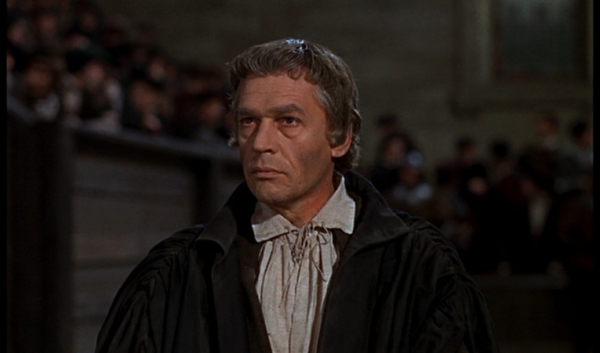
1. A Man For All Seasons (1966)

Hardly the most upbeat film to start the list, but probably the greatest ethics movie ever made.

Ethical issues highlighted: Integrity, honesty, courage, leadership, corruption, abuse of power.

Favorite quote: “Why Richard, it profits a man nothing to give his soul for the whole world… but for Wales?” [Sir Thomas More (Paul Scofield)] Continue reading

Ethics Dunce: Fox News

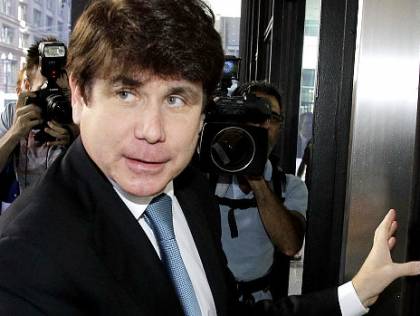
Hang on, Rod...that phone call is coming any minute now....

Apparently to remind us that it too, like CNN and MSNBC, applies cynical and insulting standards when deciding what its audience will regard as trustworthy commentary, Fox News has announced that it is hiring former South Carolina Governor Mark Sanford as a contributor during the 2012 election cycle. Sanford was forced to resign after he shamelessly used his office as a means to conduct a long-distance adulterous romance with his South American fire-cracker soul-mate, going AWOL while supposedly doing his state’s business and lying about it in the process. Is this as bad as what Eliot Spitzer, the disgraced New York governor whom CNN deemed an appropriate hire as a the star of one of its prime time programs, did to end his political career? No. Is it still irresponsible?

Oh yes: Continue reading