Update On “The Worst Aunt Ever” Debate

Auntie Maim and Nephew Maimer...

Auntie Maim and Nephew Maimer…

Remember the Ethics Alarms post about the favorite aunt who sued her 12-year old nephew for damages based on her injury when he jumped into her arms at his birthday party when he was 8? Remember the indignant plaintiffs lawyer who couldn’t get his mind around the fact that normal people don’t (ande shouldn’t) always see right and wrong like lawyers do, or that “it’s done all the time” (that is, The Golden Rationalization, #1 on the Rationalizations list, “Everybody does it”) and “there are worse lawsuits” ( or the worst of all rationalizations, #22, “Comparative Virtue” or “Its not the worst thing”) are not sufficient ethical defenses of a woman who voluntarily traumatizes a child who trusts her and who just lost his mother?

The Weekly Standard looks at the episode from some different angles, and writer Charlotte Allen does an excellent job providing a balanced analysis of the case (which I am now using in my ethics seminars to explain to lawyers how legal ethics alone is often not enough to make lawyers ethical). I am awash with regret that I didn’t think of the gag  “Auntie Maim” in the original post, which admittedly went a bit overboard in its condemnation as it was. Mostly, however, I am gratified that I was quoted in the piece after a well-handled interview with Charlotte, and indeed that she used my perspective to sum up the significance of the episode.

You can read it all here.

Ethics Musings I : The Dark Side Of Personal Injury Lawyers

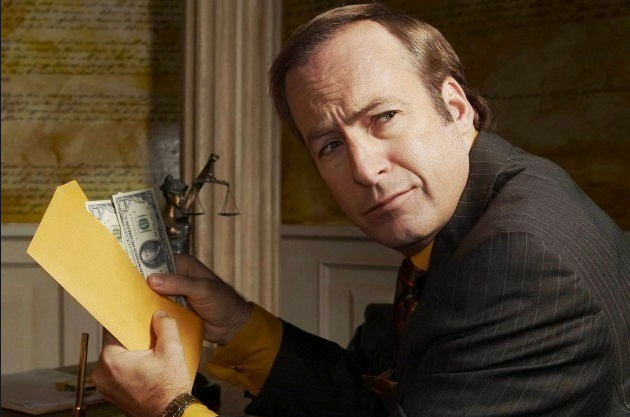
better-call-saul

I’ve been reflecting, since yesterday, on the bizarrely angry and intellectually dishonest protests registered here and on his own blog by trial lawyer Eric Turkewitz regarding the aunt who sued her 12-year-old nephew. His arguments, if you can call them that, consisted of constantly shifting the issue from ethics (what the aunt should have done) to law (what the aunt had a legal right to do), denying the core problem (Why would anyone assume that a child is harmed by dragging him into court, subjecting him to examination in front of strangers, and focusing on him as a wrongdoer and responsible for his aunt’s alleges misery, all mandated by the aunt who supposedly loves him?), and appealing to a dizzying list of rationalization and fallacies. He then made his exit by accusing me, a lawyer, of “knowing nothing about the law” (I made no assertions about the law at all—this is not a legal issue) making everyone stupid, and being a narcissist, a full-bore ad hominem attack ending in an ominous “May God have mercy on your soul!” Why would he act like that?

The reason, I realize, is that my posts challenge the basic belief system of the plaintiff’s bar, which I know very, very well having worked in an executive position and run such diverse programs as the research data base, conventions, sections, litigation groups and more over seven years with the Association of Trial Lawyers of America. Now ATLA is called “The American Association for Justice,” a name chosen purposefully to disguise the fact that it is a plaintiff’s lawyer’s lobby by keeping “trial lawyers” out of the name because it had a negative response in marketing studies. (I kid you not.)

Trial lawyers have done a lot of good and important things and continue to, but the profession is corrupting. There is a lot of money to be made, and ATLA–excuse me, AAJ, is devoted to eliminating any limits on their members’ ability to sue anyone for any amount, no matter what harm it does to the economy, the nation, the cost of health care, the bonds of trust in society, personal liberty, or public respect for the civil justice system. Individually, members of AAJ are among the top donors to the Democratic Party, in part to make sure that they can block all Republican efforts to limit jury awards, spurious lawsuits, and damages that have to be paid by negligent corporations when they destroy lives through shoddy products, conspiracies, and other conduct. The other reason is that Democrats support the redistribution of wealth, and trial lawyers profit by it.

In the matter of keeping corporations accountable, the AAJ is, as they will constantly remind us, on the side of the angels. But like other interest groups (the NRA, the ACLU, NOW, and may more) that stake out  extreme, self-serving and unethical positions in defense of legitimate rights, trial lawyers often feel that they must take the position that every injury and misfortune deserves compensation by someone else. Eventually, they believe it. Justice is taken out of the equation for all but the plaintiffs bar’s clients. Justice means that someone else is always at fault. Continue reading

My Reply To Eric Turkewitz’s Criticism Regarding “The Worst Aunt Ever”

This guy would have given The Bad Aunt the right advice...

This guy would have given The Bad Aunt the right advice…

Eric Turkewitz is a New York trial attorney, by all accounts a terrific lawyer, by the evidence of his writing an ethical and astute one, in our brief encounters a very nice guy, and the proprietor of “The New York Personal Injury Law Blog.” In a recent post, he defends the decision of Jennifer Connell to sue her young nephew for a four-year old injury she received when he hugged her too enthusiastically at her birthday party. He notes, correctly, that the decision to sue was based on the client accepting a “bad call” by her lawyer. He also includes a lot of information not mentioned in the early posts on the matter, including mine. Still, he defends Connell. He also specifically criticizes my post. Eric writes,

And this is from Jack Marshall, who says he actually teaches ethics and has a blog called Ethics Alarms (coded “no follow“):

“What’s going on is that Aunt Jennifer is pure hellspawn, a mysteriously animated pile of human excrement that embodies the worst of humanity.”

This is what happens when people elect to post stuff on the web based on an initial news report that was, shall we say, very selective on what it chose to report. This site is getting quite a bit of traffic, most likely from many who never knew it existed. So let me answer a question some of you may have: Yes, I know what it’s like to be on the receiving end of lawsuits, and they weren’t nearly as benign as this run-of-the-mill kind: On Suing and Being Sued.

Yes, I “actually teach ethics,” and I could, in fact, teach Eric some things that he would find useful and enlightening. I’m not going to get in a pissing match with him, in part because, as I learned from another tiff four years ago (in which I was wrong, and duly apologized), he has some very, very nasty pals, and I don’t want to throw blood in the water. This is, however, an excellent example of how lawyers often end up seeing the world, and in fact I may use his post, unattributed, in seminars to show where legal ethics and ethics diverge. It is wise for lawyers to be atuned to both.

Here was the response I made to Eric on his blog: Continue reading

The Worst Aunt Ever

(L) Auntie Jenn in her "Loving Aunt" disguise, and (R), my best guess at what she looks like without it...

(L) Auntie Jenn in her “Loving Aunt” disguise, and (R), my best guess at what she looks like without it…

[ WARNING: This story may make your head explode. I’m not sure why mine didn’t; it may because there’s nothing left to blow.]

Jennifer Connell, a 54-year-old human resources manager in Manhattan, is suing her 12-year old nephew, Sean Tarala, in Connecticut for $127,000 in damages for an accident that occurred at his 8th birthday party.

On March 18, 2011, Connell arrived at the Tarala home  to attend Sean’s birthday party. She was greeted with the sight of the excited kid riding his major gift, a red bicycle, around the the yard.  When he spotted Aunt Jennifer, he jumped off his new bike and ran toward her, shouting, “Auntie Jen! Auntie Jen!”

Connell testified that “all of a sudden he was there in the air, I had to catch him and we tumbled onto the ground. I remember him shouting, ‘Auntie Jen I love you,’ and there he was flying at me.” Connell said she her wrist was hurt, but she didn’t mention it because “It was his birthday party and I didn’t want to upset him.” Now, however, though he has always been “very loving, sensitive,” toward her, Connell believes he should be held accountable for her injury. Continue reading

Ethics Quiz: The Conundrum Of The Wrong Color Baby

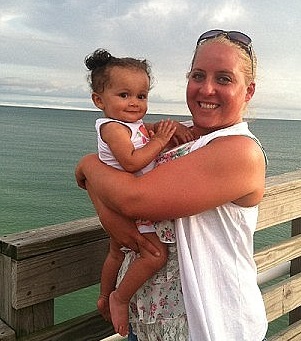
mixed race child

[ I wrote about this case last fall, before the decision in the case. This Ethics Quiz is a follow up. No fair cheating by going back and reading the older post until you have your answer]

Jennifer Cramblett, one half of a white same-sex couple that wanted a child, went to Midwest Sperm Bank and chose adeposit from donor No. 380. The sperm bank made that ol’ “8 looks like 3” mistake, so instead of the white donor the couple wanted, they were given sperm from donor No. 330, a black man. Cramblett filed suit against the sperm bank in 2014 for damages because she gave birth to a mixed-race daughter, and that was not what she paid for.

The sperm bank apologized but refunded only part of the cost to Cramblett and her partner Amanda Zinkon, and denied that damages were warranted.  Cramblett’s suit alleged that the mistake caused her and her family stress, pain, suffering and medical expenses, and that she feared that her daughter, Payton, now 3, would grow up feeling like an “outcast.” Attorneys for the sperm bank argued that “wrongful birth” suits should only apply to cases where a child is born with a birth defect that was predictable. In this case, the girl, Payton, is normal and healthy. Being black, of course, is not a defect.

The judge threw out the case, but headlines have been misleading. The original suit—why, I don’t know—failed to allege negligence, which I would think would be a slam dunk. The suit can and presumably will be refiled with a negligence claim, and that’s res ipsa loquitur.  (If a black child is born to a white couple, someone goofed somewhere.) There will be damages, but the question is how much and on what basis.

Your Ethics Alarms Ethics Quiz of the Day is this:

Would it be ethical for a court to hold that having a child that is the “wrong” color is a hardship, injury, or misfortune worthy of damages?

Continue reading

The Next Time You See One Of Those Opera Commercials About Selling Structured Settlements, Think About “Rose”

Rose

Because I worked as the general counsel for the late Richard Halpern, a kind and brilliant man, I know a lot about structured settlement, and also about the slimy businesses that conspire to destroy them. Richard’s company, The Halpern Group, worked with trial lawyers to develop structured settlements for successful plaintiffs who had won long-term damages for catastrophic injuries due to medical negligence, product liability or other torts. Most of these clients were poor, and if their millions in damages, designed to help them survive the rest of their lives, were awarded in lump sums, the result would almost always be catastrophic. These were poor people, for the most part, with poor families and poor friends and neighbors, none of whom had any experience or success managing money.  Drop millions on someone who has never had luxuries of any kind, and a spending spree as well and handouts to needy or greedy friends and acquaintances were sure to follow. For their own protection (or the protection of minors needing lifetime medical care), these plaintiffs of Rich’s lawyer clients were advised to forgo a big lump sum in favor of an annuity which would pay out regular amounts over time.

The plaintiffs own the income stream, but not the annuity itself. With assured income developed according to projected needs, the plaintiffs and their families could be assured of security and relative comfort and well-being—relative, because damages can seldom make up for broken bodies, minds and lives. Let me take over for myself here, from a post I wrote on this topic almost exactly six years ago.

Once they are on their own, however, the compensated victims are targeted by viatical settlement companies, both those with cute opera-singing commercials and those without. They undermine the sound advice of the attorneys with slogans like “It’s your money!” and try to persuade the former plaintiffs to unstructure the structured settlement by selling the annuity’s income stream to the viatical settlement company at a deep discount. Result: the annuity company gets the regular income at bargain rates, and the victims get a new, smaller lump sum to dissipate in exchange. The statistics say that the customer of the viatical settlement company will run out of cash long before he or she runs out of the need for it. But for the company, it’s a sweet deal.

It’s also despicable. The viatical settlement industry like to use lottery winnings, which are usually paid out in annuities like structured settlements, to justify their business. Lottery winning are windfall funds; while the same dissipation  hold for those lump sums (most multi-million dollar lottery winners have no money left after five years), the winners are usually no worse of after the money has been blown than they were before their number came up. When the money is a settlement for an injury, however, losing it is calamity. I would consider a viatical settlement company that only bought the income stream from lottery annuities ethical. There is no such company, however. The victims with structured settlements are a much larger and more lucrative market.

I have written about these legal but unethical businesses more than once. The first time, on The Ethics Scoreboard, I described a viatical settlement company only by using quotes from its own website, and explained what it meant, accurately. The company’s lawyers demanded that I take down the post, claiming that I had disparaged them (by using their own words and making it clear how they made their money.) I was in no position, with a family, a struggling business and aging parents, to engage in a legal battle of principle (though I suspected the company was bluffing, and I didn’t know Ken White and Marc Randazza then, both courageous blogging lawyers who assist bloggers who are threatened, like I was being threatened, to silence them. I took down the post. Continue reading

The Strange And Unethical Case Of The Aging, Ageless, Part-Time Actress

Cheer up, Junie! Remember the sage words of the great Satchel Paige: “How old would you be, if you didn’t know how old you was?”

Cheer up, Junie! Remember the sage words of the great Satchel Paige: “How old would you be, if you didn’t know how old you was?”

In October of 2011, Ethics Alarms offered an Ethics Quiz that asked, “Did the Internet Movie Data Base do anything unethical by publishing the actress’s real age without her permission?” The occasion was a lawsuit asking for over a million dollars in damages by an anonymous film actress who claimed that Amazon’s Internet Movie Data Base harmed her career by researching and publishing her real age without her permission. My conclusion at the time was that Actress X was

“shooting at the wrong villain. If there is age discrimination in Hollywood, confront it: a number shouldn’t disqualify her from any roles at all. I am not saying that fighting such a long-standing tradition in the show business culture isn’t a daunting task, but that’s the real problem, not a web service that conveys information about movies and movie stars by publishing facts.”

Well, it’s almost four years later, this dubious case has wound its way to trial, and we are now learning some fascinating things: Continue reading

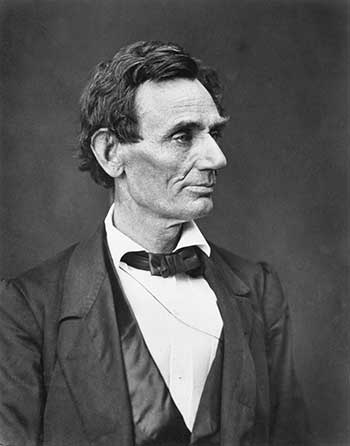
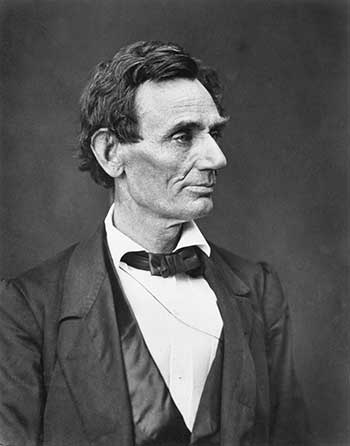
What’s The Ethical Response To Giving Birth To A Mixed-Race Child You Didn’t Bargain For? If Only Abe Lincoln Was The Lawyer…

What does Abe have to do with a sperm bank mix-up in 2014? Read on...

What does Abe have to do with a sperm bank mix-up in 2014? Read on…

I can certainly sympathize with the plight of Jennifer Cramblett, the birthing half of a loving, and white, same-sex couple who sought the assistance of a sperm bank to conceive a child, and who ended up giving birth to a mixed-race baby girl because of the kind of clerical error that sets up movie comedies starring Adam Sandler or Cedric the Entertainer. This is like what happened to Chevy Chase in “Vacation,” when he ordered one car and had a different one arrive at the dealer’s months later. Well, the car was a lot worse, because it was ugly, but it drove fine. Well, let me think about that: lots of babies, even babies sired the usual way by attractive parents without alien sperm, are ugly. This baby wasn’t ugly: Cramblett says she’s beautiful. Has all ten fingers and toes. No apparent deformities.

Hmmm.

Maybe this situation is more like the cherry red Nova that got delivered as my first car, when I had ordered something else. I got a discount for going ahead and taking the Nova, and never regretted it: best, most reliable car I ever had, and I had it in the days when I was still having fun in cars.

Come to think of it, what’s Cramblett so upset about? She has a healthy, lovely child and a stable family. OK, that sperm bank owes her a refund, and maybe some “I’m sorry you got the wrong color” money. But would I not only sue the sperm bank for the lifetime of pain it had supposedly subjected me to by causing me to have a mixed race child, but also use the law suit to garner media fame? Of course not. There is no way to simultaneously claim that having a mixed-race daughter is a hardship worthy of substantial damages, and to argue that the race of her daughter doesn’t matter, because she is unconditionally loved.

The couple’s lawsuit against the sperm bank screams “Hey! This could be a jackpot for us!”  The couple’s lawsuit explains that Jennifer Cramblett was raised to accept stereotypical beliefs about blacks. It says she is culturally unprepared to raise a mixed-race child. It argues that their community is, in effect, bigoted, and that—get this—it’s hard to get their daughter’s curly hair cut. In other words, it’s just hell having a mixed-race daughter, but they love her very much and would never trade her for anything in the world.* Got that? Continue reading

The Third Circuit Rejects Judicial Immunity In The Case Of An Unethical One Man Justice System

crazy-judgeAs I predicted at the time, many readers became upset at the spectacle of judges declaring other, clearly unethical judges immune from civil suit as a result of the judicial immunity doctrine. They will be cheered, then, by this unusual decision by the Third Circuit in a decidedly odd case out of New Jersey.

The Third U.S. Circuit Court of Appeals ruled that a civil rights suit could process against Municipal Judge Louis DiLeo of Linden, New Jersey, who was not reappointed to his post after the incident sparking the action. The lower court judge had denied DiLeo’s motions to dismiss on the grounds of absolute judicial immunity  the 3rd Circuit agreed, saying that the plaintiff had made  a plausible claim that DiLeo’s actions “went beyond legal error, such that he was no longer functioning in his judicial capacity,” the appeals court said in the its opinion . Continue reading

Unethical Quote Of The Week: Attorney Lee J. Danforth

“If this trial prevents one little girl or one mother or father from reporting suspected abuse then this is profoundly sad for our society.”

 —-Lee J. Danforth, attorney,making a lightly veiled argument that his clients should suffer no penalties for ruining a teacher’s career and reputation with a false accusation of “inappropriate touching,” because such penalties would discourage future legitimate accusations.

"Oh, you all were lying when you got John Proctor hung as a witch? Well, that's okay---we wouldn't want to punish you, because it might discourage a real victim, in case there really IS a witch one of these days...

“Oh, you all were lying when you got John Proctor hung as a witch? Well, that’s okay—we wouldn’t want to punish you, because it might discourage a real victim, in case there really IS a witch one of these days…

Mr. Danforth was defending a San Jose, California family in a defamation suit by a former Catholic school physical education teacher, John Fischler,  who claimed that they methodically destroyed his reputation with a campaign of rumors and lies, led by his main accuser, an 11-year-old girl right out of “The  Children’s Hour” or “The Crucible.” Danforth is a lawyer (Danforth was also the name of the judge in the Salem witch trials, speaking of “The Crucible” and false accusations) , and it is sometimes necessary, and thus ethical, for lawyers to make otherwise unethical arguments in the zealous representation of their despicable clients. Remember, legal ethics does not allow Danforth to temper his advocacy out of concern for future, genuine victims, unlike his clients. They are not his concern, and even bad people have a right to vigorous legal representation. Nonetheless, his statement embodies an unethical rationalization for letting diabolical and vicious false accusers escape the just consequences for their actions. Continue reading