Ethics Quiz Follow-Up (And An Ugly One): The Congressional Art Competition Winner’s Painting [UPDATED]

clay-painting-back

Well now we have a definitive answer to the Ethics Alarms Ethics Quiz that asked whether  it was responsible, fair, and ethical for Congressman Lacy Clay (D-Mo) to have the painting above displayed in the U.S. Capitol, and we don’t even have to use the ethics decision-making process I included in the post. (I note ruefully that readers were challenged to use the method to reach a conclusion, and none did.)

We don’t have to use it, because we now know some things we didn’t know at first, or at least I didn’t. Based on news reports when I first posted, I assumed that the work by high school senior David Pulphus was chosen by a designated committee, and that Clay was bound by the terms of the contest to hang the winning painting in the Capitol. That would have made the treatment of the obviously inflammatory artwork, which depicts the false Black Lives Matter narrative that Mike Brown was gunned down in Ferguson by a racist cop without cause, an ethics conflict, pitting the First Amendment and the obligation to fulfill  a commitment against the inclusion of racially divisive art in the Capitol, which is irresponsible.  Now we know, however, that Clay himself helped choose the painting, and that he did so despite the fact that the painting directly violated the rules of the contest, and thus was ineligible:

“While it is not the intent to censor any artwork, we do wish to avoid artwork that is  potentially inappropriate for display in this highly travelled area leading to the Capitol.Artwork must adhere to the policy of the House Office Building Commission. In accordance with this policy, exhibits depicting subjects of contemporary political controversy or a sensationalistic or gruesome nature are not allowed. It is necessary that all artwork be reviewed by the panel chaired by the Architect of the Capitol and any portion not in consonance with the Commission’s policy will be omitted from the exhibit. If an entrant is unsure  about whether a piece of artwork is acceptable, he or she should contact the staff of his or her  Member of  Congress; the congressional staff can speak with personnel who can determine whether the artwork would be accepted.”

The painting is beyond question  “depicting subjects of contemporary political controversy or a sensationalist or gruesome nature.” In allowing the painting to be entered, participating in selecting it, seeing that it was chosen as the winner, and hanging such an inflammatory work in the Capitol, Rep. Clay was… Continue reading
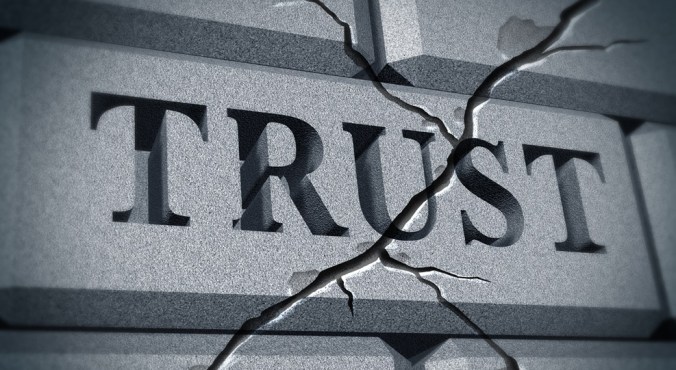
From The “Is The News Media Trying To Destroy Any Credibility It Has Left, Or Is It Just Too Biased And Stupid To Help Itself?” Files: The New York Times’ “Fact Check”

who-can-you-trustIn July 2016, Donald Trump said, in one of his more accurate public statements:

Homicides last year increased by 17% in America’s fifty largest cities. That’s the largest increase in 25 years. In our nation’s capital, killings have risen by 50 percent.

In July 2016, “Last year” meant 2015, as absolutely everyone understood. Homicides in D.C. did increase by 54 percent in 2015, from 105 in 2014 to 162. The statement was accurate.

Now, however, it’s 2017. This means that “last year” doesn’t mean 2015 any more, but 2016!  Figures on the year just completed show that homicides in D.C. fell in 2016 to 135. Thus the New York Times–you know, that flagship of trustworthy American journalism—through its reporter Emily Badger, decided to “fact-check” that statement by Trump from July, and found that he deceived us. Again. Badger wrote:

“Another end-of-year fact-check, while we’re at it: Mr. Trump claimed during the campaign that the homicide rate in his new home in Washington rose by 50 percent. In fact, it fell by 17 percent in 2016.”

There he goes again! Lying his head off! Citing fake statistics! But trust us, folks, we’ll be right there at the ready for the next four years, so he can’t get away with this constant deception!

Notice how the Times uses “claimed” to imply that Trump was making stuff up.  But he wasn’t making stuff up. The Times was making stuff up by “claiming” in this fact-check that Trump  misstated the facts, when he did not.  He wouldn’t have even been wrong, as Eugene Volokh points out, if he had been comparing 2016 to 2014, the year he was comparing 2015 to in July. The homicide rate in D.C. rose by  28 percent from 2014 to 2016.

‘Trump falsely stated that crime rose in Washington D.C.’ is a lie. It is fake news.

Writes the law professor, using far more restraint than I would (or will):

There’s a lot to be said for not focusing too much on year-to-year changes in homicide statistics, which can be volatile. Even a rise over two years doesn’t tell us that much, though it’s troubling. And we should indeed remember that homicides and other crimes have generally declined sharply from their 1991 peak (though of course we want to be watchful for any reversal of the trend). If the argument is simply in favor of caution about reading too much into yearly statistics, I’m all for that.

But the New York Times “fact-check…” suggests that Trump got his facts wrong (he “claimed” one thing but “in fact” it was something else), and I think it misleads readers into missing the fact that, even counting the 2016 decline, the homicide still rose sharply from the reference year Trump was using — 2014 — to the present.

Continue reading

From The “American Journalism Is Crumbling Before Our Eyes” Files: Unethical Quote Of The Month: CBS Radio]

“The viral video of a beating and knife attack in Chicago suggests the assault had racial overtones. CBS’s Dean Reynolds tells us the victim is described as a mentally-challenged teenager.

In the video he is choked and repeatedly called the n-word. His clothes are slashed and he is terrorized with a knife. His alleged captors repeatedly reference Donald Trump. Police are holding four people in connection with the attack.”

—–From the CBS Radio News report on the horrific crime streamed on Facebook, where four young blacks  tortured a mentally teen, forcing him to say “Fuck Trump” and “Fuck white people.”

Time to roll over, Ed. Again.

Time to roll over, Ed. Again.

Fake news. The intent of the report is obviously to make a listener believe that four whites attacked a black teen. Mediaite, in its piece about the deceitful report, calls it “technically correct.” Wrong. A technically correct work of journalism does not intentionally mislead its readers. A technically correct work of journalism does not suggest an incident has “racial  overtones” but omit the material information that the attackers were black and the victim was white, while suggesting that the opposite was true.

The story was intentionally, not accidentally, presented as another “pro-Trump” hate crime: the attackers “referenced Donald Trump,” CBS claimed, which is a long, long way from “forced their bound victim to say ‘Fuck Donald Trump,'” so far away that the difference cannot be plausibly be explained as benign. The news writers couldn’t find a way to spin “Fuck white people” so the story could be falsely reported as white on black violence, so they omitted it from the account altogether.

Now, this was CBS. CBS! The proud U.S news pioneer, home of Edward R. Murrow,  Eric Severeid, Robert Trout, William Shirer,Walter Cronkite, Dan R…okay, okay, let’s stick with Edward R. Murrow,  Eric Severeid, Robert Trout, William Shirer, and Walter. This wasn’t Fake News Tonight, or BLMN, the Black Lives Matter Network. This was CBS, a trusted name in broadcasting since 1927, and it deliberately allowed a false and misleading story to go out under its call letters to inflame anti-white racial tensions and distort the truth of what occurred.

It is a major journalism scandal, and one that should be followed by investigations, firings, a corporate apology, and reform.

Observe with me and see if it is.

Any bets?

Unethical Quote Of The Month: Michelle Obama; Runner-Up: Her Husband

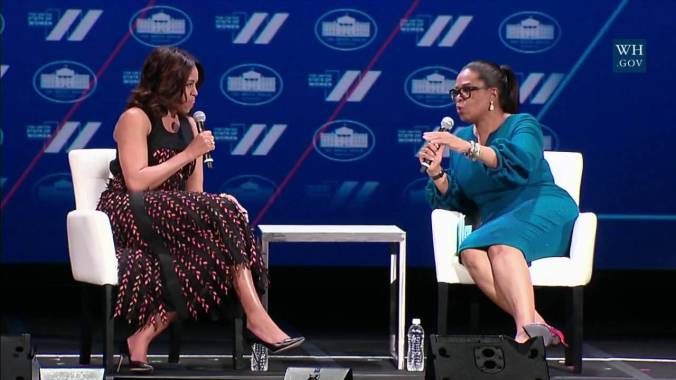
michelle-and-oprah

“We feel the difference now. See, now, we are feeling what not having hope feels like. Hope is necessary. It’s a necessary concept and Barack didn’t just talk about hope because he thought it was just a nice slogan to get votes. He and I and so many believe that — what else do you have if you don’t have hope,What do you give your kids if you can’t give them hope?”

First Lady Michelle Obama, in an interview with Oprah Winfrey broadcast last week.

I was going to ignore this unforgivable  statement, as there have been so many notable melt-downs from progressives and Democrats that if I commented on all of them it would be all freak-out, all the time on Ethics Alarms. However, the video really bothered me, and the timing of the remarks were so inappropriate—Let’s ask Syrians, who your husband decided to abandon in their desperation when he allowed his promise of a “red line” to  evaporate  as Assad turned his chemical weapons on them, how much hope they have, Mrs. Obama!—that I tried to think of any previous First Lady who so blatantly abused her role as a non-partisan symbol of stability and optimism for all Americans. There hasn’t been one. No First Lady, even the outspoken Barbara Bush or the activist Eleanor Roosevelt, has come close to declaring that hope was dead in America. It is especially irresponsible for a First Lady to talk like this as her husband leaves office. His predecessor was gracious, and the First Family owes its successor the same courtesy and respect. Continue reading

James Comey’s Ethical Conflict

twopaths2

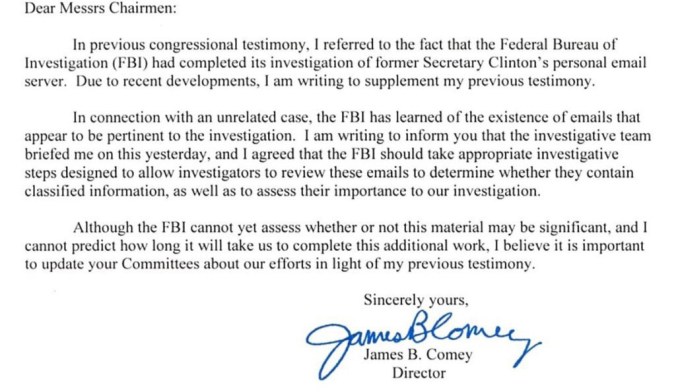
We now know that James Comey’s decision to inform Congress that the Clinton e-mail investigation had been re-opened (If I hear one more Clinton spinner  tells me that no case is ever “closed,” even one that is “completed,” I am going to run naked through the Safeway, screaming dirty limericks in pig latin. Be warned.) was “against Justice Department policy,” specifically the policy of “not acting in such a way as could influence an upcoming election.” Comey understood he was violating these guidelines, sources tell us,but felt he was obligated to do so because he had promised members of Congress he would inform them of any further developments related to Clinton’s email server misuse. Thus he sent a letter to F.B.I. employees after alerting Congress of the (possible) new evidence that necessitated re-opening the investigation. In the letter,  Comey acknowledged that his actions were unprecedented, but explained that…

I feel an obligation to do so given that I testified repeatedly in recent months that our investigation was completed. I also think it would be misleading to the American people were we not to supplement the record. At the same time, however, given that we don’t know the significance of this newly discovered collection of emails, I don’t want to create a misleading impression. In trying to strike that balance, in a brief letter and in the middle of an election season, there is significant risk of being misunderstood, but I wanted you to hear directly from me about it.

According to the Washington Post,  Comey was also concerned that the discovery of the emails would be leaked to the media after he briefed a team of investigators about them, causing the  F.B.I. to be accused of a coverup to benefit Clinton.

Some ethics conclusions:

1. Comey’s actions are consistent with an understanding of the Ethics Incompleteness Principle, which is often discussed on Ethics Alarms:

The human language is not sufficiently precise to define a rule that will work in every instance. There are always anomalies on the periphery of every normative system, no matter how sound or well articulated. If one responds to an anomaly by trying to amend the rule or system to accommodate it, the integrity of the rule or system is disturbed, and perhaps ruined. Yet if one stubbornly applies the rule or system without amendment to the anomaly anyway, one may reach an absurd conclusion or an unjust result. The Ethics Incompleteness Principle suggests that when a system or rule doesn’t seem to work well when applied to an unexpected or unusual situation, the wise response is to abandon the system or rule—in that one anomalous case only— and use  basic ethics principles and analysis to find the best solution. Then return to the system and rules as they were, without altering them to make the treatment of the anomalous situation “consistent.”

Assuming that the “policy” is a sensible and ethical one to begin with (though it isn’t), this was an anomalous case. The FBI, and Comey personally, were rightly under intense criticism for their handling of the investigation. Among other puzzling decisions, Clinton’s aides were given immunity for no apparent reason; Clinton’s interview was neither videoed nor under oath; and Cheryl Mills, who was directly involved in the private server fiasco, was allowed to serve as Clinton’s lawyer when she was questioned. The policy was designed to protect the Justice Department and its component from suspicions of bias and partisan complicity, and the inept handling of the investigation  had already created those suspicions. When such a policy appears likely to have the opposite effect that it was established for, the rational and ethical approach is to make an exception, which is what Comey did.

2. This was courageous. Continue reading

Comey’s Letter Ignites A Public Seminar On Spin And Disinformation

comey_letter_0_1477662300

From the New York Times (Note: the officially declared Trump  reviling/Clinton-favoring  Times is still a solid source on the matter of Hillary’s e-mails, because it broke the story about her private server in the first place.):

WASHINGTON — The presidential campaign was rocked on Friday after federal law enforcement officials said that emails pertinent to the closed investigation into Hillary Clinton’s private email server were discovered on a computer belonging to Anthony D. Weiner, the estranged husband of a top Clinton aide.

In a letter to Congress, the F.B.I. director, James B. Comey, said the emails had surfaced in an unrelated case, which law enforcement officials said was an F.B.I. investigation into illicit text messages from Mr. Weiner to a 15-year-old girl in North Carolina. Mr. Weiner, a former Democratic congressman from New York, is married to Huma Abedin, the top aide.

Mr. Comey’s letter said that the F.B.I. would review the emails to determine if they improperly contained classified information, which is tightly controlled by the government. Senior law enforcement officials said that it was unclear if any of the emails were from Mrs. Clinton’s private server. And while Mr. Comey said in his letter that the emails “appear to be pertinent,” the F.B.I. had not yet examined them.

That’s it, as of this morning. Anything else, at this point, is speculation or disinformation. However, this is undeniable: whatever was found on the computer was considered relevant enough to the question of whether Hillary Clinton knowingly violated federal law and endangered US security in her machinations to avoid FOIA scrutiny of her private dealings to mandate re-opening the investigation, which had been, as the Times notes, closed.

It seems fair to assume that this is all we will know until the election, which means that Hillary Clinton will face the verdict of voters while under FBI investigation. That isn’t good for her, but boy, does she (and the Democrats) deserve it. The Clinton way, as we learned from Whitewater and the other controversies during Bill’s administration, is that when one of their seamy deals provokes suspicion, the game plan is to deny, deny, stonewall, confuse, muddle the story, muddy the water, barely cooperate with authorities, count on the “friendly journalists” to assist, run out the clock, and wait for the public to become so frustrated and bored that the cry of “Let’s move on!” is effective. We have seen this time and time again, because it has worked. This time, her lies and delaying tactics backfired, and left the sword dangling over her head for all to see far too long. Now everyone will have to wonder if Clinton will be declared a felon while in the White House. I’d say that’s extremely unlikely, but you never know, especially with this bizarre election script.

What’s going on here?

What’s going on here is that James Comey played it by the book, and by book I mean the District of Columbia Rules of Professional Conduct governing the ethical conduct of all lawyers within its borders, including Comey.

Rule 3.3 in all jurisdictions (except California, but it has an equivalent rule) requires  lawyers to correct any material representations of fact or law that they have presented in a “Tribunal,” which is defined as an “ajudicative body,” usually a court. Congress and congressional committees are not adjudicative bodies for the purposes of 3,3. However, the most obscure and infrequently cited rule in all of legal ethics, Rule 3.9, says this:

Rule 3.9 Advocate in Non-adjudicative Proceedings

A lawyer representing a client before a legislative or administrative body in a nonadjudicative proceeding shall disclose that the appearance is in a representative capacity and shall conform to the provisions of Rules 3.3, 3.4(a) through (c), and 3.5.

I have met few lawyers in the government or out of it that have ever read this rule. I know for a fact that lawyers who testify before Congress almost never “disclose” that. However, lawyers—ethical ones, anyway—will correct misleading testimony as Rule 3.3, though 3.9, requires. That’s what Comey did.

It is disgraceful that the FBI’s investigation into a matter bearing on the fitness of a Presidential candidate was closed prematurely and that its recommendation to the Justice Department in the matter was based on incomplete evidence, resulting in the current uncertainty. Nonetheless, once new evidence was uncovered that agents felt could change the results of that investigation, the Bureau had no choice. It had to investigate, and Comey had to correct his testimony that the investigation of Clinton’s conduct was over. It’s not.

Now Democrats, partisan agents of the Clinton campaign and corrupted journalists are giving a spectacular public seminar on how they spin, and, if we pay attention, a demonstration of who is interested in truth and whose function in life is to mislead the public. Continue reading

The Unethical Self-Delusion Of Open-Borders Supporters

She was killed because an illegal immigrant didn't want her to report that he was illegal, but her death had nothing to do with illegal immigration., or the fact that her killer was able to kill her because he was here illegally.

She was killed because an illegal immigrant didn’t want her to report that he was illegal, but her death had nothing to do with illegal immigration or the fact that her murderer was able to kill her because he was here illegally.

The New York Times op-ed headline online is (at least until someone at the Times figures out how damning it is)…

“My Wife’s Killer Was Not an ‘Illegal Immigrant’”

Author Andy Ostroy‘s wife, actress Adrienne Shelley, was murdered by an illegal immigrant, and the fact that the Times thinks this headline is a responsible one speaks volumes to the increasing dishonesty from Democrats and the news media on the issue of illegal immigration.

Ostroy ties himself into logical and ethical pretzels while explaining his kindly open-mindedness over the murder of his wife by “a 19-year-old undocumented Ecuadorean construction worker” who feared she would report him and have him deported. Writes Ostroy:

“Given the anger and grief I still feel, I could easily be seduced by Donald J. Trump’s anti-immigrant rhetoric that is the cornerstone of his presidential run. “They’re bringing drugs. They’re bringing crime. They’re rapists,” he said as he began his campaign in 2015. And in these final weeks before the election, rather than tacking to the middle, he seems to be doubling down. “We’ve got some bad hombres,” he said in last week’s debate, referring to immigrants who commit crimes.”

First, Donald Trump’s rhetoric is anti-illegal immigrant rhetoric, not “anti-immigrant.” The intentional blurring of these two very different categories is a strategy of deceit. Any writer who engages in it has marked himself as untrustworthy, and any publication that does the same has also flagged itself as dishonest and biased.  The use of the intentionally vague term “undocumented” immigrant is similarly proof of unethical advocacy. The immigrants at issue are here illegally, hence they are illegal. If they had documentation that they were illegal, they would still be illegal, and if they had documentation that they were legal, that would be additionally illegal, since the documents would necessarily be false. Continue reading

The New York Times Proves Why Journalists Can’t Be Trusted To “Fact-Check” Since They Don’t Know What A Lie Is

jaccuse2

Ugh.

I finally grabbed a barf bag and read the New York Times attack piece from the weekend titled “A Week of Whoppers.” Silly me: Donald Trump lies so often that I simply took it on faith that the Times would have no trouble finding real and substantive lies to expose from The Donald. Instead, what I found were a few genuine lies of no great significance lumpod with statements that were obviously not meant literally, off-the-cuff remarks that any objective listener would assume were just generalizations, self-evident hyperbole, or opinion. None rose to the level of outright attempts to deceive on the magnitude of “I never sent or received classified material,” or “wiped? Like with a cloth?”

Needless to say, but I’ll still say it, none came within a Washington mile of lies like “I did not have sex with that woman,”  which is one Hillary Clinton attempted to facilitate. It is depressing that any reporter, editor or reader would find the analysis that all 31 of these alleged “lies by Trump were “lies” fair, rational or convincing. Alexander Burns and Maggie Haberman prove themselves to be partisan hacks with this weak piece of anti-Trump hype. The statements flagged here are so clearly the result of a concerted anti-Trump bias that editors must have assumed that few would actually read them, and just take the headline and sheer size of the feature as proof that the Times had legitimately proven massive dishonesty.

And it had: its own.

Here are all 31 alleged Trump “lies,” with the Ethics Alarms verdicts on each. Continue reading

Ethics Quiz: Ammon Bundy’s Cowboy Boots

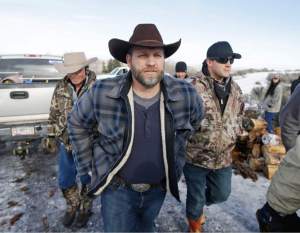
Ammon Bundy. Nice look...that last name is a problem, though.

Ammon Bundy. Nice look…the jury should like it. That last name might be a problem, though.

Jury selection is was about to begin last week  in the trial of Ammon Bundy (Son of Cliven, no relation to Ted) and his fellow defendants who led an armed stand-off on federal lands in Oregon.  First, however, the judge in the case had to rule on Bundy’s lawyer’s motion demanding that the defendants, who are in custody, can wear neckties, belts and boots at trial as requested.

The U.S. Marshal’s Service  emailed  Bundy and the rest to alert them that certain  items of apparel wouldn’t be permitted at their trial: “Ties, Bows, Belts, Handkerchiefs, Cuff Links, Steel toe boots/shoes, Shoe laces, Shirt tie down straps, Safety pins, Shirt pocket pen protectors.” When U.S. District Judge Anna J. Brown Tuesday afternoon asked Barbara Alfono, the deputy U.S marshal in charge of the Bundy trial, about the requirement, she explained that security concerns were the source of the order. Those accessories could be used as weapons against deputy marshals or the defendants themselves, she said. As for the boots, they would interfere with the shackles that are placed around the defendants ankles as they are transported to and from the courthouse. (The shackles will be removed, because prior courts have ruled that they are prejudicial, making defendants look dangerous to the jury.)

J. Morgan Philpot,  Ammon Bundy’s marvelously named lawyer, argued that since his client is innocent until proven guilty, he should be allowed to wear the civilian clothes that he chooses.  “These men are cowboys,” Philpot wrote  in his motion, “and given that the jury will be assessing their authenticity and credibility, they should be able to present themselves to the jury in that manner.” He continued:

“We must consider, when he does so, how will he look? And what are the spot assumptions and impressions will the jury have about him when they see him in the kind of white socks and loafers he was wearing today, with his beltless trousers, and dressed in a formal suit without a tie,Just as significantly, how will the lack of belt, tie, or other apparel compare to others in the courtroom, as he and the other detained defendants are the only ones who will appear that way.”

The judge ruled against him.

Your Ethics Alarms Ethics Quiz of the Day:

Is it ethical for the system to prevent accused cowboys from looking like cowboys during their trial?

Continue reading

How Can You Tell If Hillary Clinton Is Lying? Her Lips Are Moving…

Hillary Clinton

Non-partisan, irony-obsessed, law professor  blogger Ann Althouse noted this quote today, from Hillary’s almost completely ignored speech on “American exceptionalism”:

“If there’s one core belief that has guided and inspired me every step of the way, it is this: The United States is an exceptional nation.”

“Why does everything sound like a lie?” Althouse asks. Then, in the comments to her post site, she finds the answer from a commenter called Rob: because it is a lie. He wrote:

Hillary chose her words carefully: “if there’s one core belief that has guided and inspired me every step of the way . . . .” In fact, there is not one core belief that has guided her–unless you count ambition as a core belief.

Ann’s response: “Rob, are you a lawyer? Good catch!”

Yes, it turns out, Rob is a lawyer; he went to law school with Hillary, in fact. And it is a good catch, too, one that Hillary and Bill and all of the politicians who use deceit as a primary language count on most listeners NOT catching. Hillary never said that she believes or is guided by the belief that “the United States is an exceptional nation.” She only said that if she were guided by a core belief, that would be it, but said it in a way that most people will hear to mean that she does believe in American exceptionalism. It’s like me saying that if there was one mass murdering dictator that I admired, it would be Mao. But there are no mass murdering dictators that I admire in the least, and I don’t admire Mao.

I don’t especially care if a candidate believes in American exceptionalism or not. I do care that a candidate uses words and crafts sentences to deceive trusting listeners.

Somebody might inadvertently utter a sentence like Clinton’s without trying to deceive and mislead. Hillary, however, like her husband, long ago lost any right to the benefit of the doubt in this realm.

_____________________

Pointer: Ann Althouse