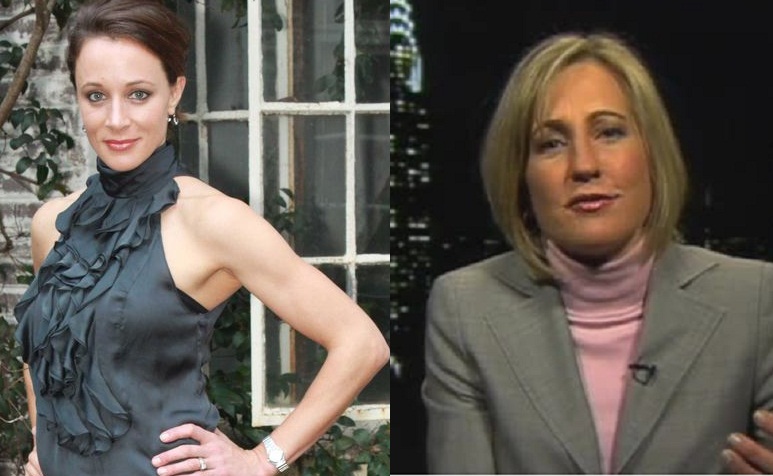
Paula Broadwell, Dee Dee Myers and The “Spokesperson” Deception

Paula or Dee Dee: Who do you trust?

Paula or Dee Dee: Who do you trust?

Speaking on behalf of Paula Broadwell, the ambitious siren whose pulchritude and sycophancy combined with David Petraeus’ vanity and mid-life crisis to wreck his career and reputation, Dee Dee Myers told the news media that “the Justice Department thoroughly looked at [allegations that Broadwell had threatened Jill Kelley in the e-mails that exposed Broadwell’s affair with the general] and declined to prosecute,” a decision that “makes a pretty bold statement about the content of the emails…People can make their own judgments based on that.”

Well done, Dee Dee! This is masterful deceit, not that I would expect less from a Clinton Administration veteran. There lies the central ethics rot in Myers’ current career as a reputation doctor and PR consultant with the Glover Park group, and particularly with her role of spokesperson, when the client is innately unbelievable and the spokesperson is not. Continue reading →

The Newtown Massacre Ethics Train Wreck Picks Up An A-Lister!

I know—I need to settle on a consistent name for this particular train wreck. I’ve used at least three. Luckily, it is clearly going to be rolling along, causing ethics havoc in its wake, long enough for me to be consistent.

Hey, everybody! Bubba's on board!

Hey, everybody! Bubba’s on board!

Wow! They must be all-tingly on the Newtown Massacre Aftermath Express–Bill Clinton! The architect of one of the great ethics train wrecks of American history has deigned to come on board! What other A-listers will follow? Oprah? David Letterman? Even the President himself! Now, anything is possible.

The nation’s grandmaster liar bought his ticket with this Newtown-inspired statement, uttered at the Consumer Electronics Show in Las Vegas, Jan. 9, 2013

“Half of all mass killings in the United States have occurred since the assault weapons ban expired in 2005, half of all of them in the history of the country.”

This was classic Bill, false and self-glorifying. After all, that ban that expired had been signed into law by Bubba himself. But as the Washington Post’s fact-checker, Glenn Kessler confirmed, his striking “fact” was a whopper. Continue reading →

Calorie Deceit

We really shouldn’t tolerate this kind of thing:

Potato chips????

Potato chips????

I know what people will say: it’s up to you to read the label carefully. And sure it is, but when I have 25 minutes to run to the local Harris Teeter and throw enough food into the cart to keep the family and the dog from starving over the coming four days, reading the fine print on intentionally misleading labels and doing quick mathematical calculations based on what I read really isn’t an option—-and obviously the food companies know it. Thus I just discovered that the tasty, vegetarian frozen burritos I bought on sale because they looked healthy as well as good had twice the calories that I thought they did. Continue reading →

Ethics Quote of the Week: Sen. Lindsey Graham

“If you can give nothing but bad information, isn’t it better to give no information?”

—- Sen. Lindsey Graham (R-SC), during a press conference on Nov. 27th, during which he reiterated his position that U.N. Ambassador Susan Rice had knowingly and intentionally misled the American public regarding the fatal attack on the Benghazi compound on 9/11, in her appearances on multiple news shows five days later repeating “talking points” to the effect that the attacks had been spontaneous and sparked by an anti-Muslim video.

Apparently.

Even many liberal commentators are now conceding that Rice was being a “good soldier” on September 16, carrying a technically accurate but intentionally misleading message that seems to have been designed by Obama campaign strategists to make sure the death of an American ambassador in Libya wasn’t seen as a refutation of Obama’s claims to a successful handling of that nation’s struggles or a contradiction of the argument that “his” killing of Bin Laden had Al Qida on life support. After all the attacks on Republicans Senators McCain, Graham and Kelly Ayotte for their condemnation of Rice for her part in the Obama campaign’s spinning, including accusations of racism from Congressional Black Caucus members and the affirmatively weird complaint by President Obama (which seems to be that as long as Rice was repeating what she had been programmed to say by others she shouldn’t be held personally responsible for the content of her own public statements),Graham in particular has refused to back off his criticism, and cheers to him for that. Continue reading →

Virginia Campaign Lies: the Unethical Use of the Dishonest “Would”

The next U.S. Senator from Virginia? You could do worse! In fact, Virginia might.

I’m going to vote for Tim Kaine, the ex-Democratic Governor of Virginia running against George Allen, the Republican trying to regain the seat he lost in 2006 to James Webb. After the slimy, dishonest campaign Allen ran against Webb ( full disclosure: I went to law school with the Senator, and know him personally. A more honorable, courageous, principled man doesn’t walk the earth), Allen lost any chance of a vote from me forever, and it wouldn’t matter if his opponent was a toilet brush.

Nonetheless, Kaine’s ads are making me think he’s only a step or two above toilet brush level. Especially outrageous is this line, from a “war on women” ad “approved” by Tim Kaine, intoned by an announcer as the camera shows a woman:

                   “Allen would take away her Constitutional rights by reversing Roe v. Wade.”

Even counting “v.” as a word, this inexcusable statement includes four misrepresentations in just twelve words, an impressive total, though I’m sure Bill Clinton has topped it at one point of another. Let’s see: Continue reading →

Undercutting the “Nerd Defense”

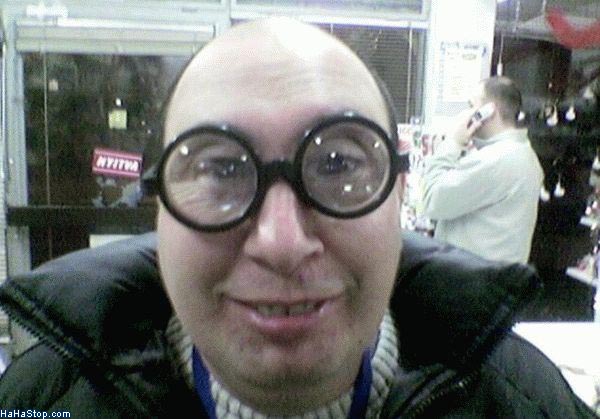
“A killer? Him? Come on, look at him. He couldn’t hurt a fly!”

More than a year ago, Ethics Alarms discussed the ethics of a current criminal defense tactic employed by lawyers with clients accused of violent crimes, putting them in nerdy glasses:

“It’s not a guarantee, but  the Daily News report says that criminal defense lawyers “swear by the gimmick, believing the right spectacles can make a sinister-looking murder suspect seem like a perfect gentleman.” “Glasses soften their appearance so that they don’t look capable of committing a violent crime,” veteran lawyer Harvey Slovis told the paper.”I’ve tried cases where there’s been a tremendous amount of evidence, but my client wore glasses, dressed well and got acquitted.” Cordero, who was represented by Slovis, wore bifocals throughout his trial, but threw them away the moment he was free.”

I’ve quizzed lawyers about the ethics of this tactic in my CLE classes, and they nearly unanimously agree that the tactic crosses no ethical lines that can be drawn with appropriate precision. I’m not so sure. I think it goes beyond merely giving your axe-murderer a shave and a haircut so he doesn’t look like an axe murderer, and edges into the realm of intentional deception. Apparently some courts may agree. Continue reading →

If You Liked “Enhanced Interrogation,” You’ll Love The “Disposition Matrix”

Is THIS the Administration’s secret weapon against terrorists?

The Washington Post launched a three-part series today about the U.S. drone strike program, in which terrorists abroad are targeted and assassinated from the sky. I’m not prepared to attempt an ethical analysis of this deadly tool against international terrorism, although I will acknowledge that my initial, gut level assessment is that the unique nature of terrorism requires adjustments in the ethics of national security and warfare, and drone killings seem to be a fair and reasonable adjustment.

Yet it is still killing. It is also controversial, with many human rights activists, international law specialists and ethicists vehemently condemning the tactic, especially when used against turn-coat Americans abroad without due process of law. Consequently, the Post’s revelation that the Administration’s “kill list” is called something else rings the ethics alarms.

The Post:

“Over the past two years, the Obama administration has been secretly developing a new blueprint for pursuing terrorists, a next-generation targeting list called the “disposition matrix.” The matrix contains the names of terrorism suspects arrayed against an accounting of the resources being marshaled to track them down, including sealed indictments and clandestine operations. U.S. officials said the database is designed to go beyond existing kill lists, mapping plans for the “disposition” of suspects beyond the reach of American drones.” Continue reading →

The Ryan Soup Kitchen Photo: Everybody Does It, But It’s Still Unethical

In the early 1960s, as the Great Leap Forward led China into political, social and economic disasters, the opposition to Mao Zedong’s leadership grew; Chairman Mao’s reaction was to purge the party leadership of intellectuals and officials in what is now termed, “the Great Proletarian Cultural Revolution.”

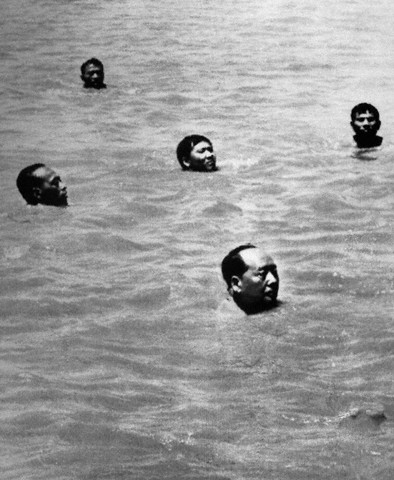
Mao Zedong’s hold on the leadership of China was shaky as he passed 70; even slaughtering more of his enemies and rivals wasn’t working. On July 16th 1966, Mao sought to debunk rumors that he was frail and ill by staging photographs of him vigorously swimming in the Yangtze River.  It was called, “The Swim Seen Round the World.” The Chinese press did its job, describing Mao’s cheeks as “glowing” and “ruddy,” his stroke steady and strong. “Our respected and beloved leader Chairman Mao is in such wonderful health!” one press report enthused.

In the West, however, there was more skepticism. Time reported that Mao swam “nearly 15 km in 65 minutes that day–a world-record pace, if true.” The photos of the swim, which showed an oddly solemn group of floating heads, were widely believed to have been doctored. As it turned out, the photos were real; Mao really did take a swim, though the event was staged, and nobody knows how long the swim lasted or how far Mao paddled. What are such photo ops? Are they deceptive? Are they ethical? Continue reading →

Ethics Alarms Verdicts: The Second Debate

Some Ethics-related conclusions on Wednesday’s second Presidential debate:

Were the candidates uncivil?

I didn’t think so. There were a lot of Twitter comments about Gov. Romney being disrespectful to the President. The deference due to the President of the United States isn’t an issue when debates hew to the formal, detached format of the past. In those debates, the tone of the exchanges are so muted that the two candidates could be in different time zones. Once a different tone is set, with either candidate directly challenging statements while the other candidate is speaking, that tradition has fled, as it did last night. The challenger to a sitting President can hardly be told that he needs to be deferential in a debate; that is the equivalent of asking him to fight with one hand tied behind his back. I thought that both candidates were within the bounds of civility under the circumstances. It was certainly not the civility that I complimented in the second debate—it was a heated, sometimes rancorous argument, but it was the argument of two passionate, forceful, serious public servants, and it served the public well. Neither candidate displayed the contemptuous, rude attitude that Joe Biden adopted in the Vice-Presidential debate. Biden crossed the civility line, but the President and his challenger did not.

Was the moderator biased? Continue reading →

Debate Alarm: The Fake Statistic Strikes Again

Outrageous.

That damn statistic again. Well, there goes THAT head!

Candy Crowley, disgracefully, chose another question at a Presidential debate—the last one was 12 years ago—based on the completely false and misleading statistic, made up by activists, that women earn “72%” of what men do in the workplace, suggesting that there is widespread gender discrimination in wages. It’s not true; it hasn’t been true for decades. It’s a myth, and one that misleads the public by being given this kind of publicity and credibility. ( The question Crowley allowed even lowered the fake percentage an extra, and fake, 5% from the “77%” Bernard Shaw negligently used in a question to Joe Lieberman. in 2000.) I’m glad Romney didn’t dignify it with a direct answer—he was placed in the position of either telling the questioner, “That stat is imaginary,” or furthur imbedding it by treating it as reality.

I’m generally a fan of Candy’s, but this was irresponsible, and I’m disappointed in her. Public policy debate shouldn’t be framed by simple-minded, misleading factoids, and it is the duty of journalists to insist on facts.