Father’s Day Morning Warm-Up, 6/17/18: More On The Horowitz Report

Happy Father’s Day, fathers!

(What a shame you all belong to a gender that is such an inferior, toxic, useless and exploitative feature of society!)

I’m sorry that yesterday was so light on content here; I was occupied from early morn to late afternoon at a distant funeral (more on that in a later post), and then sufficient fried after  I arrived home that I couldn’t brink myself to post….especially since virtually nobody reads the blog after about noon on summer Saturdays. And now I am hopelessly backed up…

1. “Trust us because you need to…Ann Althouse made what I consider a perceptive, cynical and provocative observation related to the Inspector General’s report on the Clinton email investigation. She wrote in part,

FBI Attorney 2 was asked what he meant by that “Viva le resistance,” and he said:

“So, this is in reference to an ongoing subject. And then following that, like I interpreted [FBI Attorney 1’s] comment to me as being, you know, just her and I [sic] socially and as friends discussing our particular political views, to which I see that as more of a joking inquiry from her. It’s not something along the lines of where I’m not committed to the U.S. Government. I obviously am and, you know, work to do my job very well and to continue to, to work in that capacity. It’s just the, the lines bled through here just in terms of, of my personal, political view in terms of, of what particular preference I have. But, but that doesn’t have any, any leaning on the way that I, I maintain myself as a professional in the FBI.”

Obviously, he’s just asserting what he must (and what the Executive Summary will also assert) that he has political opinions but they don’t bleed into his work because he is a professional…….It really is a convention to believe that people can do that. You can be cynical or skeptical or just plain realistic and think that’s not how human minds function, but it’s a fiction we actually do need to believe in (at least up to a point) if we are going to put human beings in a position of trust.

The IG said that it showed “extremely poor judgment and a gross lack of professionalism” to use the FBI’s systems and devices to send these messages, because “It is essential that the public have confidence that the work of the FBI is done without bias or appearance of partiality, and that those engaged in it follow the facts and law wherever they may lead and without any agenda or desired result other than to see that justice is done.”

Perhaps in the interest in maintaining what is “essential,” the IG “found no documentary or testimonial evidence directly connecting the political views these employees expressed in their text messages and instant messages to the specific Midyear investigative decisions.” I notice the words “directly” and “no documentary or testimonial evidence.” You can read the report yourself and see the basis for inference and suspicion, but you’re on your own. There’s plenty of evidence that does shake our confidence that the FBI does its work without bias and without any agenda or desired result. But — the IG encourages us to think — it’s also possible to maintain your confidence, so why don’t you do that? Because your confidence is essential!

This is, however, why government employees are forbidden by law to engage in conduct that creates “the appearance of impropriety.” These exchanges obviously did that. Some one like “Attorney 2” can claim that the fact that he hated Trump and supported Hillary had no effect on his required fair and objective performance of the job, but we are asked to believe that on faith. We hear the same thing from defenders of the blatantly biased news media: true, they are 95% Democrats, but they’re professionals! Nay, there’s no bias there! This would be easier to believe if the actual reporting didn’t seem so positive in the direction of those they are biased for, and so negative when dealing with those they are biased against.

Ann calls the presumption of professional objectivity a “convention,” which is another way of saying “myth.” Continue reading

Morning Ethics Warm-Up, 6/15/18: Spin Wars (Continued)

Hello again…

3. Spin of the Year: James Comey’s op ed in the New York Times.

Notes:

  • Comey writes,

“First, the inspector general’s team went through the F.B.I.’s work with a microscope and found no evidence that bias or improper motivation affected the investigation, which I know was done competently, honestly and independently.”

How lawyerly. This is deceit: a factual statement devised to deceive. Most will read this to mean that the investigation found no evidence of bias or improper motivation..\  That is untrue. In fact, as I have already pointed out in earlier posts, there is a great deal of evidence of bias. There is no  evidence that the bias affected the investigation, except the circumstantial evidence that the results of the investigation were consistent with the bias.

  • He writes of the IG department’s report,

“Its detailed report should serve to both protect and build the reservoir of trust and credibility necessary for the Department of Justice and the F.B.I. to remain strong and independent and to continue their good work for our country.”

What is this, confirmation bias run amuck? Rose-colored glasses? In one of its most consequential and high-profile cases, the report shows that the FBI was mismanaged, leaked to the news media, had unprofessional agents deeply involved with the matter, and did not follow its own procedures. This report will undermine trust in the agency, and should,

4. This is, broadly speaking, a pack of rationalizations…Lawfare, a Brookings ally, published an analysis called Nine Takeaways From the Inspector General’s Report on the Clinton Email Investigation.

I could use it in a seminar on rationalizations and equivocation. Behold the Nine: Continue reading

Morning Ethics Warm-Up, 6/15/18: Spin Wars (Part I)

Good Morning…

…from a galaxy not nearly far enough away…

1. Quick takes on a remarkable 51 minutes on the White House lawn. I just, and I mean just, finished watching President Trump’s spontaneous press conference on the White House lawn, standing within easy spitting distance—brave, given how much so many of these people detest him—of a pack of reporters as Fox’s Baby Doocy held a microphone for him, and picking questions, often hostile, out of the cacophony. Has any previous President done something like this? I’ve never seen such a thing.

If you can’t admire this performance, your anti-Trump virus is raging out of control. I miss the reflex, knee-jerk Democrats and progressives who have, I hope temporarily, taken a hiatus from Ethics Alarms because, in my assessment, they no longer can muster credible defenses of the way this President has been treated by the news media and the resistance, so they have retreated to the warm cocoon of the left-wing echo chamber. Trump’s appearance this morning as well as the Inspector General’s report on the Clinton email investigation are integrity tests. I’d like to think the otherwise intelligent and analytical progressives here would pass them. Ducking the challenge is not a good sign.

Of course, Trump was Trump. As I wrote long ago, constantly harping on what we all know is wrong with Trump is boring and pointless. (See: The Julie Principle) He exaggerated. He spoke in infuriatingly inexact and colloquial word clouds. He celebrated himself and pronounced himself brilliant. I know, I know: if his very existence in the universe is offensive to you, then this performance would be painful. (When Donald Trump isn’t the elected President of the United States, his existence  will probably be offensive to me once again, just as as it was right up to November 8, 2016.) However, the fact is that President Trump showed mastery of the situation. He managed the chaos and maintained his dignity while a generally angry and adversarial mob was shouting at him and interrupting him. I run interactive seminars with lawyers for a living, and I am qualified to say this: what he did is difficult, and he handled it very, very well. Anyone who watches those 51 minutes and refuses to say, “Well, he’s not senile, demented, unstable, dumb or teetering on the brink of madness, I’ve got to give him that much”  had disqualified themselves as a credible Trump critic. He was in command, quick, calm, and in his own way, masterful.

The response of the anti-Trump news media will be to “factcheck” him. He said, for example, that the IG report “exonerated” him, as the pack screamed, “But the report doesn’t discuss the Russian investigation at all!”  This is the old, dishonest and so boring, “Trump is lying when he expresses his feelings and impressions in the cloudy, semi-inarticulate imprecision that he always speaks in, which we will pretend isn’t what we already know it to be.” Of course the report doesn’t formally or actually exonerate him. It does,  in his view (and mine), show a corrupt and untrustworthy culture in the FBI and the Obama Justice Department that treated the Clinton investigation in exactly the opposite fashion that they have used to investigate him. This means, to Trump, that the Mueller investigation is a political hit job, and he regards that as the equivalent of exoneration. Well, he can regard it as cheesecake, if he chooses. His opinion is not “a lie.” (I am being sued, you may recall, by an Ethics Alarms commenter who maintains in his complaint that opinions are lies, so I am rather sensitive on this point.)

Several of Trump’s responses were succinct and effective, as well as infuriating to the anti-Trump journalists, I’m sure. He said that President Obama lost the Crimea when he refused to enforce his own “red line,” thus destroying his credibility and causing Putin to correctly assume that he could move on the Ukraine without consequences. True. He said that he was not worried that Michael Cohen would cooperate with the Mueller investigation, because he, the President, had done nothing wrong. (Headlines like “Will Cohen flip on Trump?” over the last few days imply that there is something to flip about, because the Left, “the resistance,” the news media and those AWOL Ethics Alarms readers have assumed from the beginning that Trump is guilty of some dire and impeachable conduct. Continue reading

Unethical Quote Of The Month: Outgoing Harvard President Drew Faust

…unless your racial origins would cause an imbalance in our carefully constructed palette of backgrounds, abilities and hues…

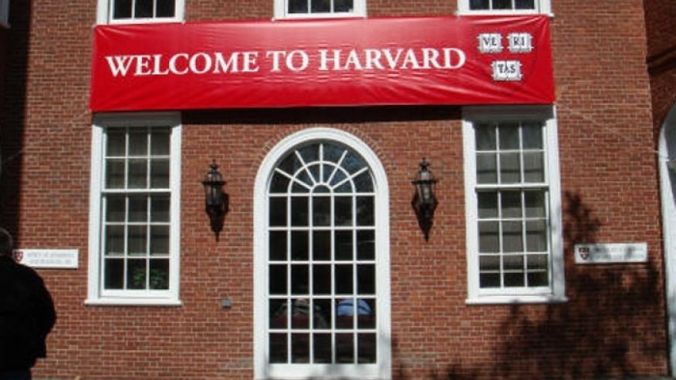
Asian-American groups  filed a federal lawsuit challenging Harvard University’s affirmative action policies as discriminatory, and the Justice Department backs of plaintiffs who say the university is discriminating against Asian-American applicants. (I wrote about the lawsuit here.) Of course they are discriminatory. In its quest for “diversity,” Harvard and other schools have penalized Asian-Americans, who confound Charles Murray-haters and racial-privilege mongers by being disproportionately excellent in academics. On a level playing field, in a purely merit-based admission system, they would dominate elite institutions, with numbers far beyond what demographics alone would predict. Can’t have that!  (This the leftist reaction, and they run U.S. education. My reaction: what an inspiring American success story!) Thus Harvard and other schools have used de facto quotas to reject Asian Americans who would have been admitted easily if they were a different color.

Outgoing Harvard President Drew Faust, a feminist proto-totalitarian who has shown an eagerness to stomp on basic human rights like speech, due process and association during her disastrous tenure,  sent the campus a message this week attacking the law suit. Here it is:

Dear Members of the Harvard Community,

In the weeks and months ahead, a lawsuit aimed to compromise Harvard’s ability to compose a diverse student body will move forward in the courts and in the media. As the case proceeds, an organization called Students for Fair Admissions—formed in part to oppose Harvard’s commitment to diversity—will seek to paint an unfamiliar and inaccurate image of our community and our admissions processes, including by raising allegations of discrimination against Asian-American applicants to Harvard College. These claims will rely on misleading, selectively presented data taken out of context.  Their intent is to question the integrity of the undergraduate admissions process and to advance a divisive agenda. Please see here for more information about the case.

Year after year, Harvard brings together a community that is the most varied and diverse that any of us is likely ever to encounter. Harvard students benefit from working and living alongside people of different backgrounds, experiences, and perspectives as they prepare for the complex world that awaits them and their considerable talents.

I have affirmed in the past, and do so again today, that Harvard will vigorously defend its longstanding values and the processes by which it seeks to create a diverse educational community. We will stand behind an approach that has been held up as legal and fair by the Supreme Court, one that relies on broad and extensive outreach to exceptional students in order to attract excellence from all backgrounds.

As this case generates widespread attention and comment, Harvard will react swiftly and thoughtfully to defend diversity as the source of our strength and our excellence—and to affirm the integrity of our admissions process. A diverse student body enables us to enrich, to educate, and to challenge one another. As a university community, we are bound across differences by a shared commitment to learning, to pursuing truth, and to embracing the rigor and respect of argument and evidence. We never give up on the promise of a world made better by an assumption revisited, an understanding expanded, or a truth questioned—again and again and again.

Last month, I presided over our Commencement Exercises for a final time and reveled in the accomplishments of our graduates and alumni, and in the joy and pride of the faculty who educated them, the staff who enabled their manifold successes, and the family members who helped nurture them and their aspirations. Tercentenary Theatre was filled with individuals from the widest range of backgrounds and life experiences. It was a powerful reminder that the heart of this extraordinary institution is its people.

Now, we have an opportunity to stand together and to defend the ideals and the people that make our community so extraordinary. I am committed to ensuring that veritas will prevail.

Sincerely,

Drew Faust

Such transparent deceit is seldom trumpeted so loudly. Continue reading

“From The Ethics Alarms “Nah, There’s No Mainstream Media Bias!” Files: The Unethical Headline Of The Month

Here is the headline in the print version of this New York Times story (which the Times headlines appropriately on-line):

Justice Department Acts Against Protections For People With Pre-existing Conditions

This is as pure an example of journalism deceit and a pernicious variety of fake news as I have encountered. An equivalent headline would be to describe  the ACLU petitioning to overturn a federal ban on “hate speech”  as “ACLU Acts Against Protections for Blacks, Gays and Muslims.”

The individual mandate was always unconstitutional as a penalty, and the Supreme Court was poised to overturn the Affordable Care Act on that basis, until Justice Roberts hit on the brilliant but perverse argument that even though the Obama administration and Democrats had insisted that the device wasn’t a tax in order to get the thing passed, it really was, so it was legal after all. Congress, however, repealed the “tax,” so now that pretense no longer works. The mandate is unconstitutional…again.

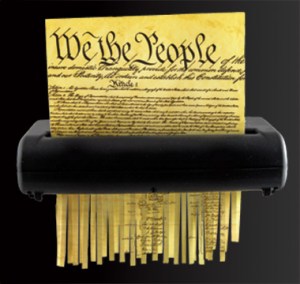
I know the Democratic approach to legislation and public policy is increasingly “the ends justify the means” and “the Constitution is just an archaic piece of paper,” but the fact is and has always been that the document is our nation’s (increasingly vulnerable) bulwark against tyranny, and it is the duty of the Justice Department and the courts to oppose unconstitutional, as in “illegal,” measures, even those that appear to solve difficult problems.

If a provision is unconstitutional, it doesn’t matter what benefits it may have. We cannot have a precedent that holds that the Constitution can be ignored for “good reasons.” No reason is good enough. That kind of thinking is how Japanese-Americans ended up in concentration camps under an iconic Democratic President, approved by a liberal Supreme Court.

The individual mandate, without the cover story that it is a tax, violates the Constitution. That’s all we need to know. The ability of insurance companies to cover pre-existing conditions under the ACA becomes impossible without it? Well, we’re just going to have to come up with a solution that isn’t unconstitutional, won’t we?

Deceiving the public into believing that upholding core constitutional principles is excessive and sinister when it blocks otherwise desirable policy initiatives is playing with fire. It makes the public civically ignorant. It places false emphasis on results rather than the rule of law.

It paves the road to totalitarianism.

Morning Ethics Warm-Up, 5/16/ 2018: The Fake Moussaka Edition

Gooood morning Pyongyang!

…and everyone else too, of course.

1. ” Winning.” How many in “the resistance” and the news media are rooting, secretly or openly, for the North Korean talks to fail? Based on the tone of some premature gloating on social media and news reports after North Korea threatened to pull out of talks, I think “many” is the fair answer. Other recent headlines and news stories also point in this direction, like “Improving Economy A Problem For Democrats.” (No, an improving economy is not a problem for any Americans, unless they care about their own power more than their country.)

This is especially revolting ( and hypocritical) from the same people who 1)  falsely attributed Rush Limbaugh’s indefensible statement in 2008 that he wanted Obama to fail to the entire Republican Party (I condemned Limbaugh’s statement at the time) and 2) used it to feed the narrative that conservatives who opposed that Presidents left-ward policies were doing so out of personal and racial antipathy.

A President’s success–as in “being proved correct” or “getting lucky,” it doesn’t matter which— makes it more likely that policies you don’t like will be continued? Suck it up and cheer like the good citizen you are. His accomplishments make it less likely that your favorite politician will get elected? Cry me a river: your duty is to care about your nation and fellow citizens first. That you are on record that—okay, still think that—this Presdent has crap for brains and you wouldn’t shake his hand without gloves makes you look less wise and prescient than you would have if he fell flat on his face? Cue the world’s smallest violin, have some integrity, and grow the hell up.

2. Ken Burns ethics, and FDR. In this post earlier this year, I scored documentary whiz Ken Burns for the hagiography of Franklin Roosevelt that marred his otherwise superb “The Roosevelts.”  “The smoking gun for me,” I wrote, “is that despite ten and half hours, Burns somehow never found time to highlight FDR’s internment of American citizens solely because they were of Japanese ancestry. The civil rights outrage is only alluded to in passing, as part of a list from a biographer preceding the nostrum, ‘All great leaders make mistakes.’” That critique stands, but it is slightly unfair, I subsequently discovered. Burns covered the internment of Japanese Americans extensively in an earlier, also excellent, PBS series, 2007′ s “The War.”  Even that section, however, avoided laying proper accountability for the debacle at President Roosevelt’s feet.  I watched the documentary over the past two days, and the deceit is really extraordinary.  The narration keeps referring to Executive Order 9066, without specifically saying whose order it was, like the thing appeared on its own. Here, Ken, let me fix this for you:

President Franklin D. Roosevelt ordered the imprisonment of tens of thousands of American citizens of Japanese ancestry and resident aliens from Japan in concentration camps (“internment” is a euphemism and a cover word, like “pro-choice”) with towers and guards with loaded rifles. Though some German-Americans and Italian-Americans were imprisoned as well, far fewer were taken. The risk they posed was not considered as great, because they were white.’

Executive Order 9066 wasn’t rescinded, incredibly, until February 19, 1976, by President Ford. The Supreme Court decision upholding the order, Korematsu v. United States, 323 U.S. 214 (1944),has never been overturned. In that case’s 6–3 decision approving the abrogation of American citizen rights with fear as the justification, six of FDR’s eight appointees—you know, the liberals—  sided with Roosevelt, and against the Bill of Rights. Continue reading

Morning Ethics Warm-Up, 5/3/2018: Katie’s Rationalization, Teachers’ Extortion, Rudy’s Zugswang, And Kanye’s Influence

Goooood morning!

(I thought it was time for “Singin’ in the Rain” again. Of course, it is always time for “Singin’ in the Rain”…)

1. And that’s when you know…When alleged sexual harassers are accused, the way you know whether they are guilty or not often depends on whether the floodgates open, and large numbers of other women step forward. This was Bill Cosby’s downfall. Now we learn that 27 more victims of Charlie Rose have raised their metaphorical hands. Sorry, Charlie!

The mystery to me is why  current and former colleagues of outed abusers and harassers so often rush to defend them, even post #MeToo, and even women. I suppose is cognitive dissonance again: the defenders have high regard for the harasser, and simply can’t process the fact that they may have been engaged in awful conduct. Katie Couric’s defense of Matt Lauer, however, is especially damning.

Variety reported that Lauer’s office had a button that allowed him to remotely lock his office door when he had female prey within his grasp…

“His office was in a secluded space, and he had a button under his desk that allowed him to lock his door from the inside without getting up. This afforded him the assurance of privacy. It allowed him to welcome female employees and initiate inappropriate contact while knowing nobody could walk in on him, according to two women who were sexually harassed by Lauer.”

Yet on “The Wendy Williams Show” this week, Couric “explained”…

“I think the whole button thing, you know? I think — NBC — a lot of stuff gets misreported and blown out of proportion. A lot of NBC executives, they make it sound like some kind of den of inequity. I don’t know what was happening. A lot of NBC executives have those buttons that opened and closed doors… They did. I mean, it was really just a privacy thing. It wasn’t..Honestly I think it was an executive perk that some people opted to have and I don’t think it was a nefarious thing. I really don’t. And I think that is misconstrued….”

Wowsers. First, Couric is intentionally blurring the facts, using “open and close” as a euphemism for “unlock and lock.” I guarantee that no button would cause the office door to swing open or swing closed, as Couric suggested. I’ve searched for such a device: all I can find are remote office door locking mechanisms. Second, while it is true that other NBC execs once had that feature, it appears that Lauer was “was one of the few, if not the only, NBC News employee to have one,”a senior NBC News employee told the Washington Post.

Second, Couric is engaging in The Golden Rationalization: “Everybody does it.”

2.  Extortion works! Arizona’s governor signed a 9% pay increase for the state’s teachers, because the teachers engaged in a wildcat strike, kids were missing school, and parents couldn’t go to work without their state funded child-sitters. I’m not going to analyze whether the teachers demands were right or wrong, because it doesn’t matter. The teachers’ tactic was unethical, just like the Boston police strike in 1919 was unethical, just like  the air traffic controllers strike in  1981. In the former, Massachusetts governor Calvin Coolidge (what happened to that guy?) famously fired all the striking cops, saying in part that  “The right of the police of Boston to affiliate has always been questioned, never granted, is now prohibited…There is no right to strike against the public safety by anybody, anywhere, any time.” President Reagan quoted Cal when he fired the air traffic controllers and eliminated its union.

Striking against children and their education is also a strike against the public safety. What now stops the teachers, in Arizona or anywhere else, from using similar extortion tactics for more raise, policies they favor, or any other objective?  What was lacking here was political leadership possessing the integrity and courage to tell the teachers to do their jobs during negotiations, or be fired.

This precedent will rapidly demonstrate why public unions are a menace to democracy Continue reading

The Paid Expert Witness Problem [UPDATED And CORRECTED]

“Check enclosed…”

When a lawyer’s expert witness testifies in a trial, the opposing counsel will always ask, “You’re being paid for your appearance today, isn’t the true?” The one time I was asked that question, I answered, “I’m being paid for my time, not my opinion.” Of course, many experts—yes, even ethics experts—are accepting payment for their opinion. The case of a Houston lawyer’s recent conduct, however, is the worst example of this reality crossing the ethics lines, hard.

Lawyer Mark Lanier had presented father-and-son orthopedic surgeons to the court and the jury as unpaid experts, emphasizing that they were testifying pro bono while the defendants’ experts had been bought. Naturally, this made them seem more credible to the jury. After the trial, however, and after the jury had awarded Lanier’s client  a handsome verdict and damages of $151 million, it was discovered that Lanier made a $10,000 charitable donation to the father’s favorite charity before trial, and sent “thank-you” checks totaling $65,000 to the surgeons after the trial, accompanied by notes of gratitude.

But they weren’t being paid for their testimony—at least, not when they were asked about it. Continue reading

Clearing Up A Matter Of Widespread Confusion: How Lawyers Acquire Accidental Clients

When I pointed out this morning that by Sean Hannity’s own description of his relationship to Trump fixer Michael Cohen, he was Cohen’s client, several commenters protested, including a lawyer or two. This suggests that many more were similarly confused, and it is no surprise. A disturbing number of lawyers fall into the trap of acquiring “accidental clients.” There are many ways this can happen, but the most insidious of them is this, which people like me constantly and repeatedly warn lawyers about, often to no avail.

A relative or a friend approaches you, a lawyer, at a party. He or she asks you a question about some legal issue, and you give an off-the-cuff answer. Because you are a lawyer, and because you gave advice, however vague, that individual accepts it as a free legal opinion, and also assumes that the conversation was confidential. Usually nothing happens. Sometimes, however, the friend or relation acts based on your advice. If the results turn out badly, he or she may sue for malpractice, and sometimes will win damages. In an infamous case that is still good law, an individual went to a medical malpractice specialist to engage him to sue a hospital. After describing the facts, the potential client was told, “You have no case,” and informed that the lawyer would not accept the representation. But the individual relied on that statement, and didn’t bring a suit until the statute of limitations had run. Then he learned, from another lawyer, that he did have a valid case, though one he could no longer pursue. The first lawyer was sued for malpractice, and the court found that indeed “You have no case” constituted legal advice, and the advice was relied upon, meaning that an attorney-client relationship had been formed. Continue reading

Morning Ethics Warm-Up, 2/16/18: Guns, Tweets And Blackberry Slingshots

Good morning everybody!

1. Oh, well if David Hogg says so… I just listened to an earnest, articulate Florida high school student named David Hogg tell a CNN reporter, his head nodding sagely, complete counter-factual garbage, with no correction, for what seemed like an eternity. “David Hogg wants Congress to act.” the screen said said as the 17-year-old was speaking. This is lousy, unethical journalism—well, it’s CNN– and irresponsible. I don’t blame the kid for believing the crap he reads and hears from people who are lying to the public, but I expect the news media to correct, not circulate, dishonest talking points. Well, maybe “expect” isn’t the right word.

No, David, “thousands of students” do not die every year. No, David, that “18 school shootings” fake stat is designed to mislead: it includes every time a gun has been discharged in or near a school, not mass or multiple shootings or even fatalities. [See Item #2]

See, David, when people talk about “mental health reform” they are often talking about pre-crime, and removing the rights of citizens before they have done anything wrong, much less criminal. But CNN’s reporter kept nodding.

These are complex issues involving rights and practical realities, and a high school student is not an authority that CNN or anyone should be presenting as an advocate. Until the anti-gun advocates stop intentionally distorting facts and trying to mislead while relying on emotion to swamp legitimate debate, there will be no serious dialogue about whether any policies could stop tragedies like the latest Valentine’s Day massacre, and bumper sticker chants like “Do something!” and “If it saves just one life…” lead away from responsible policy, not toward it.

I cross-posted this to Facebook, and can’t wait to read the reactions. At this point, posting facts qualifies as trolling. The anti-gun hysterics can’t stand it. Continue reading