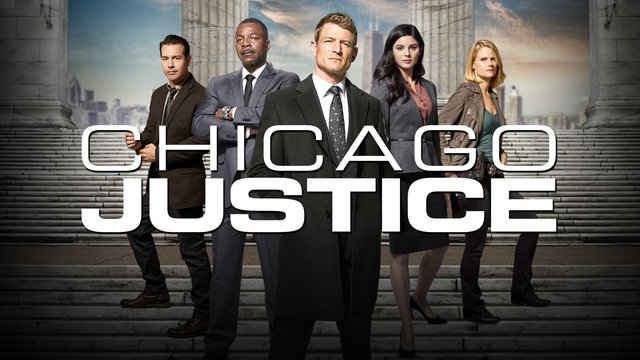
Dick Wolf, the “Law and Order” creator, is in the process of taking over NBC prime time. He now has four linked dramas dominating the schedule—“Chicago Med,” “Chicago P.D.,” “Chicago Fire,” and the latest, “Chicago Justice.” (Soon to come, at this rate: “Chicago Sanitation,” “Chicago Pizza,” and “Chicago Cubs.”)
Yesterday was Episode #2 of “Chicago Justice.” The story in involved a “ripped from the headlines” riff on the Brock Turner case, where a woman was raped while unconscious and the rapist received a ridiculously lenient sentence. In Wolf’s alternate universe, however, the judge was murdered, and the rape victim and her ex-husband were suspects. There was another wrinkle too: one of the prosecutors had a close relationship with the dead judge, and was with him right before he was killed. She was going to have to be a witness, and her colleague and supervisor, prosecuting the case, asked her if she had been sleeping with the victim. Such a relationship would have been an ethical violation for the judge, and at least a pre-unethical condition for the prosecutor, requiring her to relocate to a Steven Bochco drama, where lawyers have sex with judges all the time.
The female prosecutor indignantly refused to answer the question. After the case was resolved—I won’t spoil it, but the name “Perry Mason” comes to mind—the two prosecutors made up over a drink. She said that she would have never slept with “Ray” (the dead judge–when he was alive, that is), but that she remembered reading “in some old document” that we all had “unalienable rights,” she believed one of them was “the right to be respected by your fellow man.”
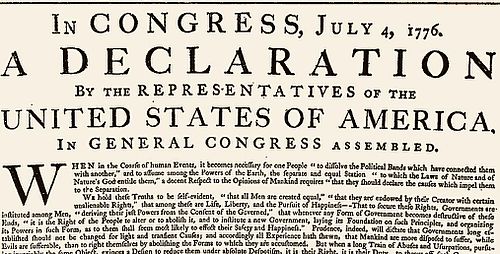
There is no “right to be respected.” The Declaration of Independence, the “old document” she referenced, lists three rights only, though they are broad ones: life, liberty and the pursuit of happiness. None of those encompass a right to be respected. The speaker, Anna Valdez (played by Monica Barbaro, a Latina dead ringer for Jill Hennessey, who played the equivalent “Law and Order” role for many years), is a lawyer, and should understand what a right is. It is a legally enforceable guarantee of an entitlement to have something, seek or obtain it, or to act in a certain ways. As a lawyer, she must understand that this is different from what is right, just or honorable. Her statement, coming from the mouth of a character with presumed expertise and authority, misleads much of the public, which is constantly getting confused over the difference between Jefferson’s use of “rights” and what is right. So do journalists and, sadly, too many elected officials. Continue reading






 Ethics Alarms