Ethics Dunce: Sportswriter Jason Reid

I really don’t care how bad you feel, Jason.

In designating national sportswriter Jason Reid an Ethics Dunce because of his sensitive, thoughtful, brave but ultimately unethical column this morning, I don’t intend to suggest that his ethical failing is unusual, or noteworthy for any reason other than the fact that it is universal.

Sometimes we are all like Jason Reid, I think. We all engage in conduct that we suspect is wrong, but we enjoy it. Gradually, truth breaks through our denial and we cannot avoid the conclusion that the conduct is wrong; still, despite the fact that we do not believe human beings should willfully do wrong, we persist in the conduct.

Because we enjoy it.

Reid’s column is titled “Seay’s Death Forces Uncomfortable Questions For Football Fans,” referring to the recent suicide death of former NFL star Junior Seau, the second suicide of a former pro football star in recent weeks. The uncomfortable question is the same one I raised on Ethics Alarms in November of 2009, which tells you how many NFL fans read ethics blogs. I wrote then,

“Simply put, it is wrong to pay money to persuade people to permanently damage themselves for our entertainment. No fight fan can watch Muhammad Ali today, recalling his nimble wit and amusing patter, and not feel complicity in his current near-mute condition, the result of being induced to box after his skills were eroded by time. When we know, and players know, that playing football in the NFL is going to lead to premature dementia for a significant number of players who will accept the risk if the money is right, can we ethically continue to provide that money?”

Sportswriters don’t read ethics blogs either, so in May of 2012, Reid has decided that this and related questions need asking. So he writes.. Continue reading

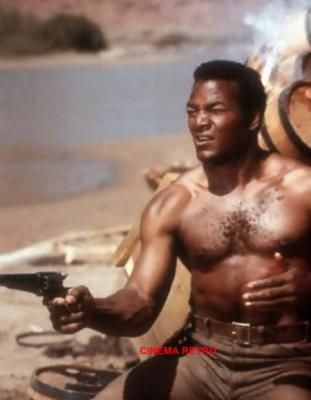
Ethics Hero: Jim Brown

Wne Jim Brown talks, people tend to listen.

I have mixed feelings about Jim Brown, the legendary N.F.L. running back and former movie star (“The Dirty Dozen”), stemming from the fact that loving a woman and beating her up never seemed to be mutually exclusive actions to him. His domestic problems aside, however, Brown has also periodically used his fame and status to draw needed attention to important issues, and he has just done so again, calling out the N.F.L. players’ union for apparently failing to make the welfare of retired players part of their impending deal with the league’s owners.

“Why isn’t the union talking about health care, better health care?” Brown recently told reporters. “Why aren’t they talking about better pensions? You definitely need a health plan that goes beyond five years; you definitely need a better pension plan.” Continue reading

Ethics Heroes: NFL Owners

The less THIS happens, the better.

I was wrong about the N.F.L.

On Tuesday, the N.F.L. owners voted to move kickoffs back to the 35-yard line, where it was until 1994. The new rule will make the game less exciting but more safe. I didn’t think they’d do it.

The league has a problem—I mean, other than the impasse in labor negotiations that threatens to disrupt the coming season and lose owners and athletes millions. Its game is more popular than ever, but little by little, the evidence is mounting that it is also lethal. Playing pro football injures the brains of a higher percentage of the athletes than anyone suspected, and far worse than suspected. Players are quite literally sacrificing their lives, or at least two or three decades of them, for the Sunday entertainment of America. Continue reading

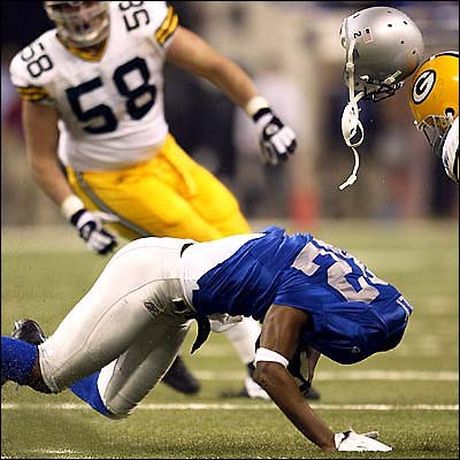
The NFL’s Looming Choice: “Chickafication” or Bloodsport

At a recent conference, a physician panelist discussing NFL player head injuries said that if the average NFL player walked into a doctor’s office for a typical checkup, he’d be rushed immediately to a hospital for treatment.

The fact is slowly dawning on NFL management, the players and the public that pro football, indeed all football, is even more dangerous than everyone thought, and that normal, accepted play may still routinely cripple players in the worst possible place: their brains. The problem, ethical as well as medical, is that no one knows whether the sport can fix the problem and still be what fans regard as NFL pro football. It is a medical problem, because the data increasingly indicates that serious head trauma and long-term disability is frighteningly common. It is an ethical dilemma, because the very aspect of football that many of its fans most relish—the bone-crushing violence—is leaving players unacceptably vulnerable to depression, memory loss, personality disorders, rage, dementia, and suicide. Continue reading

Player Dementia and the Fan’s Dilemma: Is Watching N.F.L. Football Unethical?

It is Sunday, and much of America is ready to settle in front of millions of  wide-screen, high-definition television sets to watch Sunday’s favorite entertainment: NFL football. The last thing football fans want to think about today is ethics, and today, perhaps, they shouldn’t have to. Although we are not there yet, the time is fast approaching when not only football fans, but the companies that buy commercials, the merchandisers that sell NFL-licensed jerseys and posters, the TV networks, and the nation itself may have to consider a difficult ethics question: is supporting pro-football unethical? Continue reading