“Black Lives Matter” Is Unethical, And So Are Politicians Who Pander To It

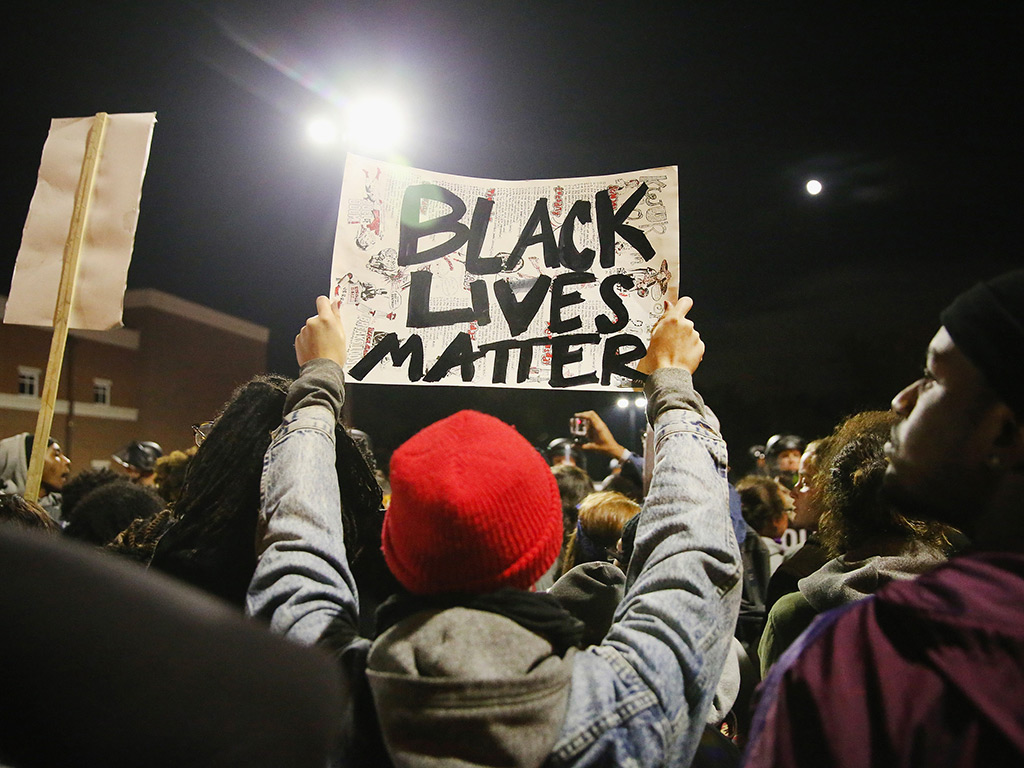
black-lives-matterThat’s the tipping point for Ethics Alarms. “Black Lives Matter” is unethical, and those who use it are unethical. And politicians who grovel to those who criticize them for not embracing it are contemptible.

The Martin O’Malley embarrassment over the weekend clinched it for me. Demonstrators interrupted the former Maryland governor, mounting a pathetic campaign against Hillary Clinton for the Democratic presidential nomination, as he was speaking at the Netroots Nation conference. When they shouted, “Black lives matter!” a rallying cry of protests that has superseded “Hands Up! Don’t Shoot!” because that one was eventually exposed as a lie,  O’Malley—the naive, racist fool!!!!— responded: “Black lives matter. White lives matter. All lives matter.”

The activists  responded by jeering him and refusing to let him speak. .Later in the day, O’Malley, “showing the firm commitment to leadership in the face of adversity that we expect in a presidential candidate,” as one wag put it on Jonathan Turley’s blog—apologized, saying…

“I meant no disrespect. That was a mistake on my part and I meant no disrespect. I did not mean to be insensitive in any way or communicate that I did not understand the tremendous passion, commitment and feeling and depth of feeling that all of us should be attaching to this issue.”

I bent over backwards to defend Smith College President Kathleen McCartney when she apologized for using the phrase “all lives matter” in December of 2014. I wrote:

If an activist says to me, “too many children go to bed hungry!” and my retort is, “Too many people go to bed hungry!”, the unspoken argument is “So stop acting like children are a special problem!” If I say, “We need peace in Syria,” and a friend’s response is “We need to end war, period!”, I view that as an effort to minimize my concerns by launching it from the realm of a specific issue into vague, generic territory.  “Black Lives Matter!” in the context of recent police episodes where African Americans died under circumstances that many believe show police callousness and excessive force against blacks is a distinct assertion that suggests that the law enforcement and justice systems do not currently function as if black lives matter as much as white lives. It is true that “All Lives Matter” includes the larger subset “black lives matter”; it is also true that it blurs the issue at hand, and dilutes the protesters’ point. It is not inappropriate for  President McCartney to apologize in this context…unless, of course, she intended a rebuttal, in which case she is indeed spineless.

I still believe that made sense in December, but “Black Lives Matter” means something very different now, after six police officers were charged with murder to quell a Baltimore mob after Freddie Gray’s death, and after President Obama decided that the merciless shooting of a  young white woman in San Francisco by an illegal immigrant wasn’t worthy of the same attention he has given other deaths when it was a black life that had been lost. Continue reading
“You Know I Can’t Hear You With All Those Ethics Alarms Ringing”: Hillary Clinton’s CNN Interview

Hillary_Clinton_2016

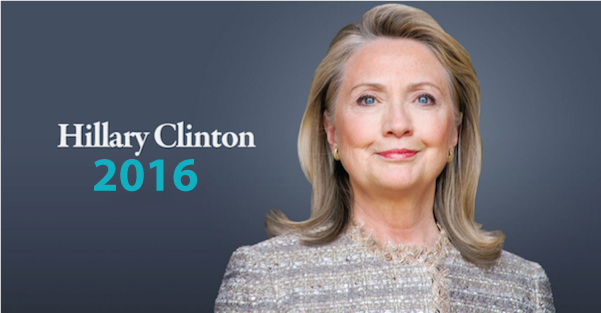
The frightening thing—it should frighten Democrats more than anyone, but if they have let Hillary get this far, they may be beyond frightening—is that Hillary Clinton had a long time to prep for this interview—her first substantive one since announcing her candidacy, about five or six scandals ago—had a hand-picked, friendly interviewer, was not pressed to clarify any of her non-answers, obfuscations or incomprehensible blather, and she still came off looking defensive, evasive, and basically like Tommy Flanagan in drag.

Ethics Alarms were ringing so loudly that the interview was almost inaudible. My observations in bold….

BRIANNA KEILAR, CNN SR. WHITE HOUSE CORRESPONDENT:  Secretary Clinton, thank you so much for talking to us today.  You’re here in Iowa for a couple of events.  You’re the front-runner in this state but we’re also seeing Bernie Sanders attract a lot of attention.  He has had big crowds here, 10,000 people in Wisconsin last week, 7,500 people in Maine last night. Why is it, do you think, that someone who is a self-described Democratic socialist is really attracting this organic interest that your campaign seems to be struggling a little bit with?

HILLARY CLINTON, FORMER SECRETARY OF STATE:  Well, first of all, I always thought this would be a competitive race.  So I am happy to have a chance to get out and run my campaign as I see fit and let other candidates do exactly the same.

Non-responsive. Also a lie: Clinton has always assumed she could get the nomination by just showing up.

I feel very good about where we are in Iowa.  We are signing up thousands of volunteers, people committed to caucus for us.  We have a committed supporter in every one of the 1,600 precincts.  And one of the things that I learned last time is it’s organize, organize, organize.  And you’ve got to get people committed.  And then they will follow through and then you bring more people.

Non-responsive.

So I feel very good about where my campaign is.  It’ll be three months and a few days that we’ve been at this.  I think I’ve learned a lot from listening to people in Iowa.  And it’s actually affected what I say and what I talk about on the campaign trail.

Non-responsive.

So I couldn’t be happier about my campaign.

Non-responsive. Pretending to open yourself to a candid question and answer session and then refusing to answer the very first question while pretending you did: Dishonest. Disrespectful.

KEILAR:  Senator Sanders  has talked about how, if he’s president, he would raise taxes.  In fact, he said to CNN’s Jake Tapper, he would raise them substantially higher than they are today, on big corporations, on wealthy Americans. Would you?

CLINTON:  I will be laying out my own economic policies.  Again, everybody has to run his or her own campaign.  And I’m going to be telling the American people what propose and how I think it will work and then we’ll let voters make up their minds.

“I refuse to answer on the grounds that I might incriminate myself actually let voters know what I stand for. After all, I’m a vagina. That’s what really matters.”

KEILAR:  Is raising taxes on the table?

CLINTON:  I’m going to put out my policies and I’ll other people speak to their policies because I think we have to both grow the economy faster and fairer so we have to do what will actually work in the short term, the medium term and the long term.  I will be making a speech about my economic proposals on Monday.  And then I look forward to the debate about them.

If Clinton made a speech Monday (July 7) about specific economic proposals, she did it in her closet, because all anyone actually heard was this.

KEILAR:  I’m wondering if you can address a vulnerability that we’ve seen you dealing with recently.  We see in our recent poll that nearly six in 10 Americans say they don’t believe that you’re honest and trustworthy. Do you understand why they feel that way?

CLINTON:  Well, I think when you are subjected to the kind of constant barrage of attacks that are largely fomented by and coming from the Right and –

The vast right wing conspiracy again! Ironic, because one very good reason people shouldn’t, and  many sane people actually do not, trust Hillary is when she made teh same accusation on the Today Show to Matt Lauer, claiming that the Monica Lewinsky scandal had been “largely fomented by and coming from the Right,” when in fact she knew otherwise and was lying for her husband.

KEILAR:  But do you bear any responsibility for that?

CLINTON:  – well, I – you know, I can only tell you that I was elected twice in New York against the same kind of onslaught.

“I got away with it before, didn’t I?” Continue reading

Playing Dangerous Cognitive Dissonance Games With U.S. The Supreme Court

The cognitive dissonance scale, now being used to weaken a crucial U.S. institution for political gain.

The cognitive dissonance scale, now being used to weaken a crucial U.S. institution for political gain.

Of all government institutions, the U.S. Supreme Court has traditionally only trailed the Presidency in public trust and esteem. There are several good reasons for this. One is that being appointed for life, the Justices are presumed to be less subject to the personal and political agendas that make the positions of politicians suspect. Another is that the Court has often taken heroic stances that made the United States a better nation and more just culture. A third is that unlike elected political offices, that of a judge requires an education and technical expertise that the average citizen does not possess. The Justices are traditionally accorded the deference given to experts. Perhaps the most important reason we trust the Court is because we need to do so. It was made the third branch to protect the Constitution against violations of core rights, as well as to be an objective mediator when the other branches, or states, or courts, reach an impasse. Of the many ingenious devices the Founders put in place, the U.S. Supreme Court is one of the wisest.

That the Court is accorded inherent respect and trust is essential to the stability of our government. What the Court says, goes, and the culture and society, including the most furious dissenters in political parties and interest groups, must follow a ruling and constrain its efforts within those boundaries. There have been times when the Court recognized that its unique credibility obligated it to intercede in dangerous conflicts that might otherwise escalate to social unrest or worse. The 2000 Presidential election was a potentially dangerous situation because the result in Florida rested on a margin of error that the available technology was incapable of resolving with certainty.  Unlike the similarly dubious results in the 1960 election, the initial losing candidate and his party decided to plunge the nation into an electoral morass, in this case one complicated by politicized state courts, vague local statutes, confusing ballots, partisan media reports and varying standards of what constituted a vote, with the rotten cherry on top being a rare situation (it had happened only three times before)  in which a popular vote loser was  the apparent electoral vote winner. The Supreme Court stepped up and stopped it from spinning out of control, in essence declaring a winner. It was a courageous and responsible act, one that many (including me) predicted, and though it came at a high cost, one that exemplified why the Court’s public acceptance must be high—so it has some room to fall when it has to take a controversial stand.

This crisis was not the beginning of the effort by parties and activists to discredit the Court by impugning its motives and undermining the public’s trust, but it caused a permanent escalation. It was when the insinuation that a Justices nominated by Republican Presidents (or Democratic ones, depending on who’s leading the chorus of critics) see their job as bolstering that party’s policies and interests became routine. Continue reading

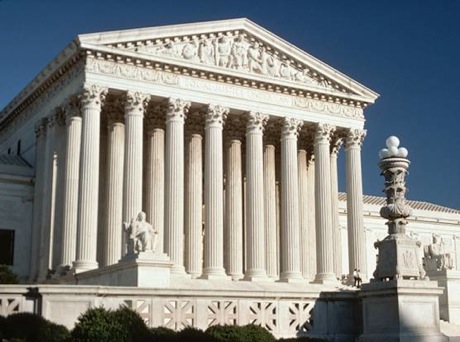
Ethics Observations On The King v. Burwell and Obergefell v. Hodges Decisions And Their Aftermath

supreme-court

 Obergefell v. Hodges, in which the Supreme Court considered whether states had to recognize a right to same-sex marriages, and King v. Burwell, in which the Court was called upon to clarify some incompetent drafting in the Affordable Care Act, could not be more dissimilar in terms of issues, topics, and significance. Nonetheless, because the two decisions involved hot political issues and arrived on consecutive days, and because they ended up favoring the positions that Democratic and progressive partisans support, they have been conglomerated in public discourse to fit several general themes, all, to varying degrees, misleading, simplistic, and biased. The decisions have also launched some of the most hysterical and embarrassing commentary in recent memory.

Some ethics, as opposed to legal, observations:

1. Anyone who hasn’t read the majority opinions and the dissents, who just skimmed them—believe me, if law school taught me anything, it taught me that skimming court opinions was a sure road to error and humiliation—or who read them but could not understand them, should be ignored, and perhaps gently mocked, for expressing any view at all about whether the decisions were the “right” ones. Quite simply, such people are not qualified to hold an opinion. They can have, and express, an opinion regarding whether the Court’s calls on Burwell or Obergefell are consistent with their own needs, desires, belief or political orientation, but they have no basis for asserting that either decision is wrong, or, right, on the law.

2. One can find it troubling and ominous, as I do, that the votes on the two cases were as predictable as they were. Objective legal scholars with integrity should be capable of ruling in ways that are not congruent with the personal political philosophies. A Democratic Presidential appointee who favors expansive government activity in health care control should be able to look at a statute designed to accomplish that purpose and still conclude, “Nope, the law mean what they want it to mean,” or “Sorry, the damn thing is unconstitutional.” Similarly, we should be able to trust a politically conservative justice to examine a statute that he objects to on principle and still conclude, “Yup, it passes the test.” Maybe all the Justices are capable of meeting this standard, but these two cases don’t suggest that. They suggest the opposite. Continue reading

Unethical Quote Of The Day: Hillary Clinton

“We have to have a candid national conversation about race and about discrimination, prejudice, hatred. But unfortunately the public discourse is sometimes hotter and more negative than it should be, which can, in my opinion, trigger people who are less than stable. For example, a recent entry into the Republican presidential campaign said some very inflammatory things about Mexicans. Everybody should stand up and say that’s not acceptable. You don’t talk like that on talk radio. You don’t talk like that on the kind of political campaigns. I think he is emblematic. I want people to understand it’s not about him, it’s about everybody.”

—Democratic Presidential Anointee Hillary Clinton, in an interview with KNPB’s Jon Ralston, discussing the Charleston church shooting of nine African-American worshipers

Note that this is just the unethical quote of the day, rather than week or month, and to be fair, it probably wasn’t even the most unethical quote of the day on this particular topic. Later today I hope to announce the top ten most unethical public statements on the Charleston tragedy (so far), and it is not certain that Hillary’s comment will even make the list.

It’s that bad out there.

I wonder if anyone in the Democratic Party is at all concerned that Clinton is apparently incapable of speaking without a script and avoiding saying absurd and outrageous things? Or do Democrats not recognize that they are outrageous? Which is more disturbing, that they seem ready to hand the most powerful job on earth to this awful, addled, corrupt woman knowing how terrible her judgment and political skills are, or that they can’t tell how terrible they are?

Or that there isn’t a single qualified individual in the entire party that they think is far superior? Or two? Or a hundred?

Well, like wading through day old garbage, let’s analyze this mess. Yuck:

1. To suggest that Donald Trump’s crude statements about illegal immigrants (which was, you know, literally accurate, just needlessly offensive) did have, could have had or is “emblematic” of rhetoric that might have “triggered” Dylann Roof’s act is slimy, gutter level politics at its worst. Clinton implicates Republicans in a murder by linking the party to a self-promoting fraud who is not a serious candidate. Nice.

2. She doesn’t have the guts or fairness to name the man she is sliming (the host asked her to). Who campaigns like that? “I’m not going to name names, but a certain Republican who just entered the race and said this...”  Feminists should throw up: this is girly campaigning…for 7th grade class president.

3. Does Hillary not recall that the Democrats and various pundits thoroughly disgraced themselves by accusing Rush Limbaugh and Sarah Palin of “triggering” the Tuscon shooting that wounded Rep. Giffords, in a flagrant effort to shut down the speech of political opponents and tie them to the act of a madman? Or did she approve of that miserable, censorious tactic? Presumably it is the latter, because this statement exemplifies the same foolish, dishonest lack of ethics.

4. Hillary begins by saying that we need to have a candid conversation, and then goes on to condemn Trump for being candid. Trump has nothing to recommend in his character or leadership ability whatsoever, but candor is not a quality he lacks. Clinton can’t  maintain honesty and integrity in the span of one short statement in an interview! How can there be candor on race, if  everyone should stand up and say that candor is not acceptable? Hillary’s version of candor is “candor that doesn’t disagree with what my party has declared as acceptable speech and belief.”

Perhaps worst of all, Clinton made a victim out of Donald Trump, and allowed him to say in response, “politicians are just no good.” This is as close to correct as Trump will be in his entire life, except that Hillary Clinton makes other politicians look good by comparison.


Lincoln Chafee’s Batty Ethics Argument For The Metric System

Lincoln_Chafee_official_portrait

Ugh. I can’t let this pass.

Yesterday I happened upon Lincoln Chafee on one of the Sunday shows, giving his elevator pitch for why he should be President. You may recall that Chafee, former Republican Senator and Governor of Rhode Island, turned independent after being defeated for re-election and now is following Bernie Sanders’ example, declaring himself a Democrat for the purpose of getting nominated. Chafee is another politician, like the Bush bothers and Hillary Clinton, who owes his initial political prominence to being related to a popular political figure rather than his own innate abilities. As he made obvious the more he spoke…

His two primary campaign positions were 1) “Wage peace”—whatever that means. This is right up there with John Lennon songs as serious policy discourse,  though I’m sure ISIS is fascinated by the concept, and 2) Adopt the metric system. Chafee borrowed this from the idea machine known as the Andrew Johnson administration, as Andy was the first President to officially acknowledge the benefits of the U.S. adopting the less eccentric measurement system used by Europe. I’m sure we all can agree that this is one of the most pressing issues facing the country today.

However, Chafee really got my attention, and sparked this post, when he attempted to combine his two prime objectives, which is no mean trick. I tried to find a transcript, video or a news report to document this, but so far I have failed: maybe everyone is trying to be nice. I swear I am not making this up, though I wish I were.

Chafee argued that the United States should adopt the Metric system because it invaded Iraq and didn’t find the weapons of mass destruction.

He really did. Continue reading

Ethics Hero: Senator Rand Paul

Thanks, Snator, we needed that.

Thanks, Senator, we needed that.

Rand Paul has disqualified himself from being considered for the Presidency by rational voters in many ways. His suggestion to MSNBC’s Rachel Maddow that he would have waited for market forces to end Jim Crow, and voted against portions of the Civil Rights Act was enough all by itself. Paul’s embrace of isolationism—he often sounds like Michael Moore on foreign policy—is as fanciful as it is dangerous.  He has no executive experience, and based on some of his statements (and positions), I’m convinced he’s just not very smart.

Not only that, but he is the most arrogant candidate in a field that may contain Chris Christie, and that’s incredible.

Nonetheless, his filibuster-like Senate speech against National Security Agency counter-terrorism surveillance, forcing key portions of the Patriot Act to expire, was a brave, principled, and important act. In the end it was also a futile act, and the Senate quickly passed provisions that Paul opposed. The Daily Beast headlined the story, “It’s NSA 1, Rand Paul 0.”

It was still a public service. Yes, Paul alienated most of his party, and he took a huge risk: a single terrorist attack here will automatically turn him into a national pariah, and coming the same week that we discovered conclusively that the TSA is a joke, the chances of such an event occurring seem likelier than ever. (Saying, however, as Paul did, that “people here in town …secretly want there to be an attack on the United States so they can blame it on me” was inexcusably  stupid. Really? People want to see American citizens die to make Rand Paul look bad, when he makes himself look bad on a regular basis?) The point Paul made, however, and it needs to be made again, and again, and again, is that there is no reason to trust the NSA, and no reason to trust the current federal government either. The fact that on security matters we have no real choice is frightening and disheartening, but nevertheless, no American should be comfortable with his or her private communications, activities and other personal matters being tracked by the NSA, which is incompetent (See: Snowden, Edward) and which lies, or the Obama Administration, which doesn’t care if the NSA lies, and has repeatedly shown that it has no qualms about violating the Constitution until a Court stops it. Continue reading

KABOOM! The Fascist School Superintendent Who Is Training Children To Think Like Senator Sheldon Whitehouse

Bad one. Been building for a while.

Bad one. Been building for a while.

Explain to me why this story isn’t national news, while a principal pulling a valedictorian off the graduation program when he insisted on making graduation a vehicle for his coming out as gay—to his parents—is. Never mind. We both know know. Journalists see discrimination and homophobia even where it isn’t, but fascism increasingly bothers them less and less.

That’s because, I fear, they are Democrats. I will return to this surprising and alarming theme in a moment.

At Northwest Mississippi Community College, where the graduation ceremony for Senatobia High was held,  the superintendent asked the crowd not to scream or cheer and to hold their applause until the end. As always happens—always, always,always–a few relatives couldn’t contain themselves. Four guests shouted various felicities and exhortation to their graduates out of turn

They are strict in Mississippi: all four were kicked out of the event.

But that’s not all. They are really strict in Mississippi: Senatobia Municipal School District Superintendent Jay Foster filed ‘disturbing the peace’ charges against the people who yelled at graduation, and police  issued warrants for their arrests with a possible $500 bond.

KABOOM!

Well, my head’s been threatening to explode for quite a while now*, and this finally did it, big time. Congratulations Jay Foster, you foolish, unethical, unkind, tin-god fascist. You did it.

Foster refused to be interviewed on camera, but told the media that he’s determined to have order at graduation ceremonies. I recommend snipers, Jay. Or maybe duct tape. This fascist idiot is responsible for educating children! Does he realize he’s educating them to be…Democratic Senators? Continue reading

Ethics Observations On NYT Columnist David Brooks’ Astounding Quote

scandal

Amazingly, Obama hasn’t had any.

Here is the quote:

“President Obama has run an amazingly scandal-free administration, not only he himself, but the people around him, not only he himself, but the people around him. He’s chosen people who have been pretty scandal-free. And so there are people in Washington who do set a standard of integrity, who do seem to attract people of quality. And I think that’s probably true of the current group.”

Yes, it was almost a Kaboom!, causing my head to explode. Yes, I think it is stunning thing for anyone to say, but especially a pundit who is respected–by some, anyway—for his careful thought and moderation. Yes, it is ridiculous on its face.

Fascinating and enlightening though!

1. Brooks, though he has wavered occasionally, has always had a man-crush on Obama. Acknowledging this as he has, it shows remarkable lack of bias-control to let it run wild to this extent.

2. It is a terrific example of how linguistics can warp ethics, and vice-versa. The only possible way someone can make such a statement honestly—yes, I do believe Brooks really thinks this, as plainly counter-factual as it is—-is to consciously or sub-consciously define “scandal” so extremely that it omits anything connected to the Obama Administration. If Brooks believes that “scandals’ only involve theft, criminal activity and sex, he has a barely supportable thesis. Barely. Well, not really even then.

3. Not just scandal-free, but “amazingly” scandal free! This gets into Big Lie territory; perhaps “Big Hyperbole” is a bit more accurate. To be “amazingly scandal free,” we would hold up this Administration as the ethics model for all future administrations. Be still, my expanding head…

4. Is this clinical denial? I have mentioned here before that a disturbing number of Democrats and progressives, as well as African Americans, defend Obama by just asserting that everything is wonderful, no matter what goes wrong, and that Obama himself is a great President, despite near complete incompetence in every sphere. Some of these are professional liars and ideological warriors, of course; some are also just not too bright. Brooks, however, doesn’t fit in those categories. Continue reading

Victims, Victimizers, and Hypocrites: The Dennis Hastert Affair

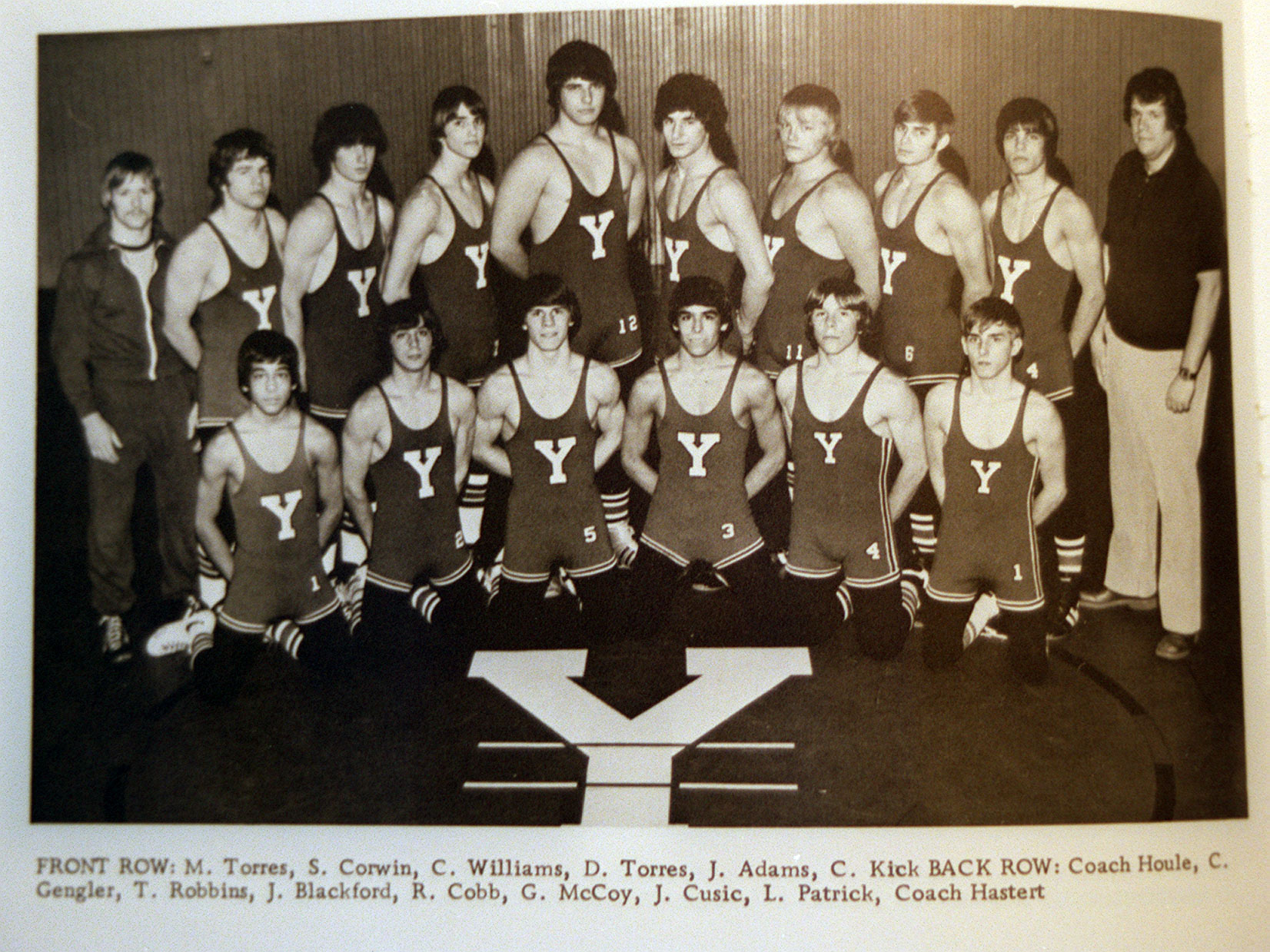
12-20-98 Copy photo from 1976 Yorkville Yearbook which shows Dennis Hastert who coached the 1976 state champion wrestling team...

Former Speaker of the House Dennis Hastert, the longest serving GOP Speaker in history, has been indicted for lying to the FBI and elaborately evading reporting requirements on large cash withdrawals for  payments he allegedly made to a male former student whom Hastert sexually abused while he was a high school wrestling coach over 30 years ago. If you want to read what is known about the unfolding Washington scandal s far, as well as partisan attempts at spin, you can try Politico, The Week, Talking Points Memo, OpenSecrets.orgWashington Post, Bloomberg Business, The National Memo, NBC News, Washington Monthly, Outside the Beltway, The Hill, Daily Mail, Patterico’s Pontifications and The Daily Kos.

Ethics observations:

1. This is a personal and professional tragedy, no matter what else may be true. Hastert has a family, and once had a career and a relatively solid reputation. The family is still there, though wounded; the rest is gone, presumably forever.

2. Assuming that what is coming out as the reason Hastert was paying millions in hush money is in fact true, he abused his position of trust as a teacher and committed a heinous crime. Nothing that he did subsequently as a public servant, or endured as a consequence of his actions, mitigates the seriousness of that misconduct. Continue reading