Facebook Manipulation, Ben Rhodes And Hillary’s Tech Minion’s Missing Emails: Seeking A Path To Objective Analysis (PART 1 of 2)

mind-control2

There are at least three news stories sending off toxic fumes right now, all—coincidentally?—suggesting sinister doings on the Left.

First, we have the Ben Rhodes story, where a key Obama foreign policy aide (with no experience in foreign policy but a degree in creative writing) boasts to a journalist on the record about how the Obama Administration, under his brilliant management, tricked journalists into misleading the public.

Second, we have Facebook employees revealing that Facebook is working hard at indoctrinating its users by pushing news items favorable to the Great Progressive Awakening while suppressing stories that might create sympathy for rightward politicians and causes.

Finally, we have the interesting news that the State Department can’t find Bryan Pagliano’s emails from the time he served as Secretary of State Hillary Clinton’s senior information technology staffer during her tenure there.

In order for citizens to have any chance of processing these events so as to have an accurate, as opposed to comforting, view of the forces directing their fates, they must banish all biases while simultaneously keeping a firm hold on their accumulated experience. How do we do that? Is it even possible?

The immediate, reflex reactions to stories like these, are, in no particular order,

I don’t believe it.

AHA! I knew it!

So what?

ARGHHHH! We’re doomed!

Good.

So how did the Mets do today?

The last one, sadly, is the most common. It is also arguably the most unethical, for the corruption of democracy thrives on apathy almost as much as it feeds upon, and nourishes, ignorance. Most Americans don’t know or care who Ben Rhodes is. Most don’t understand why Hillary Clinton’s emails are such a big deal, and are happy to accept that false narrative, fanned by Hillary herself, that it’s all a big invention by the right-wing conspiracy. Continue reading

Ethics Quiz: Second Thoughts About An Ethics Hero Emeritus

challenger-shuttle-disaster-crew

I periodically read random posts here from years ago, to check and see if I would make a different analysis today, and why. It almost never happens, which is good: though I may not trace all of the steps in every post, the systems, methods, models, values and priorities I use to assess various events and scenarios are established and consistent. I also check older posts when I am uncertain about a new version of an issue I have addressed before. Again, I am almost always struck by how closely my thinking then matches my approach now. I am also often struck by the fact that I don’t recall writing the earlier post at all. There are over 6000 of them, so I don’t feel too senile.

Today, however, I read this NPR story, about a previously unnamed engineer at NASA contractor Morton Thiokol who had been interviewed, with a promise of not being named, by NPR after the Challenger Space Shuttle exploded, 30 years ago. Now Bob Ebeling has finally come forward publicly, and allowed his name to be attached to his tragic story.The night before the launch, he and four other engineers had tried to stop it, because the weather was too cold—it was the coldest launch ever— and their research told them that that the rubber seals on the shuttle’s booster rockets wouldn’t function properly in the extreme temperatures. They begged for the launch to be postponed, but their supervisors and NASA overruled them.

That night, Ebeling told his wife, Darlene, “It’s going to blow up.” It did.

“I was one of the few that was really close to the situation,” Ebeling told NPR. “Had they listened to me and wait[ed] for a weather change, it might have been a completely different outcome…NASA ruled the launch. They had their mind set on going up and proving to the world they were right and they knew what they were doing. But they didn’t.”

Thirty years ago, when Ebeling didn’t want his name used or his voice recorded,  he said he feared losing his job but that,”I think the truth has to come out.” After the interview, the investigations, and the law suits, he left the company and suffered from depression and guilt that has lasted to this day. He told NPR that in 1986, as he watched that horrible video again on TV, he thought, “I could have done more. I should have done more.”

Reading and listening to the NPR story, I agreed with him. He should have done more. I was about to write a post from that perspective, when I realized I had not only written about another engineer who had tried to delay the launch, but inducted him into the Ethics Alarms Heroes Hall of Honor. His name was Roger Boisjoly, and of him I wrote in part…

Six months before the Challenger disaster, he wrote a memo to his bosses at Thiokol predicting”a catastrophe of the highest order” involving “loss of human life.” He had identified a flaw in the elastic seals at the joints of the multi-stage booster rockets: they tended to stiffen and unseal in cold weather.  NASA’s shuttle launch schedule included winter lift-offs, and Boisjoly  warned his company that send the Shuttle into space at low temperatures was too risky. On January 27, 1986, the day before the scheduled launch of the Challenger, Boisjoly and his colleague Allan J. McDonald argued for hours with NASA officials to persuade NASA to delay the launch, only to be over-ruled, first by NASA, then by Thiokol, which deferred to its client.

And the next day, on a clear and beautiful morning, the Shuttle’s rocket exploded after take-off, killing the crew of seven and mortally wounding the space program.

My ethics verdict then? This:

“Can we accurately call Roger Boisjoly an Ethics Hero, even though he didn’t stop the launch? I usually don’t like to call people heroes for doing their jobs. If Thiokol and NASA had behaved ethically, competently and rationally, we would not know anything about his memo or him. He did the right things, as his duties demanded. He alerted management to a deadly problem in plenty of time to address it. When they went forward, he argued and protested, until the decision was final. Afterwards, he told the truth to investigators, so the decision-making problems could be addressed. In his world, in that bureaucracy, this—doing his duty, doing the right thing—took courage. He knew, I am certain, that his career would suffer as a result of his actions. Yes, that makes Roger Boisjoly an ethics hero.”

If Boisjoly was a hero, then so is Ebeling, though Boisjoly spent the rest of his professional life lecturing at engineering schools around the world on ethical decision-making, trying to prevent future disasters.

So please help me resolve a Present Jack vs. Past Jack conflict, by considering this Ethics Alarms Ethics Quiz:

Are Bob Ebeling and Roger Boisjoly really heroes?

Continue reading

The Nurturing Of Race Hate, Part Two: The Daniele Watts Saga

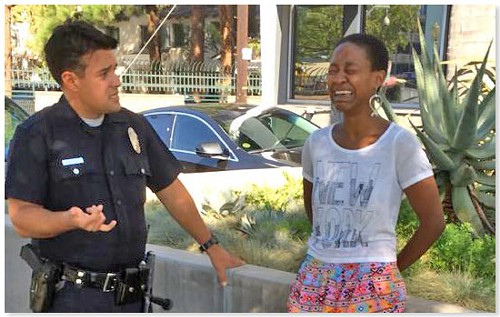
daniele-watts

Last September, African-American actress Daniele Watts (“Django Unchained”) engaged in lewd, if non-felonious, public conduct, then exploited the tensions arising out of Ferguson to claim victim status, police harassment and race prejudice. When the police were exonerated by the recording of her arrest and she was ordered to apologize by a judge (and asked to apologize by civil rights leaders, who were embarrassed after they rallied to her support only to find that she had played the race card without  justification), she failed—twice—to deliver a sincere apology. She is defiant and intoxicated by her martyrdom, another young African American who has been convinced of her entitlement to be an anti-white racist.

To appreciate the tale, we have to go back to September 11, 2014, when the actress and her white boyfriend, a “celebrity chef,” were visibly engaged in sexual conduct in their car in broad daylight on an LA street. Neighbors complained—we have not yet reached the point where rutting in public is legal and acceptable, but give progressives time—and police responded. Naturally, as this was at the height of the Ferguson controversy, the news media immediately reported the story as more police harassment of black citizens, this time for “kissing while black.” Here’s a typical account from  September 14: Continue reading

The Nurturing Of Race Hate And The News Media’s Complicity, Part One: The False Lessons of Nick Kristof

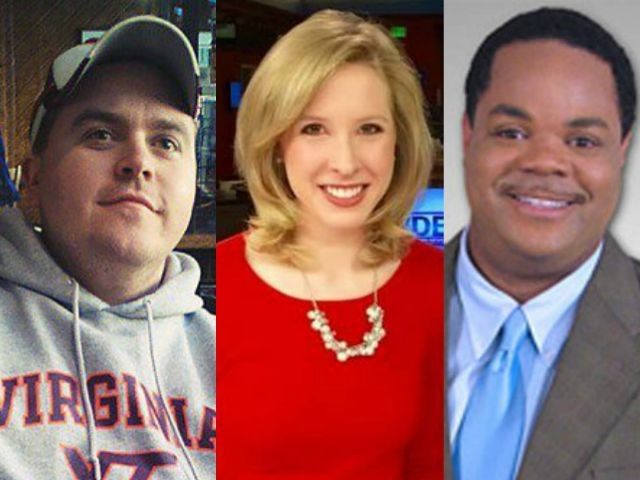
alison-parker-vester-flanagan-adam-ward-640x480

When it was reported that Vester Lee Flanagan II had accused one of his victims, Alison Parker, of making racist statements,  Baltimore BlackLivesMatter activist Kwame Rose tweeted that he hoped the accusation would be investigated, because it is white racism that causes blacks like Flanagan to turn against society. Now we have Rose’s answer (not that he’ll accept it, being a professional race-baiter): the shooter had been offended when the white reporter had talked about “going out into the field,” taking it as a reference to cotton fields. When a watermelon was bought by a TV station exec for the staff to share on a summer day, Flanagan thought it was a racist gesture aimed at him.The race hate that many in the black and progressive community have been working overtime to embed in the nation—brings out the base to vote, you know—bore deadly fruit in Vester Lee Flanagan. And he will not be the last.

A man with a successful and famous father who could never find success, Flanagan had absorbed the false assertion being aggressively pushed by political leaders and activists in the black community that the United States is so hostile to African Americans that none of his failures were due o his own choices, problems or conduct. His expanding racial paranoia made it impossible for him to keep a job, and ultimately led to murder and suicide.

Well done Continue reading

Gotcha! The New York Times Again Proves Its Bias And Unethical Journalism

F minus

One litmus test I have for whether individual Democrats, liberals and progressives have integrity and  can be trusted is whether they will admit that the left-leaning bias in the mainstream media is wrong and intolerable….and is real. It is amazing and depressing how few pass that test. For until liberals demand fairness and objectivity from journalists, the chances that the mainstream media will see the importance of reforming and actually following their own codes of ethics are nil.

The self-exiled Barry Deutsch, a perceptive and intelligent leftist cartoonist/blogger  (it’s a good blog) who once was a prolific commenter here, flunked the test repeatedly, which I found perplexing. Barry is an honest man. Why couldn’t he see it? Was it because his own bias is so strong that what the news media produced as slanted reporting seemed fair and accurate to his similarly slanted worldview? Was it that he is so far left that the news media seemed conservative to him, so the frequent, throbbingly obvious examples of the news media being left-biased—the cheerleading for Obama’s election, the relentless savaging of Sarah Palin, the open lobbying for the ACA, climate change legislation, gay marriage and gun control, the embargoes on coverage of scandals that would have attracted Watergate-level scrutiny in a GOP administration, like the IRS scandal, and much more) didn’t compute?

I still don’t have an answer, and Barry is gone, without ever supplying me with a plausible answer.

I have to think, however, that even Barry would have a hard time denying this example, neatly flagged by Elizabeth Rice Foley. She writes, on Instapundit this afternoon: Continue reading

Bill Cosby’s Rationalization: #14. Self-Validating Virtue

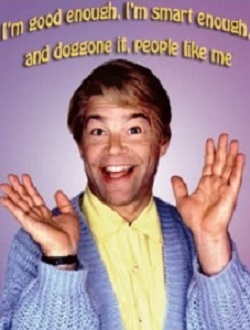
stuart-smalleyThe smoking gun Bill Cosby deposition took place over four days in September 2005 and March 2006, during which time the comedy icon answered questions in a lawsuit alleging sexual assault filed by Andrea Constand, a former basketball operations manager at Temple University. Cosby settled the case, we now know, to avoid the testimony of several women who were prepared to back Constand with similar stories of being sexually assaulted. The deposition did not become public until it was revealed this month by the Associated Press and the New York Times.

Here is a fascinating exchange from that deposition:

Constand’s lawyer:  Do you feel that you are a good person?

Cosby:   Yes.

With this, Bill Cosby illustrates one of the more common and troubling rationalizations, #14 on the Ethics Alarms list, Self-validating Virtue:

A  corollary of the Saint’s Excuse  is “Self-validating Virtue,” in which the act is judged by the perceived goodness of the person doing it, rather than the other way around. This is applied by the doer, who reasons, “I am a good and ethical person. I have decided to do this; therefore this must be an ethical thing to do, since I would never do anything unethical.” Effective, seductive, and dangerous, this rationalization short-circuits ethical decision-making, and is among the reasons good people do bad things, and keep doing them, even when the critics point out their obvious unethical nature. Good people do bad things sometimes because they are (or were) good people, and because of complacency and self-esteem begin with a conviction, often well supported by their experience, that they are incapable of doing something terribly wrong.

All of us are capable of that, if our ethics alarms freeze due to our environment, emotions, peer pressure, and corrupting leadership, among many possible causes. At the end of the movie “Falling Down,” the rampaging vigilante played by Michael Douglas, once a submissive, law-abiding citizen, suddenly realizes what he has done. “I’m the bad guy?” he asks incredulously. Indeed he is. All of us, no matter how virtuous,are capable of becoming the bad guy…especially when we are convinced that we are not.

Very few people can admit that they are not good people. Public polls suggest that over 90% of Americans think they are the most ethical people they know. I am certain Cosby was sincere in his answer. His complete absorption by this rationalization explains the apparent astounding hypocrisy between his words, public image and private life. Cosby doesn’t believe he has done anything wrong. How could he? He’s Bill Cosby, and Bill Cosby is good.

Indeed, Cosby embodies the kind of person described by Michael (Jeff Goldblum) in “The Big Chill”:

“Nobody thinks they’re a bad person. I don’t claim people think they do the right thing.They may know they do dishonest or manipulative things……but think there’s a good reason for it. They think it’ll turn out for the best. If it turns out best for them, it is by definition what’s best.You also come up against a question of style. My style may be too direct. Perhaps given my style I seem more nakedly……opportunistic or jerky or… – Whatever. All that’s happening is I’m trying to get what I want. Which is what we all do, but their styles are so warm……you don’t realize they’re trying to get what they want. So my transparent efforts are more honest and admirable….Don’t knock rationalization. Where would we be without it? I don’t know anyone who can go a day without two or three rationalizations. They’re more important than sex.”

Well, let’s say that for Bill Cosby they are exactly as important as sex.


Of Shoes and Socks, and the Soothing, Unethical Device of Lowered Obama Leadership Goals and Aspirations

shoes and socks

I had a friend in college named David, a talented musician and a funny guy, who one regaled me with his new theory of how to be a success and eliminate anxiety and stress in the bargain.

“See, we make ourselves miserable and guarantee failure by setting our goals impossibly high,” he said. “The secret to a happy, successful, care-free life is to set one’s goals extremely low. Last week, I was depressed because I had aimed at attending all my classes, writing 50 pages on my thesis, and finishing my reading assignments. I didn’t come close to accomplishing this, and I was miserable and guilty as a result.”

“Then I had an epiphany! Today I set my goal, my only one, as putting on my shoes and socks,” David explained. “That was it, the whole thing. Look! I did it! And it’s only noon!” He laughed and skipped away, not a care in the world.

I’m pretty sure he was kidding. Yet the Obama Administration, and its increasingly zombie-like, denial-motivated supporters, appears to have adopted this approach to leadership. Continue reading

Morning Pop Quiz On Ethics And Leadership: What’s Wrong With White House Spokesman Josh Earnest’s TSA Quote?

Here’s the quote, from Earnest’s  statement on behalf of the President:

“The President does continue to have confidence that the officers of the TSA do very important work that continues to protect the American people.”

Your pop quiz:

What’s wrong with it?

(It is very wrong.)

I’ll give you a minute (It took me 3 seconds) “Final Jeopardy” style:

Got it?

Here we go…. Continue reading

TSA’s Incompetence: Combining David Brooks’ Scandal-Free Fantasy With United’s Anti-Soda Can Policy For Muslem Passengers

mashupmonday

Now we have this:

Washington (CNN)Airport screeners failed to detect explosives and weapons in nearly every test that an undercover Homeland Security team conducted at dozens of airports, according to an internal investigation.

The Transportation Security Administration found that “red teams” with the Department of Homeland Security’s Office of the Inspector General were able to get banned items through the screening process in 67 out of 70 tests — 95% — it conducted across the nation.

In other words, since those deadly Islamic terrorists can easily smuggle explosives and weapons on board United flights (or any others), it’s really silly to rob them of the pleasure of sipping a Diet Coke from a freshly opened can as they wait to send everyone to Allah.

In more words, all of the hundreds of thousands of hours, pointless inconvenience and hassle, emptying of pockets, taking off of shoes and belts, moving laptops in and out of bags, showing IDs and boarding passes, as well as the occasional intrusive and unpleasant feel-up pat-downs by strangers wearing rubber gloves that have been inflicted on air passengers (like me) have been stupid, useless, and as effective at keeping airplanes safe as being checked by a blind marmoset with a divining rod.

Of course, David Brooks wouldn’t call the TSA’s gross failure an example of inexcusable incompetence, lack of oversight and breach of trust a scandal either, because it doesn’t involve sex (well, at least in most of the patdowns)  or criminal acts, and is the responsibility of Barack Obama, whose administration is amazingly scandal-free, so this can’t be a scandal by definition.

I beg to differ. The stunning incompetence and lack of competent management, accountability (watch: nobody will be fired for this) or oversight exemplified by this latest fiasco is an ongoing scandal of the worst kind, one of many, or, if you prefer, just the single, devastating, huge, two-term scandal that is the Barack Obama presidency, the most arrogant and incompetent administration in U.S. history.

Ethics Observations On NYT Columnist David Brooks’ Astounding Quote

scandal

Amazingly, Obama hasn’t had any.

Here is the quote:

“President Obama has run an amazingly scandal-free administration, not only he himself, but the people around him, not only he himself, but the people around him. He’s chosen people who have been pretty scandal-free. And so there are people in Washington who do set a standard of integrity, who do seem to attract people of quality. And I think that’s probably true of the current group.”

Yes, it was almost a Kaboom!, causing my head to explode. Yes, I think it is stunning thing for anyone to say, but especially a pundit who is respected–by some, anyway—for his careful thought and moderation. Yes, it is ridiculous on its face.

Fascinating and enlightening though!

1. Brooks, though he has wavered occasionally, has always had a man-crush on Obama. Acknowledging this as he has, it shows remarkable lack of bias-control to let it run wild to this extent.

2. It is a terrific example of how linguistics can warp ethics, and vice-versa. The only possible way someone can make such a statement honestly—yes, I do believe Brooks really thinks this, as plainly counter-factual as it is—-is to consciously or sub-consciously define “scandal” so extremely that it omits anything connected to the Obama Administration. If Brooks believes that “scandals’ only involve theft, criminal activity and sex, he has a barely supportable thesis. Barely. Well, not really even then.

3. Not just scandal-free, but “amazingly” scandal free! This gets into Big Lie territory; perhaps “Big Hyperbole” is a bit more accurate. To be “amazingly scandal free,” we would hold up this Administration as the ethics model for all future administrations. Be still, my expanding head…

4. Is this clinical denial? I have mentioned here before that a disturbing number of Democrats and progressives, as well as African Americans, defend Obama by just asserting that everything is wonderful, no matter what goes wrong, and that Obama himself is a great President, despite near complete incompetence in every sphere. Some of these are professional liars and ideological warriors, of course; some are also just not too bright. Brooks, however, doesn’t fit in those categories. Continue reading