Welcome To “Unethical Presidential Candidates Sunday”! First Up, Rationalization 19 A: The Insidious Confession, Or “It Wasn’t The Best Choice”

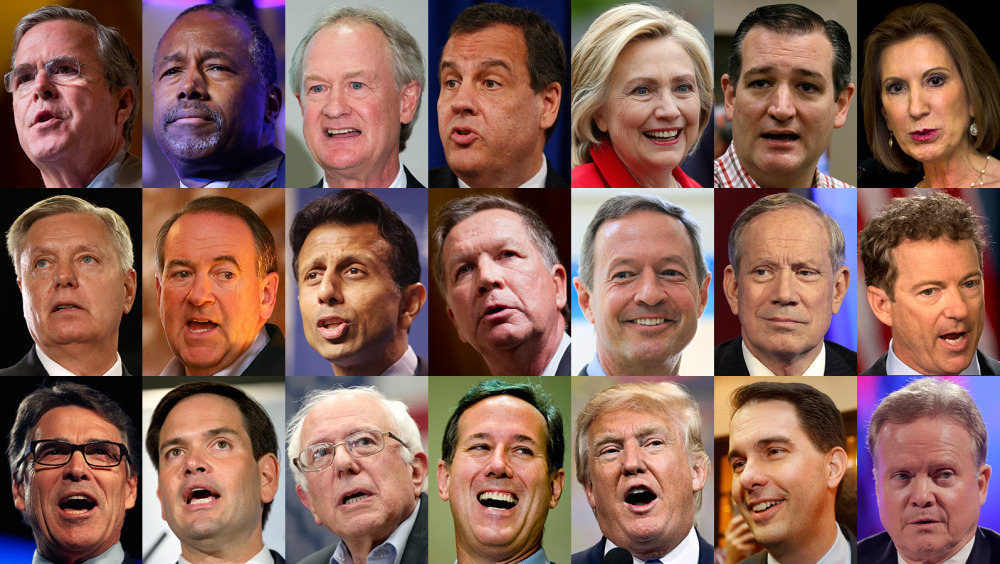
Presidential cnadidates

I have tired of suppressing legitimate ethics issues regarding the various Presidential candidates, especially the most obviously unethical ones, Hillary and The Donald, for fear of having this pan-ethics blog mired in the swamp of politics. For this day, at least, I’m going to stop wrestling myself to the ground and stop holding back my rising gorge, and focus specifically (though maybe not exclusively: you never know) on the 54—or is it 22? I get the number of Bill Cosby victims mixed up with the announced Presidential candidates sometimes—on the pack of Republicans and Democrats with designs on the White House. So look out, Jeb, Ben, Chris,  Ted, Carly, Jim Gilmore), Lindsey, Mike, Bobby,  John, George, Rand, Rick, Marco, Rick, Donald Trump, Lincoln, Hillary, Martin, Bernie, Professor, Jim (Webb)….this is

Unethical Presidential Candidates Sunday!

First up…Hillary Clinton gave us a new rationalization! Say hello to Rationalization 19A, the latest addition to the Ethics Alarms Rationalizations List, #19A The Insidious Confession, or “It wasn’t the best choice.”

When Hillary Clinton first used her poll-tested, Campaign War Room generated description of her arrogant, defiant, incompetent and irresponsible (and possibly sinister) choice to send official communications on a private email server as not “the best choice,” I recognized it as misleading and dismissive, but assumed it was just a wan variation on my least favorite rationalization, the dreaded #22, “It’s not the worst thing.” Hillary used the same phrase this week, cementing my conviction that it is a talking point, but also making its real meaning clear.

“It wasn’t the best choice” is really a sneaky sub category of Rationalization #19:
Continue reading

Debate Ethics: Megyn Kelly’s Challenging Donald Trump For His Uncivil Rhetoric Was Not Only Fair, It Was Necessary

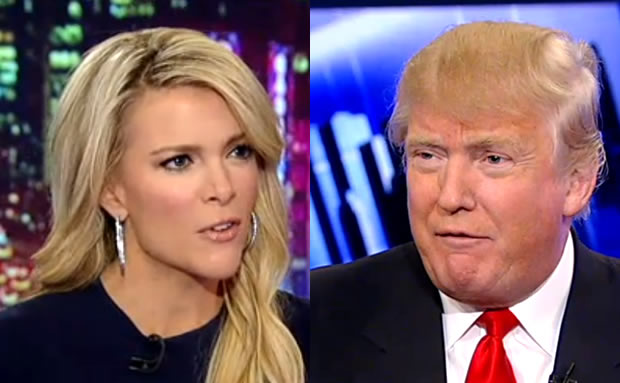
Trump and Kelly

It sometimes takes episodes like the hard right’s reaction to the Republican candidates’ debate Thursday night to remind me how ethically-challenged some—a lot, too many— of these people are. Why does this keep surprising me?

I honestly didn’t see it coming: one conservative pundit after another has criticized Megyn Kelly for challenging Donald Trump regarding his repeated episodes of using vulgar, crude, and uncivil language to denigrate women. In case you don’t recall, here was the exchange:

Kelly: One of the things people love about you is you speak your mind and you don’t use a politician’s filter However, that is not without its downsides, in particular, when it comes to women. You’ve called women you don’t like fat pigs, dogs, slobs, and disgusting animals.

Trump: Only Rosie O’Donnell.

Kelly: For the record, it was well beyond Rosie. You once told a contestant on ‘Celebrity Apprentice’ it would be a pretty picture to see her on her knees. Does that sound to you like the temperament of a man we should elect as president?

Instapundit understudy Elizabeth Price Foley called the question “silliness.” Examining the ethical values of a potential President, and civility is a cornerstone of them, is not “silly.”

Lindsay Graham, who apparently has decided that he should say anything, even stupid things, to keep his name in the news, defended Trump, telling the media that

“At the end of the day, ask the man a question that explains his position and his solutions rather than a ten-minute question that describes him as the biggest bastard on the planet.”

No, Trump’s own conduct and rhetoric describe him as one of the biggest bastards on the planet. He was given a chance to explain why reasonable people shouldn’t think they disqualify him to be President. After all, they do. Continue reading

Unethical Quote Of The Month: Democratic Operative Paul Begala

“Voters do not give a shit. They do not even give a fart… Find me one persuadable voter who agrees with HRC on the issues but will vote against her because she has a non-archival-compliant email system and I’ll kiss your ass in Macy’s window and say it smells like roses.”

—Clinton enabler/mouthpiece/consultant Paul Begala, quoted in Politico’s essay by Gabriel Debendetti 

roses

Begala, just in case you’ve forgotten, was the most loathsome of Bill Clinton’s paid defenders—deceitful, smug, arrogant, Machiavellian. I’ll confess my bias: along with Karl Rove, David Axelrod, Dick Morris, James Carville and his wife, Mary Matalin, and others whose names I am mercifully unaware of so far, Begala and his species are the scourge of the political culture as well as democracy itself. Their stock in trade is misrepresentation, and their objective is to make Americans ignorant, uncritical, lazy, compliant, and gullible. The contempt they have for Americans is palpable, as in Begala’s quote. Continue reading

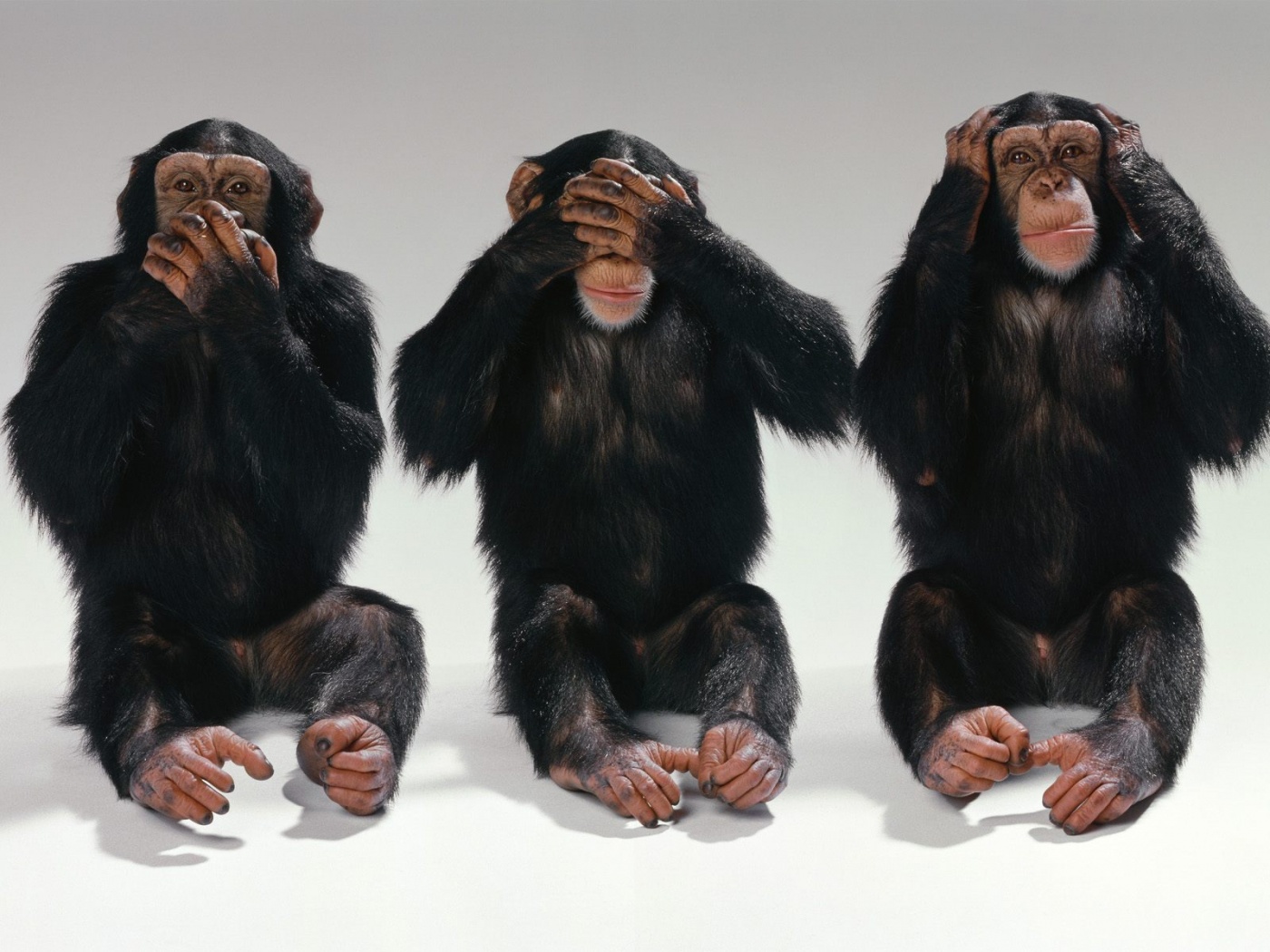
When The Truth Hurts, But A Lie Will Hurt More

see_no_evil_hear_no_evil_speak_no_evil

In the early stages of the  Monica Lewinsky scandal, President Bill Clinton infamously asked his then advisor-polster Dick Morris to research whether a lie or the truth would best serve Clinton’s purposes.  (Morris’s recommendation based on his polling data: “Lie your head off.“) The attitude that truth is just a conduct option with no more or less to recommend in it than various versions of spin, deceit, obfuscation, misrepresentation, fabrication and denial is endemic to politics, which is not to say that it is necessary or healthy. Lies can be justifiable tools of the trade in the utilitarian world of politics and government, but if there isn’t an accepted recognition that they are inherently harmful, lazy, undermine trust and tend to become addicting (See: Dick Morris and Bill Clinton), then the cure becomes worse than the disease.

The Presidency of Barack Obama should be remembered as a stark lesson in the danger of avoiding unpleasant truths. What focused my attention on this was an interview that featured journalist Geraldo Rivera opining that describing President Obama’s performance in the wake of the Ukrainian incursion “weak” was “unhelpful,” “borderline patriotic” and “accomplishes absolutely nothing but scoring cheap political points in the near future.” At the same time, this morning’s Washington Post is filled with commentators struggling with the Democratic Party’s Obamacare problem, following the disheartening defeat of Alex Sink in a special Congressional election in Florida. Some of those commentators argue that beleaguered Democrats should aggressively make the case that the Affordable Care Act is a roaring success. Or as Dick Morris would put it, “Lie your head off.” Continue reading

Lance Armstrong and the Sociopath’s Dilemma: When Honesty Is No Longer Ethical

Welcome to the club, Lance.

Welcome to the club, Lance.

Rose

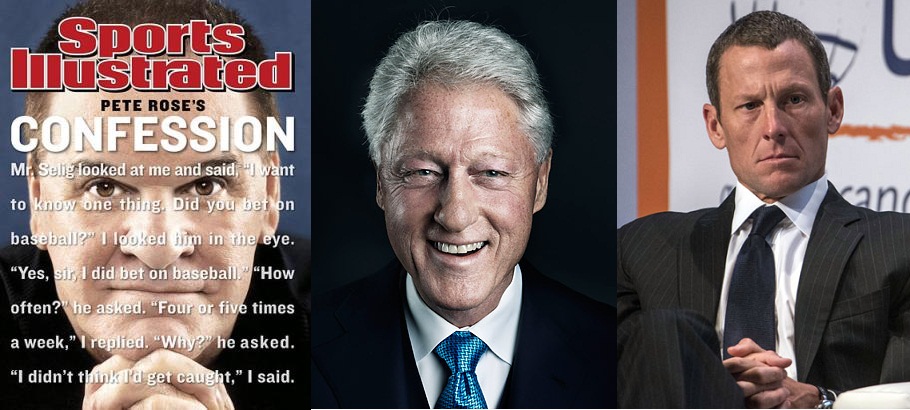
In 2004, 15 years after he had been banned from baseball after a finding by the Major League Baseball’s Commissioner’s Office that he had violated the games rules against betting on Major League Games, Pete Rose publicly admitted that his denials over that time were all lies. Yes, he had bet on baseball, and he was very, very sorry. Rose’s admission did little to change the verdict in and out of baseball that he was a rogue and a liar. His confession was obviously part of a cynical and calculated strategy to get reinstated in the game, after the strategy of denial and waiting proved ineffective. In addition, Rose needed money, and the confession was part of the hook for his new autobiographical book, which was released at the same time he withdrew his protestations of innocence.

For Pete Rose, honesty was not an ethical value that he respected or returned to in penance after years of straying. It was just another means to an end.

Clinton

In 1998, President Bill Clinton was in the midst of the Monica Lewinsky scandal, denying that he had ever “had sex with that woman.” He called up his old friend, advisor and pollster, Dick Morris, and asked what he should do. Together they decided that Morris ought to take a poll to see what the public’s reaction would be if Clinton retracted his denials and admitted the affair. Morris reported back, after taking such a poll, that while the public would forgive the sexual relationship, anger over the President’s untruthful denials might sink his administration. Clinton decided that honesty would not work to his advantage, and continued to lie.

To Bill Clinton and Morris, honesty was just one of several tactical options to solve a political crisis. If had nothing to do with ethics, or doing the right thing.

Armstrong

It is 2013, and the New York Times reports that Lance Armstrong, now stripped of all his cycling titles, banned from athletic competition worldwide and separated from his commercial sponsors and the cancer charity that bears his name,

“has told associates and antidoping officials that he is considering publicly admitting that he used banned performance-enhancing drugs and blood transfusions during his cycling career, according to several people with direct knowledge of the situation. He would do this, the people said, because he wants to persuade antidoping officials to restore his eligibility so he can resume his athletic career.”

Armstrong, it is clear, is traveling in the well-worn and slimy footsteps of Rose and Clinton, fellow sociopaths to whom conscience, shame, contrition and remorse are alien concepts and for whom atonement and redemption are just games to win, with honesty being an indispensable, if unpleasant, tactic. When one is considering whether or not to be honest and admit what one has long denied based on cold calculations of personal costs and benefits, truth-telling is no longer a matter of ethics, or doing the right thing regardless of consequences. It is merely another weapon, along with lies, manipulation, deceit and posturing, in the arsenal of one of the lifetime predators whose sole goal in life is to prevail and profit over the rest of the trusting suckers who share the Earth with them, and who will do anything, even to the extent of briefly embracing ethical principles, to get what they want.

Should he decide to finally admit what everyone knows and he has long denied, even to the extent of suing those who declared his guilty, Lance Armstrong should be seen as no more ethical or noble than the criminal who pleads guilty in court on the advice of his lawyer, because the evidence is overwhelming, conviction is certain, and confession is the only route to a lighter sentence.

Individuals like Pete Rose, Bill Clinton and Lance Armstrong defile ethical values by their brief embrace of them.
The Prince, The Sex Offender, and the Ethics of Friendship

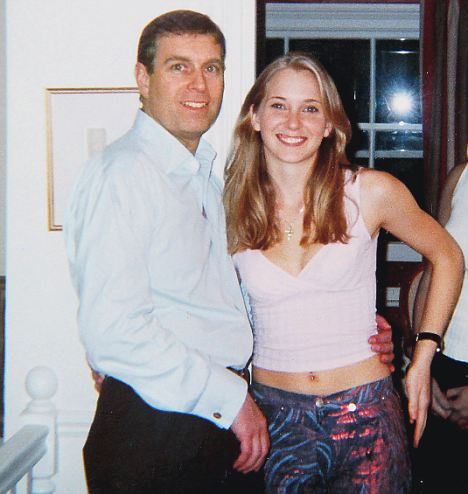
Prince Andrew with one of his friend's victims in 2001

The ethics of friendship is complicated.

President Bush claimed to be friends with Vladimir Putin. F.D.R. once said that Josef Stalin was his friend. President Obama was famously friendly with dubious characters like Rev. Wright and William Ayres.

History is full of heroes and near-heroes who had infamous friends, though the extent of the often friendship is difficult to know. Sammy Davis, Jr. and Elvis were supposedly buddies with Richard Nixon. Bill and Hillary Clinton were close friends with Dick Morris. Wyatt Earp was a life-long friend of “Doc” Holliday; Andrew Jackson may have been friends with pirate Jean Lafitte, who helped him win the Battle of New Orleans. We simultaneously celebrate loyal friends, and yet we also judge people by the company they keep. Should we condemn individuals who have friends with serious character flaws or a history of unsavory acts? Or should we admire them for sticking with their friends when everyone else is turning against them? Continue reading

Ethics Final For Barack Obama

Is President Obama the fair, ethical, unifying, anti-partisan president of all the people that he promised to be in 2008, or is he a Machiavellian, undercover Chicago pol, willing and ready to use divisiveness and deceit to enhance his power, silence critics and advance his agenda? During the past two years, there has been ample evidence supporting both descriptions, but his address in Arizona Wednesday could settle the issue. If the President emulates his Democratic predecessor, Bill Clinton, using the massacre in Arizona as a political wedge the way Clinton used the Oklahoma City bombing—if he adopts the philosophy of former Chief-of-Staff Rahm Emmanuel that one should never waste a crisis—then we will know the dispiriting truth about Barack Obama. Continue reading

Flunking the Keith Olbermann Test

Every so often there is a news story that exposes the serious deficiencies in the ethics comprehension in the public and the media. The Clinton-Lewinsky scandal was one such story; Major League Baseball’s steroid controversy was another. I confess: I didn’t see the Keith Olbermann suspension for making political donations as having the potential to be another test of ethical competence, but it is. And almost everyone is flunking it.

The facts of the Olbermann incident are deceptively simple. The rant-prone, self-annointed champion of the Angry Left violated an NBC ethics policy that forbade its reporters and commentators from making political contributions, on the theory, absurd when applied to Olbermann,  that it compromises their reputation for objectivity. Olbermann has no objectivity, or reputation for it either. Nonetheless, he intentionally and flagrantly violated his employer’s policy. That alone justifies his suspension, whether or not the policy is idiotic. And it is.

But Olbermann’s fans and critics alike are all over the internet attaching rationalizations and flawed ethical reasoning to the episode. Such as: Continue reading

Leona Gage: A Celebrity Liar Ahead of Her Time

Leona Gage died last week, and there are people who love her and will miss her. But Gage’s obituary would have never been deemed worth of mention in major newspapers had it not been for a series of lies she concocted in 1957 because “she needed the money.” She was Miss USA that year, until contest organizers discovered that, contrary to what she had said,  she wasn’t single ( a requirement then); wasn’t waiting “until she was 26” to have a boyfriend (she had been married twice at 14, and already had a child), and wasn’t 21…she was just 18. Continue reading

Ethics Dunce: CNN

Eliot Spitzer, disgraced New York Governor, law-breaking lawyer, spectacularly unfaithful husband and hypocrite for the ages, is just perfect, in CNN’s eyes, for trenchant and probing news commentary. He will be co-hosting a new talking head show on the network, partnered with conservative columnist Kathleen Parker, who as far as we know hasn’t operated any prostitution rings, not that it would matter to CNN.

Thus will the venerable cable news network adopt the strategy that has worked so well for Fox News and too many other media organizations: find infamous people who have thoroughly humiliated themselves and betrayed those who have trusted them—individuals who by all principles of justice and fairness deserve to be relegated to permanent obscurity until they have proven by hard work, good deeds and appropriate contrition, that they may again be worthy of trust—and give exposure, celebrity and employment to these anti-role models rather than to any of the large number of more deserving, talented, honest, reliable and admirable professionals who are available and capable. Continue reading