Ethics Tip To The Michigan Bar: Disbar Incompetent And Unethical Lawyers, The Justice System Works Better

There are too many stories like this. The Detroit News reports that Davontae Sanford, who spent his teen years and early 20s behind bars for multiple murders he didn’t commit, will be released today after the judge who presided over his 2008 trial vacated his sentence. It seems that he was innocent of the crimes, as a confession by someone else shortly after he was locked up should have suggested. Read the whole tale. I spit out a mouthful of coffee, however, when I got to this part, near the end of the article.

Sharing criticism for this miscarriage of justice, along with police and prosecutors,  is Sanford’s original attorney, Robert Slameka.  Sanford’s current attorney told reporters,

“One of the really tremendous failures of the system was his defense attorney. There was not one pretrial motion that was brought. Davontae’s confession had all the hallmarks of a false confession; (it was) never challenged. The failures are manifest, but a lot of it falls to the one person who was supposed to protect Davontae in this process, and that was his attorney. And that wasn’t done, and when that’s not done, the system sort of collapses.”

This lawyer didn’t stutter (that is, I don’t think so) but  convinced Sanford to plead guilty to second-degree murder, telling him prosecutors had an iron-clad case, and that if he pleaded, he’d get out of prison earlier. While allegedly defending the teen,  Slameka waived making an opening statement (maybe he DID stutter!) , and never cross-examined the detective who questioned Sanford. Continue reading
Now THAT’S An Unethical Lawyer!

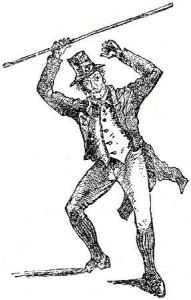
"Ay, ye fekin' eejit, I'll be reefing ye with me shillelagh!"  TRANSLATION: "Disbar me, quick!"

“Ay, ye fekin’ eejit, I’ll be reefing ye with me shillelagh!” TRANSLATION: “Disbar me, quick!”

Yesterday I posted on Facebook a real news story about an Australian teen who plotted to plant explosives on a kangaroo and sent it hopping to a terrorism target. This story, about a Louisiana lawyer who is either trying to get disbarred (with apparent success) or has lost his mind struck me about the same way. Everything seems to spinning out of control.

The Louisiana Bar Disciplinary Board  has recommended permanent disbarment for lawyer Ashton O’Dwyer Jr. This passage of its report particularly appealed to me: During a June 2012 hearing by the committee, O’Dwyer “had to be admonished for brandishing about his shillelagh, his action clearly inappropriate for a disciplinary proceeding.”

Clearly.

That’s just a sample. Here’s a random selection of some examples of how this spunky Irishman has behaved,  from the “How To Get Disbarred” handbook.

O’Dwyer first ran afoul of the ethics rules  in federal court in New Orleans during Hurricane Katrina litigation, when he engaged in personal attacks on the judge and opposing counsel, and engaged in other irregularities “prejudicial to the administration of justice.”  He was suspended by that court in 2008 for his  conduct. In response, he…

….filed a “Declaration of His Intentionally Contemptuous Non-Compliance with the Court’s Order”…

….called the Louisiana Supreme Court a “bunch of kids”…

…referred to the chief justice with a “sexual and offensive nickname,” according to hearing board’s findings of fact.

O’Dwyer then sent an email to the disciplinary counsel in which he implausibly denied the use of racially disparaging terms, which the bar found to be “disingenuous.” Then he sent another email the same day calling the disciplinary counsel a “pimp,” a “puppet,”  “Uncle Tom” and an “Oreo.”

Nothing racially disparaging about any of that, right? All of this got him disbarred for a minimum of two years. Continue reading

Three Florida Lawyers Discover How Reporting a Crime Can Be Unethical

DUI_setup

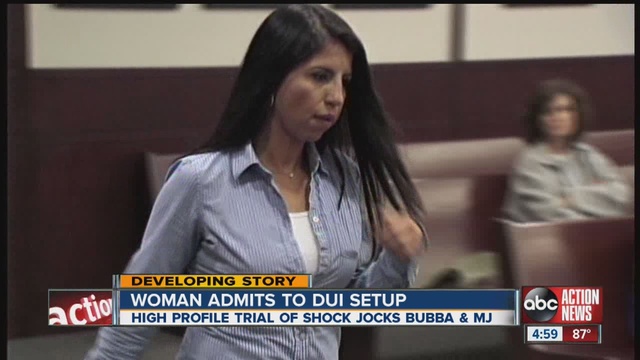
How can you get disbarred for reporting a drunk driver? Three Florida lawyers were up to the task.

Stephen Diaco, Robert Adams and Adam Filthaut were found to have “maliciously” set up the drunken-driving arrest of their opposing counsel in a  high-profile defamation trial, and Judge W. Douglas Baird,  the referee in their legal ethics case,  wrote  that Stephen Diaco, Robert Adams and Adam Filthaut should lose their licenses permanently under the legal ethics standards of the Florida Bar.

In 2013, C. Philip Campbell was representing radio shock jock Todd “MJ” Schnitt in his slander suit against another DJ, “Bubba the Love Sponge” Clem. Clem was represented by the Adams and Diaco law firm. Campbell  left court and went to Malio’s Steakhouse in downtown Tampa, near his home and office. While Campbell was at the eatery, he was spotted by Melissa Personius, a young paralegal who worked for Adams and Diaco.

According to testimony, Personius called her boss, Adams, to report that Campbell was in the restaurant. Then Personius sat next to Campbell and the two bought each other drinks. As the night proceeded, Personius periodically relayed information to Adams. Adams then contacted Diaco and Diaco constacted Filthaut to agree upon next steps. The key was that Filthaut was friends with Sgt. Raymond Fernandez, who was then head of the Tampa police DUI unit, thus was able to sic  the DUI unit on the unsuspecting opposing counsel, who was in the process of being plied with liquor by Adams and Diaco’s attractive paralegal.

When it was time to for the targeted lawyer to leave, Campbell told Personius that she was too tipsy to drive and offered to call her a cab. Personius protested that she didn’t want to leave her car at the restaurant overnight and asked Campbell  if he would move the car for her. “Of course,” he said, nice guy that he is. As Campbell drove her vehicle up the street, he made an illegal turn and was pulled over by Fernandez officers, who were lying in wait. He was arrested and charged with DUI. Continue reading

Now THIS Is An Incompetent Lawyer

Now that's who you want defending you in your capital murder trial..Thomas Jeffer..wait, WHAT???

Now that’s who you want defending you in your capital murder trial..Thomas Jeffer..wait, WHAT???

Dennis Hawver, an Ozawkie, Kansas attorney, was disbarred last week by the Kansas Supreme Court. The court ruled that Hawver showed “inexplicable incompetence” as a defense attorney for Phillip Cheatham, charged with first degree murder and tried in a 2005.  Cheatham’s conviction was overturned and  a new trial was ordered  in 2013, on the grounds that Hawver did not provide an adequate defense and thus Cheatham did not receive a fair trial. Yes, I think that was a fair assessment, given that..

  • In voir dire, Hawver told prospective jurors that his client was “a cocaine dealer” who had “killed another cocaine dealer with a gun.”
  • During the trial, he informed the jury that his client had previously been convicted of voluntary manslaughter, even though prosecutors had agreed to less prejudicial  stipulation that the Cheatham had a “prior felony conviction” without further details.
  • Hawlor failed to present evidence that might have shown that his client that was not in the city where the murder occurred at the time it occurred. He failed to investigate alibi witnesses.
  • He didn’t track his client’s cellphone to find his location at the time of the murders.
  • During the sentencing phase of the trial, after his client had been found guilty, Hawlor said “the killer” should be executed.


  • Hawver  made the creative argument at trial that his client would never have left a witness alive if he had been the one who shot the two female victims.

Continue reading

Professional Discipline For Unethical Law School Deans?

Why not?

What the North Carolina Bar considers a trustworthy lawyer...

What the North Carolina Bar considers a trustworthy lawyer…

Law professor Ben Trachtenberg has caused a stir by suggesting in a law review article for the University of Missouri Law School Journal  that law school administrators responsible for intentional and egregious misrepresentations in advertising for their schools have violated the professional ethics codes and could, and should, face discipline, such as disbarment.

I don’t want to cause Nando a fatal cognitive dissonance attack, really I don’t, but I agree with the professor wholeheartedly. I have long believed that the Model Rules prohibition of dishonesty in Rule 8.4 should be applied to lawyer conduct not related to the practice of law more frequently and stringently than it is. Lawyers, for their own protection, are fond of the fictional Clinton myth that one can be an upright and trustworthy lawyer while displaying deceitful and dishonest conduct in their “personal lives,” as if lawyers are ethically schizophrenic. The proof: John Edwards still has his license.

The law school deans that Trachtenberg targets, however, don’t get the benefit of this pass. They are lawyers who were dishonest in their professional duties that, while not requiring a law license, have a clear impact on the legal profession.  Trachtenberg writes,

“In light of the common application of Rule 8.4(c) to lawyers who engage in dishonesty unconnected with the practice of law, there is little doubt that dishonest law school marketing conducted by members of the bar justifies professional discipline. Paul Pless lied repeatedly, over a period of years, about the quality of incoming students at the University of Illinois College of Law, deceiving the ABA and U.S. News, along with prospective students and others who relied on statistics they compiled.191 Mark Sargent conspired with colleagues to engage in similar conduct at Villanova.192 Can anyone dispute that these men engaged in “conduct involving dishonesty, fraud, deceit or misrepresentation”? Surely serial dishonesty—committed with the purpose of gaming the rankings used by prospective students deciding whether and where to spend tens (if not hundreds) of thousands of dollars—is at least as serious a violation as falsifying a resume and transcript.”

Sure it is. As with Edwards, however, the profession is unlikely to be willing to expand the range of activities by lawyers outside of actual practice that will trigger discipline. Continue reading

Ethics Quiz: The Case of the Maybe Killer Lawyer

Tough one! Are you ready?

Convicted killer and lawyer too?

Convicted killer and lawyer too?

Richard Buchli, a Missouri lawyer who was convicted of beating his law partner to death, was getting a new trial after it was revealed that the prosecution had illegally withheld exculpatory evidence from the defense. There was some strong evidence supporting his conviction, such as the fact that the partner’s blood was splattered on Buchli’s clothes in a manner consistent with a beating death. (Buchli argued that he got bloody trying to revive his partner.) The court, however, frustrated with the prosecution continuing to drag out discovery and failing to deliver all the evidence to Buchli’s legal team, threw out the conviction completely and barred all the evidence in the case, effectively making Buchli, who had been in prison since 2002, a free man.

Now Buchli, who was disbarred in 2005 (killing your law partner is considered unethical), wants his law license back. Your Ethics Alarms Ethics Quiz Question:

Should he get it? Continue reading

Casey Anthony’s Lawyer is Pronounced Unethical By an Expert

Jack Thompson knows incivility

Ah, the Casey Anthony trial continues to be the legal equivalent of “Jersey Shore,” or some other annoying TV reality show. In today’s episode: Hypocrisy! Revenge!  Irony! Abuse of process! Incivility!  And a special guest!

Cheney Mason, one of Casey Anthony’s defense attorneys, gave a raised middle finger (the international symbol of “I have nothing but contempt and utter disdain for you and your untoward words and conduct, so please have some form of unpleasant sexual intercourse with yourself!”) to a spectator who was verbally harassing Mason and others celebrating Anthony’s July 5 acquittal at a restaurant immediately after the trial.  Such public conduct by a lawyer is rude, undignified and inappropriate, but it is also rude, undignified and inappropriate for sea captains, puppeteers and plumbers, too. Incivility by a lawyer has to be especially egregious and must in some way threaten to undermine the administration of justice to raise the possibility of bar discipline, and flipping the bird to a jerk in a restaurant just plain doesn’t qualify. Now, a lawyer running all over town giving the finger to everyone for weeks on end, or a lawyer making the gesture to judges, opposing counsel or jury members in court would be very different matters. Such conduct would call into legitimate question a lawyer’s fitness to practice law. One such incident? No. I won’t speculate on what percentage of lawyers have given the upturned finger to someone during their careers, but you can.

Nevertheless, a Florida citizen decided to file an ethics complaint against Mason, which is his right. But this wasn’t just any Florida citizen; the complainant was Jack Thompson, a once nationally prominent attorney who managed the nearly impossible: he got himself disbarred for life in Florida for incivility, along with other ethical misconduct. Continue reading

“Harry’s Law” Is A Legal Ethics Mess

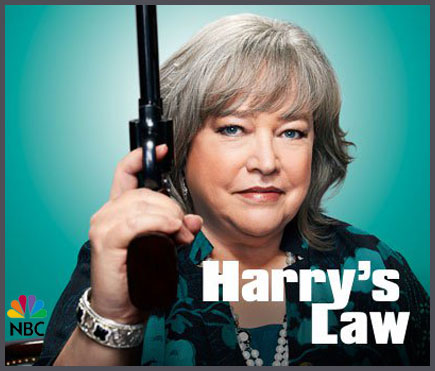
When it comes to legal ethics, "Harry" is no straight-shooter.

As I have noted before, TV has one of its more ethically-sophisticated legal dramas to date in CBS’s “The Good Wife.” Oh, the lawyers (and their investigators) are frequently unethical, all right, but the show has seldom represented unethical conduct as ethical, or implied that it would be defensible if it came to the attention of the bar. In contrast, the new NBC Kathy Bates drama “Harry’s Law” has already ticketed itself for the Dumb Lawyer TV Show Hall of Shame, grossly misleading its audience about what constitutes a lawyer’s ethical duties. (Other recent admittees to the Hall: James Woods’ “Shark,” the Kathleen Quinlan drama “Family Law,” Steven Bochco’s embarrassing “Raising the Bar,”and every legal show created by David Kelley.) Continue reading

Ethics Dunce: The Ever So Tolerant Wisconsin Bar

Hot on the heels of the story about the New Jersey lawyer who managed to avoid interruption to his legal career after admitting forgery, we have more disturbing evidence that a profession that insists on self-regulation may have a rather different concept than the public about what constitutes “fitness to practice law.”

The professional ethics rules in every state declare that substantial dishonesty and especially failure to obey the law call into question a lawyer’s trustworthiness and are grounds for suspension of disbarment. Many states automatically disbar any lawyer convicted of a felony. But in Wisconsin, a local newspaper investigative report reveals, there are 135 attorneys continuing to practice law despite convictions for battery, theft, fraud and repeat drunken driving. Some even had active licenses even as they served time behind bars, giving a new meaning to the term, “jail house lawyers.” Another 70 of Wisconsin’s  attorneys-in-good-standing managed to avoid discipline by getting charges reduced or entering into deferred prosecution agreements. Continue reading

Marco Rubio Trips an Ethics Alarm

Florida Republicans have a wonderful opportunity to demonstrate the proper response to a bracing ethics alarm. They can vote against Marco Rubio, the Tea Party-backed opponent of Governor Charley Crist in the Republican primary for the U.S. Senate.

Whatever Rubio’s virtues, ideological or otherwise, he set off the alarm with this: according to a carefully researched story in the Miami Herald, Rubio used his party credit card—his business credit card, issued to him by the GOP to use for party-related expenses only—to pay for things like: Continue reading