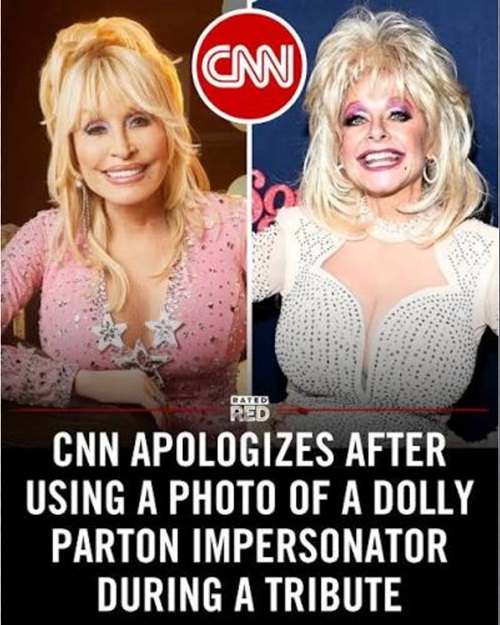
[This is CNN! I had to find an excuse to post this, but it is relevant to Paragraph 7 below.]
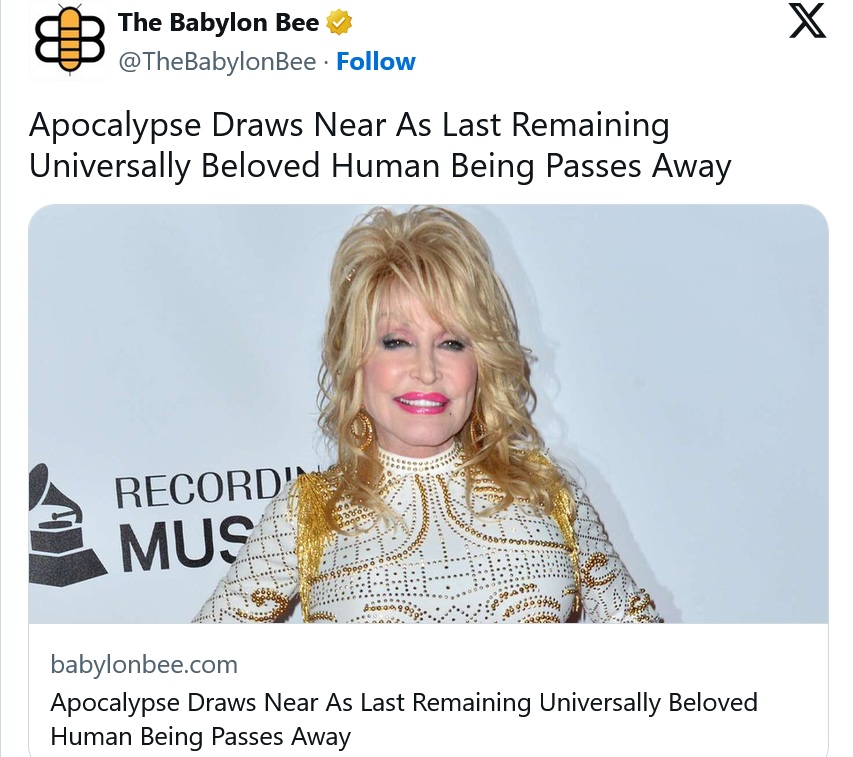
All over Facebook, my Trump Deranged friends have been egging me on to stuff their metaphorical heads up their metaphorical asses after they have used Dolly Parton’s demise to justify their own biases. My favorite was the one that began, “I don’t want to talk about Trump, but isn’t it interesting that the vile, bigoted asshole wrote nice things about Dolly even though she was woke and an LGBTQ supporter.”
Note: This woman doesn’t want to talk about Trump, but immediately turned an appreciation for a recently deceased, non-political country music superstar into an excuse to attack the President.
Remind me: how did I end up with so many friends like this?
Lie #1: Dolly Parton was not by any stretch of the imagination “woke.” She consistently refused to take political or culture war positions. “Live and let live,” “Trust in the Lord,” Love your Neighbor” are not woke talking points.
Lie #2: She was not an LGBTQ “supporter” other than to say she loved everyone. Claiming that Parton was a member of the Pride mob is now a viral near consensus on Bluesky, Instagram and Facebook, and even the bots on Google and “X” will confirm that non-fact. It’s the reverse of “If you’re not for us, you’re against us”; in Dolly’s case, that she didn’t support active bigotry against gays etc. and believed they should have the same rights and acceptance as everyone else, made her an LGBTQ+ activist.
Let’s examine this one a bit more. shall we? Dolly Parton never directly advocated same sex marriage. She once joked about gay marriage, “Why can’t they be as miserable as us heterosexuals in their marriages?” Bob Hope might have made that joke. (Maybe he did.) Bob was not “woke.” She gave the obligatory lawn sign pablum “I think love is love and we have no control over that” when pressed. I guess she also supported the Man-Boy Love group, then. “I think people should be allowed to marry,” was another of Dolly’s carefully worded ambiguities. Donald Trump’s comment was, “I have no problem with the gays.” Did that make him “woke”? An LGBTQ activist?