The title describes the public transit riders who watched this disturbing scene unfold on a Philadelphia bus, and did nothing:
2014 is the 50th anniversary of the infamous Kitty Genovese case, and dueling books on the incident either recount the accepted version that 38 people in an apartment building heard the 28 year-old woman’s screams as she was being stabbed to death but “didn’t want to be involved” and let her die, or adopt the revisionist theory that the apathy of bystanders was unfairly and inaccurately hyped by the news media. The incident on the Philadelphia bus tells me that the revisionists have a burden of proof that will be hard to meet. There was plenty of evidence already, like here, or here, or here, or here, or more recently here, that Kitty Genovese might not fare any better today. Continue reading →
Maryland State Sen. Victor R. Ramirez (D-Prince George’s County) has introduced a bill to designate state funds to erect a statue of Len Bias, a former University of Maryland basketball star, at Northwestern High School in Hyattsville, Md. Bias, a graduate of the school, died in 1986 of cocaine intoxication less than two days after he was drafted s by the NBA’s Boston Celtics, shocking the area and the nation. Ramirez’s efforts, as well as a recent decision to name another local high school after President Obama, is causing the Prince George’s County Education Board to revise and formalize its policy for such honors as statues and building names. Will an African-American kid who cut off his promising life as it was just beginning with a self-administered drug overdose be deemed worthy of immortalization, to serve as inspiration for future generations of black youth? Stay tuned.
The Stupid is strong in this one...
“Len Bias was a student athlete in Prince George’s,” Sen. Ramirez argues. “He moved the University of Maryland basketball program to new heights. He and Michael Jordan were the two best college players at that time, until he tragically died. . . . We can learn something from everything. The nation learned a lot from this unfortunate incident.” Well, if learning “a lot” from someone’s demise is the criteria for honoring them with a heroic statue, that opens up all kinds of possibilities. Good thinking, Senator! A statue of Richard Nixon reminds us that power corrupts, certainly a valuable lesson for all. A statue of Benedict Arnold teaches us the dangers of pride, and how a sense of entitlement can lead to tragic choices. And what could be more illuminating than a statue of Adam Lanza, the Newtown shooter? Maybe even one showing him mowing down those kids—such a powerful statement about gun abuse, and the failures of the mental health system! In fact, what would really be appropriate is naming a public school after him.
By the end of his life, Len Bias was no hero or role model, and he deserves no honor for knowingly breaking drug laws and getting himself killed while disappointing legions of fans and supporters. Erecting a statue to Bias would be just one more step in society’s capitulation to the seductive, and destructive, appeal of the drug culture, and the elimination of the vitally important societal stigma attached to recreational drug use. What Bias did was willful, ignorant, irresponsible and illegal, and even if that last is removed for his young admirers, the first three remain.
The County Board of Education is now going to debate the appropriateness of making a hero out of a drug abuser and a 21 year old cocaine casualty. If they have to discuss it to answer that question, they all need to be replaced, not that the pathetic performance of their schools isn’t reason enough for that. Len Bias’s death wasn’t “a tragic incident.” A car crash is a tragic incident. Bias died because, like so many young people in Prince George’s County and elsewhere, he deliberately engaged in dangerous conduct that he knew was forbidden, and learned, the hard way, why.
Placing a triumphal statue in front of a high school is no way to discourage deadly attitudes like the one that got Bias killed…unless the design of the proposed statue shows the young man at the exact moment his heart seized and his eyes rolled back in his head.
A few quick points, before I present Chris Marschner’s excellent Comment of the Day:
You know you’re posting too much when a you’ve completely forgotten an essay less than a month old, like this one.
Why didn’t someone tell me that I left the “l” out of “Columbia”?
I’m going to have to start working on my proof-reading again, clearly. There were a couple more typos in this post.
Chris just started commenting, and this is the third carefully written, well-reasoned substantive piece he has produced. I am grateful; such debuts raise everyone’s game.
I liked this post, and not many people read it or commented on it. I am increasingly worried about the trend in law enforcement and in government generally, especially the schools, to brush off free speech as an inconvenience. I’m grateful to Chris for raising the issue again.
If our culture did a minimally competent job communicating the essential right of free speech in the United States, people like Ruben Santiago wouldn’t think as the do—as they do being best described as ignorantly, censoriously, arrogantly and stupidly. Both the Left and the Right are to blame for the message not getting out to the public, and, consequently, members of the public who acquire governmental authority: the government can’t threaten you or harm you for mere speech…the Left through its attempts at political correctness, mind control and indoctrination in the schools, the Right in its efforts to use laws to curb expression involving sex and violence in the arts and entertainment.
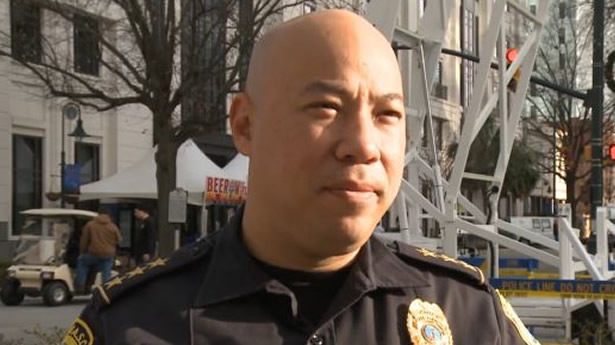
In Columbia,Police Chief Ruben Santiago took to the Columbia Police Department Facebook page to announce that his officers had seized $40,000 in marijuana from an apartment after a successful drug investigation. Citizen Brandon Whitmer, on his own page, took note of the arrest and opined, “maybe (police) should arrest the people shooting people in 5 points instead of worrying about a stoner that’s not bothering anyone. It’ll be legal here one day anyway.”Santiago replied ominously to Whitmer, saying, “(W)e have arrested all of the violent offenders in Five points. Thank you for sharing your views and giving us reasonable suspicion to believe you might be a criminal, we will work on finding you.”
Somebody in the department with a working knowledge of the Constitution quickly got that post deleted, but Santiago defended it in a double-down post, writing, Continue reading →
“Most theorists of self-government have maintained that certain modest virtues are necessary to democracy and free markets: deferred gratification, diligence, a prudent concern for the future. There is an ongoing American debate about the degree to which government can or should promote such virtues. But here is an extraordinary case of government actively undermining the moral underpinnings of market capitalism for its own benefit. It holds out the promise of sudden wealth without work or productive investment, engaging in a purposeful and profitable deception. A corrupting fantasy becomes a revenue stream, dependent on persuading new generations to embrace it. Perhaps we have given up on government as a source of moral improvement. Does this mean we must accept a government that profits by undermining public virtues? Nearly 20 years ago, William Galston and David Wasserman wrote, “While history indicates that gambling is too ubiquitous to suppress, moral considerations suggest that it is too harmful to encourage. The most appropriate state stance toward gambling is not encouragement, but rather containment.”’
Whitney Houston, she of the musical gift we may see only once in a lifetime, is dead at 48. There has been no final determination, but there is little doubt: drugs killed her.
Houston, they say, and I have no reason to doubt it, was troubled by the pressures of show business, celebrity and stardom, and with a little help from her dead-beat, abusive husband, singer Bobby Brown, sought to relieve the stress with a variety of illegal substances, including cocaine. Over the past 15 years or so, Americans have been able to watch the relentless deterioration of Houston, once the epitome of a beautiful, intelligent, ebullient and charismatic presence, into an emaciated, ruined shell with only a hint of the glorious instrument that once, in the middle of a war abroad, delivered the most stirring rendition of the Star-Spangled Banner I have ever heard, or ever will hear.
This happened to Whitney Houston because when illegal drugs were among the options she could have chosen to accept or reject as a way to get through difficult days and troubled times, she did not have the instant reaction, hard-wired in her brain, that has to stop all of us from doing terrible, dangerous, irresponsible and anti-social things. There can be little doubt that some theoretical options would have triggered that reaction. They would be the options that did not seem like options at all, because the culture Whitney Houston lived in was unequivocal and unshakable in its verdict, a verdict virtually all members of that culture naturally adopted and accepted—because that’s what cultures do. And when that option presented itself, Whitney Houston, like the culture she was a part of, would have said “No.”
That she didn’t say no to drugs, and is dead because of it, was the direct result of an American culture that does not give its constituency a clear message and verdict. Instead, the clearest and most unequivocal signal from the culture, the fact that recreational drugs are illegal and that America enforces the laws against them, is progressively weakened by ridicule, attack, popular culture, and the defiance or hypocrisy of role models and public figures. Incredibly, though the deaths by drug-abuse among the tiny proportion of the world that is famous and talented—Michael Jackson, Amy Winehouse, Whitney—should make it obvious how massive the number of anonymous victims of drug abuse there must be, the destructive refrains grow louder: Legalize drugs! End the War on Drugs! And those calls weaken the cultural resolve further. Actually doing what they advocate would cripple it….and that day might come.
Whether they are preventing the culture from rejecting drug use because enforcement is expensive, or because they have a relative or friend in prison for drug-dealing; whether they are calling for legalization because they are libertarians and academics or Ron Paul, or because they are public officials who see a new revenue source; whether they are longing for the halcyon days of Haight-Ashbury and the Strawberry Alarm Clock, or just like getting stoned, these are the people whose advocacy continues to nurture a competing culture that killed Whitney Houston, as surely as if she had been shot her between the eyes.
I would say that if their insistence on legalization is followed, and the nation’s laws join the popular throng in pronouncing addictive and life-destroying drugs as legitimate “options,” many more like her will die….except there aren’t many more like her. But there are countless lives to destroy, and unimaginable losses to families, businesses and America to be endured.
I just watched the video of Whitney Houston’s glorious performance of our National Anthem at the Super Bowl, before the drugs had finished their work. She radiates confidence, strength and character, as well as that special joy that the fortunate few with magical gifts have. She brings a stadium full of Americans to their feet in cheers, with an exhibition of artistry that will continue to inspire forever. Drugs took all of that away, from Whitney Houston and from us.
Because our culture could not say no with enough conviction to save her.
Update (2/15/12): With some regret, I am closing comments on this post. Too many commenters refused to discuss the issue it was intended to raise, which was how cultural approval and disapproval of conduct is more powerful, ultimately, than the law in establishing standards. I have committed on this blog to responding to as many comments as possible, but the onslaught of pro-drug zealots whose tactic was to keep repeating the same arguments no matter how many times I gave my response led me into too many frustrated responses, too many nasty exchanges, and too many hasty replies that I wish I had stated more clearly. For those I apologize, both to the visitors involved and other readers. I also apologize for ending the discussion here, but I don’t have the time to monitor it. You are welcome to e-mail me personally.
Michael, whom I believe leads the field in 2011 Ethics Alarms Comments of the Day, just weighed in with an epic comment to Neill Franklin’s Comment of the Day from the lively distracted driving/marijuana post. It restores some balance to what has been largely an Ethics Alarms vs. NORML mugging: I knew there had to be someone out there who agrees with me on the governments ethical obligation to keep drugs from further infecting American society. Here is Michael’s Comment of the Day on both Neill’s COTD and Distracted Driving, Pot, and “The Great Debate”:
“I was just a little horrified by Mr. Franklin’s comment, especially considering the source. I live in a neighborhood rife with drugs and the effects to me are evident. The effects that I see are different from those Mr. Franklin seems to care about, however. I see the wasted lives and wasted generations. If you look at the children around here, you see a generation that grew up without parents, without guidance, and without hope. They have never known adults who worked or who cared about their kids. They only know adults who are on drugs. These adults don’t play with their kids, don’t teach them. They don’t provide food, clothing, or reliable shelter and they subject their children to every form of abuse. These kids have no hope because they haven’t seen anyone like them live any other way. To escape this nightmare existence, they too turn to drugs and the cycle continues. I can’t understand how someone can advocate validating this behavior by legalizing drugs. I understand the self-serving legalization argument of the idle college student drug user and the people who somehow have lucked into good paying jobs that are easy enough to do while high, but I don’t respect them. Continue reading →
The drug legalization advocates attacked en masse regarding my post about the faulty opposition of the Right to measures prohibiting cell phone use while driving and the Left to anti-marijuana legislation. The passionate pot advocates shattered the previous Ethics Alarms record for comment volume; to read the threads, one would think I am the last remaining citizen who supports drug laws. I more than fulfilled my obligation to respond to as many of the comments as possible, and there were many articulate and well-informed advocates. I was waiting for a worthy Comment of the Day from the debate, one that didn’t rely on one of the four fallacious arguments that will drive me to drugs if I have to read them much more. Neill Franklin, a first time commenter, came through.
“Well, we can discuss all of the philosophies, intent of the law and compare oranges to apples all day and night, but here’s the bottom line from a practical, what’s happening in the streets, our neighborhoods, cities, neighboring countries and to our kids, point of view. No speculation here…all facts. Continue reading →
It is easy, and even enjoyable, to call foul when Fox News side-show barker Glenn Beck slanders a great American and personal hero like Theodore Roosevelt. It is less enjoyable when his target of abuse is someone I am far less fond of, George Soros. I don’t like to see billionaires use their checkbook to prop up juvenile Angry Left slime-artists like Move-On. Org, or to foist another family and character-wrecking drug on society by pushing us toward the legalization of marijuana. But fair is fair, and lies are lies, and never the twain shall meet. The fact that Glenn Beck doesn’t agree with George Soros’s political activities can’t justify or excuse Beck’s use of falsehoods to paint him as something he is not. Continue reading →
Paul Daugherty, a sportswriter for the Cincinnati Enquirer,recently wrote a column expressing a theme I hear all too often regarding politics, government, education, and society generally. Motivated by the steroid allegations against yet another hero, Lance Armstrong, Daugherty penned his surrender to a culture that doesn’t seem to care about ethics. Daugherty wrote:
“Everyone wants sports to be equitable. We all desire the level field. No one wants sports to be as drugged up as Woodstock in 1969. But it is. We’ve fought the ethical fight. We’ve lost. It could be time to let it go.
Even the athletes who lose still win. Mark McGwire got his, Barry Bonds got his, Brian Cushing got his. If you wait enough, deny enough, then rationalize believably, you get yours. Disgrace fades. Only Olympic athletes wear the stink of doping longer than the average 5-year-old’s attention span. In one respect, it’s not unlike the fight against legalizing marijuana. It has lasted so long, and now seems so pointless, I can’t even remember what we’ve been arguing about. We’ve become numb to it….It’s only a little outrageous now to suggest that a professional athlete be allowed to use performance-enhancing substances to his (enlarged) heart’s content, as long as he’s doing it legally….So what’s the point?”



 Ethics Alarms