Comment of the Day: “Ethics Dunces: Penn State Students”

“Different Angle,” a college student and victim of child abuse, has, appropriately enough, a different angle on the Paterno/Penn State/ Sandusky scandal, and it provides useful and provocative perspective. I’ll let him have his say, as it is extraordinarily well argued, and save my comments for the end. I think he is compassionate, generous, thorough, thoughtful, and wrong. But first, here is his Comment of the Day on  “Ethics Dunces: Penn State Students.”

“As a current college student, prior victim of child molestation, and generally reasonable person, I feel inclined to give my two cents. Having read the grand jury report personally, I am shaken. Unless you are familiar with the shame and humiliation of a situation like this–even if you are familiar–the sheer quantity of these attacks… beyond words. Had any Penn State staff understood the thoughts running through this man’s mind, this comment would’ve started “As a current toddler…” Anyone who knows that the sexual abuse of children is occurring and acts so callously as to downplay it and sweep it under the rug has no place in modern society. That’s as nicely as I can put that.

“With as much emotion and sympathy as I harbor for the young men who’ve endured through this, it pains me to read the bickering and finger-pointing I’ve encountered in comment threads like this. And while it is normally in my nature to grab my trident for a healthy round of devil’s advocate with the popular and most often intelligent opinion, I cannot help but side with Joe Paterno in this matter. I’m about as far removed from sports as a sociable college male can get; I will not rally for a few chants of WE ARE… at the end of this post. If you’re going to scrutinize the choices he made in reference to the 2002 incident, be thorough enough to consider this: He wasn’t thinking about slandering Sandusky, he wasn’t concerned about his career or standing in the community. The decision of if/when/to whom this should be reported wasn’t calculated with pro’s and con’s. Continue reading

Mike McQueary and Me


Do you know what you would do, in Mike McQueary's place? Are you sure?

I have defended Mike McQueary, the graduate student assistant coach who, according to the Pennsylvania Attorney General’s report, witnessed Jerry Sandusky raping a young boy in the Penn State showers in 2002 and told Joe Paterno, to this extent: he took the crucial step of reporting the incident to the coach, his boss as a graduate student assistant coach, and that took courage. Because of Paterno’s reputation as a moral and ethical exemplar, the young man had no reason to believe that Paterno would not do all the right things, from confronting Sandusky to finding the boy to alerting the police. (As we now know, Paterno did none of these.)

Even so, he had to believe he was in a career jeopardizing situation. Sandusky was a Penn State football legend, though retired, and presumably had Paterno’s loyalty. Would being the messenger that created liability and public relations problems for his boss’s beloved football program make McQueary a pariah even if it resulted in Sandusky’s arrest? That scenario is not uncommon, unfortunately.

That is why, when a commenter wrote that McQueary was more culpable for Penn State’s inaction than Paterno, I disagreed strenuously, and I still do. Paterno had power, given his iconic status, perhaps the ultimate power. If he had insisted that Sandusky be confronted, removed, and reported to police, it would have happened, and would have happened completely within his natural sphere of influence. For McQueary, however, to track the university’s response and independently take action to stop Sandusky would require exemplary valor. I wish he had done it. But he had placed his faith in Joe Paterno, and at Penn State, that should be a sure bet.

I think it is easy for any of us to conclude that in Joe Paterno’s place, we would not have allowed Sandusky to continue preying on young boys. What would we do in Mike McQueary’s position, however…putting aside the action of physically intervening in the rape itself? There is a reason why the first thing he did was to go home and call his dad for advice. He never, never considered what he would do in such a situation, because never, in his wildest dreams, did he imaging such a crisis occurring.

Never underestimate the difficulty of making the right ethical decision in an unexpected crisis.

I also sympathize with McQueary, because I had my own Mike McQueary moment years ago. Continue reading

An Ethics Lesson Missed, a Life Lost

Jayna Murray, victim of a murderer and ignorance of the the Golden Rule.

The grisly Lululemon Athletica murder trial in Montgomery County, Maryland, concluded with Brittany Norwood being quickly found guilty of the March beating and stabbing death of co-worker Jayna Murray in the yoga-wear store where they both were employed. Among the key testimony at the trial was that of Jana Svrzo, the manager of the Apple store adjacent to the murder scene, who said she heard banging, screaming, grunts and other someone-is-getting-attacked sounds, along with a frantic woman screaming things like, “God help me! Please help me!” and “Talk to me! Don’t do this!” Svrzo said she called another Apple employee over to the wall to confirm her suspicions, and they heard the voice say,”Stop! Stop! Stop!” and then, “Oh, God! Stop!”

The two Apple employees did nothing. Continue reading

A Cautionary Ethics Tale From Texas

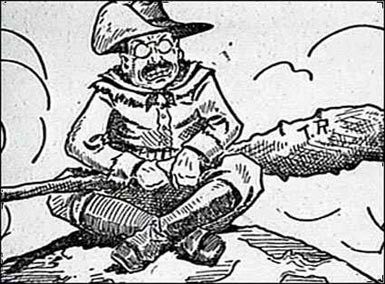
A Good Samaritan Teddy could relate to

In Texas, a 62-year-old man pulled over on the highway to help a couple whose truck had run out of gas. While he was assisting, the Good Samaritan apparently objected to the demeaning way the 31-year-old husband was addressing his wife, and said so. The husband then attacked the older man…who drew his concealed gun and shot him in the shoulder.

<sigh> Continue reading

Ethics Hero: Actor Ryan Gosling

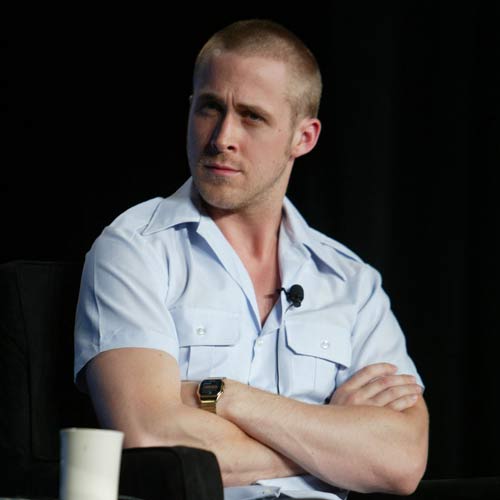
Ryan Gosling....ready for action!

Caught on video: Hollywood hunk Ryan Gosling (“The Notebook”) saw a fight developing on the streets of NYC, dropped his bag of groceries and used his personal-trainer toned bod to break it up.

Stopping violence in public can be dangerous, and I wouldn’t recommend it for everyone. Gosling obviously knew what he was doing, however, and what he was doing was fulfilling the citizen’s duty to fix a problem when he or she can. Proactive participation in society, including discouraging misconduct whenever possible, is profoundly ethical, and too rare. The actor not only stopped a brawl, he also established himself as a member of that endangered species, the celebrity who deserves to be a role model.

Gosling doesn’t just play heroes in the movies—-he knows how to be the real thing.

Ethics Quiz: Is It Wrong For A Rescuer To Sue The Victim He Rescued?

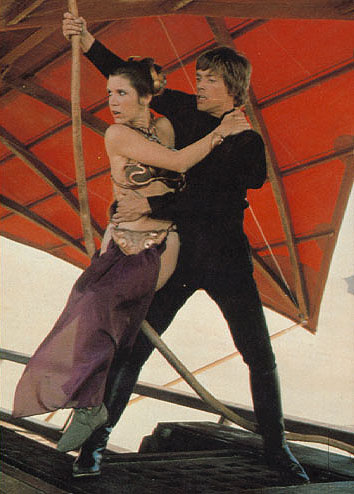
"OK, Princess, you'll get my bill for this rescue in five to seven business days."

On March 11, 2009, Mark Kinkaid and David Kelley were riding in Kinkaid’s truck when they saw a detached bumper, headlights and all, lying in the middle of Rt. 23.  Smoke was rising up from the highway embankment,  and the two men concluded that someone was in trouble. The truck stopped, and they got out, hopped a barbed-wire fence, made their way down the steep highway embankment, where they saw a flaming Hummer. Theresa Tanner was trapped inside, screaming for help. They forced their way into the vehicle, pried a door open and pulled Tanner out. She was injured and burned, but after weeks in intensive care, survived.

Now Kinkaid and David Kelley are suing Tanner, claiming that the crash was her fault and that she is liable for the injuries they sustained in rescuing her. They have filed a lawsuit asking for damages of at least $25,000 each. “All I know is that I am not the same man I used to be,” says Kelley, a 39-year-old truck driver and father of five, who says the heavy smoke and fire that day damaged his lungs so that he can’t carry a laundry basket up the three flights of stairs in his home.

The law provides a rationale for such a lawsuit. “The precedent is clear: danger invites rescue … and if you’ve acted recklessly or negligently and someone gets hurt rescuing you, you could be in trouble,” says Stan Darling, a tort law specialist. A well-established principle known as “the Rescue Doctrine” holds that if someone is in peril because of their own negligence or recklessness, an injured rescuer can recover damages if he acted reasonably and can prove that his injuries were caused by the rescue attempt.

That’s the law, however. This is ethics, and your Ethics Quiz today is:

Is it ethical for a rescuer to sue the person he rescued? Continue reading

Comment of the Day: “The Death of Ryamond Zack”

The story about the Alameda firefighters and police, as well as many citizens, standing useless on the shore as a suicidal man slowly drowned continues to receive  outstanding commentary. Here is the most recent, from Peter, doing some follow-up and pointedly critical analysis: 

“ABC asked Alameda Fire Division Chief Ricci Zombeck  whether he would save a drowning child and he said: “Well, if I was off duty I would know what I would do, but I think you’re asking me my on-duty response and I would have to stay within our policies and procedures because that’s what’s required by our department to do.”

“This quote essentially makes any indefensible defenses, or apologetics for how big and scary the victim was, moot. Perhaps they should make off-duty the new on-duty by assigning first responders to permanent off-duty roles. At least then they would go in after a drowning child. Continue reading

Comment of the Day: “The Death of Raymond Zack”

Raymond Zack

Buck Best, a Northern Virginia firefighter and supervisor, weighs in with his expert perspective and nuanced insight regarding my post on the Alameda, Cal. incident involving a suicide by drowning. His wife Lianne had another Comment of the Day earlier this week; if this keeps up, I will have to call the feature “Best Comment of the Day.”

“As an 18 year veteran of the Fire Dept. and the last ten years as the Officer of a Technical Rescue team that would be responsible for just such a rescue, let me offer another perspective to this ethical question. The Fire service much like many other organizations in recent history are governed by politics and litigation. The management of the organizations are always looking to the risk analysis of any potential situation based of the money that is available. The risk analysis is not based as much on the physical risk as it is on the financial or political risk. Continue reading

Flashback: “What Hugo Alfredo Tale-Yax Can Teach America”

The Late Hugo Alfredo Tale-Yax

[Not many people were checking in on Ethics Alarms when I wrote this post in response to yet another example of bystanders choosing to do nothing when a human being was in peril. Some of the comments to the Alameda post, those making excuses for the 75 faint-hearted or apathetic citizens in that city who would rather gawk at a tragedy than try to stop it,  caused me to recall the essay, which explores related issues.  I wrote it, but I had nearly forgotten about the story; when I re-read it today, I got upset all over again.Here, for the second time, is “What Hugo Alfredo Tale-Yax Can Teach America.”]

The one with the premium-grade ethics alarms bled to death on the sidewalk. The people who never had theirs installed at all took pictures. Is this the way it’s going to be? Continue reading

The Death of Raymond Zack: No Heroes, Only Bystanders

50-year-old Raymond Zack waded into the surf on an Alameda, California beach and stood calmly in the 54-degree water, apparently waiting to die. His suicide took nearly an hour, but eventually he drowned, with no rescue attempts from any of the 75 San Franciscans who gathered on the shore to watch the entire tragedy.

Why didn’t anyone try to rescue the man?

Apparently it was because nobody was paid to do it. You see, stopping Zack from killing himself wasn’t anyone’s job.

The media’s focus in reporting yet another disturbing incident with echoes of the murder of Kitty Genovese has been exclusively on the inert Alameda police and firemen who witnessed Zack’s suicide. “Fire crews and police could only watch,” wrote the Associate Press.

What does the AP mean, “they could only watch”?  Were they shackled? Held at gunpoint? Were all of them unable to swim? They didn’t have to watch and do nothing, they chose to watch and do nothing, just like every one of the bystanders who weren’t police or firemen chose to be passive and apathetic when saving a life required action and risk. Continue reading