The North Carolina Transgender Bathroom Freak-Out, LGBT Activists And Shared Accountability For An Ethics Train Wreck

rest rooms gender

Yes, the new North Carolina anti-LGBT law is excessive, dumb, an over-reaction and probably unconstitutional. More than that, however, it is an example what can happen when the proponents of opposing views refuse to listen to or respect each other, don’t attempt to minimize bitterness and conflict, and prefer to settle problems by going to war. The law exemplifies the ignorance, fear and reflex defensiveness of human beings when faced with inevitable cultural change, but it could have been avoided if LGBT activists and advocates had not demonized their opponents and used political leverage to push for extreme positions that were neither necessary nor clearly correct.

North Carolina’s conservatives are horrified at the idea of biological males being allowed to use women’s rest rooms when the “males” identify as female, so the state passed a law that appears to allow all forms of discrimination based on gender and sexual orientation. The new law establishes a statewide nondiscrimination ordinance that explicitly supersedes any local nondiscrimination measures. The statewide protections cover race, religion, color, national origin and biological sex,  but not sexual orientation or gender identity. Whether it is intended to do so or not, this seems to say that in the eyes of North Carolina, discrimination against LGBT citizens is fine and reasonable.

Well, it isn’t, and thus the law itself is unethical—incompetent, irresponsible, unfair, unjust, uncaring, and disrespectful.

Good job, State legislature,  Gov. Pat McCrory, and North Carolina. You’re all an embarrassment to the nation.

Still, this whole mess  occurred because activists couldn’t come up with a reasonable accommodation that would still the concerns of those old fashioned citizens who think ladies rooms shouldn’t be frequented by people who can pee standing up, while still meeting the minimal requirements of the Caitlyn Jenners of the world. Continue reading →

Ethics Jump Ball: What Is An Ethical Reaction To This Story?

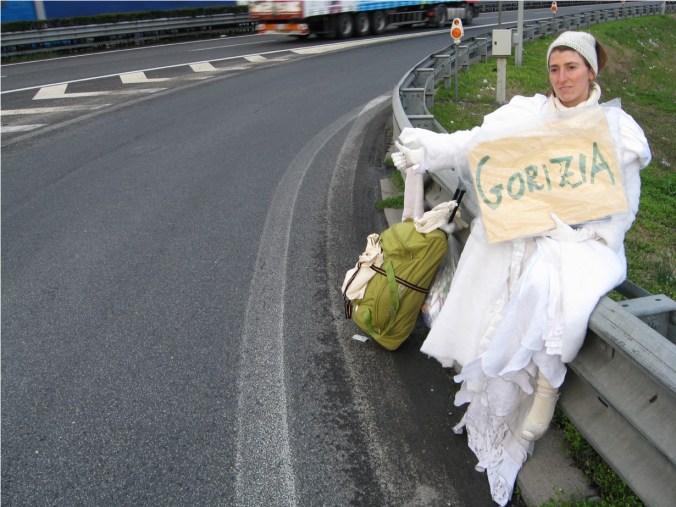
Pippa-Bacca

From the BBC (2008):

An Italian woman artist who was hitch-hiking to the Middle East dressed as a bride to promote world peace has been found murdered in Turkey.

The naked body of Giuseppina Pasqualino di Marineo, 33, known as Pippa Bacca, was found in bushes near the northern city of Gebze on Friday.

She had said she wanted to show that she could put her trust in the kindness of local people.

Turkish police say they have detained a man in connection with the killing.

Reports say the man led the police to the body.

I think I’ll add my reactions to the comments.

Fragments can be found in the tags.

You go first.

__________________

Pointer: Red Flag

Comment of the Day: “KABOOM! The School System ‘Applauds The Efforts Of Students Who Act In Good Faith…'”

This is an appropriate illustration for this Comment of the Day.  You'll see...

This is an appropriate illustration for this Comment of the Day. You’ll see…

The post about the middle-schooler suspended for rushing to the aid of a stricken classmate inspired a wide range of fascinating commentary, and also generated a tangential thread, as essays here often do. This one involved some commenters challenging my assertion that the ungrammatical quote from the young hero spoke to a school system that was better at no-tolerance discipline than it was at education, and that students not conditioned to view double negatives as poor communication were being handicapped by incompetent teaching. Into the fray jumped the always provocative Extradimensional Cephalopod, who walloped the debate with one of his trademark, long-form expositions on linguistic matters.

Here is his Comment of the Day on the post, “KABOOM! The School System “Applauds The Efforts Of Students Who Act In Good Faith To Assist Others In Times Of Need” And Is Therefore Exacting Punishment So They Know Never To Do It Again.”

I agree that not all languages are created equal. Effective communication requires a few subordinate skills based on semantics (navigating within a paradigm) and empathy (shifting between paradigms). One such skill is translation, the ability to convey a set of ideas to someone who has an unfamiliar paradigm and to understand ideas they express in that paradigm. Another is background, the ability to recognize semantic cues (e.g. grammar and etiquette) and use them to create a desired impression on someone else, which is necessary to smoothly blend in with one’s surroundings, putting others at ease by appearing to be similar to them. People need to develop the power of communication in order to interact with others, and therefore regardless of how they prefer to speak, they need to be able to shift to different methods of speaking depending on the context in which they find themselves. That is the virtue of linguistic descriptivism: “When in Rome, do as the Romans do.” Or, as my grandfather likes to say, “…as the Romanians do.”

That said, linguistic prescriptivism has virtues of its own, when correctly employed, which is rare. Language is important because it is based on semantics, which is the simplification of interactions and which usually brings with it the concept of designating anything as “proper”. Labels and names are not hard limits for thought, but they shape it by making some thoughts easier than others. Any concept for which we have a word becomes easier to think of, because we can call that concept and associated ones readily to mind instead of retrieving each concept individually. It’s the difference between using the word “bird” and describing the animal’s characteristics anew each time you want to talk about it. The latter is possible, but people might have trouble thinking about birds and what they are like.

Continue reading →

Comment of the Day: “Comment of the Day: ‘On the Importance Of Christmas To The Culture And Our Nation : An Ethics Alarms Guide'”

Scrooge9

Nesting Comments of the Day again, as Belle’s reflections on how the cultural celebrations of Christmas made her feel “othered” as a child was met with many excellent responses and a lively thread. Pennagain’s (that is to say, the Commenter Previously Known As Penn) comment, however, surpassed tough competition, and thus we have the Comment of the Day on the post, Comment of the Day: “On the Importance Of Christmas To The Culture And Our Nation : An Ethics Alarms Guide”:

First impressions aren’t that easy to shrug off. Belle’s comment that she “was always sure that Ebenezer Scrooge was a commentary on the Jews” reawakened a long dormant spectre of mine. So, Google to the rescue, I went searching for the 65-year-old source and damned if I didn’t find it: My oldest Scrooge image is not from Dickens; it’s from the Rackham illustration of Shylock from Charles and Mary Lamb’s incomparable childrens’ (anyone’s!) introduction to Tales from Shakespeare:

ShylockFiction abounds with misers, a sub-category of villains (often semi-comical: to jeer at), a stock character from Medieval times, especially in children’s stories, who are often more memorable — and way more fun to act out — than are heroes. Miserly villains tend to have the same features and characteristics: mean, suspicious, hoarding good will as well as gold, stooped, narrow-shouldered, and “clay-faced” life-denying penny-pinchers … as is another “Ebenezer” in Stevenson’s “Kidnapped” whose miserliness is ethically and morally beyond villainhood (he changes sides in the middle of a battle), or a father-and-son pair of Chuzzlewits in another Dicken’s classic, or Shylock himself — who has by the end of Scene 1, before he lends the money and (jokingly) adds the “interest” that is the basis of the tragedy, chosen love of money over love of his daughter.

Continue reading →

Comment of the Day: “On the Importance Of Christmas To The Culture And Our Nation : An Ethics Alarms Guide”


Belle is a Jewish reader of the recent Ethics Alarms Christmas post who sent  her comment to me off-site, then agreed to have it posted as the Comment of the Day after I requested permission.

She describes a real dilemma that I am very aware of, and thus am grateful for her raising it clearly and directly. I’ll be back with a bit more at the end, but here is Belle’s Comment of the Day on the post, On the Importance Of Christmas To The Culture And Our Nation : An Ethics Alarms Guide: 

I would like to try to make you understand at least a little why I am SO heartened that my children are growing up with “Happy Holidays” and Chanukah menorahs along with Christmas trees in public places, and how difficult it was for those of us non-Christians who didn’t. I sense that you were so antagonized by your colleague’s aggressiveness and different world view that you couldn’t hear what might have been behind the aggressiveness. You write that “Jews, Muslims, atheists and Mayans who take part in a secular Christmas and all of its traditions—including the Christmas carols and the Christian traditions of the star, the manger and the rest, lose nothing, and gain a great deal. Christmas is supposed to bring everyone in a society together after the conflicts of the past years have pulled them apart, What could possibly be objectionable to that? What could be more important than that, especially in these especially divisive times? How could it possibly be responsible, sensible or ethical to try to sabotage such a benign, healing, joyful tradition and weaken it in our culture, when we need it most?” Continue reading →

On the Importance Of Christmas To The Culture And Our Nation : An Ethics Alarms Guide

christmas-hero-H

I don’t know what perverted instinct it is that has persuaded colleges and schools to make their campuses a Christmas-free experience. Nor can I get into the scrimy and misguided minds of people like Roselle Park New Jersey Councilwoman Charlene Storey, who resigned over the city council’s decision to call its Christmas tree lighting a Christmas Tree Lighting, pouting that this wasn’t “inclusive,” or the  CNN goon who dictated the bizarre policy that the Christmas Party shot up by the husband-wife Muslim terrorists had to be called a “Holiday Party.”  Christmas, as the cultural tradition it evolved to be, is about inclusion, and if someone feels excluded, they are excluding themselves.  Is it the name that is so forbidding? Well, too bad. That’s its name, not “holiday.” Arbor Day is a holiday. Christmas is a state of mind. [The Ethics Alarms Christmas posts are here.]

Many years ago, I lost a friend over a workplace dispute on this topic, when a colleague and fellow executive at a large Washington foundation threw a fit of indignation over the designation of the headquarters party as a Christmas party, and the gift exchange (yes, it was stupid) as “Christmas Elves.” Marcia was Jewish, and a militant unionist, pro-abortion, feminist, all-liberal all-the-time activist of considerable power and passion. She cowed our pusillanimous, spineless executive to re-name the party a “holiday party” and the gift giving “Holiday Pixies,” whatever the hell they are.

I told Marcia straight out that she was wrong, and that people like her were harming the culture. Christmas practiced in the workplace, streets, schools and the rest is a cultural holiday of immense value to everyone open enough to experience it, and I told her to read “A Christmas Carol” again. Dickens got it, Scrooge got it, and there was no reason that the time of year culturally assigned by tradition to re-establish our best instincts of love, kindness, gratitude, empathy, charity and generosity should be attacked, shunned or avoided as any kind of religious indoctrination or “government endorsement of religion.”  Jews, Muslims, atheists and Mayans who take part in a secular Christmas and all of its traditions—including the Christmas carols and the Christian traditions of the star, the manger and the rest, lose nothing, and gain a great deal. Christmas is supposed to bring everyone in a society together after the conflicts of the past years have pulled them apart, What could possibly be objectionable to that? What could be more important than that, especially in these especially divisive times? How could it possibly be responsible, sensible or ethical to try to sabotage such a benign, healing, joyful tradition and weaken it in our culture, when we need it most?

I liked and respected Marcia, but I deplore the negative and corrosive effect people like her have had on Christmas, and as a result, the strength of American community. I told her so too, and that was the end of that friendship. Killing America’s strong embrace of Christmas is a terrible, damaging, self-destructive activity, but it us well underway. I wrote about how the process was advancing here, and re-reading what I wrote, I can only see the phenomenon deepening, and hardening like Scrooge’s pre-ghost heart. Then I said…

Christmas just feels half-hearted, uncertain, unenthusiastic now. Forced. Dying.

It was a season culminating in a day in which a whole culture, or most of it, engaged in loving deeds, celebrated ethical values, thought the best of their neighbors and species, and tried to make each other happy and hopeful, and perhaps reverent and whimsical too.  I think it was a healthy phenomenon, and I think we will be the worse for its demise. All of us…even those who have worked so diligently and self-righteously to bring it to this diminished state.

Resuscitating and revitalizing Christmas in our nation’s heart will take more than three ghosts, and will require overcoming political correctness maniacs, victim-mongers and cultural bullies; a timid and dim-witted media, and spineless management everywhere. It is still worth fighting for.

More than five years ago, Ethics Alarms laid out a battle plan to resist the anti-Christmas crush, which this year is already underway. Nobody was reading the blog then; more are now. Here is the post: Continue reading →

More “Blue Bloods” Ethics

Blue Bloods 2

Tom Selleck’s “Blue Bloods,” or “The Conflict of Interest Family” as we call it around our house, continues to explore difficult unethical dilemmas for an all-law enforcement family. Its latest episode’s message, however, was troubling.

Forget the secondary plot of Police Chief Frank Reagan’s staff squabbles. The meat of this installment was police detective Danny Reagan’s discovery that the well-oiled bank robbery he was on the scene to witness (it’s amazing how often the main characters in procedurals  just happen to be in banks when they are robbed) has been carried out by a group of three military combat veterans—just like Danny!. They have banded together to raise $100,000 so the female member of the trio can pay for expensive medical treatment for her wounded veteran husband. He lost his legs and sustained brain damage in Iraq.

Danny is seething at the injustice of the wounded hero being in an endless line writing for help from the Veterans Administration, and perplexed that the three perps who he has personally identified from his observations of them during the robbery—the loving spouse’s voice, one of the men’s scarred wrists, a neck tattoo on the other—are acting out love and loyalty, not greed. Continue reading →

On Immigration, Speech Suppression, War, Terrorism, Police and More, It’s Cultural Death By Compassion Poisoning

Think of the children!Compassion is a wonderful thing. A nation cannot govern or even survive, however, using compassion as its guiding ethical principle. The United States currently seems hell bent on disproving this fact, and is well on the way to confirming it. It is too bad that this is true, and we should all agree that it’s  a damn shame that you can’t run a successful democracy without periodically inflicting pain, creating suffering and harming some human beings in order that many more can live in peace and pursue their lawful ambitions and desires. Nonetheless, that is an immutable fact of existence. Government policy that attempts to deny it is not merely incompetent and naive, but ultimately suicidal. A culture that elevates compassion above all other values like responsibility, accountability, prudence, process and proportion is betting everything on the inherent goodness and rationality of humanity. History tells us it’s a losing bet.

When I woke up to the horrible news of the Paris attacks, and after I had finished simultaneous laughing and crying about the fact that President Obama picked yesterday to proclaim that the threat of ISIS had been “contained,” it suddenly occurred to me that the majority of the crises this nation struggles with today are  linked by the same cultural and leadership malady. The United States increasingly is unwilling to accept the reality that governance is utilitarian, and that punishment, deterrence, sacrifice, pain, retaliation and accountability are indispensable tools that must be used and used unapologetically. The alternative is chaos, and chaos is what we are facing.

An impressive number of these crises have been in the news this week: Continue reading →

The Greensboro College “It Stops Here” Ethics Train Wreck

Everybody’s unethical here.

As usual, however, it starts at the top.

It Stops HereGreensboro College in North Carolina  adopted a new policy on student sexual misconduct, and it requires all first year students to attend a performance of  a one hour play, “It Stops Here,” written and directed by student Michaela Richards, based upon “accounts of sexual assault submitted by survivors.”

Ethics Foul 1 (Greensboro): A female-authored play based on “survivors” accounts is a one-sided, biased and ideological work by its very nature. Do we know that the real incidents are being fairly represented, or would the claims of a “Mattress Girl” be included? Presumably proof of “sexual assault” is being validated by the infamous “Dear Colleague” letter from the Obama Administration that has led to multiple examples of male students being harshly punished in violation of basic due process principles.  It is entirely written from a woman’s/alleged victim’s point of view, and thus certain to be received as hostile and unfair by male students.

Ethics principles violated: Responsibility, honesty, fairness, competence.

Ethics Foul II (Greensboro): Using a work of fiction to inform students about a policy is incompetent. Fiction is always infused with the viewpoint, agendas and biases of the playwright; in this case, such a work is bound to be political. A sincere effort to instruct students on policy should have no political content at all.

Ethics principles violated: Abuse of power, responsibility, respect, competence.

Ethics Foul III: Forced viewing of a work of art isn’t instruction, but indoctrination. In a play, any audience member should have the option of walking out. This is especially true of a play written and performed by amateurs. “The student actors on stage are telling stories of an extremely sensitive nature that should be viewed in a respectful manner,” the president of the college said. “We expect no less of our students, who should know better than to make light of an extremely serious subject that affects us all.” WRONG. Forcing students to watch a play consisting of a slanted view of the sexual assault issue on campus is not respectful. It is, in fact, an insult and a provocation.

Ethics principles violated (Greensboro): Abuse of power, respect, fairness, prudence, regard for personal autonomy.

When people, especially young people and especially American young people who, thank heaven, are still imbued by the culture with a natural detestation of arrogant authority and the courage to defy it, are commanded to do something they shouldn’t be, like to watch an agitprop play, they tend to resist. They did, too:

Members of the audience frequently heckled the cast and shouted sexually explicit remarks.“Many of the boys started calling out ‘She wanted it, it’s not rape,’ and making masturbation noises,” stage manager Claire Sellers told a local news station. Sellers said the remarks were so excessive that cast members “became physically ill and vomited after the show because they were so vulgar.”

Continue reading →

The Great Maine Diner Controversy

Marcys-Diner

Thanks to the internet, every day conflicts between ordinary citizens become opportunities for society-wide ethical evaluation . This can be extremely beneficial, helping to reveal disagreements regarding ethical conduct in common situations, and establishing social norms with efficiency that once would have been impossible. Of course, that requires that society reaches a reasonable consensus.

Last week a controversy emanating from a Portland, Maine diner called Marcy’s had blogs bloviating, pundits punditting and social media boiling over. Vacationing parents took their toddler to a crowded diner for breakfast, waited 30 minutes for a table and another 40 minutes for their food. The hungry child went on a crying jag that went on too long for the owner, who  suggested that the couple to leave in a less than polite manner, and finally shouted at the little girl to  “shut the hell up!” The couple left the diner.

The mother, Tara Carson, couldn’t resist registering her indignation on the Marcy’s Facebook page, the owner responded with even more colorful language than she did in the original confrontation, and social media appeared to divide into the “it takes a village so be sympathetic to parents of young kids and give them a break” camp and the “serves these entitled and incompetent parents right for being so inconsiderate and not controlling their child” camp, with the latter considerably smaller than the former. Then, not content to let the matter blow over, Carson got the Washington Post to publish her op-ed about the episode, which concluded, Continue reading →