Ethics Hero, Thanksgiving Division: Scott Stuckey, Manager of Atlanta’s Omni Hotel

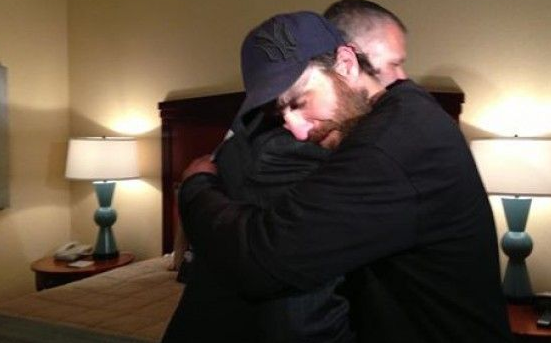
Scott Stuckey gets hugged by a grateful non-criminal Joel Hartman was homeless and surviving in Atlanta by dumpster diving, but when he found a lost wallet with the owner’s identification and credit card inside, he was determined to do the right thing. The wallet obviously belonged to a tourist, so the 36-year-old man checked the hotels in downtown Atlanta until he found out that the tourist (from France, for a conference) was staying at the Omni Hotel.

After Alanta’s Omni manager Scott Stuckey saw the surveillance video of Hartman—who looked as destitute as he was— turning in the wallet to the hotel’s  security guards, he decided that a reward was in order.  Hartman had given them a fake name, so it took some effort to track the shy good Samaritan down. Stuckey and his staff searched for a week, leaving messages with other homeless people that the Omni wanted to thank the man who recovered its guest’s stolen wallet. Eventually Hartman heard about their quest, and showed up at the hotel. He was shocked at what Stuckey had planned for him. Hartman was told that he would be the Omni’s guest in a luxury room through the Thanksgiving holiday with complimentary room service. The hotel also  gave him $500.

I think the gesture by Stuckey and the Omni was kind, appropriate, and in keeping with the spirit of the holiday….but: Continue reading
The Ethics of Cheering Alex Rodriguez

Poor Alex Rodriguez and his wife...

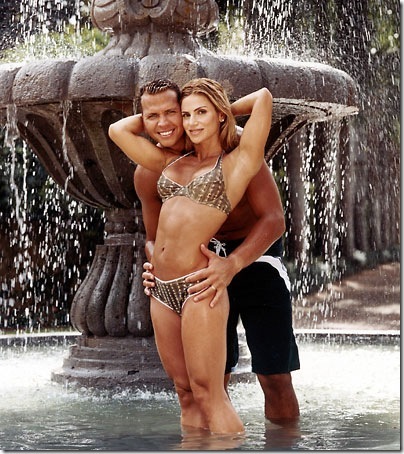
Poor, downtrodden, Alex Rodriguez and his wife…

Baseball’s most embarrassing super-star, the steroid cheat Alex Rodriguez, in playing for the New York Yankees while appealing his long suspension by Major League baseball. As he is unquestionably a repeat liar and a serial violator of the game’s rules against PED’s (performance enhancing drugs), as he signed a contract, in part generated by the results of his cheating, that will both enrich him by millions and handicap his team competitively while conferring few, if any benefits, as he would qualify, by most objective standards, as the antithesis of a sports hero, the fact that Arod, as he is called, still was cheered by a vocal minority in Yankee Stadium when he made his season debut this week is intriguing. What does this mean? Can it be ethical to cheer Rodriquez now?

These are deceptively complex and difficult questions. The threshold  issue is whether cheering or jeering any sports figure, or any public figure at all, is an act with ethical content rather than just a communication of an opinion. Is it conduct, or just “words”? I think, in the context of the Rodriquez situation, a sound argument can be made that it is conduct. Registering group approval or disapproval of prominent conduct by someone of status and influence is a crucial societal function in setting standards, registering disapproval, and prompting shame, regret, apology and reform—none of which, so far at least, seem to register with Arod.

That is pretty clearly what the boos convey, but what about the cheers? If the boos are ethical—they are if the disapproval is proportionate, rational, fair, and just—then are the cheers automatically unethical? Not necessarily. Here are some of the things those cheers could be expressing: Continue reading

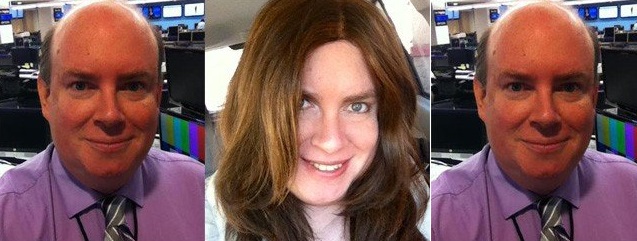
Sorry: I Would Fire Don/Dawn Ennis

Old Don, Dawn, New Don

Old Don, Dawn, New Don

Let me begin by saying that I have no idea what is going on, was going on or will be going on with ABC producer Don Ennis. Unless he has the worst sense of humor in the world, whatever it is isn’t good, or anything I would wish on someone else. I am, to a point, sympathetic. However, if I were his employer, I would tell Ennis today that he will have to work out his unusual identity issues somewhere else, and I believe that would be the right thing to do. It may not, however, be the legal thing to do, which is one of approximately 268 reasons I’m glad that I am not Mr. Ennis’s employer.

Not that it wouldn’t be exciting. If you hadn’t heard, last May Don Ennis, a well-respected ABC News editor and previously unambiguously male, entered his newsroom wearing a cute black dress and an auburn wig and announced to a stunned staff, colleagues and superiors that he was transgender. The ABC News national assignment editor said he was forever more to be known as Dawn Stacey Ennis. “Please understand,” he said in a statement, “this is not a game of dress-up, or make-believe. It is my affirmation of who I now am and what I must do to be happy, in response to a soul-crushing secret that my wife and I have been dealing with for more than seven years, mostly in secret. A father of three, “Dawn” announced that the newly-confirmed she was separating from her wife of seventeen years.

His colleagues were supportive, as was everyone else in the media, which is why you probably hadn’t heard the story. They left flowers on Dawn’s desk; ABC News President Ben Sherwood wrote her a note of support. I would have done likewise. This is a real problem, and exactly the kind of personal, medical crisis that the workplace ought to accommodate, while providing emotional support for the difficult and courageous transition. Thus Ennis continued to work at ABC sporting hormone-induced breasts, make-up, lipstick, skirts and heels. This undoubtedly caused a period of adjustment and awkwardness, but I would expect mature professionals to handle it gracefully.

Today, we learned, along with ABC, that Ennis has had a change of heart, and almost everything else. In a jaw-dropping e-mail to family and co-workers  titled “Not Reportable, Very Confirmed,” Ennis explained that he was Don Ennis again. “That will be my name again, now and forever. And it appears I’m not transgender after all.” Continue reading

Comment of the Day: “Ethics Hero: David Blankenhorn, Former Same-Sex Marriage Opponent”

eeyore1

In many ways, I love this post. I love it because it is passionate and serious, and from the heart, and because I am certain that it reflects what many Americans, especially those of a certain age, feel with frustration and a little fear and anger.  I also agree with much of what it concerns, the lack of respect for accumulated wisdom in many aspects of the culture, and the rush to discard old standards not because they have failed us, but just because they are old. The comment comes from a regular commentator, Eeyoure (not his real name, you’ll be relieved to learn, and yes, we both know how to spell the A.A. Milne character he honors) who is educated, decent, smart and articulate.

But regarding his lament’s  applicability to the controversy at issue, gay marriage, he is absolutely, utterly, tragically wrong. The conventional wisdom is that we should just try to ignore Americans who feel similarly to Eeyoure, because demographics are relentlessly removing them from the scene. As the politically active public becomes younger, the support for equal rights for gays, trangendered and bi-sexual citizens will grow into an overwhelming majority.  I think that’s a lazy and obnoxious way to win an argument, even when you are right. Smart but misguided people, like Eeyoure in this matter, should be able to evolve, learn, and realize when what they once thought was right, isn’t.  Realizing that one aspect of entrenched belief was, upon knowledge and reflection, wrong does not mean the whole foundation of civilized society has to crumble—this is the classic, irrational, self-defeating fallacy of conservatism. Change in the presence of enlightenment and experience is the essence of ethics, which constantly evolves. We should be able to explain what is wrong with this post so that even the poster agrees.

Here is Eeyoure’s Comment of the Day, on the post (and comment thread t0) Ethics Hero: David Blankenhorn, Former Same-Sex Marriage Opponent: Continue reading

Ethics Hero: David Blankenhorn, Former Same-Sex Marriage Opponent

Same sex

In a well-reasoned and sharply written op-ed in the Los Angeles Times, former gay marriage opponent David Blankenship writes eloquently and persuasively about why he has reversed his position. He writes in part:

“In the end, I didn’t change my mind on gay marriage because I stopped believing in the importance of intact biological families. Nor was it because of new studies or additional facts. (Gay marriage still strains biological family bonds, although research also points to the potential stability of gay marriage and family structures.) And I didn’t change my mind because I got tired of being criticized. I changed my opposition to gay marriage because of personal relationships. In my case, it began with the writer Jonathan Rauch, who I’d been publicly debating on the gay marriage issue. But at some point we stopped debating and started talking about our lives, including about my wife, Raina, and his husband, Michael. Did Jonathan’s marriage threaten the idea of marriage? Perhaps in theory. But in real life, was I able to see it? No. In fact, quite the opposite. It may sound trite, but for me the key was the gradual breakthrough of empathy. I found that as friendships develop, empathy becomes at least possible, no longer kept at bay by a wall of fixed belief. Put simply, becoming friends with gay people who were married or wanted to get married led me to realize that I couldn’t in good conscience continue to oppose it.”

Bingo.

_______________________

Pointer: Advice Goddess

Sources: LA Times

Medical Ethics: The Insideousness of Bias

Obesity biasThe New York Times had an enlightening article about bias in its Science section this week. Apparently a study of the interactions between patients and their primary care physicians suggests that doctors are more pleasant, encouraging, empathetic, kinder—just nicer, in short—to their normal weight patients than they are to those who are obese.

From the article:

‘“It’s not like the physicians were being overtly negative or harsh,” said the lead author, Dr. Kimberly A. Gudzune, an assistant professor of general internal medicine at the Johns Hopkins School of Medicine. “They were just not engaging patients in that rapport-building or making that emotional connection with the patient.” …While such expressions of concern and empathy are not remarkable on their own, what was surprising was how absent they were in conversations with overweight and obese patients. And statements like these are no small thing. Studies show that patients are far more likely to follow a doctor’s advice and to have a better health outcome when they believe their doctor empathizes with their plight.

‘“When there is increased empathy by the doctor, patients are more likely to report they are satisfied with their care, and they are more likely to adhere to recommendations of physicians,” Dr. Gudzune said. “There is evidence to show that after visits with more empathy, patients have improved clinical outcomes, so patients with diabetes have better blood sugar control or cholesterol is better controlled.”’

Continue reading

Now THIS Is Disrespectful Courtroom Conduct!

i-was-a-teenage-werewolf

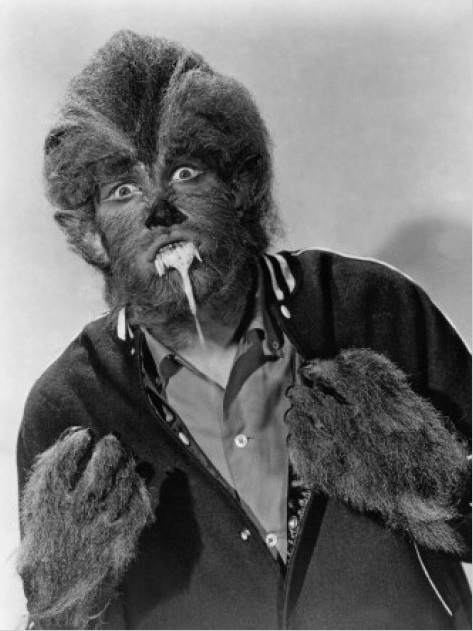
“Come on, where’s your compassion? He’s just a mixed-up kid!”

TJ Lane, who pleaded guilty in the fatal shooting of three Ohio high school students, appeared in court for sentencing wearing a T-shirt with the word “killer” written on it in black marker,the same message that he had on the T-shirt he wore while shooting three studentsteens in the cafeteria at Chardon High School. Lane also charmed the judge before sentencing with a “vile and unprintable” courtroom description about what he did to himself while recalling his killing spree, raised a middle finger to the assembled and said, “Fuck all of you!”

The judge sentenced Lane to three life sentences without parole.

And should we extend this obviously troubled and confusedyoung man our sympathy, our pity, our compassion? Should we be on the watch for when he repents, shows remorse, indicates contrition, and seeks that “second chance” that all Americans, indeed all human beings, deserve, with our hearts and arms ready to receive him back into civilized society?

No.


Tricking Yourself Into Being More Ethical

Cracked 5 waysOver at Cracked, the website that excels at developing clever factoid lists and debunking conventional wisdom, they have posted a list of “5 Scientific Ways To Trick Yourself Into Being A Good Person.”

Uh-huh. As usual for this site, the headline is just a bit overstated. “Trick” is a misleading word here: most of the devices involve the phenomenon of priming, which basically means that we are more ethical the more something focuses our attention on the ethical implications of what we are doing. By Cracked’s definition of “trick,” Ben Franklin’s morning and evening questions are tricks.

Skepticism is also warranted because we are just getting summaries of studies, and brief, non-technical, non-critical ones at that. It is impossible to know what extraneous factors might have polluted the results, or what biases the researchers brought to their research. Social science research is notoriously fallible and subject to design flaws, particularly regarding sample size. Such research is also prone to confuse cause and effect. I am especially dubious of #2 on the list, “Washing Your Hands Makes You Less Prejudiced.” Yes, researchers found that those who chose to use sanitary wipes on their hands when given the option during a flu epidemic scored better after doing so than those who declined to sanitize when they were asked to answer a survey designed to measure prejudice. I think it is a logical stretch to conclude that the act of ridding their hands of germs washed away the subjects’ biases; it is more likely that those who were more considerate of people around them, as indicated by their interest in sanitizing their hands during a flu outbreak, were also the most empathetic, tolerant and unbiased to begin with. That result isn’t nearly as startling as the claim that handwashing magically heals one’s prejudices, but Cracked apparently needed something to fill out a list of four.

It’s still an interesting article, even though ethical conduct takes a lot more cognitive effort than “tricks.”. You can read the whole thing here.

Ethics Hero Emeritus: Eric Lomax, 1919-2012

Eric Lomax was a hero of forgiveness.

Eric Lomax, his book, the Bridge on the River Kwai,, and his friend, the man who tortured him.

In 1942, Eric Lomax, was a 19 year old  member of the British Royal Corps of Signals stationed in Singapore when he joined thousands of British soldiers in surrendering to the Japanese. It was 1942. He was one of those shipped to Thailand and became one of the slaves laboring to build the Burma Railway, also known as the Death Railway. The building of the railroad and the brutal treatment of the English prisoners by their Japanese captors  formed the plot of the classic 1957 David Lean film, “The Bridge on the River Kwai,”

After Lomax was discovered to have built a radio receiver from spare parts, he was mercilessly tortured and interrogated by his captors.  After his release, fantasies about murdering his main torturer, a man named Nagase Takashi, obsessed him. Lomax spent the early years of his retirement in the 1980s looking for Takashi, and eventually learned that he had become an interpreter for the Allies after the war. In 1992, he stumbled across an article profiling Nagase and noting that he was haunted by guilt over his mistreatment of one British soldier. That soldier, Lomax realized, had been him. He arranged to meet the man who tortured him, and whom he had spent the rest of his life dreaming of murdering.

Torturer and victim met in 1993, on the infamous bridge Lomax had been forced to help construct (and which was not blown up, the film ending notwithstanding). Continue reading

Ethics Dunce: Lindsay Lohan

So, Lindsay, you really are a “mean girl,” eh? Good to know.

I have been sympathetic to Lindsay Lohan, a tragic example of a child star who has been programmed by an abnormal upbringing and awful parents to be self-destructive and irresponsible. However, Lohan has just signaled that she is also a mean-spirited jerk. Fellow child star Amanda Bynes, once frequently cited as an example of a performing tot who grew up normal, has had a bizarre string of hit-and-run accidents and appears to be dealing with some substance abuse issues. Bynes is facing charges, and has lost her license to drive. So is Lindsay, who has been in and out of court, jail and lawyers’ offices repeatedly over the last several years over everything from drunk driving to violating probation to grand theft, empathetic?  Hardly. Here was her recent tweet regarding Bynes’ problems:

Continue reading