Twin Comments of the Day: “Popeye Time: I Am Finally Forced Into Responding To Woke Nonsense on Facebook”…

Two longtime and esteemed commenters delivered worthy comments of the day on the same post almost back-to-back, and I’ve decided that they should be posted that way, since the second referred to the first. The original post concerned my response on Facebook to a particularly facile and lazy defense of DEI.

Heeeeeere’s Here’s Johnny and Chris Marschner in their tag team Comment of the Day on the post,Popeye Time: I Am Finally Forced Into Responding To Woke Nonsense on Facebook

Well, one good point by [the banned commenter whose name must never be spoken, BCWNMNBS for short ]: Avoid a rush to judgment, as in “Now THIS is legitimate guilt by association”.

But [BCWNMNBS] is wrong about allowance of liberal comments here. I’ve made a few myself, sometimes sincere (I’m bi-polar when it comes to politics), sometimes playing the role of a progressive just to provoke an argument and force a stronger defense of a position. So far, I’m still here.

As to that Facebook post, the demand to be specific is rather ironic since neither DEI nor the component parts of that acronym have specific definitions.

Diversity — the high school where I taught in my second career had a welcoming sign in the lobby that said “Strengthened by Diversity.” My own thought on that was that we are strengthened by unity, but enriched by diversity. But, then, the enrichment can lead to strengthening. But, the enrichment and the strengthening come from voluntary association, not forced association which usually is counterproductive. What does the FB poster have in mind for diversity? Hmmm. Don’t know. No specifics.

Equity — for Progressives, this seems to mean equal outcomes, which is destructive of initiative, individual effort, perseverance, and so on. Or, does it mean ensuring a broadening of opportunities? Again, I don’t know what the FB poster has in mind.

Inclusion — Again, don’t know, but this sure sounds like something forced on people, which would be contrary to a basic right of freedom of association.

So, to the FB poster, from now on, be proud of your opinions, state specifically what you mean, don’t hide behind a simplistic slogan, let everyone know exactly what it is you are promoting.

And, to [BCWNMNBS], who may still be lurking, what you see as sealioning could actually be a variant of the Socratic method. Motive matters, and often enough, the motive of the one asking the questions is perceived differently by an observer, but, in either case, the effect should be to cause a refinement or adjustment of an initial position on an issue.

***

Soon thereafter, Chris Marschiner contributed Part II:
Continue reading

On Lady Gaga’s Frenchies: Not Surprisingly, Criminals Don’t Comprehend “The Unclean Hands Doctrine” [Corrected]

[In the original version of this post I confused readers by forgetting to erase pieces of the source article that I had pasted to the draft to save me the time of jumping back and forth between screens. My fault. Then I compounded the problem by leaving out the link. Fixed. It was all my fault; can’t blame WordPress this time.]

What a moron.

But then if criminals were smart, we’d be in even more trouble than we are…

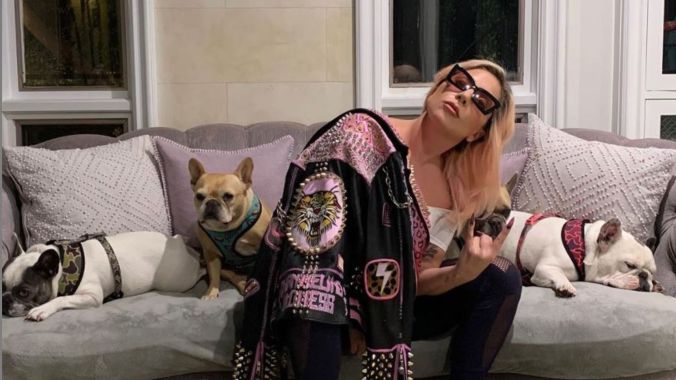
Lady Gaga promised to pay a $500,0000 reward for the return of her two kidnapped French Bulldogs Gustav and Koji (two of the three above: sorry, I don’t know which). The pop icon’s dogwalker was shot and injured during the theft. Emulating the plot twist in the Mel Gibson thriller “Ransom,” however, one of the participants in the kidnapping scheme decided to collect the reward, arguing that because Gaga had said she would pay for the dogs’ return “no questions asked,” she was obligated even to pay someone who was involved in the crime.

Seeking the outlandish reward, Jennifer McBride was arrested when she turned in the dogs at a police station. She pleaded no contest to knowingly receiving stolen property and was sentenced to probation. I suppose the scheme was to have her collect the reward and split it with the dognappers.

After Lady Gaga warbled, “You’ve got to be kidding!’ when McBride asked for the money, McBride sued her for breach of contract.

Uh, no.

In rejecting the claim, Judge Hollie J. Fujie of Los Angeles Superior Court cited the ancient “unclean hands doctrine,” which holds that a litigant cannot benefit from a situation he or she deliberately helped to bring about by illegal or unethical conduct.

“The unclean hands doctrine demands that a plaintiff act fairly in the matter for which he seeks a remedy,” Fujie wrote, adding that the UHD “is an equitable rationale for refusing a plaintiff relief where principles of fairness dictate that the plaintiff should not recover, regardless of the merits of their claim.”

Continue reading

Official Progressive Deceit: The Equality/Equity Scam

In describing to lawyers what deceit is in my ethics seminars (it is amazing how many layers don’t know what deceit is, though it is forbidden in the ethics rules), I often say that deceit is the official language of Washington, D.C. It’s a reliable laugh line, but it’s not funny. Using linguistic tricks to deceive and mislead the public is a tool of dangerous and untrustworthy governments, movements, leaders and politicians. I don’t know if this age old practice has become worse in recent years; to me it seems that way, but it could be an illusion. In the Sixties, leftists like Abbie Hoffman liked to use “liberate” as a synonym for “steal.”

The success of “Black Lives Matter” relied on a linguistic disorientation, like the old gag about a lawyer asking a witness, “When did you stop beating your wife?” What has been dismaying is how few people have the wit and courage to call out the trick and refuse to back down. The use of “immigrants,” “migrants,” “undocumented workers” and other deliberately misleading terms to hide the reality that the subject is law-breaking aliens has also been largely successful in bamboozling the public. “Affirmative action,” a nice and deceptive way to say “racial quotas,” is finally going down, but it kept the Constitution at bay for half a century. The all-time most sinister linguistic cheat, perhaps, is the use of the benign word “choice” to describe the right to kill unborn children.

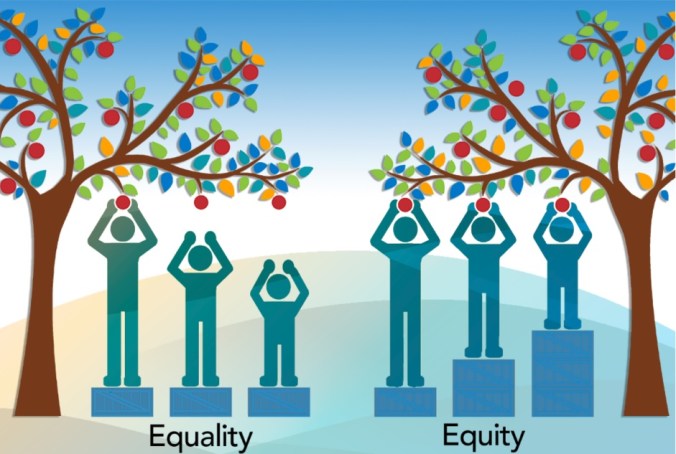
Lately, the most prominent verbal deceit is embodied in the “Diversity-Equity-Inclusion” mantra, with “equity” serving as the cornerstone of the cheat. Most Americans—hey, thanks, public education system!—think that equity is just another word for equality. Now that Democrats and progressives are fully committed to socialism (while denying it—that’s not deceit, it’s just lying) they have been bombarding the public with the word without clarifying its implications. Equality means equality under the law; it means that every citizen has the same opportunity to accomplish what his or her talents, effort, ingenuity, determination, laws and the vagueries of fate and fortune allow without obstruction by the government. Equity means that every citizen should be guaranteed the same success to the extent government power can make such “equity” possible. It is based on the socialist/communist ideal that it is unfair that life provides unequal benefits , ability and advantages, so central power must ensure fairness by artificially eliminating as many disparities in these benefits , ability and advantages as possible.

Continue reading

Add “Equity” To The Intentionally Dishonest Cover-Words Being Employed In Progressive Disinformation And Propaganda

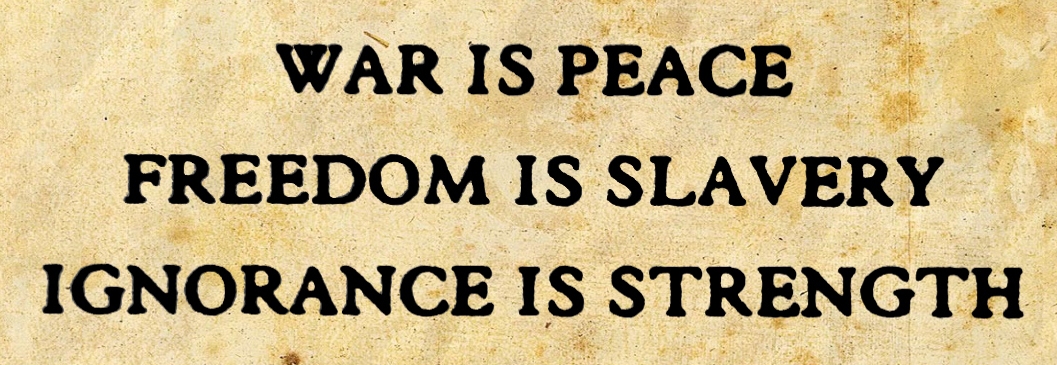
quotes-1984-george-orwell-hd-wallpapers

Racism is Equity

Yesterday I was talking with my sister, who worked for years in the Justice Department dealing with the refugee mess, about the intentional use of “immigrant” as a word for “illegal immigrant” in order to warp political debate and confuse the public. She blames ignorant journalists, but then she is something of a progressive, and tends to the Hanlon’s Razor explanation of deliberate deception by what the U.S. now calls “journalism.”

The latest diabolical use of language to justify the unjustifiable is the media’s weaponization of “equity,” which most of the public equates with “equality” thanks to a deficient education system. Equity is the quality of being fair and impartial. In law, equity now means the judicial imposition of measures to prevent damage, as when an ex-employee who agreed otherwise is prevented from competing with a former employer.

A front page article in the New York Times a week ago read “Biden’s Efforts At Race Equity Runs Into Snags,” the “snags” being those evil racist white conservatives. “No part of President Biden’s agenda has been as ambitious as his attempt to place concerns about equity squarely at the center of the federal government’s decision-making,” we are told. But what the article, and many, many other media reports and enthusiastic pundit columns call “equitable decisions” are in fact straight up racial discrimination.

Racial discrimination is not equity and can never be equity, but we are currently under a severe brain-washing effort to make us think otherwise.

From the Times article:

In late May, Syovata Edari, the owner of CocoVaa Chocolatier in Madison, Wis., was told she would receive $50,000 from Mr. Biden’s government, courtesy of the president’s efforts to ensure that pandemic relief aid for struggling restaurants and food businesses would be distributed equitably. But three weeks later, she instead received an email that broke the bad news: The award had been rescinded thanks to a lawsuit filed on behalf of white restaurant owners that successfully challenged the program’s policy of prioritizing applications from women and people of color. The check she was counting on would not arrive. “It doesn’t surprise me that once again these laws that we fought and died for, that were intended to benefit us — to even the playing field a bit more — are being used against us,” Ms. Edari, who is Black, said, referring to the Constitution’s equal protection clause. “You can’t promise something and then take it back.”

Wow! What breathtaking confusion and hypocrisy! The lawsuit was filed because the government giving benefits to one race and gender and not another for no reason except color and chromosome distribution is a slam-dunk violation of the Constitution’s Equal Protection Clause, and only a cynical and irresponsible administration seeking to create division and racial animus would represent it as otherwise. Eadari is trying to evoke “equity” Bizarro World-style by the assertion that it is “unfair” to “promise something and then take it back.” Thus, in the now routine mental gymnastics of antiracism racism, it is ‘inequitable’ to make an illegal and discriminatory pledge and not follow through on it.

The Times goes on…

“The small-business program that prioritized people like Ms. Edari was forced to change its rules last month after challenges by white Americans who say the policy is racist. And around the country, Republicans are promising to tie the president’s equity efforts to a broader culture war during the 2022 midterm elections, arguing that Mr. Biden is doing the bidding of liberal activists who believe that all white people are racist. On Capitol Hill, the $1.9 trillion relief package Mr. Biden pushed through in March, known as the American Rescue Plan, included money for health care, child care and poverty programs that disproportionately benefit minority groups, underserved communities and women.”

Being a now partisan and completely untrustworthy mouthpiece, neither the reporters nor their editors made any efforts to point out the logical and legal problems with the above, nor to avoid the bias the wording used perpetuates:

Continue reading

Monday Ethics Warm-Up, 12/14/2020: Last Week Before Getting Freaked Out Over Christmas Edition

Anxious Santa

1. American companies doing China’s censorship for a buck. The Chinese government pulled the American film “Monster Hunter” from theaters because a childish pun was deemed racist. “Look at my knees!” says an American soldier played by a Chinese-American rapper known as MC Jin as he rides in a military vehicle. “What kind of knees are these?” Then he answers his own question: “Chi-nese!”

Based on that, the movie was attacked and censored, so the line was removed, and German production company that co-produced the film (Sony is the U.S. distributor) apologized.

I am increasingly convinced that the media edict that it was racist to refer to the Wuhan-originating virus as the Wuhan virus was entirely motivated by corporate media interests in Chinese revenue. If U.S. companies won’t represent U.S. values in their dealings abroad, then the role of the U.S. as a beacon of democracy and human rights in the world is a sham.

I intend to call the pandemic the Wuhan virus forever.

2. Are absurd gay stereotypes unethical? Late night talk show host James Corden is being pilloried for his performance in Netflix’s musical The Prom. He plays an openly gay Broadway actor who describes himself as “gay as a bucket of wigs” in the Broadway musical’s film adaptation that premiered last week. I haven’t seen the film, but I know what gay stereotypes look like, from the Flaming gay director (and his even more flaming assistant) in Mel Brooks’ original “The Producers” to Martin Short’s event planner in “Father of the Bride.” The new name for this kind of performance is “gayface,” an obvious reference to blackface.

Continue reading

Pandemic Ethics Dilemma: The Universities And Colleges Need To Keep Their Students’ Money, But They Are No Longer Earning It.

A class action lawsuit has been filed against the Arizona Board of Regents, the governing board for Arizona’s three public universities, because the three schools have refused to refund room, board and campus fees to students who were told to leave campus because of the Wuhan virus. Like virtually all US colleges and universities, Arizona State University, University of Arizona and Northern Arizona University, moved their classes online  for the remainder of the Spring  semester. Students who lived on-campus were either told to move out or encouraged to do so. Yet, the  lawsuit says, the Arizona Board of Regents has refused to offer refunds for the unused portion of the students’ room and board and their campus fees. The lawsuit seeks payment of the prorated, unused amounts of room and board and fees that the class members paid but were unable to use.

How can the schools maintain that it is ethical for them to do this? I understand that having to refund the money will be disastrous for them, but they are literally keeping advance payments for services that the schools will no longer provide. I expect to see more such suits, and on the basis of law, equity, ethics and common sense, I don’t see how the institutions can prevail in them. Continue reading

Morning Ethics Warm-Up, 3/19/18: Unethical Wedding Gifts, The Fairness Conundrum, What Really Makes Students Unsafe, And More

Good Morning!

1 A Not Exactly Hypothetical… A family member is getting married, and the social justice warrior spouse has decreed that no gifts should be sent, just contributions in the happy couples’ name to designated charities and causes, all political, partisan, and ideological. Does this obligate guests to give money to causes and organizations they object to or disagree with? One might be tempted to teach a life-lesson in abuse of power, and pointedly give a contribution to, say, The Family Research Counsel, the NRA, or Paul Ryan’s re-election campaign, but that would be wrong. Wouldn’t it?

2. “Progressive fines” poll update. The percentage of readers who regard so-called “progressive fines” as fairer than fining all law violators the same amount regardless of resources is about 6%, in contracts to 40% who think this is less fair. As I suspected, the schism is driven by the long-standing (and resolvable) arguments over what constitutes “fair” government policies, and whether it is the government’s job to try to make life less unfair. Is it “fair” to treat everyone the same, when we know that life doesn’t treat everyone the same? Are those who argue that life’s unfairness should be addressed by individuals, not society, taking that position because they are winners in life’s chaotic lottery? Can society and governments be trusted to address “unfairness” and inequality without being influenced by the conflicts and biases of the human beings making and carrying out laws and policies. I don’t generally care to spend a lot of Ethics Alarms time or space on abstract ethics questions, but some of them can’t be avoided. You can take the poll, if you haven’t already, here.

3. On the topic of fairness, here is a study that will make you bang your head against the wall: Following on the heels of this discouraging study I posted about on March 3 is this report by researchers at Stanford, Harvard and the Census Bureau, as described here by the New York Times. A taste sufficient to ruin your day: Continue reading

Ethics Quiz: Income-Based Legal Penalties

In an op-ed in the Times,  lawyer Alec Schierenbeck argues for “progressive fines”:

“For a justice system committed to treating like offenders alike, scaling fines to income is a matter of basic fairness. Making everyone pay the same sticker price is evenhanded on the surface, but only if you ignore the consequences of a fine on the life of the person paying. The flat fine threatens poor people with financial ruin while letting rich people break the law without meaningful repercussions. Equity requires punishment that is equally felt.”

Your Ethics Alarms Ethics Quiz of the Day is..

Do you agree that “progressive fines” are a more ethical policy than having the same fines for the same violation, regardless of the offender?

Continue reading

Comment Of The Day: “Morning Ethics Warm-Up, 3/6/ 2018: “Remember the Alamo” Edition” (#2: “The Option”))

Commenter Zanshin returned to expand on his answer to the hypothetical I offered a Boy Scout troop based on one of my late, lamented professional theater company’s many dilemmas over the years. Here is the situation again…

The Option

Your professional theater company has limited funds, so it offers its actors an option. They may choose a flat fee for their roles, or get a percentage of the show’s profits, if there are any, on top of a much smaller base fee.

The company just completed an extremely profitable production, the biggest hit your theater has ever had. Nine of the show’s ten cast members chose the percentage of profits option, a gamble, because most of the shows lose money. One, the star, who you know could not afford to gamble, took the flat fee for the role. After the accounting for the production is complete, you realize that every member of the cast will make $1000 more than the star, because of the show’s profits.

Question 1: What do you do?

  1. Give him the extra $1000. It’s only fair.
  2. Pay him the flat fee. A deal’s a deal.

Question 2: You remount the production, and the exact same thing happens. The actor chooses the flat fee, the show is again a huge money-maker,,and the rest of the cast will make much more than him because they chose the percentage. Do you give him the extra amount again?

  1. No. Now he’s taking advantage of me.
  2. Yes. Nothing has changed.

You can read the initial responses here, and check the poll results.

And here is Zanshin’s Comment of the Day, on the post Morning Ethics Warm-Up, 3/6/ 2018: “Remember the Alamo” Edition:

Here are my reflections on this ethical (hypothetical) issue.

Question 1: Some personal background influencing my thinking: In the early years of my career I worked at a small company (about 40 employees). After having worked there for 2 years the owners sold the company, probably for a very good price, because they decided to give every employee about $ 200 for each year that he had worked with the company. Some of my colleagues worked with them for 15 years and more.

For me it would be a nice $ 400 but to my surprise I received $ 1.000 with a handwritten note which stated something like, “We’ll give you $600 extra because we are very pleased with your performance with us. Please do not discuss this with your colleagues.”

Back to the question.

I would go for a third option. First, Pay him the flat fee. A deal’s a deal.

But at the same time, give him in some personalized way, about $500 extra.With personalized I mean, fitting the situation. Why couldn’t he gamble with his reward? For instance, his car is broke, he needs it very bad for whatever reason. Offer to pay a part of the bill, etc.

Question 2: In my opinion the set-up of the first situation (question 1) was already tainted. Just as we expect of journalists that they don’t “interview people who are drunk, drugged, impaired, or not in a mentally or emotionally stable state.” one should also not ask an employee who you know could not afford to gamble to just do that, gamble with his income. Continue reading

Ethics Dunces : Michigan State University Student Feminists

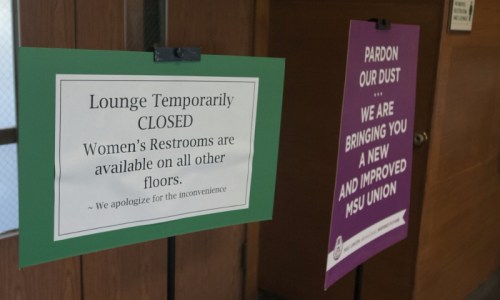
MSU womens_study_lounge

Higher education progressives, students, professors and administrators alike, are seriously confused about ethics, and some basic principles like fairness, respect, equity, and competence, not to mention common sense. How did they come to such a state?

For various reasons, none of them reasonable, Michigan State University had maintained that gender segregation was appropriate in the student Union, and  a study lounge there was designated for women only. Perhaps we can forgive the school’s initial judgment in this case, since the Union’s Women’s Lounge, located on the main floor of the MSU Union, debuted in 1925, just five years after women gained the right to vote.Men vastly outnumbered women then, and were looked upon as oddities, or perhaps temptation.

It is 2016, however, and women are demanding equality where it may already exist, and declaring gender discrimination where it may not, so the continued existence of the male excluding lounge was more than a bit anachronistic. After all, Harvard College just declared war on any male student who dared to belong to off-campus all-male clubs, since even freedom of association away from school is deeply offensive to the progressive values of Ivy League educators.

Then a University of Michigan-Flint professor named Mark Perry, filed a complaint to the Michigan Department of Civil Rights towards MSU alleging that the lounge violated federal anti-discrimination law, which it obviously does. Continue reading