Morning Ethics Warm-Up, 5/18/18: George Sanders Memorial Edition

Good morning….

1. Why George, you ask? “Dear World,” famed actor George Sanders wrote in his suicide note in 1972, ”I am leaving because I am bored.”

I can relate. I am so bored with the unchanging patters of the news media’s irresponsible obsession with “getting” Donald Trump, the unethical and obsessed Ahab-like mania of his foes, and the depressing–I’m really ashamed of all of you—conduct of my many left-wing friends who still, after all this time, erupt in unseemly barking and seal-flipper applause over any Trump-hating pundit’s warped analysis. I’m bored, and I don’t understand why everyone else isn’t bored. How can Saturday Night Live fans still pretend to think Alec Baldwin’s amateurish, fury-sweating, repetitive Trump mockery is interesting? We’re at the point now where everything is being repeated from months ago: the resistance is running through the alphabet AGAIN.  A few days ago an ex-Obama official went all the way back to the Resistance’s Plan C, the arcane Constitutional dead letter known as the Emoluments Clause, and like the lapdogs they are, the Democrats’ impeachment lynch mob and anti-Trump news media predictably followed suit. This was widely interpreted by cooler heads as a sign of Trump Derangement Desperation, and maybe so, but this is like “Groundhog Day.” I never dreamed that I would still have to write about this 18 months after the initial post-election freak-out—“He’s a Nazi!” “He’s insane!” He’s a racist!” “He stole the election!” “He’s a Russian puppet!” —which was embarrassing enough. And I do have to write about it, because it is, in the end, an ongoing story of Americans acting horribly toward their own institutions, and professionals, who are supposed to be trained to be better, leading the way while in many cases acting worse.

It just kills the blog, as well as the fun of writing it, which has always been the eclectic and broad influence of ethics in our lives. The issue has just gutted traffic here: the anti-Trump virus-infected  can’t bear to read any objective commentary that doesn’t drip with hatred of the President, so they retreat to the warm second-hand lies of social media, rapid Trump supporters don’t want to frequent a periodic defender who won’t ignore his flaws, and serious ethics followers who view the whole episode as a bad dream that they would rather not think about while pondering the nuances of utilitarianism find the essays on the topic of the Trump Wars repetitive—which, inevitably, they are.

2. “Animals.” Look at yesterday’s ridiculous effort by journalists and pundits to intentionally misinterpret the President’s off-the-cuff comments in response to a comment about the violent MS-13 gangs at a White House roundtable discussion on the subject of immigration and so-called “sanctuary cities.” Fresno County Sheriff Margaret Mims raised the problem of  Mara Salvatrucha gangs, better known as MS-13. “There could be an MS-13 member I know about — if they don’t have a certain threshold, I cannot tell [Immigration and Customs Enforcement] about it,” Mims said, thus triggering a typical Trump word cloud in which he described the gang members as “animals.” Never mind: multiple news sources deliberately omitted the context of Trump’s remarks to advance the “Trump is a racist and hates all immigrants” narrative. Incredibly, this was so blatant that CNN, of all people, decided to weigh in on the President’s side—all the better to allow them to claim objectivity when they smear him later. Continue reading

Morning Ethics Warm-Up, 5/2/18: Dictators, Wizards, Liars and Abusers [Updated]

Good morning!

1 Housekeeping matters. For some reason, I know not what, there was an outbreak of contentious discussion regarding Ethics Alarms administration in a couple of threads yesterday. I think everything covered or complained about is covered in the Comment Policies above, but just for the record:

  • I handle the moderation here. Only me.
  • Though it might appear otherwise to some, I do not spend my day glued to Ethics Alarms. Thus on days like yesterday, when I had an early morning CLE session to teach in D.C., followed by one  law firm client emergency after another, I did not see any comments at all from 1am to 6 pm. Thus the hysterical and indignant “Why did you delete my comment?” outbursts and the “How dare you allow that rude comment to stay on the site?” and the ultimata springing therefrom were especially silly, unfair, and ill-informed.
  • I am not your Moderation Monkey. Don’t command me on how to police my own site. Thank you.
  • As I have written many times, occasionally a comment from an approved participant gets spammed for no good reason. Sometimes WordPress, for no apparent provocation, starts spamming the comments of visitors here who have been commenting for years. Sometimes such commenters have had to change their screen names as a result. None of this has anything to do with me: I can’t control it, or predict it. The calm, reasonable commenters faced with this crisis generally e-mail me, then I search the spam archives, find the lost post, send it to moderation, and approve it.
  • I do not delete posts from approved commenters. The exception is when I ban a commenter permanently, or give one a time out, which is a temporary ban or suspension, in which case the commenter is always warned in advance.
  • I expect discourse here to be civil, but will excuse momentary and periodic lapses and outbursts from veteran commenters (and me, of course), in direct proportion to their time here, level of participation and constructive value to the mission. Individual quirks will also be taken into consideration.

2. Remembering the David Manning Liar of the Month: A commenter who hails from the old Ethics Scoreboard days recently referenced the feature there called the David Manning Liar of the Month. A David Manning-style lie is a statement that the speaker or writer can’t possibly expect anyone to  believe, thus raising the question of whether it is a lie at all. (Sony spawned the award by excusing its use of a fake film reviewer it named David Manning to rave about terrible movies in ads,  claiming that nobody believed such excerpts anyway.) If Ethics Alarms had the same feature, President Trump would obviously dominate it, as I was reminded this morning. The President’s ex-physician, Dr. Harold Bornstein. bitter over his ejection from the Trump Court, revealed that Trump himself had dictated the absurd letter in which the doctor attested, Continue reading

Mid-Day Ethics Warm-Up, May 1, 2018: Generally Disgusted

Good day to all, I guess.

Me, I feel like quitting.

1.  Basic ethics blindness regarding the White House Correspondents Dinner. The ethically obtuse responses I am reading in columns and blogs regarding the self-defining journalism ethics event–you know, as in none—doesn’t bother me too much. I assume these people have the ethics of jackals. The similar responses I am reading here from intelligent readers who have been supposedly paying attention, however, discourage me greatly. Really: why bother writing a couple thousand words a day about ethics when  your readers react to a high profile, unequivocal act of disrespect and rudeness by resorting to “I don’t like the guy, so I’m glad,” “he started it!” and “they had it coming”?

Or, my personal favorite, “this one insult everyone is talking about isn’t one if you spin it hard enough, so the other 30 insults don’t matter”?

There is no ethical defense whatsoever for inviting individuals to a formal dinner and intentionally making them feel like they are being singled out for abuse. Ever. Period. No exceptions. This is so obvious and uncontroversial that it prompt debate in a civilized society.  That anyone is trying to defend the association, and its hired gun, Ms. Wolf, simply validates my two years-and-running correct prediction that electing Trump as President will turn this into a nation of assholes, though I was expecting those transformed to be primarily young, shallow and easily influenced. I did not expect so many professionals to re-enact the donkey-scene in “Pinocchio.”

And yes, as far as I’m concerned, Wolf, with the journalists’ consent, insulted the President of the United States and his daughter to their virtual faces. It is just moral luck that Trump did not attend, and there is no reason to believe that Wolf changed her act one iota because he wasn’t there. She was prepared to call the President of the United States a pussy, a monster and a Nazi to his face, with him a captive audience member. The ethics-free, rationalized justification I am reading on this blog is , “Yeah, well he made fun of a disabled man in 2016!”  Wow. I really am wasting my time, I guess. How else can I interpret that?

Off the blog, some other ethically dim justifications have surfaced, like today’s New York Times column absolving Wolf from all responsibility because she performed the same kind of anti-Trump material that she always did. Funny, nobody gave Don Imus, the briefly ascendant shock-jock, that easy out when he embarrassed President Bill Clinton by calling him a “weasel,” among his less offensive terms, when he entertained the same group. Hey, protested the I-Man, I call Clinton a lying weasel every day on my show, why would anyone expect me to do any differently at the dinner? Why? Because professional entertainers have calibrated the appropriate content of their performances to their audiences’ tastes and sensitivities forever, that is why, and professionals are expected to be professional, which includes responsible. Go ahead, look me in the eye and tell me that Wolf would have made equally denigrating jokes if Obama was the President. Jokes about his flirtation with being gay. Jokes about eating dog. Jokes about him being a weenie with Putin and the “red line.” Jokes about the most “transparent” administration ever. Jokes about Joe Biden feeling up women during photo ops. About the IRS. About “you can keep your plan.”  No, the association always assumes that its entertainers would keep their material appropriate to the venue and the event. The argument being used to excuse Wolf would be like excusing infamous “blue” material comics like Buddy Hackett, Redd Foxx and David Brenner if they made dick jokes on “The Ed Sullivan Show.” No, they toned down their material, out of respect for the audience. Respect. What a concept. And this was an audience of middle class Americans, not the President of the United States.

Of course, Wolf easily could have assumed that she was expected to be uncivil, cruel and offensive, since she knew that her hosts, like her and her fellow professional Trump-bashers, constituted the “resistance’s” Agents of Presidential Destruction. That doesn’t relieve her of ethical responsibilities, though. The association was irresponsible to hire someone with her proclivities, and she is accountable for her own disgusting, divisive conduct. Continue reading

Review: Ethics Alarms Concepts And Special Terms

Recently updating the Ethics Alarms list of concepts and frequently used terms reminded me that I had been meaning to post them for review and assistance to those relatively new here. Of course, the link has always been right there at the top of the home page, but I have this sneaking suspicion that it isn’t visited very often.  Here, then, is the up-to-date list.

CONCEPTS

Non-Ethical Considerations: Defined above, non-ethical considerations are important because they are often the powerful impediments to ethical conduct, and the cause of many conflicts of interest. Non-ethical considerations are many and diverse, and include:

  • The need and desire for shelter, health, wealth, fame, security, self-esteem, reputation, power, professional advancement, comfort, love, sex, praise, credit, appreciation, affection, or satisfaction
  • The desire for the health, comfort, safety, welfare and happiness for one’s family, loved ones, friends, colleagues, an co-workers
  • The pursuit of vengeance or retribution
  • Hunger, lust, pain, ambition, prejudice, bias, hatred, laziness, fatigue, disgust, anger, fear
  • …and many more

Ethical Dilemma: This is an ethical problem in which the ethical choice involves ignoring a powerful non-ethical consideration. Do the right thing, but lose your job, a friend, a lover, or an opportunity for advancement. A non-ethical consideration can be powerful and important enough to justify choosing it over the strict ethical action.

Ethical Conflict: When two ethical principles demand opposite results in the same situation, this is an ethical conflict. Solving ethical conflicts may require establishing a hierarchy or priority of ethical principles, or examining the situation through another ethical system.

Ethical Gray Area: Gray areas are situations and problems that don’t fit neatly into any existing mode of ethical analysis. In some cases, there may even be a dispute regarding whether ethics is involved.

Reciprocity: The ethical system embodied by The Golden Rule, and given slightly different form in other religions and philosophies. It is a straight-forward way of judging conduct affecting others by putting oneself in the position of those affected. Reciprocity should always be available in any ethical analysis, but it is frequently too simple to be helpful in complex ethical situations with multiple competing interests.

Absolutism: Absolutist systems do not permit any exception to certain ethical principles. The champion of all absolutists, philosopher Immanuel Kant, declared that the ethical act was one that the actor was willing to have stand as a universal principle.

One principle of absolutism is that human beings can never be harmed for any objective, no matter how otherwise worthwhile. Absolutism has the advantage of making tough ethical calls seem easy, and the disadvantage of making debate impossible. One sees absolutism reflected today in the controversies over war, torture, abortion, cloning, and capital punishment.

Utilitarianism: Utilitarianism accepts the existence of ethical conflicts and the legitimacy of some ethical dilemmas, and proposes ethical analysis based on the question, “Which act will result in the greatest good for the greatest number of people?’ It entails the balancing of greater and lesser goods, and is useful for unraveling complex ethical problems. Its drawback, or trap, is that utilitarianism can slide into “The ends justify the means” without some application of absolutist and reciprocity principles.

Consequentialism: In formal ethics, utilitarian schools of philosophy are sometimes lumped together as “consequentialism,” in that the ethical decision-making is based on seeking the best result. Here we just uses the above term, utilitarianism.  Consequentialsm, in contrast, is the flawed belief that the rightness or wrongness, or even wisdom, of chosen conduct is measures by its actual results rather than its intended results. If “if all worked out for the best,” in other words, the conduct that created the desirable result most have been ethical, whatever its intent or however the conduct was determined to be necessary or desirable. This is a fallacy.

Cognitive Dissonance:
Cognitive dissonance is a psychological phenomenon first identified by Leon Festinger. It occurs when there is a discrepancy between what a person believes, knows and values, and persuasive information that calls these into question. The discrepancy causes psychological discomfort, and the mind adjusts to reduce the discrepancy. In ethics, cognitive dissonance is important in its ability to alter values, such as when an admired celebrity embraces behavior that his or her admirers deplore. Their dissonance will often result in changing their attitudes toward the behavior. Dissonance also leads to rationalizations of unethical conduct, as when the appeal and potential benefits of a large amount of money makes unethical actions to acquire it seem less objectionable than if they were applied to smaller amounts.

Moral Luck: The common situation where an unethical act is only discovered, noticed, or deemed worthy of condemnation due to unpredictable occurrences that come as a result of the act or that affect its consequences. Moral luck is the difference, for example, between two mildly intoxicated drivers, one of whom arrives home without incident, while the other has an unwary child dash in front of his automobile, leading to a fatal accident that he couldn’t have avoided if completely sober. Yet the unlucky driver will be a pariah in the community, while the more fortunate driver goes on with his life.

SPECIAL TERMS USED ON ETHICS ALARMS

Continue reading

Comment Of The Day: “Harassing McGruff: Oh-Oh…Am I Going Crazy?”

I’m going to post the whole ad at issue again, because it is an essential reference point for context:

My almost entirely serious post about the GEICO ad showing McGruff the Crime Dog being subjected to office harassment based on his appearance and species/race prompted more and more diverse commentary than I expected, and one slam-dunk Comment of the Day, by Zanshin, who has a record of deconstructing oddball Ethics Alarms posts.

Three points:

1. I was not aware that McGruff had starred in anti-bullying videos, and I doubt that any but a tiny fraction of the intended audience for the GEICO commercial is either,

2. Kudos to Zanshin for seeing a connection to The Jehovah Paradox, which I did not. It is not often that I am told that I don’t understand my own inventions, but he makes an excellent argument. I also need to add TJP to the Ethics Alarms list of concepts and special terms, which I had neglected to do.

3. I just saw the ad again, and it still feels to me like GEICO is making light of workplace racism, bullying and harassment, and

Here is Zanshin’s Comment of the Day on the post, Harassing McGruff: Oh-Oh…Am I Going Crazy?:

Jack asked, […] am I just seeing an ethics breach that isn’t there?

My answer, You saw only the unethical part in this commercial because you didn’t have the context to ‘see’ the ethical part in it.

tl/dr

1. McGruff is subjected to cruel bullying and office harassment.

2. Is that an ethics breach? No, not if one understands “The Jehovah Paradox”.

3. In the commercial McGruff doesn’t break character.

4. (At the minimal) the commercial doesn’t go against the teachings of McGruff.

5. The commercial makers should have done a better job in making the teachings of McGruff more explicit.
(But maybe couldn’t given intellectual property/licensing issues?)

Let me explain. Continue reading

Harassing McGruff: Oh-Oh…Am I Going Crazy?

Being an ethicist, especially a blogging ethicist, has its disadvantages. One bad one is that your ethics alarms are tuned to be so sensitive that you see, or think you see, ethics issues in just about everything. Now I think I just may have crossed the line into ethics-hypersensitivity madness, or EHM.

That GEICO commercial above really, really bothers me, and apparently I am the only one.

What is looks like to me, and did from the very first time I saw it, is cruel bullying and office harassment. Despite the stated gag in the ad, this isn’t human beings talking “baby-talk” to a dog. The ad depicts co-workers being deliberately cruel to a colleague because of his appearance, and arguably his race. (McGruff isn’t a dog; he’s a “Goofy,” one of the strange dog-headed animated human mutants most prominently represented by Disney’s slapstick star. Pluto, as made quite clear by the kids in “Stand By Me,” is the dog..)

I find it incredible that GEICO would put out a TV ad that makes a joke about bigotry and workplace harassment now, of all times. How is that funny? Poor McGruff is trying to do his job, and his entire office refuses to take him seriously because he has a dog-face. They humiliate him. They show they don’t respect him. They gang up on him. And GEICO’s announcer just calls it “surprising,” meaning “hilarious.”

I don’t find someone being made to feel like they are being relegated to the role of an office joke as hilarious. We are watching a classic hostile work environment scenario, and GEICO is telling us that it’s funny. Doesn’t that inform children that this kind of peer bullying and denigration is OK, indeed fun? Why doesn’t it? Because McGruff is a ‘toon?” Why isn’t that tantamount to racism? Because of how he looks? If there was a comedy scene in “Who Framed Roger Rabbit?” where Jessica Rabbit was mercilessly ridiculed and hazed because of her body, would that have been all right? Why isn’t the depicted treatment of McGruff the Crime Dog the equivalent of making relentless comments about a co-worker’s unusually large breasts, or weight?

Or am I just seeing an ethics breach that isn’t there? Go ahead, you can tell me. I can take it.

Comment Of The Day: “When Ethics Alarms Don’t Ring: Snapchat Approves A Domestic Abuse Game Ad”

Video games and their effect on societal violence have been mentioned in the comment threads of several recent posts of late, so Michael West’s essay on the topic is especially timely (even if my posting of it is tardy). I am dubious about claims that forms of entertainment warp healthy minds, as I am old enough to have seen a series of modes and genres be condemned from various sides of the political spectrum as turning children into violence-prone monsters. Even the Three Stooges once were fingered as making kids unfeeling sociopaths. I’m also historically astute enough to know dime-novels about bloody Wild Bill Hickock shootouts, pulp novels with half-naked blondes on the cover and  EC comics about shambling, face-eating corpses were similarly accused. My son played “The Godfather” video game, and five earlier versions of the “10 Violent Video Games” the Parenting website says to avoid, all with my blessing.

When my son was 18, he bought a gun, too. I’m not worried. He has many friends, a strong peer group, he has strong ethical values and character, and is kind and thoughtful. That is not to say that every new social influence is different, and that attention must be paid.

Here is Michael West’s Comment of the Day on the post, When Ethics Alarms Don’t Ring: Snapchat Approves A Domestic Abuse Game Ad

Video games have been out nationally for quite a while. Even video games that have abstract versions of violence…like Mario Brothers or Donkey Kong…and I mean old school versions of those games like I used to play on Apple IIe. But for us to seriously contemplate capital V, capital G, capital V Video Game Violence as a force affecting the acculturation of our youths, we ought to fast forward in time specifically to “realistic” video game violence. An estimate that will be off plus or minus a few years, the *mid* 1990s is when our culture saw First Person Shooters enter the market, with early favorites like “Doom” and “Wolfenstein 3D” for desktop computers and ultimately entering the console market. In other words, Video Game Violence is still a young force in our society. This makes measuring its effects a bit problematic.

As we raise our young, they are acculturated through several INPUTS…all of which communicate to some level or another the values that the culture espouses OR worse, inadvertently communicates values the culture notionally DOES NOT espouse, but accidentally promote. In a manner of speaking, “we are what we eat”. My personal take up front is that YES, video game violence, as a subset of ALL informational inputs DOES affect each individual’s acculturation. The real questions are, “how much” and “are it’s effects mitigated by other inputs”?

I would think that for video game violence to start acculturating the young towards violence, they would need to be inundated by it and have few effective counter-acculturating forces in their lives teaching them that wanton and purposeless violence is bad. For the first 20 years of video game violence, my gut tells me we can explain away its effects as having been minimally noticeable without deeply searching each individual or practically non-existent. Children of the early years of video games had plenty of other inputs in their lives as well as outlets for their minds at a vastly greater ratio than the violence int he games…first and foremost active and attentive parents.

That leaves us really with only about 15 years of any generation that could be said to be inundated by truly graphic depictions of limitless violence…most of those age cohorts are still too young to see how they turn out as adults. Again, my gut says that you’d see actual correlations, if they exist, in about another decade. And even then, I don’t think we’ll find a direct causal effect between video game violence and individuals acting on violent tendencies *except in marginal cases*. Continue reading

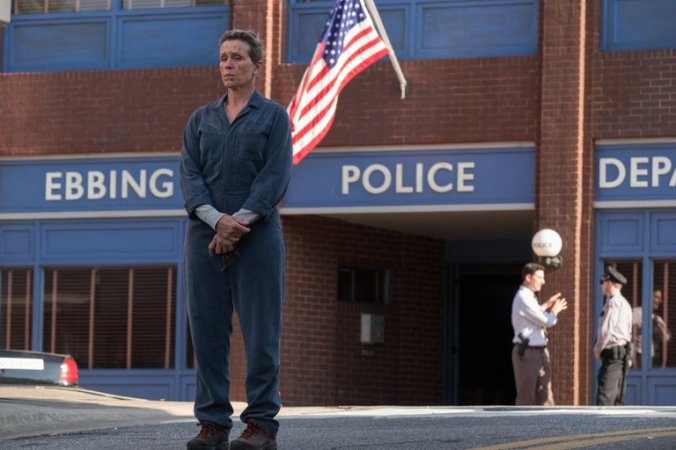
Ethics Review: “Three Billboards Outside Ebbing, Missouri”

I watched last year’s “Three Billboards Outside Ebbing, Missouri,” twice, just to make sure it was the profound ethics movie I thought it was. It is. None of the reviews described it that way, of course. Here is the New York Times:

“The movie opens on low boil with Mildred behind the wheel of her station wagon near three derelict billboards…she uses the billboards to announce her crusade … a way to get things jumping (the investigators, the tale) and splash some foreboding on an outwardly pacific scene. Much of the story involves the ripples of outrage, confusion and buffoonery that the billboards inspire and that soon envelop almost everyone Mildred knows. Months after her daughter’s death, grief has walled her in; isolating and seemingly impenetrable, it is inscribed in the hardness of her gaze and in her grim new identity as a mother of a dead girl. The billboards turn that grief into a weapon, a means of taking on the law and assorted men — a threatening stranger, a vigilante dentist and an abusive ex (John Hawkes) — who collectively suggest another wall that has closed Mildred in….”

None of which addresses what is remarkable about the film, which is that it shows what causes our ethics alarms not to ring—Frances McDormand as Mildred and Sam Rockwell as Dixon, a racist and vicious deputy, in particular demonstrate  what it is like to be driven by non-ethical considerations of the darkest and most passionate sort—and more important, what causes them to start ringing again. Most reviewers described this as a dark and depressing film. The ethics alarms are mostly off again as the film ends, and that is ominous, but its main ethics message is uplifting in many ways. “Three Billboards” teaches us that even broken, ignorant, alienated human beings have the capacity to access their innate instincts for compassion, justice, forgiveness, selflessness and kindness, and even when our ethical selves seem permanently overcome and decisively defeated, they can burst out again, in control, salvaging what’s best about the species.

There is a moment early in “Three Billboards” that signals that it is not only going to show us what monsters anger and grief can transform us into, but also that what George Washington’s list of 110 Rules called “that little spark of celestial fire called conscience” is remarkably resilient.  A sheriff—the ethics compass of the story, played by Woody Harrelson— visits Mildred after her billboard messages embarrass him and roil the town. She is hard and cold as marble as he tries to explain his failure to find her daughter’s rapist/killer, even after he reminds her that he is dying of cancer. Suddenly the sheriff has a violent  spasm: he coughs up blood on himself and Mildred. And we see her fury evaporate in an instant. The compassionate and caring mother she once was emerges, if only for a few moments. ( McDormand is such a superb actress that she pulls off the sudden transition convincingly and movingly: you believe it, though it is like watching Mr. Hyde turn into Dr. Jekyll in the snap of a finger.) Later, when again her fury has been aroused, we see the same woman firebomb the police station and watch implacably as her nemesis deputy burns. A warning: just because the ethics alarms can ring doesn’t mean they are working well enough.

Sam Rockwell’s character also reveals surprisingly that his ethics spark has not been entirely extinguished, again thanks to a catalyst supplied by the sheriff. This transformation caused considerable  criticism of the film among critics and artists in Hollywood, and some attribute the film’s failure to win the Best Picture Oscar to the fact that a racist is redeemed and revealed to have an ethical core. But except for the sociopaths and psychopaths among us, admittedly a disturbingly large group, we all have that ethical core. We have the ethics alarms too, ready to be re-activated, even if they aren’t in perfect working order. Yes, this is  even true of racists. So much of our current political discourse is driven by the false construct that a single belief or a single lapse of reason marks an individual as irredeemable. Its easier to marginalize and demonize them that way. But it isn’t true.

Indeed Ethics Alarms often declares certain conduct and words as signature significance, proving that an individual is unethical because such actions and thoughts are alien to ethical human beings. “Three Billboards Outside Ebbing, Missouri” reminded me that people may be unethical–Mildred and Dixon, the deputy, could never be called ethical, for ethical people don’t set police stations on fire or throw young men out of second story windows, as Dixon does—but that even unethical individuals can find their ethics if you give them a chance.

And if they can find their ethics, so can all of us, and so can society. There is hope.

________________________

Addendum: I cannot leave “Three Billboards” without a salute to one of its most powerful scenes, when Mildred tells a priest why she doesn’t care what he has to say when he comes to her home to admonish her for the messages on the billboards:

Bingo.

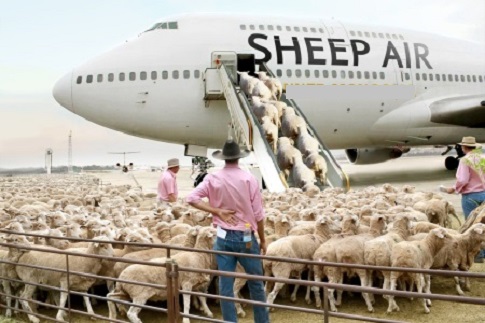
Comment Of The Day (1): “A Cruel And Stupid Flight Attendant, A Dead Puppy, And A Plane Full Of Sheep”

Choosing the best among so many excellent comments on this topics was nigh impossible. I chose two in the end, beginning with Michael West’s systemic analysis that also opens several ethics issues that could justify separate posts on their own. The second COTD, coming up forthwith, addresses a completely different aspect of the story.

Here is Michael West’s Comment of the Day on the post, A Cruel And Stupid Flight Attendant, A Dead Puppy, And A Plane Full Of Sheep”

1) Airlines have clearly delineated standards for carry-on sizes. Enforcement of these sizes has been perennially neglected to where passengers routinely carry noticeably larger than permitted carry-on bags. This is marginal rule breaking.

2) No doubt this puppy was in such a carry-on that would never have been permitted if rules were enforced…NOR EVER EVEN ATTEMPTED if the owners knew that rules were enforced. But the larger culture has acquiesced to the flouting of a “no big deal” rule. Continue reading

Morning Ethics Warm-Up, 3/17/2018: Mockingbirds, Headlines, And Reasonable Doubt

Good Morning, Scout!

1 Assorted blog stuff. I’m going to have to fly to Boston next month for the hearing on my motion to dismiss the specious defamation suit against me by an Ethics Alarms  commenter to whom my responses were no more defamatory than what I have said to many of you when provoked…Every now and then some blog or social media participant with a huge following links to an old post here, and I am swamped with visits from a lot of individuals with no serious interest in ethics. They almost never comment, and if they do, the comments typically don’t meet my posting standards. Still, they swell the traffic stats, and I’ll take ’em. In 2017 I had none of these fluky hit avalanches, after a 2016 that had several. This time, the post suddenly drawing interest is a 2014 essay about a letter written to director Terry Gilliam in 2005. You just never know…Expect a lot of Comments of the Day this weekend: I am way behind, and I’m sorry. Tough week.

2. Keep hope alive! Yesterday’s New York Times front page headline perfectly embodied the fake news-by-innuendo tactic that has marked the mainstream media’s efforts to pander to the “resistance.” The Special Prosecutor’s fishing expedition just subpoenaed the business records of the Trump organization relating to its dealings in Russia. Says the Times headline: “Investigation nears President.” Ooooh! Scary!

Hype, and unprofessional. This is the “He’s getting closer! And closer!” narrative the anti-Trump journalists have been flogging for a year. Yeah, I guess any time an investigation involves someone’s business it is “near” the owner, but why would that obvious fact justify a headline?  The reality is that Trump’s organization had business dealings in Russia (legal and unremarkable), the fact that Mueller is looking does not prove or suggest that those dealings had any connection to the campaign, and Mueller could have asked for these records a year ago. There is nothing ominous about the request from the President’s perspective at all, unless, as this whole fiasco has presumed from the moment Democrats seized on Wikileaks and fake Facebook news as the designated excuses for Hillary’s inexcusable defeat, there really was “collusion.”

That an investigation has been launched does not imply, suggest, or indicate wrongdoing. The news media’s reporting continues to suggest otherwise because they want the President to be guilty of something heinous. Imagine that: there are Americans who want their elected President to be proven guilty of wrongdoing.

3. To kill a “To Kill A Mockingbird.”  Harper Lee’s estate filed a complaint last week in federal court in Alabama, arguing that a Broadway bound stage adaptation of “To Kill A Mockingbird” by “The West Wing” creator and “A Few Good Men” writer Aaron Sorkin violates a contract, between Harper Lee and the producers that stipulates that the characters and plot must remain faithful to the spirit of the book. (I wrote about the complexities surrounding Atticus Finch’s character in a 2015 post.) Continue reading