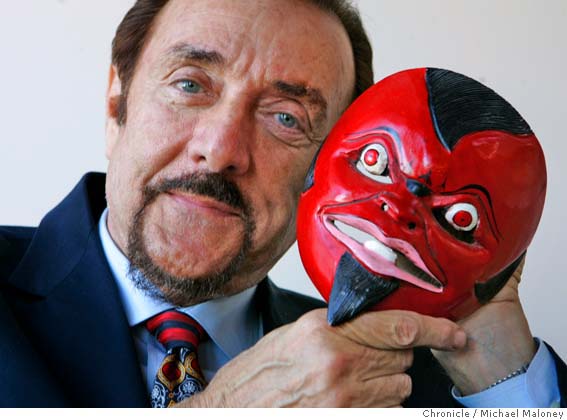
I’m giving ethics seminars to lawyers and accountants today at a non-profit conference in Washington, D.C. While I’m gone, I thought you might want to think about one of the topics I’ll be talking about, the problem of avoiding unethical influences and being co-opted by an unethical culture. What follows are some of the principles advocated by psychologist Philip Zimbardo, “Dr. Z” to his students, who is best known for devising the infamous Stanford Prison Experiment (it was even made into a movie), that demonstrated to a frightening degree how ethical individuals could engage in horrendous acts when placed in the right (or wrong) environment. Zimbardo has studied, taught and written about this phenomenon extensively, and I find his advice bracing and wise, as well as fodder for debate and discussion. Here it is: Continue reading
ethics alarms
Ethics Quote of the Week: Ethics Alarms
“The lesson: the absence of respect for the opinions of others, accompanied by a lack of humility and a surplus of contempt for fairness and civility, will doom even intelligent, talented and hard-working individuals to inevitable failure, because they cannot be trusted, not by employers, not by colleagues, not by friends.”
—Me, from January of last year, writing about the demise of Keith Olbermann at MSNBC
Rush, Sandra, Bill, and Jack, plus many, many others, please—please— take note.
Rush’s Apology, His Power, and His Responsibility
The Sunday morning talk shows had a real Rush Limbaugh bash-fest this morning, and that’s fine: he earned it, with his ill-considered and vicious attack on Sandra Fluke for stating her opinion. This is a real career crisis for Limbaugh, I think, and he knows it. His initial reaction to the furious criticism of his offensive comments about the Georgetown Law student was to refuse to back down, as has been his response to controversies his entire remarkable career, and it has served him well. Then he realized that this controversy was different. He had crossed a line of decency, fairness and civility that the culture as a whole, not just political adversaries, would not tolerate. He apologized, saying.
“For over 20 years, I have illustrated the absurd with absurdity, three hours a day, five days a week. In this instance, I chose the wrong words in my analogy of the situation. I did not mean a personal attack on Ms. Fluke.
“I think it is absolutely absurd that during these very serious political times, we are discussing personal sexual recreational activities before members of Congress. I personally do not agree that American citizens should pay for these social activities. What happened to personal responsibility and accountability? Where do we draw the line? If this is accepted as the norm, what will follow? Will we be debating if taxpayers should pay for new sneakers for all students that are interested in running to keep fit? In my monologue, I posited that it is not our business whatsoever to know what is going on in anyone’s bedroom nor do I think it is a topic that should reach a Presidential level.
“My choice of words was not the best, and in the attempt to be humorous, I created a national stir. I sincerely apologize to Ms. Fluke for the insulting word choices.”
Was it a “real” apology? I’m going to discuss the issue of apology ethics in the next post, but yes, it was as real as most apologies. If one’s definition of apology is ” a statement of contrition and regret freely and sincerely given,” the answer is no. Very few apologies meet that high standard, if only for the reason that few of us will apologize unless an apology benefits us in some way or is unavoidable. Rush’s reputation is based on daring, outrageousness and his refusal to back down from the ‘truth” despite assaults from the “drive-by” media and the politically correct; he, of all people, would never apologize for anything he said on his show if he had any choice in the matter. In this case, I assume that Limbaugh was hearing from his affiliates, his sponsors, other talk show hosts, and political figures that he was courting disaster if he didn’t back down. Continue reading
The Basics
I know it is asking a lot, but it would save a lot of frustration and aggravation on all sides if newcomers to Ethics Alarms would take the time to read, not only the Ethics Alarms Comments Policies, but also the Concepts and Special Terms (under the masthead above), the Unethical Rationalizations and Misconceptions, the Virtues, Values and Duties, the Alarm Blockers, and the Ethics Decision-making Tools, all of which have permanent links to the immediate left of the most recent post. Not only do the essays and commentary constantly refer to these terms and topics, they are also based on them. I don’t expect to stop all new commenters from relying on “everybody does it” logic or from stooping to “who are you to judge?” as their sole argument, but if more would just read these sections, I wouldn’t have to keep writing the same thing in response quite so much. That would make me happy, and also get more new relationships here off to a friendlier start. These are the concepts, tools and language that underlie everything that’s written here, and the more we all are speaking the same language, the better the discussion will be.
I have also recently added material to both Concepts and Special Terms and the Rationalizations section, as both were out of date. I encourage regular visitors to re-acquaint themselves with those areas, and feel free to suggest changes, additions and deletions, as well as flagging the inevitable and apparently unavoidable, for me at least, typos.
Thanks and Mea Culpa
The discussion on Ethics Alarms has been especially lively, diverse and interactive this week, and I want to thank all who participated for their time, passion, reason and civility. My goal has always been to foster better ethical analysis through dialogue, and I consider what I read the past several days to be a significant advance. I am grateful to everyone, especially so because it has been a hectic and difficult period for me.
I also am aware that the typos have been proliferating again, and I apologize to all. It is irritating, not to mention confusing, to have to read posts with errors, and it is unprofessional for me to allow the errors to occur. There can be no excuse for it, and I am truly sorry. Unfortunately, I can’t type, I have always been a poor speller, and I am an even worse proof-reader of my own work. Believe it or not, I proof each post at least four times, and use two different spell-check programs. I have begun to re-proof every day’s output before I go to bed, and it is astonishing how often I find typos that slipped through. Skipping a word that I heard in my head (and then read when it isn’t there) is the most common mistake, followed by typing “ed” instead of “es” at the end of words. The typos are more common when I am on the road, like this week, and have to work on my old, small, netbook with the missing keys.
I will continue to make improving this long-time flaw a top priority, and I remain very grateful for those of you, especially the two Jeffs and my old editor Patrice, who have been especially alert and kind enough to flag my mistakes. Meanwhile, I continue to return to past posts—all 2, 232 of them, and search for typos to fix. And, dammit, I find them, too.
Once again, thanks, everybody, both for your contributions and your patience.
Ethics Alarms: 2011 in Review (via WordPress)
WordPress.com prepared this 2011 annual report for Ethics Alarms. I thought some of you might find it interesting.
Here’s an excerpt:
London Olympic Stadium holds 80,000 people. This blog was viewed about 440,000 times in 2011. If it were competing at London Olympic Stadium, it would take about 6 sold-out events for that many people to see it.
Three Terrible Tales From the Busted Ethics Alarms Files…
An unfortunate side-effect of writing Ethics Alarms is becoming aware of such stunningly unethical conduct in all reaches of American society that it risks sending me into despair. I have no illusions about my level of influence over the problem—virtually nil—and the mounting evidence, often bolstered by the tenor of the comments to some posts, that our society does a poor job installing functioning ethical reflexes is both frightening and intriguing. What percentage of the American public go through their lives without functioning ethics alarms, and how do we tell who they are in time to protect ourselves?
As to the first question, I have no idea, but I suspect it is disturbingly high. The second question is even more difficult. Fear of consequences keeps most unethical people from revealing themselves until they face a crisis or an opportunity too tempting to resist. Then they do things like this: Continue reading
OK, So the Vengeful Tattoo Artist Story Is A Web Hoax. It’s Still A Great Ethics Topic.
This comment was received on the post about the tattoo artist who tricked his cheating girlfriend into letting him draw a steaming pile of manure on her back:
“You are all dumb. This is fake and I called it fake the first time I saw it. And guess what? The Smoking Gun did a little research and concluded that it is also fake. There appears to be no such person with the “victim’s” name in existence and nobody with the guy’s name. Further, the photo of the girl with the tattoo was first found as a submission on a blog about 18 months ago for “worst tattoo of the day”. And, further, they contacted the court in the jurisdiction where this allegedly happened and there has not been and is not any lawsuit filed with the names of either person nor about a tattoo like this. In other words, the story was made up on a website to generate hits and google ad generation (they’ve done this type of thing before).
Sort of makes all the arguments up above pointless.”
Since whoever this charming individual is didn’t include a name or a valid website, I deleted his comment, and since he had to be obnoxious while delivering this information, I’m not thanking him. But he was right, and his information was correct: the story is probably a hoax. The Smoking Gun did some digging, and exposes the deception here.
The commenter is also wrong, in several ways. Nobody is dumb. Web hoaxes are despicable and hard to catch, and especially hard for a site like Ethics Alarms to catch, a one-man, unfunded operation that is not a news source. I’m glad the commenter is puffed up with pride because he wasn’t fooled; the fact is, somebody somewhere refuses to believe every story, from moon landings to Elvis’s death. Sometimes they are right. I’m not impressed.
Mostly, however, he is wrong about the arguments generated by the story being pointless. Continue reading
A Close Call at Integrity Junction
It’s so easy to violate your integrity. It also can become a habit. I just had a close call at Integrity Junction myself, and, of all things, another blogger saved me. In part, this account is to thank him.
It was inevitable that the daily task of highlighting and discussing ethical issues and the ethical choices of others would generate some backlash, and it certainly has. As a lawyer, I know where most of the landmines are, but the danger of a deep-pockets corporation that has been properly chastised budgeting enough money to ruin you with a spurious lawsuit is always a possibility. In eight years of writing online about ethics, I have only been successfully bullied into taking down one post, that one regarding a viatical settlement company that was even more sleazy than the industry generally. The article relied heavily on direct quotes from the company’s own website, yet I received a stern “cease and desist” letter from the company’s toady of a general counsel, accusing me of libel and defamation.
2005 was a tough year at ProEthics, which was just getting established; the mortgage was a monthly challenge, and we had several financial emergencies. It was no time to spit in the wind, especially in defense of a web post that would probably get a total readership approaching the roster of a weekend bowling team. I pulled the article. It has bothered me ever since. But as a remarkable number of commenters on the “Mike McQueary and Me” post seem to be unable to comprehend, real world, pragmatic and yes, selfish considerations do factor into ethical decisions. The trick is to know how to do the factoring, and even more important, to have prepared yourself to do the analysis quickly when the time comes.
I recently received another cease-and-desist letter, demanding that I take down a post I wrote a few months ago, based on an AP story about the mismanagement of several 9-11 charities. One of the operators of the charities mentioned in the story and in my post has hired a reputation-cleaning outfit that is doing all of the dubious tasks such companies do, including complaining, harassing and threatening websites and blogs that include negative opinions or facts about their clients. The hit-group assigned to me has added bogus comments to the post (failing to mention that their opinions were bought and paid for), and repeatedly sent me ominous e-mails hinting at impending legal action. Continue reading
Please Resume Being Ethical: We’re Back!
A DSL catastrophe robbed ProEthics of internet connectivity mid-day Wednesday, and aside from about 45 minutes in a Thai restaurant in Shirlington, VA. yesterday where I could access a weak WiFi signal to post two previously-written essays, Ethics Alarms has been without a rudder. I’m back online now, for better or worse, and will be furiously catching up.
My first task will be to approve the comments of first-time participants in our daily roundtable here; I apologize profusely for the delay.
I know I missed you more than you missed me; anyway, there’s ethics to think about.
Back to work.