The Death of Raymond Zack: No Heroes, Only Bystanders

50-year-old Raymond Zack waded into the surf on an Alameda, California beach and stood calmly in the 54-degree water, apparently waiting to die. His suicide took nearly an hour, but eventually he drowned, with no rescue attempts from any of the 75 San Franciscans who gathered on the shore to watch the entire tragedy.

Why didn’t anyone try to rescue the man?

Apparently it was because nobody was paid to do it. You see, stopping Zack from killing himself wasn’t anyone’s job.

The media’s focus in reporting yet another disturbing incident with echoes of the murder of Kitty Genovese has been exclusively on the inert Alameda police and firemen who witnessed Zack’s suicide. “Fire crews and police could only watch,” wrote the Associate Press.

What does the AP mean, “they could only watch”?  Were they shackled? Held at gunpoint? Were all of them unable to swim? They didn’t have to watch and do nothing, they chose to watch and do nothing, just like every one of the bystanders who weren’t police or firemen chose to be passive and apathetic when saving a life required action and risk. Continue reading

Recognition and Gratitude Time

Despite the lightest traffic Ethics Alarms had experienced since Christmas in the week running up to Memorial Day, May 2011 will break the blog’s previous record for most visits, and end up approximately 300% busier than May 2010.

My heartfelt thanks to regulars and occasional visitors too—even those who still want to argue about the Tide commercials—with Acti-Lift!—for making my efforts here seem, if not especially influential, not entirely unappreciated either.


Comment of the Day: “Schadenfreude, Ethics, and Those Fanatics Inside Us All”

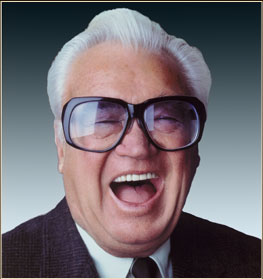
Maybe "The Broadcaster" was all Harry had inside...

Rick elaborates nicely on the theme of my post on handling those fanatic personas that reside in each of us, and in the process takes the ethical measure of an iconic baseball broadcaster whose charms always escaped me…the late Harry Carey.

“It strikes me that there’s another part of the equation, which you only hint at here, but which you have mentioned in other posts. That’s the “ethics alarm” (to coin a phrase) that goes off, or should, when the director or the Red Sox fan or whoever That Guy is says or does something unethical. Part of it is “heat of the moment” stuff: the egoism that slips out in a moment of excitement. No, of course you didn’t want Thurman Munson to die, but yes, he did play for the hated Yankees, and their team just got worse. You’re forgiven the fist-pump. Once. And provided you (Jack, as opposed to Red Sox fan) didn’t mean it.

“I was watching a Cubs game on WGN sometime in the mid-1980s when news came over the wire that Montreal Expos infielder Hubie Brooks had suffered a season-ending injury. Brooks had been a favorite of mine when he’d played for the Mets (“my team”), and I continued to follow his career with some interest, so the news was doubly sad for me: a player had been seriously injured, and that player was Hubie Brooks.

“In contrast, Cubs announcer Harry Carey proclaimed “well, if it helps the Cubs win, it’s OK by me.” I remember the exact words 25 years later. What struck me was not that they were uttered, but that no one—not Carey himself, not his broadcast partner, no one—made the slightest attempt to walk them back. That was the official verdict: a season-ending injury (Brooks was never the same again, by the way) was a good thing if it happened to somebody in a different uniform. I mentioned the incident to a couple of friends—Cubs fans—and they laughed and said “oh, that’s Harry.”

“Everyone understood that Carey was a Cubs fan first and an announcer second. That was, I am told, part of his charm—I never saw it, but others did. Still, I was sort of hoping that there would be a human being in there somewhere. On that particular day, at least, I was disappointed. We lived in WGN country for another seven years. I never watched another Cubs game without turning off the sound.”

Schadenfreude, Ethics, and Those Fanatics Inside Us All

NBC baseball blogger Craig Calcaterra recently raised the sensitive issue of sports fan Schadenfreude*, something that I have been afflicted with from time to time. The occasion was the recent injury to San Francisco Giants catcher Buster Posey in a particularly gruesome collision at home plate. His comments made me think about the obsessed and narrow personas in all of us, and how we should regard their occasional callousness.

Posey was the 2010 National League Rookie of the Year; he is also a cornerstone of the Giants’ recent success: the team is the reigning Major League Baseball World Champion. The collision with Florida Marlins’ Scott Cousins simultaneously broke Posey’s leg, ended his season, jeopardized the career of an exciting young player (players often return from such injuries permanently diminished) and dealt a serious blow to the Giants’ chances of returning to the World Series in 2011.  Reacting to a blogger who suggested that the injury caused most non-Giants fans to  give “a little fist-pump”… because “their team’s chances of dethroning the Giants as World Series champions just got a little bit better,” Calcaterra wrote… Continue reading

Newt Gingrich: Ethics Victim…Ethics Miscreant…Walking, Talking Ethics Lesson

The Ethics Lesson

I’m glad Newt Gingrich is in the presidential race, however foolishly and futilely. He is perhaps the perfect illustration of how a potential political leader’s private personal conduct is not only relevant to assessing his fitness to lead, but predictive of it. What makes Newt especially useful in this regard is that he is a Republican, and all the Democrats who are going to be sneering at his candidacy will have to square their attacks on his character with their indignant claims in 1998 that Bill Clinton’s adultery, sexual harassment and lies were irrelevant to his leadership—and they weren’t truly private or personal.  Similarly, Newt will be helpful to some of my ethically-addled trial lawyer friends who have argued that John Edwards is still a trustworthy lawyer, despite his betrayals of his dying wife, his family, his supporters and his party.

Of course private conduct is relevant to judging a leader, especially when private conduct shows an individual to be dishonest, disloyal, cowardly, ruthless, selfish and cruel—like Newt. Cheating on two wives and leaving both of them when they were battling health crises isn’t a mistake, or a coincidence, or a misunderstanding; it is a pattern, and a symptom. You can’t trust Newt. You can’t rely on Newt. You can’t believe Newt. Ask his ex-wives, and eventually, I am quite certain, his current one.

Today conservative talk radio is abuzz with Gingrich’s frenzied efforts to sooth the conservative faithful after he attacked Rep. Paul Ryan’s budget reforms over the weekend. What??? You mean Newt Gingrich stabbed a political ally and  fellow party stalwart in the back without warning? Who could have seen that coming? Oh, only everybody: You can’t trust Newt. You can’t rely on Newt. You can’t believe Newt. Ask his ex-wives. Continue reading

OH NO! Political Correctness Got Me!

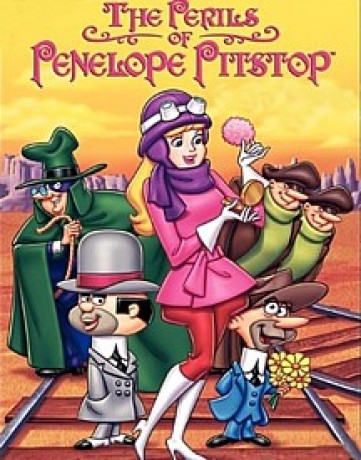
Late last night as I was battling worry and insomnia, my TV remote transported me to the Cartoon Network where I encountered, for the first time  in 40 years, a minor Hanna-Barbara animated series called “The Perils of Penelope Pitstop.” Like all Hanna-Barbara shows, but especially the Saturday morning variety, “Penelope” was crudely drawn and aimed its humor at the lowest common denominator: compared to it, Woody Woodpecker is Faulkner. Drawn in by the comforting sounds of great vocal artists of the era like Mel Blanc and Paul Winchell, however, I watched about ten minutes of the show and realized, to my horror, that I now found it offensive…and not for the reason that I found it annoying in 1970 (it is, after all, moronic).

The plot of  every episode of “The Perils of Penelope Pitstop” (a spin-off of H-B’s more successful but just as repetitious and silly “Wacky Racers”) was the same. A female auto racer who is also a blonde, helpless bimbo with a Southern accent is stalked by a villain called “The Hooded Claw,” voiced by the great Paul Lynde.  The Hooded Claw, for no discernible reason,  concocts elaborate plots to kill Penelope, but is foiled, at the last second, every time. The cartoon is an obvious riff on “The Perils of Pauline,” the famous Pearl White silent movie cliffhanger serial in which each segment ended with the heroine tied to a railroad track or falling to earth dragging a collapsed parachute. Yet I found it impossible to appreciate the cartoon’s meager charms because of the loud clanging of  ethics alarms in my brain. Why is the only woman in the show portrayed as a walking, talking Barbie Doll? And why are kids being encouraged to laugh at a woman being stalked by a homicidal maniac? Because he’s an inept homicidal maniac? What could possibly be funny about stalking, an insidious phenomenon that every year leads to multiple murders?

“Oh my God,” I thought. “I’m politically correct!Continue reading

The Giordano Decision, Sympathy and Malfunctioning Ethics Alarms

Sympathy and empathy are wonderful and admirable qualities, but they can mess up ethics alarms but good, causing them to ring out with gusto when perhaps they shouldn’t be set off at all.

This, I’m sorry to say, is what seems to be going on with the public and the media in the wake of a North Carolina judge denying Alaina Giordano primary custody of her two children,  in part because Giordano has Stage IV breast cancer, and in part because she is unemployed. Giordano is upset and nobody can blame her for that. She has also started a website exhorting readers to “Say NO! to CANCER discrimination!” There is a Facebook page (of course) rallying support for her, and it already has over 14,000 fans. An online petition to the governor called “Do Not Allow NC Judge To Take Alaina Giordano’s Children Just Because She Has Cancer ” has more than 75,000 signers.

Yet there is nothing inherently unethical, illogical or unfair about family law Judge Nancy E. Gordon awarding custody of 11-year-old Sofia and 5-year-old Bud to their father, who lives and works in Chicago, rather than to their mother, who lives in Durham, and has breast cancer that is most likely terminal. Continue reading

Ten Lessons from the “Dog Wars” Debate

Wait! Calm down! This is a CARTOON dog.

The “Dog Wars” Android phone app is apparently down for the count, the victim of too many complaints, threats and accusations that it was evil and irresponsible and promotes real, live dog-fighting, even though almost nobody sane makes similar claims about other video games. As with the subject of most posts on Ethics Alarms, however, the ethics issue lingers on, whether or not the specific incident that sparked the commentary has been resolved.

The comments, often passionate, that this post elicited have been fascinating, and had much to teach, even when the comments themselves were dubious. Here are ten lessons from the debate over the game and the Ethics Alarms commentary about it.

1. Ethics alarms aren’t always right. So many comments about “Dog Wars”, here and around the web, consist of various versions of, “That’s just wrong!” Well, why is it “just wrong”? Continue reading

Loop-Hole Ethics and The New York Times

The NYT’s website paywall plan floats in a sea of holes.

Ariel Kaminer, author of “The Ethicist” column in The New York Times Magazine, made an interesting assertion in her answer to a reader who asked about whether he could exploit several loop-holes in the Times’ new paywall plan for its website.

Noting that he was a struggling freelance journalist who visits the Times website often, he asked if it was unethical for him to use his parents’ free access to the content, since they are subscribers.  Then he Mused about other scenarios. “If I buy online access, can I share the password with my live-in girlfriend, even if I move to New York for the summer? What about our other housemates?” Continue reading

Flashback: “Ethics Test at McDonald’s”

Background: The McDonald’s beating and video story reminded me of another ethics essay arising out of a McDonald’s incident, one that I was personally involved in. This post first appeared on The Ethics Scoreboard in 2006, and reading it again, I realized it was one of the first times that I used the ethics alarms imagery that became the basis for this blog. The incident that inspired the essay still troubles me. I wish I could blame McDonald’s for the callousness that my 2006 experience and last week’s incident in Maryland exposed, but unfortunately, our problem relates to the Golden Rule, not the Golden Arches. Here is “Ethics Test at McDonald’s”:

Life gives ethics tests like pop quizzes. You often get no warning, and if you’re thinking about something else, you might not even realize the test is going on. Continue reading