“Unethical Presidential Candidates Sunday” (EXTENDED): Hillary’s New Public Corruption Plan? If They Won’t Willingly Vote For Her After They Learn What She’s Like, Make Them promise To Vote For Her No Matter What They Learn

Loyalty Oath

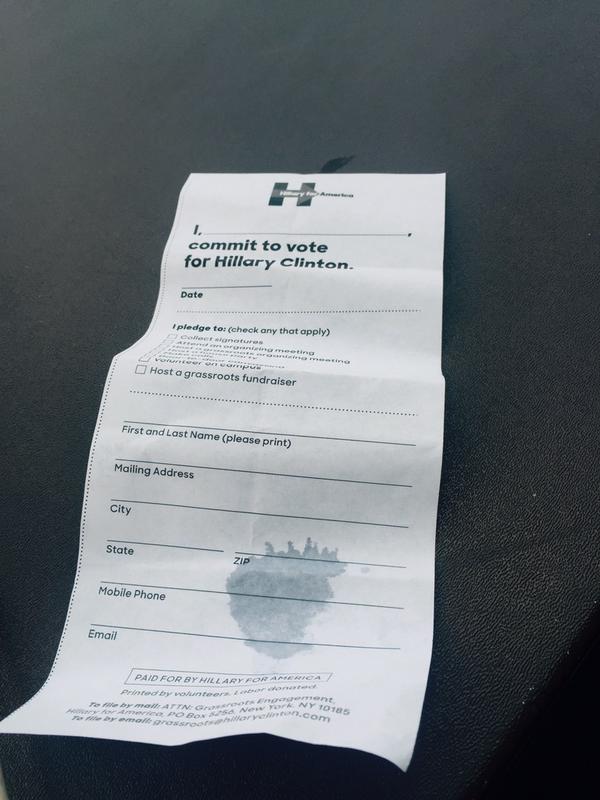
From the Pittsburgh Tribune-Review‘ via Mediaite: Attendees at a Hillary Clinton campaign event in Cleveland, Ohio, were asked to sign a pledge promising to vote for the candidate before they were allowed into the venue.

Yes, this is basically a loyalty oath. Loyalty is the most confounding of ethical values, because it so frequently leads to unethical resolutions of ethics conflicts, when loyalty requires the rejection of other ethical values that should be given priority. Many unethical organizations and leaders insist on loyalty even if they will disdain honesty, integrity, responsibility, accountability, fairness and decency. Used like this, loyalty becomes a virtue that enables unethical conduct. A mother refuses to report her murderous son. A wife abets her raping husband (Hello, Camille Cosby!) Another wife supports her husbands lies about his adultery. (Now who could this be?) Blind loyalty directs Southerners to insist that their forebears weren’t rebelling in support of slavery, African-Americans to insist that a black President is a great President, and patriots to spit “Disloyal!” at principled protesters of national policies abroad.

Obviously, loyalty is very useful to leaders who are untrustworthy or corrupt. They seek support out of quid quo pro transactions that insist, “You owe me! I was there for you, so you must be there for me, no matter what happens,” “no matter what happens” meaning “no matter what awful things I do and what unsavory things you learn about me.” It isn’t patriotism is the last refuge of a scoundrel, as Samuel Johnson famously said, but loyalty. Loyalty was the main bulwark of power and survival for Don Corleone, Colonel Jessup (“A Few Good Men”), Auric Goldfinger,  Darth Vader…and in the real world, Richard Nixon, Mao, Jesse James, Bill Clinton…and obviously, Hillary. Continue reading

Ethics Quiz: “Rear Window” Ethics At The Ball Game

RearWindow1

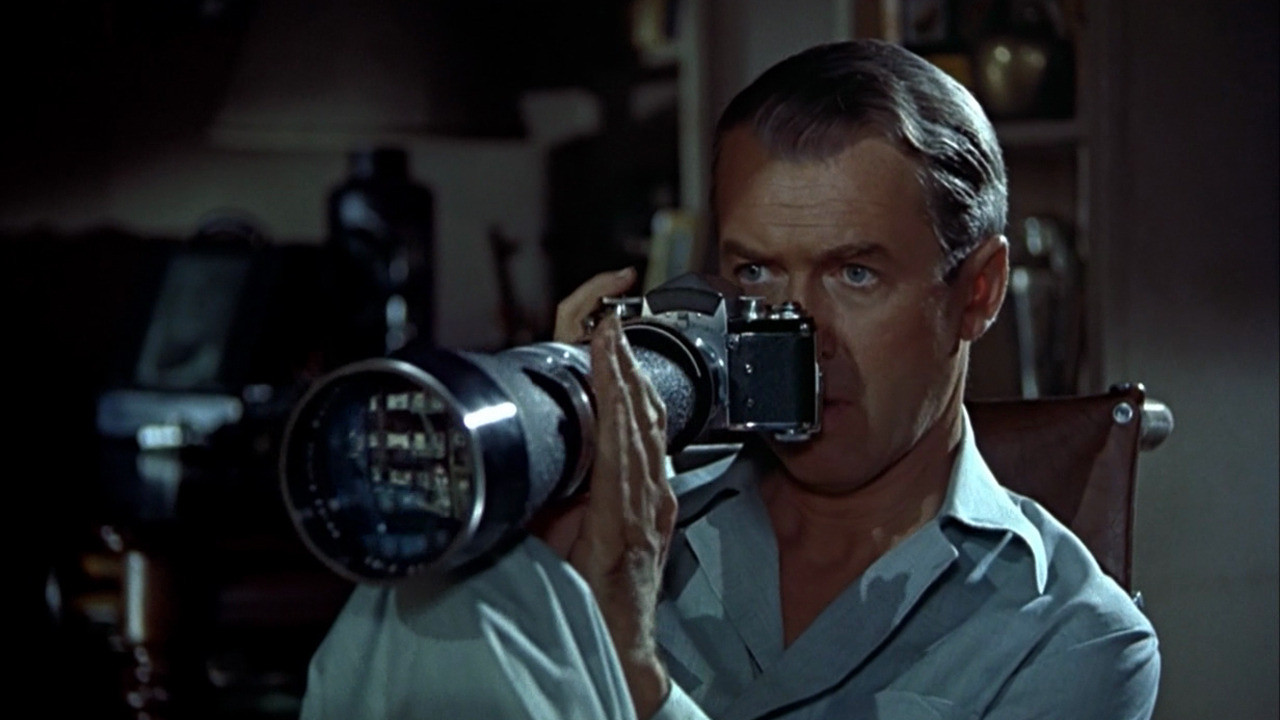
The New York Daily News recounts the tale of two sisters attending an Atlanta Braves game who exposed a man’s cheating wife by taking photos of her as she apparently sexted another man with her arm around her husband. Delana and Brynn Hinson posted photos of her texts on Twitter.

The sisters said they slipped a note to the woman’s suspected husband as he was leaving, which read,

“Your wife is cheating on you. Look at the messages under Nancy! It’s really a man named Mark Allen.”

You can read the details—accurate or not—here.

I don’t care if the story is exactly as it was reported. Let’s assume it is.

The Ethics Alarms Ethics Quiz for the day is this:

Did the sisters behave ethically when they informed the husband about his wife’s secret texting?

Continue reading

Ethics Observations On Mayor de Blasio’s Refusal To Apologize To His Police Officers

Integrity and leadership are not the same thing, Mayor...

Integrity and leadership are not the same thing, Mayor…

New York City Mayor Bill de Blasio’s relations with his own police force could not be worse, and this is not in the best interest of the citizens both the mayor and the police are duty-bound to serve. Can the rift be repaired?

This week de Blasio ruled out one avenue of peace: he said he would not apologize for his remarks following the Eric Garner grand jury decision not to bring charges against the officer who appeared to precipitate the unarmed black man’s death by using a choke-hold. The mayor said…

“You can’t apologize for your fundamental beliefs. The things that I have said were based on my beliefs, the truth as I know it. Can we do a better job communicating, and listening, and deepening an understanding of what our officers need? Yes.”

Fascinating.

I can’t think of a better example of a dilemma where the most ethical conduct is still irresponsible leadership, and thus, from the perspective of a leader’s obligations, unethical.

From an isolated perspective, de Blasio is asserting his integrity. “I could apologize and help smooth over my toxic relationship with the police, but that would require me to be insincere, and I’m not going to do that,” he is saying. He is saying that his constituents can trust him to be straight and honest, and if that means that he must pay a political price, he will pay it. This is admirable, on a human level. Praiseworthy…in a vacuum.

De Blasio, however, doesn’t have the luxury of being ethical in a vacuum. He is the mayor of a city with a lot of problems, controversies, obstacles to effective governance and people in need. The context of all of his words and actions must be his duties to address those issues, and his integrity, in this case, must be subordinate to getting the job he was elected to do done. Continue reading

The Ethics Conflict Of Chevy Chase’s Newlands Fountain and How To Resolve It

Chevy Chase Circle

Chevy Chase Circle is the official border separating the District of Columbia and Chevy Chase, Maryland. The inscription on the fountain at the center of Chevy Chase Circle honors Francis Griffith Newlands, saying, “His statesmanship held true regard for the interests of all men.” He was a three-term senator from Nevada,  serving from 1903 until his death in 1917, but more important to this controversy, founded the Chevy Chase Land Co., which created neighborhoods on the Washington and Maryland sides of the circle. Yes, the founder of Chevy Chase is honored with a fountain in Chevy Chase Circle. What could possibly be wrong with that?

The problem is that Senator Newlands was a racist, and a proactive one. He was a white supremacist who described blacks as “a race of children” too intellectually handicapped for democracy. In 1912, he attempted to have  the 15th Amendment, which granted voting rights to African American men, repealed. Not surprisingly, his vision of Chevy Chase did not include black residents, or Jewish ones for that matter.

The Advisory Neighborhood Commission that represents the D.C. section of Chevy Chase wants to remove Newlands’ name from the fountain, and has introduced a resolution calling on the D.C. Historic Preservation Office to rename the landmark “Chevy Chase Fountain.” The reason is his advocacy of anti-black policies.

This is a classic ethics conflict, a problem in which valid ethics principles oppose each other. There are so many conflicting ethical principles and objectives at work here: Continue reading

A Proposed Guide To Spoiler Ethics

"It SINKS??? You spoiled the ending!!!"

“It SINKS??? You spoiled the ending!!!”

I was just admonished on Facebook by a friend (a real friend, not just the Facebook variety), for referencing the end of the last episode of Season One of “Orange is the New Black.”  He hadn’t finished viewing the season yet, and this was a breach of spoiler ethics. Or was it?

Ever since I encountered for real someone who was angry with me for “spoiling” the end of “Thirteen Days,” ( “Yes, World War III started and everybody died”), I have been dubious about spoiler etiquette. The advent of DVDs and Netflix has made this all the more annoying. If I’m in a group of five, and one individual hasn’t kept up with “House of Cards,” are the rest of us obligated to censor our discussion? As a devotee and fanatic devourer of popular culture, I admit that my first instinct is to say, “Keep up, get literate, or pay the price.” If I actually live by that rule, however, I will be a walking, talking, writing, spoiler machine.

Chuck Klosterman, “The Ethicist” in the world of the New York Times, recently pronounced himself an anti-spoiler absolutist:

“I’m an anti-spoiler fascist. I don’t believe that any conversation, review or sardonic tweet about a given TV show is more valuable than protecting an individual’s opportunity to experience the episode itself (and to watch it within the context for which it was designed). I’ve never heard a pro-spoiler argument that wasn’t fundamentally absurd.”

Even Klosterman, however, excepted sporting events (the question posed involved mentioning World Cup scores to a friend who was annoyed that the game had been “spoiled” for him) from his fascism, writing, reasonably:

“I must concede that live, unrehearsed events are not subject to “spoiler” embargoes A live event is a form of breaking news. It’s not just entertainment; it’s the first imprint of living history. …Because this guy is your buddy, you might want to avoid discussing the games’ outcomes out of common courtesy — but not out of any moral obligation. It’s his own responsibility to keep himself in the dark about current events.”

For once I agree with Chuck. But what are reasonable ethics rules for dealing with the other kind of spoiler, involving literature and entertainment?

Luckily, this is not new territory, though it is evolving territory. The underlying ethical principles include fairness, trust, consideration, compassion, and empathy, which means that the Golden Rule is also involved.

Back in 2010, an erudite blogger calling himself The Reading Ape proposed a draft “Guide to Responsible Spoiling.” That blog is defunct; the promised successor is not around, and so far, I haven’t been able to discover who the Ape is. Whoever he is (Oh Aaaaape! Come back, Ape!) , he did a very good job, though some tweeks might  improve his work, especially in light of the emergence of Netflix.  (I have edited it slightly, not substantively…I hope he doesn’t mind, or if he does, that he’s not a big ape.) His approach is to frame the problem as an ethical conflict, in which two competing ethics principles must be balanced. I think that’s right.

Here is his “draft”—what do you think?

“A Brief Guide to Responsible Spoiling”

by The Reading Ape (2010)

The objective is to balance two ethical principles:

I. The Right to Surprise: The inherent right of any viewer or reader to experience the pleasure of not knowing what’s
going to happen next.

II. The Right to Debate: The inherent right of any viewer or reader to engage in public discourse about the content of
a given work of narrative art.

Part 1: When Spoiling is Fair Game

In the following circumstances, one can discuss crucial plot details and reveal endings with a clear conscience. Continue reading

Resolving An Ethics Alarms Ethics Conflict

poof-smallI just took down a post, something I have only done four times previously. This decision, unlike the others, was the resolution of a genuine ethics conflict, created in part by the recent discussions here.

Tonight I received a terse demand, phrased as a request but with a time deadline,* from a former commentary subject insisting that I remove a critical post here from nearly a year ago. The post was not factually incorrect, nor  did it make any factual assertions that could support a credible defamation claim. My commentary was pure opinion, though a fairly harsh one. I have pledged, following the inspirational example of Ken at Popehat and also attorney/blogger Marc Randazza, not to countenance web censorship involving bogus legal threats, and thus drafted and came within a finger-stroke of sending a rejection of the demand, and a strongly worded one.

Then I re-read the post at issue. It was a criticism of a tweet from a professional that I believed, and believe, had the effect of unfairly impugning an entire workplace and the identifiable colleagues of the tweeter. The tweet was wrong, but I realized that I was also wrong to highlight it here. I have been writing quite a lot lately about the inherent Golden Rule violation of web-shaming individuals for single and isolated unethical acts that fall short of illegality or such outrageous callousness or cruelty that there is a duty to warn others. I think there is a toxic cultural trend, fed by the power of the internet, that will soon make web bullies and assassins of us all, and potential victims as well. I want to fight that trend, not contribute to it. I think, in the case of that post, I was on the side that I now believe is the wrong one. It was a stupid and thoughtless tweet. It did not justify a web-shaming on Ethics Alarms. Continue reading

Ethics Quiz: The Case of the Unauthorized Clean-Up

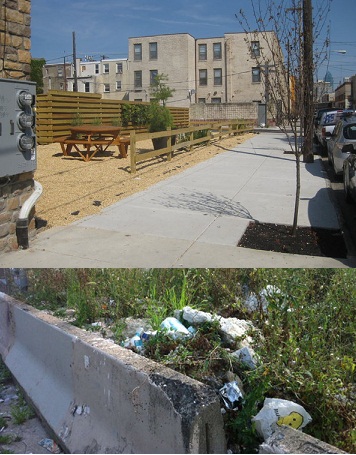
The photo on top is how the lot looks today, thanks to a generous citizen. Philadelphia wants it put back to the way it looked in the lower photo. Wait…WHAT?

Can an act that benefits everybody still be unethical? That’s the underlying conundrum in this week’s Monday Warm-Up Ethics Quiz.

In the Point Breeze neighborhood of Philadelphia, a city-owned lot was in nightmarish condition, filled with trash, weeds and rats. Ori Feibush owned a coffee shop that backed onto the lot, and had repeatedly petitioned the city to do something about it, like clean it up. Feibush, who also is a real estate developer, says he submitted seven written requests to buy or lease the land, calling the Philadelphia Redevelopment Authority about it 24 times. There was no response to any of this, and the city claims that it has no record of any inquiries.

Finally, Feibush couldn’t stand the mess any more. He spent more than $20,000 of his own money to clean up the lot, removing more than 40 tons of junk, garbage, and trash. Point Breeze residents are thrilled.

The city, however, is threatening to take legal action against Feibush for trespassing, explaining through a spokesman that “Like any property owner, [the Philadelphia Redevelopment Authority] does not permit unauthorized access to or alteration of its property. This is both on principle (no property owner knowingly allows trespassing) and to limit taxpayer liability.” It is demanding that Feibush return the land to its original condition—that is, fill it up with garbage so it is an eyesore, dangerous, and useless again.

Your Ethics Quiz:
Who is in the wrong, the city, or Ori Feibush? Continue reading

The Runway and The Snowy Owl: An Ethics Conflict Tale

“One showed up at the airport in Hawaii, and they shot it,” Denver Holt, director of the Owl Research Institute in Montana, told the New York Times.“It’s the first ever in Hawaii and they shot it!” Holt was expressing his dismay at the sad news that a snowy owl, one of the most magnificent of all American birds, had journeyed from its Arctic home all the way to Hawaii and been shot dead for its effort. He was quoted in a Times story about the sudden, mysterious surge in snowy owl sightings all over the country, giving people a chance to see the huge, white predators in places where they had never appeared before. Like Hawaii.

“Aloha!”

Bang!

Here is a lesson in the value of waiting to get the full story before making assumptions. I saw the Times story, and had sketched out a post on the doomed Hawaii visitor, something about mankind’s unethical impulse to destroy beautiful living things to make beautiful dead things like fur coats, trophies and stuffed snowy owls. But my travel travails made it impossible for me to finish it, and it’s a good thing. Honolulu Civil Beat had the rest of the story. Continue reading