The NBA’s Unethical, Unavoidable, “Bait And Switch”

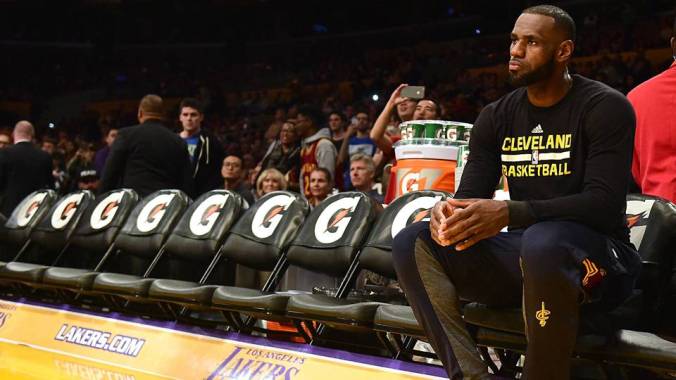
For a second consecutive Saturday, ABC’s  Saturday prime time NBA game was a pre-rigged dud. The LA Clippers blew out the supposedly star-studded Cavaliers, 108-78, as chants of “We want LeBron” echoed through the arena. The three super-stars that make Cleveland an NBA powerhouse,  LeBron James, Kyrie Irving and Kevin Love, were all kept out of the game, not because they were injured,  but because Cleveland coach Ty Lue had decided to rest his “Big 3” in the first of back-to-back games. Sure enough, all three played against the Lakers the next day.

It has become standard practice in the NBA for play-off bound teams to rest stars for “strategic purposes,” meaning that in a league where more than half the teams make the play-offs and the regular season is little more than an exhibition for most of them, it makes no sense to blow out the stars until a championship is on the line.  The NBA, in short, has no integrity. (Neither does the National Hockey League, for the same reason.) The previous Saturday, the San Antonio Spurs blew out the Warriors, 107-85,  as Golden State fielded a  JV team, with Stephen Curry, Draymond Green and Klay Thompson all on the bench. Yet NBA’s new nine-year, $24 billion media rights deal with ABC, Disney and Turner Broadcasting included Saturday Primetime along with  the TNT Thursday Night NBA game and ESPN’s Wednesday and Friday night broadcasts, to showcase the best of the NBA. (Most of the NBA teams never make it to the Saturday ABC game.)

Shouldn’t that kind of money guarantee that the teams put their best players out on the court? NBA fans also typically shell out three figures for tickets. Doesn’t the league pull what is in essence a bait and switch by allowing a game to be treated as a virtual forfeit? Continue reading

Ethics Zugswang And The Vicissitudes Of Moral Luck: The Rutgers Prof’s Scary Tweet

Careless tweets matter...

Careless tweets matter…

Rutgers University lecturer Kevin Allred tweeted,

“Will the 2nd amendment be as cool when i buy a gun and start shooting at random white people or no…?”

The University had him arrested and sent to Bellevue mental hospital for a psychiatric evaluation.

His defenders, and of course Allred, say that his tweet was just a rhetorical question to make a point. The University says that he left them no choice, or no good ones, anyway.

They both are right. This is what comes of being in Ethics Zugswang, when one is thrust into  a position where no course of action is fully responsible, fair, and ethical.

The university decided that it could not responsibly assume that the tweet was benign and not a threat. What if the school did nothing, and Allred then  took high ground and became Charles Whitman 2016? Having him arrested, however, looks unfair and like a punitive reaction to free speech. There was literally no course the university could take that was completely ethical. Rutgers sacrificed its  teacher’s dignity for the safety of the students and to protect the institution’s liability.

The other alternatives—talking to him, shrugging it off as a poorly considered social media gaffe—placed the fate of the school and perhaps many students at the mercy of moral luck. These would seem like reasonable  decisions only if the moral luck dice did not come up snake eyes. Allred didn’t say “if” I buy a gun, he said when. He added race to the equation, and there are a lot of people who seem to be losing their grip in the wake of the election. What were the odds that he meant what he wrote? 100 to 1? 1000 to 1? 5000 to 1? Is it worth the remote chance that this was a warning of an impending catastrophe not to take the safe route, and have him arrested and examined? Is it worth gambling with students’ lives? Continue reading

The 2016 Election And Ethics Zugswang

scylla-and-charybdis

In a July post I introduced the concept of ethics zugswang, described in the Ethics Alarms glossary as

From the chess term “zugzwang,” describing a board where the player with the next move worsens his position regardless of which move he chooses. Ethics Zugswang occurs when all the opportunity to choose ethical options has passed. Any course of action will have unethical consequences.

I often talk about ethics zugswang in my ethics seminars as well. It is a situation where  no ethical decision is possible, because of poor choices and a failure to play competent ethics chess, not thinking ahead, not anticipating worst case scenarios, and thereby creating a situation where  ethical options are unavailable. All that is left are options that do tangible harm. The idea is to avoid such messes by not blundering through life being governed by non-ethical considerations, emotions, rationalizations, recklessness and ignorance. Sometimes, however, despite all of one’s best efforts, ethics zugswang arrives anyway.

Such is the plight of the American citizen on Election Day, 2016. For months, thoughtful voters who care about democracy and want to participate in choosing their President responsibly have been trying to decide which of several unethical decisions is the best—the most ethical, or rather least unethical– of the available options. Being angry or indignant, or holding one’s breath until one turns blue, will not do. A decision has to be made, and refusing to make a decision is still a decision. (In chess, the most common response to ethics zugswang is to resign, to quit. But one cannot quit being a citizen in a democracy.)

In past posts, mostly in the comments, I and others have exchanged proposed analogies to describe the choice between choosing Hillary Clinton or Donald Trump to lead the country. Arguing that it was a binary choice that could best be compared to having one’s commercial airline flown by an untrustworthy pilot of questionable skill, motivations and objectives or, in the alternative, a seven-year old, a monkey or a spaniel, my position was that one choice was terrible and the other was infinitely worse, but the terrible one as at least survivable, with luck. Classical literature provides another useful analogy: the myth of Scylla and Charibdis.

In Greek mythology, they were two immortal and deadly monsters who lived on opposite sides the narrow waters in the Strait of Messina, between Italy and Sicily. Odysseus, trying to return home after the Trojan War,  faced the dilemma posed by having to choose between them in Homer’s Odyssey, Book XII. Scylla had been a lovely a sea nymph who was loved by the sea god Poseidon, but Poseidon’s jealous wife Aphrodite treacherously cursed the waters in which Scylla bathed. The god-poisoned water turned Scylla into huge and vicious monster with twelve legs, six heads on long, snaky necks, with each head having a triple row of shark-like teeth. The transformed Scylla’s loins were also covered by the heads of baying dogs. (Note to self: don’t mess with Aphrodite!) When ships passed close to her, Scylla’s six heads would each snatch one sailor, then devour them in her cave.

Charybdis was also once a nymph, a daughter of Poseidon, who angered Zeus, Poseidon’s brother. Zeus turned her into an even worse monster than Scylla. The transformed nymph lurked under a fig tree on the opposite shore from Scylla’s rock, drinking down and belching out  the sea three times a day, causing  fatal whirlpools no ship could survive. Odysseus managed to get the worst of this dual  monster dilemma, sailing close enough to Scylla to doom six of his sailors (who he never warned about the threat) and still seeing his chip wrecked by Charybdis, with him being the only survivor. The shipwrecked Odysseus barely escaped her clutches by clinging to a tree until the improvised raft that she swallowed floated to the surface again after many hours.  To be “between Scylla and Charybdis” means to be caught between two equally horrible alternatives.

As today loomed and this metaphor appeared more and more accurate, I sought wisdom from various versions of the story, only to gradually realize that I was not as certain as I once had been which candidate was which monster. Continue reading

Perhaps The Best Baseball Ethics Story Ever: The Chris Sale Uniform Freak-Out

White Sox uniforms

Last night, incomplete fragments of news came through the baseball media that Chicago White Sox pitching ace Chris Sale had been pulled from his scheduled start against the Tigers. Was he about to be traded? No, we learned that there had been a “non-physical” altercation with someone in the White Sox front office. Huh? What did that mean?

It turned out that the truth was stranger than any speculation. Sale, we learned, had refused to wear a retro White Sox uniform during a “Turn Back The Clock” promotion that nigh, and to ensure that he wouldn’t have to, he cut up all the vintage uniforms, using a scissors and a knife, while the rest of the team was taking batting practice.

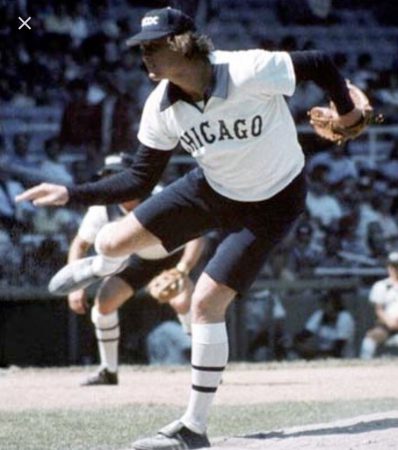
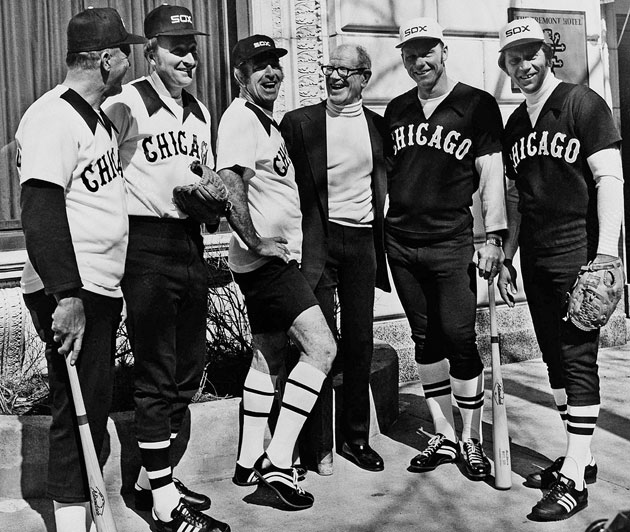
As soon as I heard this, I told my wife,”I bet I know exactly which uniforms the team was supposed to wear.” I was right: the White Sox promotion involved giving out free facsimile 1976 uniform jerseys to the first 15,000 game attendees, with the team wearing the infamous fashion abortion perpetrated on baseball by puckish former White Sox owner Bill Veeck, the same iconoclast who sent a midget up to bat in a real game.

Here are those uniforms, almost unanimously agreed-upon by all critics as the silliest baseball garb ever to appear on a Major League player (that’s Veeck in the middle; the ones on the left are the uniforms in question):

1976-white-sox-uniforms_mtqjliw57ekb1e3fkjxj4grkj

It is recorded that the players and the fans hated the 1976 uniforms, which were quickly discarded, especially the version with the shorts, which only appeared in one game. No wonder Sale was upset.

Now to the ethics issues: Continue reading