My Father, Memorial Day, and Reflections

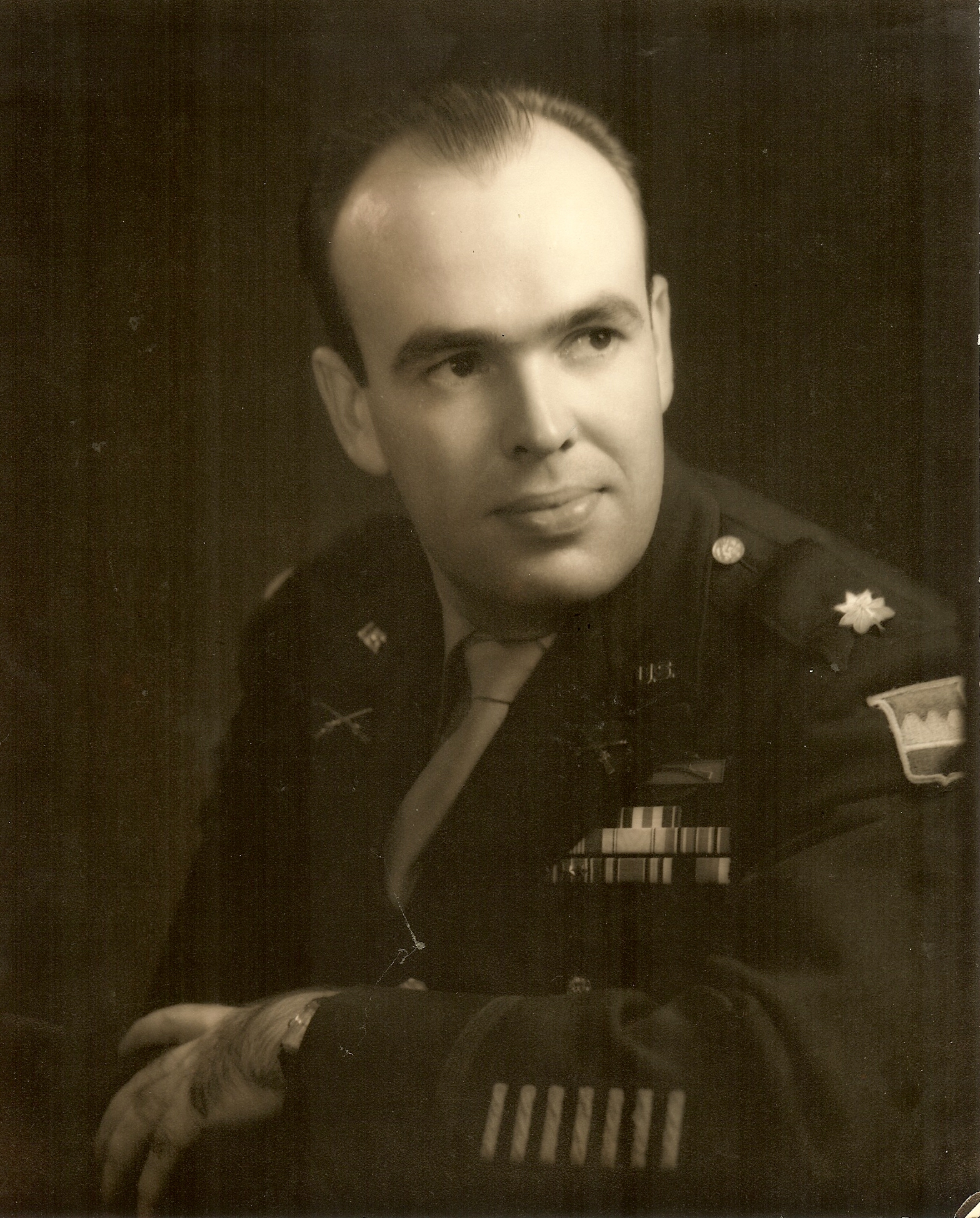
Jack Marshall Sr Army portrait

[In the last few years of his life, my father used to take my sister and me on a pilgrimage to Arlington National Cemetery on the Sunday of Memorial Day Weekend. He was always strangely jolly about it, though appropriately reverent. We always visited the oddly inadequate Battle of the Bulge memorial, where my dad would usually tell us one new story of his horrible experiences in that conflict that he had previously suppressed. We always paid our respects to the humble grave of Audie Murphy, World War II’s most decorated American soldier. We did NOT visit the grave of my dad’s own father, whose betrayal of his mother he would never forgive, though my grandfather, a veteran of the First World War, was also buried at Arlington. Mostly we just walked around the beautiful surroundings, with Dad periodically admiring some grand monument and suggesting, tongue in cheek, that he wouldn’t mind being under something like that some day. Continue reading

Incompetent Elected Official Of The Month: Nancy Pelosi (D-Cal)

I'm so disgusted with Nancy Pelosi that I can't tolerate seeing her face on the blog, so I'm posting a picture of one of my favorite animals, an Okapi...which would, by the way, be a likely improvement in over Pelosi.in Congress.

I’m so disgusted with Nancy Pelosi that I can’t tolerate seeing her face on the blog, so I’m posting a picture of one of my favorite animals, an Okapi…which would, by the way, be a likely improvement in over Pelosi in Congress.

Count the dishonest, idiotic, misleading, unethical statements in this jaw-dropping interview exchange. I count eight. I may have missed one or two, because I was vomiting by the end:

REPORTER: Since the IRS happened on President Obama’s watch, how much of a hit — or do you think at all Democrats will take a hit on the IRS in the 2014 midterms?

REP. NANCY PELOSI:  Well, you said it happened under his watch. (1) It happened under the appointment of the head of the IRS, who was appointed by President Bush. His length of stay extended into President Obama’s stay.  I think that points to the fact — (2) why is this a politicized issue?  We all are concerned about how the IRS does what it’s supposed to do but does not do it in a selective way. I said before what they did was wrong. The Inspector General has said over and over(3)  it is not illegal.  The committee wants to challenge the Inspector General on his findings, so that will unfold. But again (4) the IRS is an independent agency.  (????So the inference to be drawn happened on his watch is that it happened on his watch the way some other cabinet agency of government would. (5)  No, this is an independent agency is headed up by a Bush appointee. What they did was wrong. We have to make sure it doesn’t happen again. Selective review. We don’t like it on our side or their side. It has no place.

REPORTER: Doesn’t the buck stop with him? Should he have known about these things but he said he didn’t know about any of this? Continue reading

David Foster Wallace (1962-2008) On Being An Ethical Adult

David_Foster_Wallace

The late author David Foster Wallace—who committed suicide in 2008, the victim of depression— gave a wise, inspiring, ethically-astute  commencement address to the graduating class at Kenyon College in 2005. The speech was later published as a book in 2009 under the title “This Is Water.” It was recently made into a vivid video, and has been viral on the internet. You can see it here, at least for a while.

If the video sends anyone to Wallace’s other works, it has done good; if it causes people to ponder what ethics really means, for that is what Wallace was talking about, it had done better. Apparently the David Foster Wallace Literary Trust is in the process of ordering that this video be taken down as copyright infringement, which if his words belong to the Trust, is their right. I wish they wouldn’t; I think letting Wallace’s eloquent life lesson reach as many people as possible, especially young people, would be both ethical and consistent with the values and aspirations of Wallace himself, but it is not my decision to make. I am a little conflicted about sending you to the link, in fact, if the piece was, in effect, stolen. I am applying utilitarian balancing here.

You can also read his speech, presumably legally, here, where it was republished upon his death. The essence of it is in this passage:

“The really important kind of freedom involves attention, and awareness, and discipline, and effort, and being able truly to care about other people and to sacrifice for them, over and over, in myriad petty little unsexy ways, every day. That is real freedom. The alternative is unconsciousness, the default setting, the “rat race” – the constant gnawing sense of having had and lost some infinite thing.”

__________________________

Pointer: Tim LeVier

Sources: Upworthy, The Guardian

Ethics Alarms attempts to give proper attribution and credit to all sources of facts, analysis and other assistance that go into its blog posts. If you are aware of one I missed, or believe your own work was used in any way without proper attribution, please contact me, Jack Marshall, at  jamproethics@verizon.net.

Media Bias At Work: A Smoking Gun From The New York Times

Brava to blogger/ law professor Ann Althouse for catching this one.

Smoking gunYesterday, the New York Times, reporting the news, published this item:

“The inspector general… divulged that he informed the Treasury’s general counsel he was auditing the I.R.S.’s screening of politically active groups seeking tax exemptions on June 4, 2012. He told Deputy Treasury Secretary Neal Wolin “shortly after,” he said. That meant Obama administration officials were aware of the matter during the presidential campaign year.”

This is not good, you know. This means that the fact that the I.R.S. was suspected of targeting conservative groups was known in time for the knowledge to give voters second doubts about the President’s trustworthiness and veracity, not to mention judgment in signing a bill that gives that same agency massive power in distributing health care. Given the choices among revealing it as a “transparent” administration should, claiming it was the fault of a YouTube video, or suppressing the facts, the Administration chose the latter. Thus the New York Times’ website’s headline, “Treasury Knew of I.R.S. Inquiry in 2012, Official Says,” was appropriate. No spin there, just the “news that’s fit to print.” Let readers decide whether they are satisfied allowing their leaders to parcel out information so as to make sure voters are only as well-informed as its convenient for them to be. Headlines are especially important, because many readers skim the news, and the headlines are all they read. Continue reading

How Amy Bouzaglo Makes Us Better People

Run away! But pay attention!

Run away! But pay attention!

I’m not going to take back every negative thing I’ve ever said about reality shows, but there is no getting around it: now and then an episode of one of them is a better training film for good ethics than  “Leave It To Beaver,” “Star Trek, The Next Generation,” and “Father Knows Best” combined.

A case in point was a recent episode of “Kitchen Nightmares,” a Fox reality show that sends chef and restaurateur Gordan Ramsay to turn around failing eateries, usually by his browbeating them into basic management competence and the use of fresh ingredients. This time, however, Ramsay was pitted against the proprietors of Amy’s Baking Company Bakery Boutique & Bistro in Scottsdale Arizona, specifically the eponymous Amy Bouzaglo, a textbook narcissist who dominates her much older husband and partner, abuses employees, and treats all criticism and constructive suggestions as a personal attack. Continue reading

Ethics Quiz: Too Stupid To Be Unethical?

Little Tommy flunked Ethics 101. Should we blame him?

Little Tommy flunked Ethics 101. Should we blame him?

An incident in Jefferson City Missouri nicely raises an issue I think about often.

Capital 8 Theaters in Jefferson City, Missouri sent actors dressed as gunmen, wearing assault gear and carrying what appeared to be semi-automatic weapons, into a screening of the film “Iron Man 3”  last weekend. Really. Apparently the similarity between this scenario and the deadly shooting last year in an Aurora, Colorado movie theater premiering another big budget movie about a superhero never occurred to the theater manager, because he is, you see, a moron. It sure occurred to the patrons, though, and one of them called in the police, saying that gunmen had entered the theater. SWAT teams were called. Luckily nobody was shot or had cardiac arrest, no thanks to the theater.

Interviewed by a local TV station, manager Bob Wilkins was asked if he had any regrets. “No, my job is to entertain people,” he said. Asked if he considered  how  his stunt might affect patrons who remembered the mass shooting in the theater in Aurora, Wilkins responded, “Absolutely. That’s my number-one priority every day. It’s the safety and security of our guests.”

Okay, this pretty much tells us what we need to know about old Bob, so here is your Ethics Alarms Ethics Quiz question:

May abject stupidity be a complete defense to the accusation that one is unethical? Continue reading

Ethics Quote of the Day: “Emily Webb”

“Goodbye to clocks ticking — and my butternut tree! And Mama’s sunflowers — and food and coffee — and new-ironed dresses and hot baths — and sleeping and waking up! Oh, earth, you’re too wonderful for anyone to realize you! Do any human beings ever realize life while they live it — every, every minute?”

—- Emily Webb, the heroine of Thornton Wilder’s 1938 drama “Our Town,” in her climactic speech in Act 3, cutting short the one day in her life she has been permitted to relive after dying in childbirth.

Thornton Wilder

Thornton Wilder

It’s a gorgeous spring Sunday in Northern Virginia, and by happenstance Garrison Keillor chose today’s installment of his “Prairie Home Companion” to allude to Emily’s famous,  heart-breaking speech at the end of “Our Town.” The speech is so familiar to many of us that we tend to forget how perfect and right it is, one of those remarkable, inexplicable times when a writer manages to express the important thought that is beyond expression.

Emily’s speech reminds us that the ultimate unethical act is wasting the remarkable opportunity that is a human life, and, at the same time, failing to appreciate the wonder that passes by our senses in the process. The answer to Emily’s question is, of course, no—nobody, not poets, not geniuses, not heroes nor saints—realize life every minute. Wilder’s, and Emily’s immortal words, however, spur us to try.

On this beautiful day, in this beautiful country, Emily’s speech is an excellent catalyst for calm, resolve, perspective, and hope.


The Ethics Conundrum of Jim Thorpe’s Body

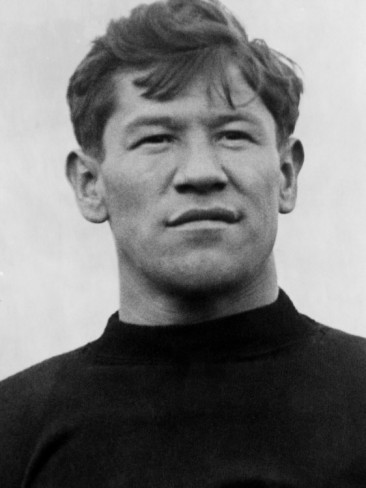
Jim Thorpe: Native American, Olympic Champion, baseball star, football star...football.

Jim Thorpe: Native American, Olympic Champion, baseball star, football star…football.

One thing is for certain: Jim Thorpe doesn’t care. The great Native American athlete whose sports legacy was as sterling as his life was tragic died in 1953, recognized by the country he honored with his record-breaking performance in the 1912 Olympics, but like so many of his race, mistreated and exploited by it as well. Since his death, however, a bizarre battle over his body has raged, and it is a perfect example of the Roshomon-like nature of  ethics in some situations. What is the right thing, the fair thing, the ethical thing? The answer sometimes depends on whose viewpoint is applied, and objectivity, the ideal viewpoint we strive for, doesn’t even exist. In an ethical conflict, moreover, there are good ethical principles on both sides of a dispute.

In Jim Thorpe, Pennsylvania, the ethical verdict of what occurred in a Pennsylvania  court last month is clear: the town has been double-crossed. A federal judge ruled that Thorpe’s remains, which lie in a mausoleum built by the town, can be moved to Oklahoma by his family, to be buried on lands belonging to his tribe. In 1953, however, two Pennsylvania towns signed a contract with Thorpe’s widow, committing them to consolidate and rename themselves after the Olympic, football and baseball legend, in return for being able to house Thorpe’s body and reap the tourism benefits of doing so. The contract was valid, if venal in inspiration: Mrs. Thorpe wanted and received cash in return. But a bargain is a bargain, and Thorpe’s presence and name has defined the town for over half a century. Losing Thorpe means losing the town’s identity and signature feature, which is a calamity. Continue reading

“The Only Answer”: An Ethics Hero, A Life Saved, And A Troubling Hypothetical

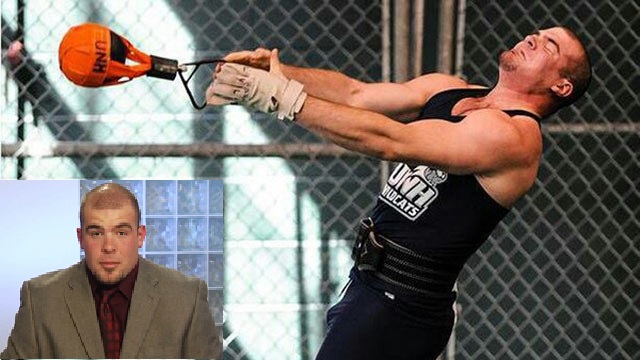
In this universe, a hero...and in an alternate one? I wonder...

In this universe, a hero…and in an alternate one? I wonder…

University of New Hampshire senior Cameron Lyle, a Division I college track and field competitor who excels in the shot put and hammer throw, has chosen to end his collegiate athletic career to save a stranger’s life.

He will donate his bone marrow today to a 28-year-old man suffering from acute lymphoblastic leukemia. Doctors told Lyle the man who will receive his marrow will live only six months without a transplant, and that there was a only one in five million chance for another non-family match. Yet the odds came up in his favor, thanks to  Lyle having his mouth swabbed to join a bone marrow registry two years ago. He was a perfect match.

Lyle says he never hesitated in his choice, once he was informed. “It’s just a sport,” he said. “Just because it’s Division I college level doesn’t make it any more important. Life is a lot more important than that, so it was pretty easy…It was kind of a no-brainer for a decent human. I couldn’t imagine just waiting. He could have been waiting for years for a match. I’d hope that someone would donate to me if I needed it.”

“He made his decision. He gave up his college season to do this. He’s a gentle giant,” Lyle’s mother said of her 6-foot-2-inch, 255-pound son. “He’ll do anything for anybody.”  Lyle’s coach Jim Boulanger, was also completely supportive, and, according to Lyle, came up with an instant Ethics Quote of the Month when the shot-putter told him of his plans.

“Here’s the deal,” Boulanger told Lyle. “You go to the conference and take 12 throws or you could give a man three or four more years of life. I don’t think there’s a big question here. This is not a moral dilemma. There’s only one answer.” Continue reading

Wikipedia Ethics And The Gosnell Trial

Ah, sunlight! When all the machinations are revealed, it's a lot harder to be unethical.

Ah, sunlight! When all the machinations are revealed, it’s a lot harder to get away with  being unethical.

Apparently Wikipedia almost joined the media outlets operating a cover-up of the Gosnell baby-killing trial. For a while a debate raged on the site, with an editor advocating that the article about the abortion doctor at the center of the horrific allegations and testimony be deleted entirely, because Gosnell’s trial is only a “local multiple-murder story in Pennsylvania.”  Yes, and the Newtown murders are just a multiple-murder story in Connecticut. Outright hoaxes stay on the site for years, puff piece entries on virtual non-entities and insignificant organizations clog it, but a case with major policy implications bearing on a contentious national, bioethics  and human rights issue of long-standing isn’t worthy of a page? The editor in this case, whoever he is, is too biased and incompetent to hold the position. Had his argument prevailed, Wikipedia’s credibility and perceived trustworthiness would have been severely diminished, for an encyclopedia cannot have an ideological agenda, and the desire to marginalize the Gosnell story is smoking-gun proof of one.

Luckily, Wikipedia got it right in the end, and the article survived. What saved Wiki was transparency. The argument about the Gosnell article was open and public, and ethics always benefits when transparency reigns. You would think that would be one of the news media’s mottos…but not, apparently, when it means letting the public know how it is that certain stories get buried, marginalized and ignored.

(The mainstream media, not surprisingly, didn’t cover the Wikipedia debate, either.)

_______________________________________

Sources: Daily Caller1, Daily Caller2, Newsbusters