Wikipedia Ethics And The Gosnell Trial

Ah, sunlight! When all the machinations are revealed, it's a lot harder to be unethical.

Ah, sunlight! When all the machinations are revealed, it’s a lot harder to get away with  being unethical.

Apparently Wikipedia almost joined the media outlets operating a cover-up of the Gosnell baby-killing trial. For a while a debate raged on the site, with an editor advocating that the article about the abortion doctor at the center of the horrific allegations and testimony be deleted entirely, because Gosnell’s trial is only a “local multiple-murder story in Pennsylvania.”  Yes, and the Newtown murders are just a multiple-murder story in Connecticut. Outright hoaxes stay on the site for years, puff piece entries on virtual non-entities and insignificant organizations clog it, but a case with major policy implications bearing on a contentious national, bioethics  and human rights issue of long-standing isn’t worthy of a page? The editor in this case, whoever he is, is too biased and incompetent to hold the position. Had his argument prevailed, Wikipedia’s credibility and perceived trustworthiness would have been severely diminished, for an encyclopedia cannot have an ideological agenda, and the desire to marginalize the Gosnell story is smoking-gun proof of one.

Luckily, Wikipedia got it right in the end, and the article survived. What saved Wiki was transparency. The argument about the Gosnell article was open and public, and ethics always benefits when transparency reigns. You would think that would be one of the news media’s mottos…but not, apparently, when it means letting the public know how it is that certain stories get buried, marginalized and ignored.

(The mainstream media, not surprisingly, didn’t cover the Wikipedia debate, either.)

_______________________________________

Sources: Daily Caller1, Daily Caller2, Newsbusters


U.S. Education: A Lost And Untrustworthy Profession

lostThe extent and sheer audacity of the 2009 Atlanta schools testing scandal, now resulting in teachers and administrators facing prison time, shows (or perhaps I should say “should show”) the complete folly of calling for more funding as the solution to the rotting U.S. education system. Indeed, I would argue that budgets should not be increased one penny anywhere until the educational establishment demonstrates that it is capable of policing itself, holding members of its profession to higher standards, which is to say, standards, of ethical conduct and professionalism, and can prove that it is more interested in the goal of teaching students than it is in pensions, job security, and cash. Continue reading

Ethics Hero: Lawyer/Blogger Scott Greenfield

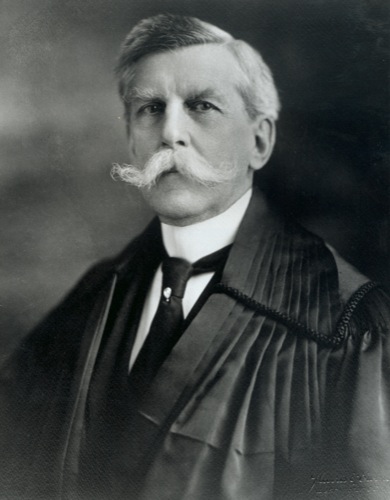
No question: Justice Holmes would think Scott Greenfield is a good man.

No question: Justice Holmes would think Scott Greenfield is a good man.

Criminal defense lawyer and caustic, if trenchant, blogger Scott Greenfield stakes out a noble and correct stand on legal ethics and ethics generally in a superb post titled, “What Tastes Good To You?” Read the entire post, but his essay springs from a question that has been posed in various forums (including,  in slightly different form,the Jack Lemmon comedy “How To Murder Your Wife”), to wit:

If you could commit any crime and get away with it, what would it be? 

Greenfield’s answer, the ethically correct one, is “none” : “Just because we can get away with it isn’t a reason to do wrong.” Thus does he definitively separate himself from what Justice Oliver Wendell Holmes referred to as “the Bad Man” in his famous 1897 essay, “The Path of the Law.”  For Holmes’ “bad man” never breaks a law, but only because he abhors punishment.From this starting point, Greenfield considers a professional debate about whether the legal marketing tactic (as determined by the courts) of buying up another firm’s name as a web “key word” to lead customers to one’s competing firm is “unseemly,” which is to say, unethical, though not technically unethical under the professional rules of conduct. One of the defenders of the practice describes the division on the issue to a difference in “taste,” leading Greenfield to aim carefully and fire: Continue reading

The Portman Reversal: Why He Did It DOES Matter

reversalI feel it necessary to return to the topic of  Senator Rob Portman’s reversal of his long-held and much-publicized opposition to same sex marriage and homosexuality in general in the wake of his son’s disclosure that he is gay.

Anyone who required further evidence that current events analysis, not to mention public consciousness, is almost untouched by an understanding of ethics, need look no further than the near universal pronouncements in the editorial pages and the Sunday talk shows that “it doesn’t matter” why  Portman suddenly decided that he was in favor of gay marriage once the issue affected someone he cared about.

It is not yet 11:00 AM in Virginia, and I have already read and heard this reaction so many times that the flashing red light on my head that signals an imminent explosion is flashing bright. It doesn’t matter? It doesn’t matter that Senator Portman firmly, strongly, extensively and consistently declared in public forums, to interviewers and in op-ed pieces that the sanctity of the institution of marriage as well as the moral fiber of the nation depended on withholding the right to marry from millions of law-abiding American citizens, but that the minute one such citizen, someone he actually gave a damn about, risked being adversely affected by his supposedly heart-felt and principled position, he changed his “principles” like he was changing his socks? That doesn’t matter? Continue reading

“The Walking Dead” Ethics: The Toughest Leadership Dilemma Of All

“Michonne, you’re gone..these are words that Rick choke upon, my Michonne…

“Michonne, you’re gone..these are words that Rick should choke upon, my Michonne…

In the absence of “Homeland,” currently waiting for Claire Danes to get back in shape after becoming a mom, AMC’s “The Walking Dead” is the best ethics show on TV. Apocalypse ethics is instructive and fascinating, because it addresses ethical problems as they were originally considered, before laws, before enforcement methods, and before organized morality. The objective is survival and continuation of the tribe and the species, without abandoning all semblance of humanity.

Yesterday’s episode built to an ethical dilemma of major consequence; naturally, some reviewers thought this was boring. Rick, the former sheriff leading the (mostly) good guys through the zombie-filled wilderness that was once the United States, is trying to protect the group’s refuge, an abandoned prison, from the imminent attack of a larger, better-armed commune run by a deranged psycho who calls himself “the Governor.” A former member of Rick’s group who now consorts (cough!) with the Governor (and who has been rightly condemned as an idiot for doing so, since she either knows or should know that he has the basic instincts of Vlad the Impaler), attempts a mediation to avoid bloodshed, and Rick and the Governor meet to parley. Continue reading

“Beyond the Myth”: Disturbing and Revealing Lessons About More Than Pit Bulls

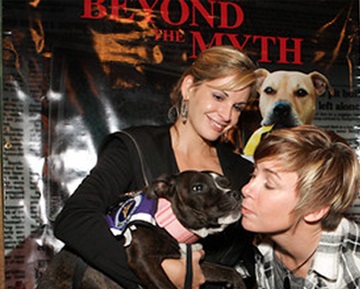
Beyond the Myth

“Beyond the Myth” is a 2012 documentary that provides a vivid, troubling and often moving account of “breed specific legislation” in the U.S., which primarily involves states and municipalities banning “pit bull-like dogs,’ a.k.a. “vicious dogs,” though the dogs such legislation targets are usually not vicious and often are not even pit bulls.  If you are one of the misinformed who have been convinced by biased reports and public hysteria that pit bulls are any more dangerous or vicious than any other breed, you owe it to yourself, your children, and the dog owners in your community to watch this film, which is available on Netflix.

Long-time readers of Ethics Alarms know that the site has visited the issue of anti-pit bull cruelty and bigotry frequently, most recently here. For those who have read and absorbed what I have written and the references I provided, there will be much that is familiar in “Beyond the Myth,”; nevertheless, I found the documentary shocking. I had no idea how pit bull bans worked in cities like San Francisco and Miami, with Gestapo-like raids on private homes culminating in harmless and beloved family pets being confiscated and slated for death if a police officer concluded that they have “5 out of 8” physical traits identified with pit bulls. Nor was I aware of how many of these dogs were being euthanized—tens of thousands every year—for being born with a broad  head or a deep chest that meant they were legally branded as “vicious.”

The stories of the individual dog owners who have organized, lobbied, sued, and in some cases had to move out of their homes to protect a loving canine companion are also inspiring, if astounding. Wounded veterans have even had their service dogs taken from them. The most illuminating aspects of the documentary, however, are: Continue reading

Justin Bieber’s Tardiness: Calling Card Of The Unprofessional Jerk

Professional on the right, arrogant jerk on the left. Also, anyone next to Cary Grant looks like a troll...

Professional on the left, arrogant jerk on the right. Bonus: Anyone next to Cary Grant looks like a troll…

There is still some confusion how late pop sensation Justin Bieber was for a recent London concert. It may have been as much as two hours, and it may have been only 40 minutes. The ethical verdict on the conduct is the same, however: rude, disrespectful, irresponsible, unfair and arrogant…and inexcusable.

The tardiness is especially inexcusable because the singer didn’t even offer a plausible excuse or one that might prompt some sympathy. He was not kidnapped by terrorists, abducted by aliens, or cornered by a rampaging T-Rex from Isla Sorna. He wasn’t late because he single-handedly rescued a runaway school bus full of kids, or defused a ticking bomb in the London Tube. Justin Bieber was late because he’s an unprofessional jerk who knew that his fans would wait for him until he got there, and so he chose to to get drunk, or get laid, or sleep in, or play Words With Friends with Alec Baldwin, or whatever other selfish conduct suited him rather than meet his obligations as a performer. This is the Star Syndrome in its most obvious and obnoxious form. Continue reading

Is “Double-Dipping” Unethical? How?

"Throw one scoop away, you greedy, unethical bastard!"

“Throw one scoop away, you greedy, unethical bastard!”

Over at Trust Across America, Barbara Kimmel has painted a scarlet “U” on the interim superintendent of the Mahwah School District, who has a $167,000 contract as well as an $131,000 annual pension. She finds the woman’s justification for her extravagant enrichment at taxpayer expense through the practice of “double-dipping,” unethical, and is rankled by the woman’s justification, when she says, “I think it’s the way the system is set up. Greater people than me made that decision, I took advantage of it. ”  This is the epitome of unethical reasoning, Kimmel writes:

“As the Commander in Chief of a school district you are responsible for the “culture of the corporation.” Just remember what you said the next time a student shows up in your office and uses the excuse that “everyone else was doing it,” or when one of your faculty members chooses to use all their days off, leaving a classroom full of kids with no teacher.  After all, it’s the way the system is set up. And the NJ taxpayers- apparently they don’t factor in to your ethical barometer at all. You just “took advantage of it (them).”

The executive director of Trust Across America also finds this to be the perfect example of conduct that is legal but not ethical. Is it? I’m dubious, and I’m not comfortable condemning the interim superintendent’s conduct or even her words, though she could have stated her situation a bit less smugly.

Exactly what is unethical here? Is it… Continue reading

Our Sick, Sick, Untrustworthy Schools

And you thought Hogwarts was dangerous...

And you thought Hogwarts was dangerous…

The easiest place to render oneself disconsolate regarding the pit of warped values we must send our public school children into every day is Fark.com, which cheerily documents the child predators in the teaching ranks and their exploits. Let’s see, I haven’t checked in a while…I wonder what the tally is for February? Hey, February’s a light month! I have to go all the way back to the 19th to find the first, LaShawn Simmons, a 41-year-old former Pasadena middle-school math teacher who had sex with four students. She’s charged with sexual assault of a child, two counts of improper relationship between an educator and a student, online solicitation of a minor and possession of child pornography.

Actually, February was a terrible month to go to school, just not one with a bumper crop of child-molesting teachers. For example, in Port St. Lucie, Florida, we had a female teacher who didn’t have sex with a male student, she only purchased drugs from him and went drinking with him. It would be hard to top the teacher who poured pencil shavings in the special ed student’s mouth (and who wasn’t fired), but I think the Linden, California gym teacher who was caught on video stealing money from her students’ backpacks gets the prize. She was caught when a suspicious student and aspiring Nancy Drew hid in a locker to see if she could solve a string of thefts, and recorded the teacher’s larceny on her phone. It gets worse: when she brought the video to the attention of the principal, he told her to destroy the evidence. Luckily, she had already sent the video to her father. Continue reading

Dog Owner Ethics: The Suicide and the Pitcher

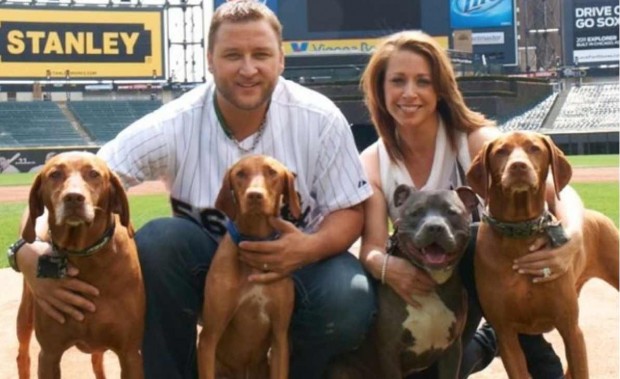
Does one of these nice creatures not belong in this picture? Ontario says yes. The correct answer is  no.

Does one of these nice creatures not belong in this picture? Ontario says yes. The correct answer is no.

Our life-changing events often become crises for our canine companions. In the news today: ethical  and unethical responses in such circumstances, by two individuals in the public eye.

The Unethical

Mindy McReady, the troubled country music star, committed suicide Sunday on the front porch of the home she shared with her boyfriend, who had recently committed suicide there as well. She apparently killed the couple’s dog before taking her own life. McReady’s friends insist that she didn’t kill the dog out of malice, but because she didn’t want to leave the dog alone. Granted, McReady deserves consideration and compassion, since her actions that day were not those dictated by a healthy or fully functioning mind. Still, I read of dog owners doing this a lot, and I’ve known a few—not committing suicide, but killing their dogs when they knew they wouldn’t be able to keep them any more, on the theory that the dog would be happier dead than with new owners. Continue reading