The Perfect Ethics Story: The Dilemma Of The Extra iPads

Your ethical dilemma just arrived!

Your ethical dilemma just arrived!

Now here is an example of a consumer episode in which everyone involved behaved with exemplary ethics, and without hidden agendas. There is no need to draw this out—Consumerist does a great job telling the story, and you should read it here. A quick summary:

  • A woman who ordered one iPad from Best Buy received five.
  • Her e-mail to the store about what she should do was unanswered.
  • Legally, she was within her rights to keep the extra merchandise, but (correctly) worried about possible consequences to the worker who made the shipping error,
  • She consulted the consumer advice maven at Consumerist, who tracked down someone at Best Buy to deal with the problem.
  • Best Buy’s rep contacted the consumer, thanked her for her honesty, and sent her this letter: Continue reading

The Man On The Subway Tracks


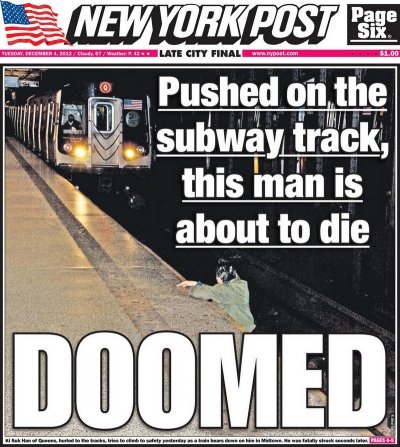
Subway Headline

It is destined to become a classic case in photojournalism ethics. Someone pushed 58-year-old Ki Suk Han pushed onto a 49th Street station  subway track in New York City. R. Umar Abbasi,  a New York Post freelance photographer was  on the platform when it happened, and took a photo as the subway train bore down on the terrified man. He was killed, and the photo became a lurid, if dramatic, Post front page.

There have been many ethical questions raised about the incident. Let’s examine them.

Was it ethical for the New York Post run the photo?

This is the easiest of the issues: of course it was. The photo is dramatic, the incident was news, the paper had an exclusive, and readers were interested. The Post might have decided that it would be in better taste not to run the photo, and that decision might be praiseworthy. Still, there is no good argument to be made that such a photograph is outside the range of acceptable items for publication. By the ethical standards of 21st Century journalism, admittedly low, the Post’s call isn’t even close to the line. Objections to the photo on ethical grounds are pure “ick factor.” Continue reading

Fair Is Fair: The Times Isn’t Perfect, But It’s Time I Paid For It

nyt-paywallEver since the New York Times instituted its paywall system, which forces you to subscribe to its cyber-version once you use the site more than 20 times in a 30 day period, I have been economizing on my Times use rather than pay its (reasonable) subscription fee. One reason was money; one reason was that I usually don’t have to use the Times more than 20 times a month, with other good news sources out there that charge nothing at all; and a last reason is that the Times annoys me with its hard left-wing bias, well to the left of the Washington Post, which is hardly balanced, and inappropriate, in my view, for the publication that holds itself up as the exemplar of American journalism. The exemplar of American journalism should be objective and non-partisan, damn it, or at least try to be.

I have to admit, however, that even with its biases, the New York Times is still the best news source I know. I get the Post delivered to my door every day, and read the print copy of the Times only when I am on the road. I am always struck at how often a Times story or feature is directly relevant to my work, compared to any of its competition, including the acclaimed publication I read every day. Yesterday I learned that the Times has scheduled yet another round of lay-offs and buy-outs. It is in financial trouble, like all newspapers, and I can no longer justify refusing to do my part to help it survive as long as it can. The Times has given a lot to me, my readers and my field, and what it has provided has come with tangible expenses that are becoming more difficult to cover. The paper drives me crazy sometimes, but it remains a vital resource; it is unfair to focus my disillusionment with the journalistic field at the best of it, much as I would like to see the Times set an even higher standard. Right now, the battle is to allow the Times to maintain the journalistic standard, however flawed, that it sets now.

I just signed up for a cyber-subscription. The Times has earned my support, and with it struggling to keep the print flowing, I can no longer justify taking my 19 free articles a month and giving nothing back in return.

The Colin Kaepernick Tattoo Controversy: “Ick,” Not Ethics

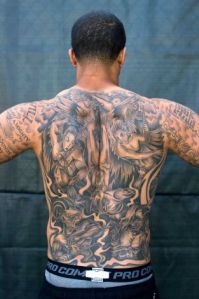
How can he pass with a back that looks like that?

How can he pass with a back that looks like that?

The new star San Francisco 49ers quarterback Colin Kaepernick is tattooed all over. Does this mean that he is unqualified to be a leader, a role model, an ethical exemplar, as NFL quarterbacks are supposed to be? The Sporting News’ columnist David Whitley argued in a column that indeed Kaepernick’s tattoos do mean that, and as you would expect, the number of coherent points he could mount in support of that position equaled exactly zero. He did, however, give everyone a terrific example of how people who don’t comprehend ethics make what they think are ethical arguments.

His column is about ethics, because ethics is central to leadership. Whitley believes that Kaepernick’s tattoos undermine his ability to lead by compromising the values he represents to those who must follow him. And those values that tattoos undermine are??? Well, Whitely doesn’t really explain that. He says that tattoos on a quarterback send the wrong message because prisoners get tattoos in the Big House. This is a man who is hostage to cognitive dissonance. Presumably if Stephen Hawking or Barack Obama showed a tat, he’d be fine with Kaepernick’s decorations. When I was kid, it wasn’t prisoners but sailors who we identified with tattoos. I knew a Pearl Harbor survivor with a big one—this neither convinced me that he was a rotter instead of a hero or made me want to get a giant anchor needled into my arm. Popeye had a tattoo, and we all loved Popeye. He also ate spinach. We didn’t. Continue reading

TV Ethics, Viewed From A Sickbed

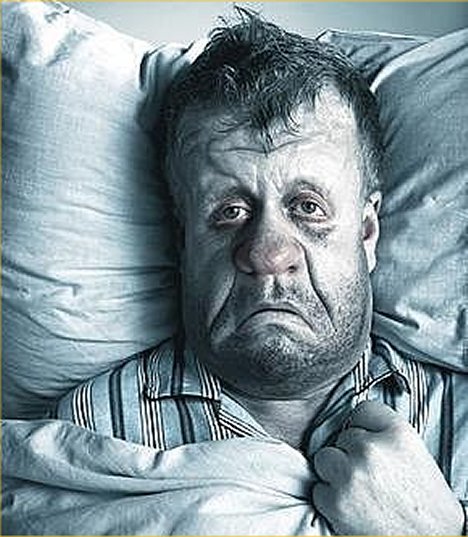
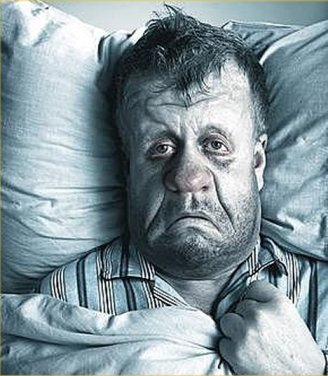
This isn’t how I look. This guy looks BETTER than I look…

[ As regular readers here might have guessed, I am ill, and have been since Thanksgiving. I can barely read, can’t really research, and whatever appears below was composed in 10 minute increments with hours or days in between. I’m hoping to be catching up very soon. Thank you for your patience]

What do you do when any movement or exertion makes you cough your guts out, when you can’t sleep but have to rest, when your brain is so blurry from viruses and medication that you can’t even compose a blog post for three days? (Sorry.) If you are me, and I hope for your sake that you aren’t, you watch TV.

I got one jolt of legal ethics horror that I hadn’t remembered re-watching Kevin Costner’s “The Untouchables,” directed by Brian DePalma. In the movie’s climax, Al Capone’s trial on income tax evasion has come to a crisis point, as Elliot Ness (Costner) realizes that the jury has been bribed to acquit him. Despite documentation of that fact, the corrupt judge tells Costner that the trial will proceed, whereupon Costner extorts him to prompt “a change of heart.” Now the judge shocks the courtroom by announcing that he is trading juries with another trial next door. The new, un-bribed twelve will decide Capone’s fate.

This is, of course, beyond ridiculous. Adversary attorneys must be able to choose a jury in voir dire, where each potential juror is questioned. Trading juries just invalidates two trials. Even if they could trade juries, which they couldn’t, the Capone trial would obviously have to start all over again since the new jury wouldn’t know what was going on.

None of this occurs to Al Capone’s panicky lawyer, however, who, realizing that the jig is up, announces that “we” are changing “our” plea to “guilty.” Chaos reigns. Capone (Robert DeNiro) punches his lawyer in the face, and I don’t blame him one bit.  A lawyer can’t plead guilty against the wishes of his client! The judge couldn’t accept such a plea, and Capone wouldn’t be bound by it. This would be an embarrassing distortion of the justice system in a Warner Brothers cartoon, but for a movie based on historical figures and events to sink so low is unforgivable. (“Carrie” aside, Brian DePalma was a hack.) Continue reading

The Complete “It’s A Wonderful Life” Ethics Guide [UPDATED]

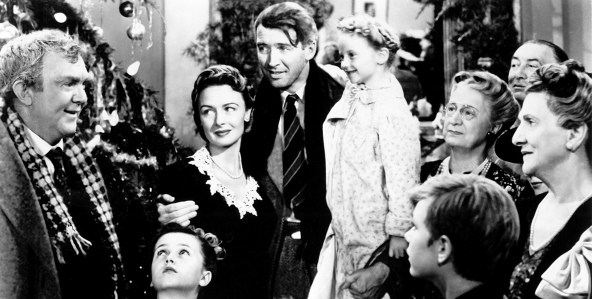
 Frank Capra’s 1946 masterpiece “It’s A Wonderful Life” is one of the great ethics movies of all time, perhaps the ethics movie of all time. In 2011 I prepared a guide through its complex ethics thicket. The post was divided into three separate posts, and I eventually combined them s0 readers can have the pleasure, if one can call it that, of watching the film like I do: having ethics arguments the whole way through. And now, here is your guide. Additions are welcome and encouraged.

1. “If It’s About Ethics, God Must Be Involved”

The movie begins in heaven, represented by twinkling stars. There is no way around this, as divine intervention is at the core of the fantasy. Heaven and angels were big in Hollywood in the Forties. Nevertheless, the framing of the tale advances the anti-ethical idea, central to many religions, that good behavior on earth will be rewarded in the hereafter, bolstering the theory that without God and eternal rewards, doing good is pointless.

We are introduced to George Bailey, who, we are told, is in trouble and has prayed for help. He’s going to get it, too, or at least the heavenly authorities will make the effort. They are assigning an Angel 2nd Class, Clarence Oddbody, to the job. He is, we learn later, something of a second rate angel as well as a 2nd Class one, so it is interesting that whether or not George is in fact saved will be entrusted to less than heaven’s best. Some lack of commitment, there—then again, George says he’s “not a praying man.” This will teach him—sub-par service!

2. Extra Credit for Moral Luck Continue reading

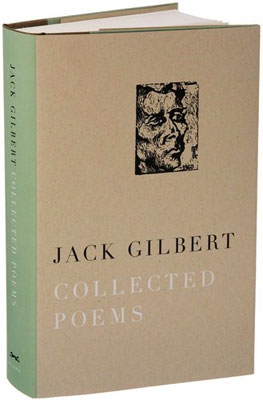
Ethics Quote of the Week: Jack Gilbert (1925-2012)

A Brief for the Defense

Sorrow everywhere. Slaughter everywhere. If babies
are not starving someplace, they are starving
somewhere else. With flies in their nostrils.
But we enjoy our lives because that’s what God wants.
Otherwise the mornings before summer dawn would not
be made so fine. The Bengal tiger would not
be fashioned so miraculously well. The poor women
at the fountain are laughing together between
the suffering they have known and the awfulness
in their future, smiling and laughing while somebody
in the village is very sick. There is laughter
every day in the terrible streets of Calcutta,
and the women laugh in the cages of Bombay.
If we deny our happiness, resist our satisfaction,
we lessen the importance of their deprivation.
We must risk delight. We can do without pleasure,
but not delight. Not enjoyment. We must have
the stubbornness to accept our gladness in the ruthless
furnace of this world. To make injustice the only
measure of our attention is to praise the Devil.
If the locomotive of the Lord runs us down,
we should give thanks that the end had magnitude.
We must admit there will be music despite everything.
We stand at the prow again of a small ship
anchored late at night in the tiny port
looking over to the sleeping island: the waterfront
is three shuttered cafés and one naked light burning.
To hear the faint sound of oars in the silence as a rowboat
comes slowly out and then goes back is truly worth
all the years of sorrow that are to come.

—American poet Jack Gilbert, who died this week.

A No Tolerance Rule For Cabinet Members: Don’t Threaten Reporters

Intolerable.

I’ll make this simple, and get right to the point: any Cabinet member who threatens a reporter with physical violence for doing the job journalists are supposed to do should be fired. No exceptions. Moreover, that should be obvious and beyond debate.

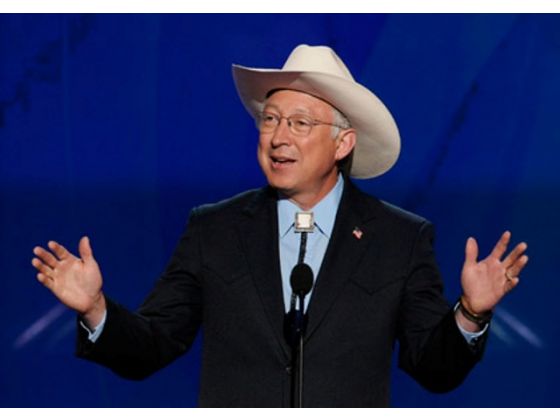
Ken Salazar, the Secretary of the Interior, didn’t like a question he was asked by Colorado Springs Gazette reporter Dave Philipps. The investigative reporter had tried to reach Salazar for months through his press secretary seeking a comment on a story Philipps had written about how a Colorado man with business connections to Salazar had been sold hundreds of federally protected wild horses that have subsequently vanished. The man is under investigation, and one of his businesses is slaughtering horses, not that any of this is germane to how Salazar treated Phillipps.  When Philipps began asking Salazar about the program and possible personal ties he had to the wild horse buyer now under investigation, Salazar abruptly ended the interview. He then pushed The Gazette’s camera aside, got nose to nose with the reporter, and said, pointing, “Don’t you ever…you know what, you do that again… I’ll punch you out.” Continue reading

CREW vs. Issa: Biased Accuser, Guilty Accused

Unethical for Rep. Issa to make it, and unethical that CREW didn’t

The Center for Responsibility and Ethics in Washington does almost half a great job in its stated role as a government ethics watchdog. The supposedly non-partisan group is obviously partisan, since it goes after unethical Republican officials with frequency and relish while targeting unethical Democrats with infrequency and reluctance. CREW’s complaints, however, are almost always well-supported and legitimate. Why almost half a great job? CREW can’t be as effective in its efforts to expose unethical Republican conduct as it needs to be because its obvious bias makes the organization’s motives and judgment less trustworthy and more vulnerable to attack.

We have a perfect example in the news. “The Hill” reports that CREW….

“…has asked the Office of Congressional Ethics to investigate whether Rep. Darrell Issa (R-Calif.) violated rules by producing a video that attacks President Obama. Continue reading

Ethics Hero: Golfer Blayne Barber

Aspiring professional golfers can’t just join the PGA tour. They have to qualify by completing and passing PGA school.  Blayne Barber is one such golfer, and his dreams of winning tournaments and cash prizes will have to wait at least another year, if they are realized at all. He washed out this year. The way he washed out, however, is remarkable, and shows that if he does make it into the PGA ranks, Barber will be a credit to his sport.

Indeed, most pro golfers are credits to their sport, because golf has managed to hold the line against the increasing cultural acceptance of poor sportsmanship better than any of our professional pastimes, with tennis a distant second, and third place too far away to see without binoculars. This is a sport where the honor system is mandatory. One reason the tradition of self-regulation has persisted in golf may be because cheating in contests is so easy, and because there are so many ways to do it. Players find their own balls, and write down their own scores. Anyone who has seen James Bond and Auric Goldfinger take turns cheating each other in the famous grudge match from the movie knows that amateur golf can be cutthroat and nasty. The pros have built a culture that requires exemplary conduct.

Few would be this exemplary, however. Continue reading