Ethics Quiz: The Vetoed Wish

“When you wish upon a star…it depends how sick you are!”

This one is so convoluted with cross-cutting issues that I’m not going to even try to make the call until I read some responses.

McKenna May is four-years-old and has survived leukemia. Her mother and grandmother submitted her wish to go to Walt Disney World to the Make-A-Wish Foundation, which, according to its mission statement, selects children with life-threatening medical conditions and grants their wishes. McKenna’s wish was granted by the charity, but then withdrawn  because her father, William May, who is divorced from McKenna’s mother, refused to sign the required approvals. He believes that the Make-A-Wish funds should be spent on children who are terminally ill, and not children like McKenna, who have been cured. McKenna’s mother, Whitney Hughes, says that the real reason May has killed his daughter’s dream is to punish Hughes for restricting his visiting rights.

Your Ethics Alarms Quiz Question:

Assuming May is not doing so out of spite, is his decision to pass up his daughter’s dream trip to the Mouse Kingdom so that a more needy child can be helped an altruistic and noble gesture, or an unethical act of disloyalty and betrayal to his young daughter? Continue reading

The Bill James Effect, Or How Nature Conspires To Make Us Irresponsible

Quiz: What do Gen.Lee and Bill James have in common?

You see, our strengths do us in, sooner or later. The greater the strength, the more successful it has made us, the more dangerous it is.

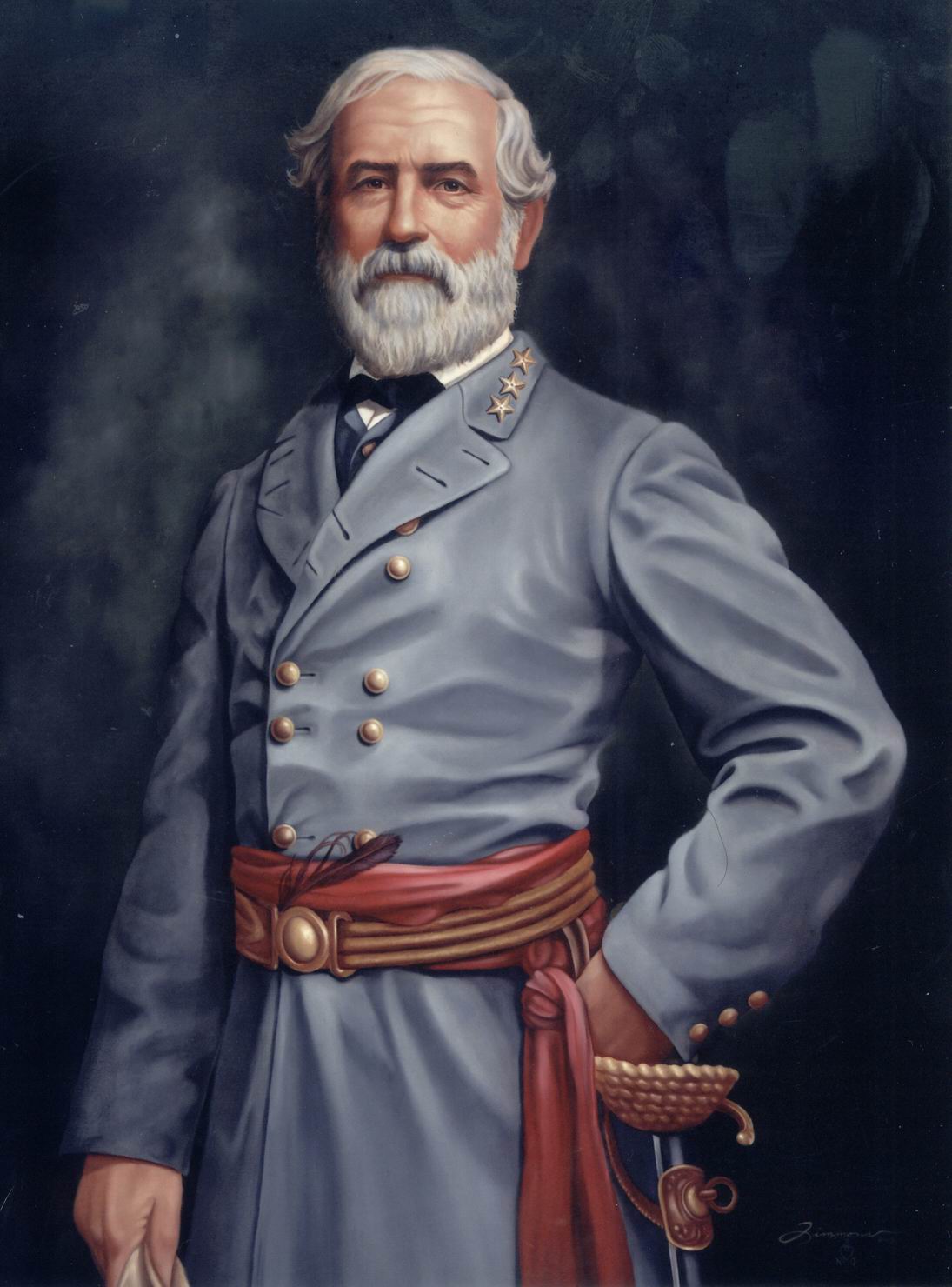
In the American Civil War, Robert E. Lee was the smartest general on the field…so smart that he broke iron-clad rules of battle strategy again and again, and prevailed every time. When everyone told him how it was usually done, always done, Lee knew that he could get an edge by doing something else. You never divide your forces, his aides, subordinates and the military books told him. So Lee did, at Chancellorsville, and won an incredible victory.

Then came July 3, 1863: the final day of the Battle of Gettysburg, and Pickett’s Charge. Everyone told Lee that a massed Napoleonic assault, over an open field, into enemy artillery and a fortified line, was suicidal. But when conventional wisdom dictated a course of action, that was when Lee had always succeeded by ignoring it. So he ordered Pickett’s Charge. This time, conventional wisdom was right. The same qualities of creativity, courage, certitude, and willingness to resist the power of convention that had caused Lee’s men to trust him unconditionally had resulted in the massacre of thousands. Pickett’s Charge wasn’t bold or ingenious. It was irresponsible. Lee, because of a lifetime of success challenging what others thought was obvious, was no longer able to tell the difference. Continue reading

“Why Do I Bother?” Department

Oh, the hell with it…

The publication “The Week” quoted and linked to my post about the Joe Paterno statue controversy, presumably because I was among the few to make an argument that Jo Pa’s statue should stand without doing so on the basis that the coach “made only one mistake” or that the football program he built and his coaching career are severable from the little matter of him allowing his former colleague to keep raping little boys for over a decade.

My mistake was reading some of the comments on Yahoo!, which is chock full of commenters who mocked my conclusion without either reading the post or comprehending it. For example, Dave, a non-reader from Texas, responds, “Leave it up as…what? A monument to pederasty in sports?” to applause from 17 sheep. I believe I answer that question, Dave, and the link is right in front of your damn face. Continue reading

Ethics Quote of the Week: Chicago White Sox Thirdbaseman Kevin Youkilis

“And to all those kids out there in Red Sox Nation, I can give you my Dad’s advice. ‘Life is like a throw to first base: always aim high.‘”

—–Kevin Youkilis, former Boston Red Sox star recently traded to the Chicago White Sox, in a farewell letter of appreciation to Boston’s management and fans

“If you trade him, he will leave an inspiring ethics quote…”


The letter concluded, “I love you all, and thanks.”

And thank you, Kevin, for departing with class and gentility, and for imparting some sound ethical wisdom on the way.

“YOUK!”

________________________________________________________________________

Source: Boston.com

Graphic: Anyclip

_______________________________________________________________________

Rushed Ethics

Feeling pressured?

The Economist points its readers’ attentions to two studies showing the ethical benefits of delay to decision-makers. It is an important topic, with profound ethical implications. Deadlines and the perception of urgency are both what I call pre-unethical conditions, situations that so frequently lead to unethical conduct that our ethics alarms should start ringing the second we start feeling the dread of time-pressure. The Economist article notes that…

“…[ in ] an obscure article in the Academy of Management Journal by Brian Gunia of Johns Hopkins University… Mr Gunia and his three co-authors demonstrated, in a series of experiments, that slowing down makes us more ethical. When confronted with a clear choice between right and wrong, people are five times more likely to do the right thing if they have time to think about it than if they are forced to make a snap decision. Organisations with a “fast pulse” (such as banks) are more likely to suffer from ethical problems than those that move more slowly….The authors suggest that companies should make greater use of “cooling-off periods” or introduce several levels of approval for important decisions.” Continue reading

Ethical and Unethical Adultery Advice: There is Carolyn Hax, and Then There Is Emily Yoffe

Sometimes, you just have to tell your slimy boss “No.”

Emily Yoffe is Slate’s advice columnist, in its “Dear Prudence” feature. She specializes in extreme situations: a recent column involved a teenager who realized that his mother had breast-fed him far too long because she was sexually aroused by it, and then had him fondle her breasts for years after he stopped be willing to suck on them. He asked what he should do now that his mother was subjecting his younger sister to the same treatment. (Emily did get that one right: she told him to call child services on his mother, and to seek professional help for himself.)

Last week I congratulated Carolyn Hax for her advice to a woman torn between the adulterous relationship of one friend with another friend’s husband. Notwithstanding the persistent argument of one crusading commenter who felt that I should have stood for universal adultery whistleblowing on friends and strangers alike, Hax gave, as usual, practical, ethical and measured advice.  She suggested that the inquirer tell the cheating husband that his secret was out, and that she would not lie to protect his illicit affair.  I believe that’s the right ethical balance. Hax’s advice to the woman was to be proactive in both extracting herself from the split loyalties and to be a catalyst for either disclosure or ending the affair. I also noted that the ethical duty on the questioner may be different when the betrayed spouse is an especially close friend, or a family member. Then loyalty and trust could require disclosure.

That same week, Yoffe got an inquiry from a “well-paid assistant of a successful business mogul.” Among her duties, she told “Prudence,” is to facilitate her boss’s extra-marital affair: lying about his whereabouts to business associates, deceiving his wife when she calls, and even buying gifts for the illicit lover. “Next month he’s going on a weeklong business trip,” she wrote. “He only needs to be gone for two days, but he’s taking his girlfriend with him and staying longer. I know I’m doing wrong by his wife. But I love my job, and I’m not sure what I could or should do to behave honorably in this situation.” Continue reading

“I’m Warning You: If You Rescue That Drowning Man Over There, You’re Fired!”

“Not your concern…”

The brain-dead and ethics-empty conduct of Jeff Ellis Management, an Orlando, Florida-based company, in its recent firing of 21-year-old lifeguard Tomas Lopez is welcome in one respect, and one respect only. It helps explain the inhuman attitude of the two Brooklyn EMT’s who stood by and watched a woman die of a heart attack as they munched bagels. It begins to explain why two Seattle security guards stood by and allowed a woman to be nearly beaten to death while they looked on. It almost explains how a crowd of people on a California shore, including firefighters, stood by as a man named Raymond Zack took nearly an hour to drown himself. It might even provide some insight into the thought processes of Penn State assistant football coach Mike McQueery, who famously observed Jerry Sandusky as he engaged in a child rape but didn’t stop it. For one of the reasons so many Americans turn off their ethics alarms, reject their humanity and flunk their duty to rescue those in peril is that there are people like  Jeff Ellis, who deem human life less important than business, policy and profit, and who will punish any employee who doesn’t feel similarly and act accordingly.

The company fired Lopez after he pulled a struggling swimmer out of the ocean on Hallandale Beach in Broward County, saving his life. The rescue, you see, occurred 1,500 feet south of the firm’s contracted boundaries for lifeguard service.  Lopez was told that a swimmer was in peril off the neighboring beach, and ran to his rescue, leaving the “protected beach” area where his services had been contracted to serve. The near-drowning victim was swimming in the “unprotected area” without lifeguards, and there’s no point, the management company reasons, to hire it to provide lifeguards if the heroes like Lopez will dive in for free. Continue reading

Rest in Peace, Andy: Mayberry Wasn’t Racist

In the wake of Andy Griffith’s death today, a friend of mine wrote this on Facebook: “If you’re waxing nostalgic about Mayberry as an idyllic 1960s Southern town, remember that it had no Negroes living there. Is it any wonder that show was so popular in the midst of the turmoil of the civil rights movement?”

The sentiment was undoubtedly motivated by good intentions, but boy, it is unfair. America was a largely segregated society in 1960, when “The Andy Griffith Show” began its trek to television Valhalla, and it was not up to the producers or writers of a folksy sitcom set in small North Carolina town to remedy that, protest it, or comment on it. This wasn’t “Andy Kills a Mockingbird.” It was a comedy, and a comedy unique and precious for celebrating basic ethical values like kindness, loyalty, friendship, tolerance, community, cooperation, patience, respect and virtue. There were no racist sentiments or attitudes expressed in Mayberry, and no reason to doubt that if a black family moved into the town, they would have been embraced, appreciated, and treated like everyone else. The fact that this may not have been true of a real North Carolina town of that period is as irrelevant as pointing out that real Scottish villages don’t disappear and reappear centuries later like Brigadoon. Continue reading

Dan Ariely: Without Ethics, We Are Governed By Psychological Enablers of Cheating and Worse

And it’s nothing to be proud of.

Duke behavioral scientist (or, as he likes to call himself, “behavioral economist”) Dan Ariely, has a new book out. This is a boon for my ethics classes, since I’m sure they are getting a little sick of me quoting the last one, “Predictably Irrational.” His new best seller is “The Honest Truth About Dishonesty,” and Ariely has been making the rounds of NPR and various publications promoting it. Like Malcolm Gladwell (“The Tipping Point”), Ariely writes provocative and easily digested books that seemed to be designed to make you skip the movie on airplane flights; they are not deep, but they are helpful, at promoting self-understanding if nothing else.

I’ve been saving my copy of “The Honest Truth About Dishonesty” for my next trip, but the most valuable thing about it from my perspective is that it validates the importance of developing the skills of ethical analysis. As the author explained in a recent interview, when most human beings ( Ariely pegs the percentage at a depressing 98%—and one of the two missing percentage points are people who cheat no matter what! ) human beings let their gut determine whether they are going to cheat or not, they will make their choice according to a potpourri of rationalizions and quirky psychological factors that have little to do with right and wrong.

Among the useful observations he made in his recent interview with journalist Gary Belsky: Continue reading

The Penn State-Sandusky Disgrace: Time For Paterno Worshippers To Face Facts

Amity’s Mayor Larry Vaughn, a.k.a Joe Paterno

Yesterday CNN revealed that e-mails uncovered in Penn State’s internal investigation of the Jerry Sandusky scandal show that beloved, ever-so-ethical Jo Pa appears to have stopped the university from reporting the child-molesting ex-coach to authorities. The e-mail trail seems to show, the New York Times reported, that the university’s president, Graham B. Spanier; the athletic director, Tim Curley, and the official in charge of the campus police, Gary Schultz, were ready to report Sandusky in the wake of assistant football coach Mike McQueery’s eye-witness account of seeing Sandusky molesting a child in the showers.  Curley then wrote the group that talks with Paterno had persuaded him that it would be more “humane” to confront Sandusky, bar him from bringing his young victims on campus, and  urge him to get professional help. This, of course, freed Sandusky for a decade more of  child sexual predation, with the kids foundation he had founded serving as his hunting grounds.

Humane indeed. Continue reading