Holiday Ethics Assigment: Quick! Watch These 25 Great Old Ethics Movies Again Before You Go Bonkers Too!

movie-theater

I am compiling a new list of great ethics movies to help those troubled by the recently completed Presidential campaign, the election and its aftermath. I haven’t decided whether to reveal it piecemeal, or collectively as I have before, but I do need to begin by presenting the previous list of 25, actually the combination of several previous posts. Ethics films I have covered individually since those lists debuted, like Spotlight and Bridge of Spies, will eventually be added.

For now, here’s the top 25. Don’t pay attention to the order.

1Spartacus (196o)

The raw history is inspiring enough: an escaped gladiator led an army of slaves to multiple victories over the Roman legions in one of the greatest underdog triumphs ever recorded. Stanley Kubrick’s sword-and-sandal classic has many inspiring sequences, none more so than the moment when Spartacus’s defeated army chooses death rather than to allow him to identify himself to their Roman captors (“I am Spartacus!”)

Ethical issues highlighted: Liberty, slavery, sacrifice, trust, politics, courage, determination, the duty to resist abusive power, revolution, love, loyalty.

Favorite quote: “When a free man dies, he loses the pleasure of life. A slave loses his pain. Death is the only freedom a slave knows. That’s why he’s not afraid of it. That’s why we’ll win.” [Spartacus (Kirk Douglas)]

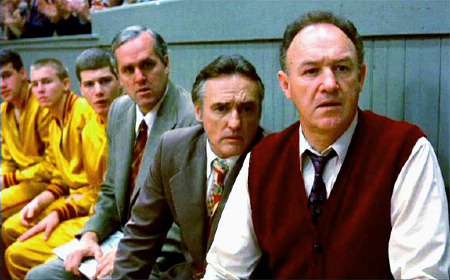
2.  Hoosiers (1986)

“Hoosiers” is loosely based on true story, but its strength is the way it combines classic sports movie clichés—the win-at-all-costs coach down on his luck, the remote superstar, over-achieving team—into a powerful lesson: it isn’t the final victory that matters most, but the journey to achieving it.

Ethical issues highlighted: Forgiveness, generosity, leadership, kindness, courage, loyalty, diligence, redemption.

Favorite quote: “If you put your effort and concentration into playing to your potential, to be the best that you can be, I don’t care what the scoreboard says at the end of the game, in my book we’re gonna be winners.” [ Coach Norman Dale (Gene Hackman)]

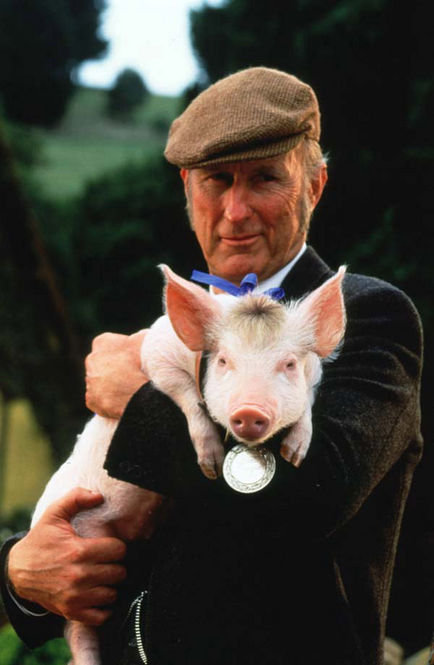
3. Babe (1995)

A wonderful movie about the virtues of being nice, the greatest civility film of all time. Second place: “Harvey.”

Ethical issues highlighted: Civility, kindness, reciprocity, loyalty, courage, love, friendship, bigotry, bias.

Favorite quote: “Fly decided to speak very slowly, for it was a cold fact of nature that sheep were stupid, and there was nothing that could convince her otherwise…The sheep decided to speak very slowly, for it was a cold fact of nature that wolves were ignorant, and there was nothing that could convince them otherwise”  The Narrator (Roscoe Lee Browne) Continue reading

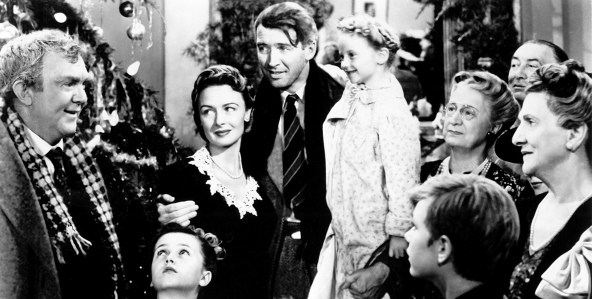
The Complete “It’s A Wonderful Life” Ethics Guide [UPDATED AGAIN! ]

 Once again, Ethics Alarms re-posts its ethics guide to Frank Capra’s 1946 masterpiece “It’s A Wonderful Life,”one of the great ethics movies of all time. It was written in 2011, and revised regularly since, including for this year’s version. I suspect we need it more in 2016 than usual.

It is fashionable now, and was even when the film was released, to mock its sentiment and optimism. On one crucial point Capra was correct, however, and it is worth watching the film regularly to recall it. Everyone’s life does touch many others, and everyone has played a part in the chaotic ordering of random occurrences for good. Think about the children who have been born because you somehow were involved in the chain of events that linked their parents. And if you can’t think of something in your life that has a positive impact on someone–although there has to have been one, and probably many—then do something now. It doesn’t take much; sometimes a smile and a kind word is enough. Remembering the lessons of “It’s a Wonderful Life” really can make life more wonderful, and not just for you.

Here we go:

1. “If It’s About Ethics, God Must Be Involved”

The movie begins in heaven, represented by twinkling stars. There is no way around this, as divine intervention is at the core of the fantasy. Heaven and angels were big in Hollywood in the Forties. Nevertheless, the framing of the tale advances the anti-ethical idea, central to many religions, that good behavior on earth will be rewarded in the hereafter, bolstering the theory that without God and eternal rewards, doing good is pointless.

We are introduced to George Bailey, who, we are told, is in trouble and has prayed for help. He’s going to get it, too, or at least the heavenly authorities will make the effort. They are assigning an Angel 2nd Class, Clarence Oddbody, to the job. He is, we learn later, something of a second rate angel as well as a 2nd Class one, so it is interesting that whether or not George is in fact saved will be entrusted to less than Heaven’s best. Some lack of commitment, there—then again, George says he’s “not a praying man.” This will teach him—sub-par service!

2. Extra Credit for Moral Luck

George’s first ethical act is saving his brother, Harry, from drowning, an early exhibition of courage, caring and sacrifice. The sacrifice part is that the childhood episode costs George the hearing in one ear. He doesn’t really deserve extra credit for this, as it was not a conscious trade of his hearing for Harry’s young life, but he gets it anyway, just as soldiers who are wounded in battle receive more admiration and accolades than those who are not. Yet this is only moral luck. A wounded hero is no more heroic than a unwounded one, and may be less competent as well as less lucky.

3.  The Confusing Drug Store Incident

George Bailey’s next ethical act is when he saves the life of another child by not delivering a bottle of pills that had been inadvertently poisoned by his boss, the druggist, Mr. Gower. This is nothing to get too excited over, really—if George had knowingly delivered poisoned pills, he would have been more guilty than the druggist, who was only careless. What do we call someone who intentionally delivers poison that he knows will be mistaken for medication? A murderer, that’s what.  We’re supposed to admire George for not committing murder.

Mr. Gower, at worst, would be guilty of negligent homicide. George saves him from that fate when he saves the child, but if he really wanted to show exemplary ethics, he should have reported the incident to authorities. Mr. Gower is not a trustworthy pharmacist—he was also the beneficiary of moral luck. He poisoned a child’s pills through inattentiveness. If his customers knew that, would they keep getting their drugs from him? Should they? A professional whose errors are potentially deadly must not dare the fates by working when his or her faculties are impaired by illness, sleeplessness or, in Gower’s case, grief and alcohol.

4. The Uncle Billy Problem

As George grows up, we see that he is loyal and respectful to his father. That’s admirable. What is not admirable is that George’s father, who has fiduciary duties as the head of a Building and Loan, has placed his brother Billy in a position of responsibility. As we soon learn, Billy is a souse, a fool and an incompetent. This is a breach of fiscal and business ethics by the elder Bailey, and one that George engages in as well, to his eventual sorrow. Continue reading

A Hopeful Ethics Note

rugby2

Here’s at least one example of the culture getting more ethical. It might not seem like much, but ask a Jack Russell Terrier, and you’ll understand.

Gradually, dog owners and breeders are stopping the practice of docking—that is, cutting—the ears and tails of puppies so they conform to arbitrary breed standards. The reason is simple: it is cruel and pointless, and the dogs look just as good, indeed better, the natural way.

I first noticed this trend years ago when I saw this breed at a dog show:

great-dane

I had no idea what it was. I asked, was told it was a natural example of the breed I was used to seeing this way…

dane-clipped

Yes, it’s a Great Dane. In recent years, fewer and fewer owners are opting for the ear operation, allowing the breed to keep the ears that reflect its English Mastiff ancestry.

This beautiful, loving, smart breed dog usually has both its tale and its ears cropped, the tail down to a nub:

Continue reading

Ethics And The New TV Season, Part 1: “The Good Place”

There are an unusual number of shows this season that should be full of fascinating ethical dilemmas. There is even sitcom, “The Good Place,” with a main character who is an ethicist. He’s a dead ethics, but that’s something. Let’s start with that show as I plan on reviewing the ethics-related TV shows in future posts.

The first episode of  the NBC comedy  began with selfish, habitually unethical  Eleanor Shellstrop (Kristen Bell) waking up in the afterlife called “the Good Place, I assume to avoid religious controversy. Michael (Ted Danson) welcomes her, and explains that he designed this particular Good Place neighborhood that she will reside in for eternity. As many of us were taught, our lives on Earth are being monitored by higher beings, literally and figuratively. In this show’s cosmology, they calculate our ethical worth using a point system.  Those with the highest positive point totals make it to the Good Place.

The problem is that there has been a glitch: Eleanor was erroneously awarded the point score of a capital punishment-fighting lawyer (naturally the Good Place regards all progressive and liberal positions as “good;” I assume that all conservatives and Republicans are in the Bad Place) when she really was a salesperson for an evil drug company. The situation in this sitcom is whether Eleanor can shape up and justify her points before she is found out and ends up playing strip poker in Hell with Ronald Reagan, William F. Buckley and Phyllis Schlafly.* Continue reading

Comment of the Day: “The Amazing Mouthwash Deception: Helping Alcoholics Relapse For Profit”

There is an Ethics Alarms post “going viral” right now, at least as viral as any post on an ethics blog is likely to go. For two weeks now, my post at the end of July about how the “urban legends” site Snopes had descended into  dishonest, spinning, fact-distorting partisan/ left “factchecking” hackery has lapped all others here, and been shared to record levels on Facebook (nearing 11,000 shares) and Reddit.

This is nice, of course. It has brought a few (though not many) new commenters to the blog, and presumably more readers who stayed to peruse other topics. It has made August 2016, usually a fairly dead month, the most heavily trafficked month in Ethics Alarms annals. The post alerted some people to why Snopes is untrustworthy, though not, apparently, the Washington Post, which cited it as authority just a few days ago. It also prompted, on Reddit and Facebook, several thousand smug “this is not news, I’ve known this for years” comments. Where were your blog post, jerks?

The post’s wide circulation through the web also made me aware that a conspiracy theory holding that Democrats and the Hillary Corrupted maintain a team of attack commenters who go to blogs and attempt to muddy the waters when the truth about Clinton threatens to break through the denial dam might be accurate. I have received four or five almost identical comments on that post attempting to deny my dissection of Snopes’ pathetic attempt to prove that Hillary didn’t defend a child rapist, didn’t discredit his young victim in the process, didn’t know he was guilty when she did it, and didn’t laugh about the case in a recorded interview. None of the four commenters  read all of my post, which echoed a previous one in pointing out, as I always do, that a lawyer defending a criminal is not unethical, that the attacks on Hillary for doing so were ignorant and unfair, and that Hillary Clinton has nothing to apologize for in this case. Never mind: all four of these commenters ( and some others which never made it onto the blog) shifted into similar boilerplate language claiming I was attacking her too,  and preceded to repeat Snopes’ dishonest “factchecking” as if the documentation of its falsity I presented in the post didn’t exist.

Nonetheless, the Snopes revelation was not the Ethics Alarms post I would have chosen to “go viral.” There have been many essay in the last six year that I was, and am, especially proud of and believe were original, perceptive and important, and that have been barely read by anyone, never linked to or shared, and that have had all the impact of a shell thrown into the surf. How I wish my warning to the Republican Party , for example, urging it not to permit Donald Trump to participate in the primaries, had received similar attention. Not a single editorial board or pundit saw the peril looming, or at least  they didn’t write or talk about it if they did, because having The Donald spouting his inanities would be good copy and “fun.”

One such post dates back to the first full year of Ethics Alarms: The Amazing Mouthwash Deception: Helping Alcoholics Relapse For Profit, from August 2010. In six years, it has amassed about the same number of views that the Snopes piece amassed in half a month. Yet the topic, how mouthwash manufacturers profit significantly by hiding the widespread use of their product by alcoholics who use mouthwash to conceal their destructive disease from family members and co-workers, is barely mentioned  on the web—a few places, and almost all of them since the post. Still, Congress hasn’t held hearings, regulatory agencies haven’t noticed, and the products still carry warnings that fool non-alcoholics into believing that the stuff is poison, so nobody drinks it. Lives could be saved, marriages rescued, and endangered businesses might survive, if what I wrote was generally known

I’ve done the original research and put the problem out there. At least I’ve tried, and I will continue to write about the problem, which I have learned about first hand.

My efforts  haven’t been completely futile. I have received some gratifying comments and off-site e-mails from family members who read the article, discovered that a loved one was secret drinker, and got them help. I have also received a few responses that confirmed my work, though none quite like this one from new reader Dave, an alcoholic himself.

Here is his remarkable and  cryptic  Comment of the Day on the post, The Amazing Mouthwash Deception: Helping Alcoholics Relapse For Profit. Is it intentional irony? Is it sarcasm? Is it support, in the form of criticism? You decide:

Halfway through your article I decided it would be a good idea to go to shoppers and grab myself a bottle. I’d been so triggered today, only being a week sober prior. It’s great, you know, the mouthwash deception as you call it. I spend roughly $3.50 on a bottle of Life brand yellow mouthwash and it gets me radically twisted, with zero hangover. So not only does it make it easier for me to be a functioning alcoholic based on its inexpensiveness and zero hangover qualities, it is also amazingly convenient in that within 10 minutes I have three different 24 hour grocery stores I can go to in order to get a bottle.

Alcoholism is a shitty disease, believe me, I have lost much at the expense of it.

Continue reading

Comment of the Day: “Ethics Dilemma: What Do You Do With Steve King?”

Pennagain, who also acts as the volunteer and indispensable Ethics Alarms proofreader, submitted this Comment of the Day, packed with ethics, and trenchant observations about how diverse cultures have enriched civilization. It begins with a quote from another commenter on Rep. King’s descent into white-supremacistspeak, and heads to wonderful places.

Here is Pennagain’s Comment of the Day on the post,  “Ethics Dilemma: What Do You Do With Steve King?”

Still, most of the really big failings over the ages have been ah, east of Suez.

Rewrite: Still, most of the big failings over the ages have been during the first couple of thousand years of any particular civilization. That’s considering national and natural barriers that don’t go along any particular meridian. If they last beyond a millennia or two, they’ve usually learned a thing or two.

Some of those things might be an understanding of the concept of comparative values and why basic ethical principles have always been in vogue – including under the Shogunates, the Mughal emperors, the dynasties of China (going back to 2100BC, by the way), and other long-lived non-democracies). Or why certain types of governments or power structures work best with certain cultures at certain times, barring catastrophic disasters and military dictatorships (North Korea is still in its 68-year-old infancy and ailing). Or why philosophies of aesthetics differ to an extent that makes comparing art or architecture, or its presence or absence idiotic. Or why a majority of us believe our own way is best (and some of the latter think they need to Disneyfy, Democratize, and Develop everyone everywhere else on the planet).

Example of some basic Asian principles aka Their Ethics: harmony, benevolence, righteousness, courtesy, wisdom, honesty, loyalty, filial piety.

All of the above can be incorporated into the principles of what us non-Asian, non-African folks call universal ethics; our ethics:

Continue reading

The Flat Learning Curve Again: Obama Signals His Desires In A Law Enforcement Matter Of Some Considerable Consequence

curve-flat…and not just any law enforcement matter, but an investigation of a former Secretary of State and presumptive Presidential nominee.

Nice. You see, Barack Obama just doesn’t care. That’s the only possible explanation for this pattern which goes way back to 2009, when he opined on whether his old friend from Harvard, Henry Louis Gates, was the party at fault in an altercation with a Cambridge, Mass, police officer. That was his first year as President, so maybe it’s plausible that this “Constitutional scholar” and allegedly brilliant man didn’t know that the President of the United States warps the justice system and law enforcement when he declares how he thinks they should handle a particular matter, since he is at the tippity top of our rule of law. Obama has done this again and again, however—with Trayvon Martin… in the Big Branch Mine disaster…as Obamacare approached a key challenge in the Supreme Court…in the military sex abuse scandal…regarding Arizona’s illegal immigration laws, and regarding other matters. He has to know by now that it biases the process, but his supporters cheer, the news media makes excuses, only Republicans, the “conservative media”  and Ethics Alarms complain, so he keeps doing it anyway. He can get away with it, so he just doesn’t care.

Nice.

This, however, was special. The same day that the White House admitted that the FBI’s investigation into Hillary Clinton’s intentional mishandling of official e-mails for her own personal needs–she didn’t want citizens to be able to see her business and political machinations using the Freedom of Information Act—was a criminal investigation, he endorsed Clinton for President in glowing terms.

Fox News’ Chief Washington Correspondent James Rosen asked White House Paid Liar Josh Earnest about the appropriateness of this—heaven forfend that any non-conservative-biased news outlet would ask such an obvious and necessary  question, queried “You have other employees of the executive branch, career prosecutors, FBI agents, working this case who have now just heard how the president wants to see this case resolved, in essence. Isn’t there some conflict there?”
Continue reading

Comment Of The Day (A Deft Rebuttal!) : “Comment of the Day: ‘From The Signature Significance Files: Trump And The Teleprompter. Seriously, How Can You Even Consider Voting For A Guy Like This?”’

mcdonalds drive-thru

I posted Fattymoon’s lament regarding the state of America’s culture, politics and prospects late last night, and yet another deserving Comment of the Day arrived in record time, this morning at 8:41 PM.

Here is Tim Hayes’  rebuttal to FattyMoon’s Comment of the Day in response to “From The Signature Significance Files: Trump And The Teleprompter. Seriously, How Can You Even Consider Voting For A Guy Like This?”

(THE MANAGEMENT FULLY AGREES WITH AND ENTHUSIASTICALLY ENDORSES THE OPINION EXPRESSED HERE.)

“To this very day I call for armed revolution and don’t give a fuck who knows it. Maybe Homeland Security will make me a return visit at one in the morning. But, this time, I ain’t inviting them in. Ain’t got no guns”

This statement, right here? This is the symptom of so damn many of the problems facing our country right now. I’m not saying that to attack FM as an individual, here, but rather to reject a representative of a mentality that provokes the gnashing of teeth and tearing of hair. So please, when reading this post, understand that all directed comments towards a “you” are directed towards anyone sharing that mentality, not at a specific individual.

You call for armed revolution, but you don’t have arms with which to join one.

You call for changes to who is elected to office, but you then say “but I only voted twice” with the clear implication that you’re not to blame for how things are.

Continue reading

Comment of the Day: “From The Signature Significance Files: Trump And The Teleprompter. Seriously, How Can You Even Consider Voting For A Guy Like This?”

shitstorm

I am behind in my Comment of the Day postings by two or three, and was trying to decide which to post first. After the previous post, the answer became obvious.

Fattymoon is a teacher, an idealist, an activist and an intellectual as well as an honest, sincere and occasionally bitter and disillusioned man. We met here on the blog back when I was criticizing a movement he strongly supported, Occupy Wall Street. Like a few other regular visitors to Ethics Alarms—not nearly enough—who have remained civil, provocative and predictably adversarial at the same time, he has been a font of thoughtful lateral thinking  with a heavy dose of whimsy.

I was startled that his response to one of my posts about the ethics black hole that is Donald Trump sparked this reaction from Fatty:

Me, I’m watching this farce unfold from the sidelines and I’m laughing my ass off.

To which I replied,

How, exactly, are you on the sidelines? Doesn’t it bother you, accepting for the hell of it that such a thing is possible, that an entire generation is on the way up and the nation and world isn’t on the sidelines?

Here is Fattymoon’s response, and the Comment of the Day, to the post, From The Signature Significance Files: Trump And The Teleprompter. Seriously, How Can You Even Consider Voting For A Guy Like This:

No, it doesn’t bother me one iota, Jack. I lost all faith in presidential politics, and politics in general, when Obama failed to live up to his promises/my expectations. I consider him a traitor of the first magnitude. I would rather have seen him stand up to Wall Street and other Bush atrocities and pay for it with his life than what actually went down during his presidency. At least he would have died an honorable man.

Continue reading

If You Know Anything About Ethics, You Don’t Even Ask These Questions, Because You Know The Answers Already

virtual reality

Darrell West, a Brookings scholar, believe it or not, queries, “What happens when virtual reality crosses into unethical territory?” It is the topic of his essay, but the question is self-answering. Virtual reality is, by definition, not real. Ethics is about determining right and wrong in reality, in interaction with real people, real consequences and real dilemmas in the real world.

West doesn’t seem to grasp that, and neither, according to him, does the playwright of a work being presented in my metaphorical back yard: Jennifer Haley, who authored “The Nether” playing at the Woolly Mammoth Theater in Washington, D.C. West tells us that Haley

“…explores the troubling questions that arise when the main character known as Papa uses advanced software to create a fantasy environment where adult clients molest young children and then kill them….  Should there be limits on human fantasies involving heinous thoughts? Do fantasies that remain in the private realm of someone’s brain warrant any rules or regulations by society as a whole?  Even if the bad behavior rests solely in one individual’s private thoughts, does that thinking pose a danger to other people? For example, there is some evidence that repeated exposure to pornography is associated with harmful conduct towards women and that it legitimizes violent attitudes and behaviors. Does that evidence mean we should worry about misogynistic or violent virtual reality experiences? Will these “games” make it more acceptable for people to engage in actual harmful behaviors?”

These are not troubling questions or even difficult questions, unless one is intrigued by the Orwellian offense of “thought crime.” Here, for the edification of West, Haley, those nascent brainwashers out there who find his ethically clueless essay thought-provoking of any thought other than: “How the hell did this guy get to be called a “scholar”?, let me provide quick and reassuring answers to West’s questions: Continue reading