Ethics Hero: Yankees Manager Joe Girardi

I don't believe I'm posting this.

It has come down to the final day of the season, with the (or as they are known in these parts, MY) Boston Red Sox tied with the Tampa Bay Rays for the final spot in the American League playoffs. The Yankees have been dominated by the Red Sox, their long-time rivals, most of the season, while the Rays have been easier pickings. Lo and behold, it is the Yankees playing the Rays, in a game that could determine who will be the Yankees’ opponents in the League Championship series.

The game is otherwise meaningless to New York, which has already clinched a play-off berth. At this point, a play-off bound manager’s job is to decide which marginal players will be on the post-season roster, to line up his pitching, and to steer clear of injury. Asked if he was bothered that Yankee manager Joe Girardi was surely not going to oppose the Rays with his best team, Boston Manager Terry Francona shrugged. He had earned the right to use the game to prepare for the play-offs, Francona answered.

Yet here was Girardi, starting a team made up of most of his regulars, replacing his pitchers as soon as they were in peril, and generally managing the game against the Rays as if it were the final game of the World Series. Continue reading


Non-Douche Neil Patrick Harris Almost Gets It Right

Neil Patrick Harris...no douche he! But is it for the right reasons?

In a cover feature story for Entertainment Weekly, Neil Patrick Harris (or whoever ghost-wrote for him) lays out his Hollywood Survival Guide. Secret of Hollywood Survival #6 for the star of “How I Met Your Mother” and ubiquitous awards show host is “Don’t Be A Douche”:

“Hollywood affords many opportunities to be a douche of epic proportions,” writes the grown-up “Doogie Howser,” “Avoid the temptation.”  He continues:

“Being a pleasant person has got to count for something….Actors sometimes take themselves far too seriously and put themselves on a different level [from the crew.] But everyone’s working really hard and should be afforded the same level of respect.”

For that, Neil gets an Ethics Alarms salute. Unfortunately, he scars his achievement by going on to explain how the make-up people, the film editor and the transportation department can really nail you if you don’t treat them well.

Given the breezy tone of the article, Harris was probably joking, but the joke reinforces the misconception many people have about ethics, which is that ethical conduct is a quid pro quo. It’s not. The Golden Rule isn’t “Do nicely unto others do they won’t screw you over,” and someone’s less than nice behavior  toward you doesn’t justify your being a douche to him. One isn’t respectful to the waiter because he’s liable to spit in your soup if you’re not, but because it’s the right way to treat other human beings.

Neil Patrick Harris certainly seems like a decent guy, and he probably is. I just wish, in the pursuit of a pretty stale joke about how the make-up people will get even by making you look like a troll, he hadn’t reinforced one of the most persistent of unethical rationalizations.

Lingerie Football Ethics

Does this sport condone rape? Or tickle fights?

I think professional lingerie football is a strange sport, to be sure. Attractive women dressed in bras, panties, helmets and shoulder pads play football before paying customers, almost all of them men. The players seem to play hard and many of them are excellent athletes. Is it sport? Is it sex? Is it spectacle?

Sondra Miller, a feminist and rape crisis counselor, believes that lingerie football increases the incidence of rape and violence against women, and writes that the proper ethical conduct is to end it:

“Don’t support the women’s lingerie football league. Don’t buy a ticket. Don’t watch it on TV. Don’t talk about it at the water cooler. Ignore it — or better yet — speak out against it.” Continue reading

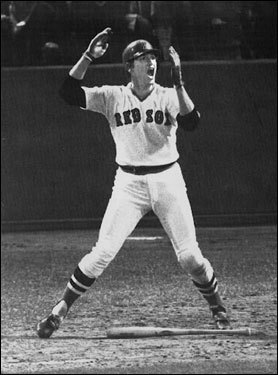
A Fan’s Obligation: 12 Life Lessons From Being a Red Sox Fan

Thanks Carlton. I won't forget.

This is not going to be a fun day.

The Boston Red Sox, the baseball team to which I have devoted a remarkable amount of my time, passion and energy over a half-century, are threatening to complete late season collapse of embarrassing and historic proportions. A spectacularly bad month of September has the team holding on to its once assured post-season play-off slot by its fingernails, and the squad appears to be dispirited and unhinged. Today the Red Sox play a double-header with the New York Yankees, the team’s blood-foe, and its prospects don’t look good. I, of course, must watch both games.

Following a losing baseball team is emotionally hard—I listened to or watched every game the Red Sox played in a six year period in which they never had a winning season— but following a collapsing winning team is much, much worse. It feels like a betrayal, yet at the same time the fan feels guilty for being angry with the players, who undoubtedly are suffering more than you are. This is, after all, their career. Still, you have had your hopes raised over many months; you have, if you are a serious fan, attached your self-esteem to your team’s fortunes. Watching it tank is like watching a presidential candidate you have argued for, and gone to rallies for and contributed to make an ass of himself in a debate. (And no, I’m not a supporter of Rick Perry.) Continue reading

Ethics Quote of the Month: Clarence Darrow’s Closing Argument in the Trial of Nathan Leopold and Richard Loeb (1924)

When capital punishment is in the news, it's time to listen to Clarence Darrow.

I know I have previously quoted portions of Clarence Darrow’s famous courtroom plea for mercy in the “thrill killing” murder trial of teenagers Nathan Leopold and Richard Loeb. It can never be read too many times, however, and is an essential backdrop to any discussion of capital punishment. Darrow, who hated the death penalty and defended over a hundred clients facing it, never lost a capital punishment case. This, however, was the only time he articulated why he believed that capital punishment was wrong. 

Nathan Leopold and Richard Loeb were charged with the murder of fourteen year-old Bobby Franks. Both defendants were brilliant students (Leopold, the youngest graduate in the history of the University of Chicago; Loeb, the youngest graduate of the University of Michigan), Jewish and the sons of wealthy and successful Chicago businessmen. Neither showed any remorse for their act, which had been coldly undertaken as a demonstration of their superior intellects. Darrow was hired by the Leopold and Loeb families to keep their sons from dying on the gallows, and he decided to plead their case directly to the judge.

His summation on August 22, 1924, remains perhaps the most persuasive and eloquent argument against capital punishment ever made in court or anywhere else. And it worked: Judge Caverly spared Leopold and Loeb, and they were sentenced to life imprisonment. This is a somewhat shortened version, edited for The Essential Words and Writings of Clarence Darrow, a 2007 paperback compiled by historian Ed Larson with some help from me. Here is one of the great orators of the 20th Century, one of the great progressive thinkers in our history, and the greatest trial lawyer who ever lived, arguing for the life of two murderers and for the soul of our civilization. I do not share Darrow’s absolute rejection of the death penalty, but I wouldn’t want to have to argue against him either. Continue reading

More S.E.C. Ethics Blindness

What good is a blind watchdog?

Back in February, I told the tale of David Becker, former S.E.C. General Counsel, who had inherited money from his mother that was really the fruits of the Bernie Madoff investment scandal after he had served in the post while Madoff was merrily swindling people as the S.E.C. twiddled its thumbs. Becker apparently wasn’t in the information chain that should have led the S.E.C. to stop Madoff , and the scandal was uncovered after he left the agency. In 2009, after the Madoff mess had exploded, he rejoined the agency in his old job, but when it came to light that he and his brothers had inherited $2 million Madoff-manufactured profits from their mother, he quickly stepped down. My view was that Becker was a victim of circumstance: he had the appearance of impropriety, but hadn’t done anything wrong.

I should have known better: after all, this is the Securities and Exchange Commission, where they illegally shred files and the regulators look at porn all day. Now it is revealed thatContinue reading

“I Am One of Those Untouchables” : The Unethical Persecution of Former Sex Offenders

No ethical person can read this and conclude that such treatment by society is fair, responsible, compassionate or American. It is the ethical duty of every citizen who believes in our society’s commitment to the freedoms guaranteed by the Declaration and the Constitution to oppose efforts to persecute former sex offenders, because our elected officials will not oppose them. It is, in the end, a matter of choosing national integrity over bigotry and fear.

“I am one of those untouchables. And I’m not one of those ones that everyone agrees shouldn’t be on the registry. Continue reading

Comment of the Day: “Unethical Quote of the Month: Canadian Judge Joanne Veit”

The Comment of the Day, by Eric Monkman, is one of many excellent comments on yesterday’s post on the words of a Canadian judge in allowing a woman who murdered her newborn infant to go free.

There are many threads in the discussion, and I am not caught up. I officially apologize to combatants Eric and tgt especially for not being able to respond in sufficient detail, or in some cases at all, to their thoughtful posts. This an example of the limitations of the blog comment format. I wish I could organize a conference call.

The discussion went into so many directions that the initial post’s point was distorted, in part by me. Here is how I would summarize it:

Judge Veit’s quote, the actual focus of the post, strikes me as ethically offensive because 1) the statement that “many believe” abortion is a less than ideal solution to unprotected sex suggests that abortion is acceptable as a primary method of birth control. The commenters object to my interpretation of the judge’s phrasing to mean that she personally believes the adverse of the statement, that abortion is an ideal solution to unprotected sex. (The ideal solution to unprotected sex is not to have unprotected sex.) OK. I see their point. I still read it differently, and my comments are based upon my reading. At best, it is a sloppy, imprecise statement. 2) The comparison, and equivalency, between grief for the child—who is dead, and who was killed by the person who was most responsible for her welfare—and grief for the murderous mother, who is alive, and who is avoiding legal sanctions for her crime, shows a warped set of ethical values. The implication is that the life of a child is no more important, nor has any more regard from the society, than the emotional comfort of the mother. I know that is the standard in Canada, and in much of the US. It is wrong.

The subsequent discussion about how acceptance of abortion leads to acceptance of infanticide was focused on the U.S., but mistakenly assumed that this was the order of events in Canada. It was not; I think that is affirmatively strange, as one would assume that a human life would not be less valued in a society as it became more viable. It doesn’t change my analysis regarding the U.S., however.

Eric asks some good questions which I will address at the end. Here is his Comment of the Day, on “Unethical Quote of the Month: Canadian Judge Joanne Veit”: Continue reading

Unethical Quote of the Month: Canadian Judge Joanne Veit

“…While many Canadians undoubtedly view abortion as a less than ideal solution to unprotected sex and unwanted pregnancy, they generally understand, accept and sympathize with the onerous demands pregnancy and childbirth exact from mothers, especially mothers without support…Naturally, Canadians are grieved by an infant’s death, especially at the hands of the infant’s mother, but Canadians also grieve for the mother.”

—- Canadian Judge Joanne Viet, announcing that Katrina Effert, who strangled her newborn child and threw the body over a fence into the neighbor’s yard when she was 19, will serve a three-year suspended sentence with no jail time for the murder, reflecting a “fair compromise of all the interests involved.”

This is a cautionary ethics tale indeed for those who deny that a callous attitude toward human lives in the womb, giving them no standing against a mother’s desires and convenience, will gradually, inevitably, coarsen and warp a culture’s respect for life and its comprehension of wrong. [Addition: Many commenters have pointed out that Canada had designated infanticide as a relatively minor crime before fully legalizing abortion. That is a strange progression, though once infanticide had been declared “understandable,” abortions days were numbered. In the US, the gradual de-valuing of young life is moving in the more obvious way, from younger to older. The process, however, is the same.] Continue reading

Ethics Quiz: Truck Nutz vs. Schweddy Balls

Remember Truck Nutz? That may the name of Ben and Jerry's next flavor, if Schweddy Balls catches on...

I’ve been driving or lecturing all day and may be a little punchy.  Yet having last posted on Ethics Alarms about Ben and Jerry’s crude homage to Alec Baldwin (FULL DISCLOSURE: I would be likely to find any homage to Alec Baldwin offensive, since I find Alec Baldwin offensive) and juvenile word-play, I found myself wondering: which is more uncivil and disrespectful, Ben and Jerry’s new Schweddy Balls ice cream, or the large, red, swinging plastic scrotum decorations that some truckers hand at the tail end of their rigs, Truck Nutz?

So that’s your Ethics Quiz, dear readers, as we head into the weekend: Which is more arrogantly disdainful of public decorum, decency, and respect for one’s fellow community members? Continue reading