Ethics Dunce: The California State Bar

This question should be easy.

This will be a short post, unless I snap in the middle of writing it and get hysterical.

Why is The California State Bar August’s first Ethics Dunce? This news item says it all:

“A California State Bar panel is considering whether an illegal immigrant who passed the exam to practice law should be admitted despite his status.”

Pardon me, California State Bar, but exactly what is there to “consider?” 

I can see the value of some general consideration of the insanity of California’s laissez faire attitude toward illegal immigrants, and the fact that California residents seem to have no problem with allowing them to use schools, hospitals, public schools, universities and others services that their bankrupt state can barely afford. I can see the need for some reconsideration of the foolishness of creating incentives for illegal immigrants to continue living a lie in America by giving them the benefits of a Dream Act, like the one Governor Brown recently signed into law. Continue reading
Ethics Quote of the Week: Washigton Post Reader Elizabeth Grover

“Sun wrote: ‘Most doctors will not perform abortions beyond 22 or 24 weeks for various reasons, including legal concerns, social stigma, inadequate training or inexperience.’ She left out perhaps the biggest reason: Most doctors believe that late-term abortions are morally wrong.”

—-Elizabeth Grover of Washington, D.C., in a letter published in the Washington Post “Free for All” section. Reader Grover was commenting on a glowing Post profile of Maryland physician Dr. LeRoy Carhart by feature writer Lena Sun, extolling his willingness, indeed eagerness, to perform late term abortions, which are illegal in several states. Dr. LeRoy dismissed state restrictions on abortions of any kind as “ridiculous.”

Grover was absolutely correct to flag the bias and misrepresentation in Sun’s article. Continue reading

Ethics and the Right to Truck Nutz

Classy!

The provocative T-shirt issue? Kid’s stuff. If you like your public civility quandaries straight and not watered down by such matters as political speech, get ready for the Great Truck Nutz Controversy.

Truck Nutz (also known as “Bull Balls”) are a…decoration?… favored by people whose sense of humor runs to farts, loud burps and titty-twisters, whose favorite films are the “Jackass” series and Farrelly brothers movies, whose idea of the perfect woman is Kim Kardashian, and whose idea of a genius is Howard Stern. They are large, usually red, approximations of male testicles that are hung (well-hung, you would have to say) on the back of trucks. They say, “I’ve got a big, scary, motherfucking truck here!”

Or, if you prefer, “I am a moron.”

A South Carolina woman named Virginia Tice was given a $445 ticket for displaying Truck Nutz on her truck, and she’s going to trial to protest the ticket. Blogger Ellie Mystal of “Above the Law,” which brought the adornment  to my attention and which I will never forgive for doing so, commented, Continue reading

Ethics Dunce: Larry Flynt

BLECHHHH!

I know, I know. “In other news, the Earth spins, and the Atlantic ocean is wet!” Nevertheless, it is occasionally worth the trouble to remind ourselves what an unprincipled sleaze Larry Flynt is, especially with people still around who argue that he’s a hero.

Flynt announced on Nancy Grace’s show last night that talks are ongoing with Casey Anthony to have her nude and tattooed bod featured in Hustler magazine for $500,000 up front plus 10% of all profits. Flynt said he decided to make the offer after concluding there was a big market for seeing the acquitted child murder suspect in the buff. Continue reading

Robert E. Lee and the Abuse of Principle

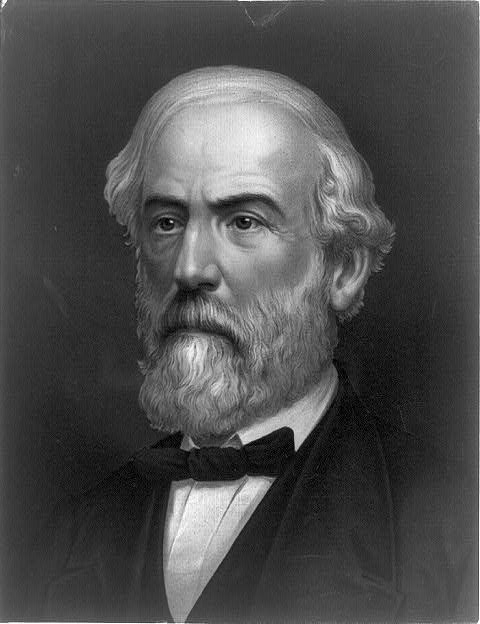
Lee: Use his life as a warning, not an inspiration.

As both political parties and the President of the United States seem to be determined to subject the American people, economy and standing in the world to disaster in the defense of principles, it might be a good time to reflect on the fact that principles detached from reality have little value, and that rigidly adhering to principles to the detriment of the community and civilization is not a virtue.

In the current issue of Humanities, historian James Cobb makes these points vividly, if tangentially, while reflecting on the odd reverence with which Americans, and not just Southerners, regard Robert E. Lee. I am proud to say that the lionization of Lee never made sense to me, not even when I was a small boy. But he is the epitome of someone who is revered as a role model and hero for his supposed character and values rather than what he actually did with them.*

Cobb begins his essay with this anecdote:  Continue reading

Religious Tolerance Ethics: Pro

Yes, India, worshipping this silly thing means you are all mad as hatters. Now come to a rational church, and chow down with us on some body and blood of Christ. Hey...what's so funny?

In  State v. Daley, the Ohio Court of Appeals reversed a trial court’s mental incompetence verdict and order of treatment for the defendant  because it appeared to be based solely on the defendant’s passionate religious beliefs.

Daley was charged in March 2010 with retaliation, intimidation, aggravated menacing, menacing, and telecommunications harassment. The trial court referred Daley to the court’s psychiatric clinic for a competency evaluation, and the evaluating psychiatrist opined that Daley was not competent to stand trial because he was not able to assist in his defense.

At the competency hearing, Daley testified that, to the contrary, he was able to continue assisting his attorney in his defense. He also testified that his opinions about the legal system, such as his description of divorce court as the “high court of Satan,” were based on his religious belief that divorce is against the word of God. Nevertheless, the trial court found Daley incompetent to stand trial and ordered him hospitalized for restoration to competency. It based its opinion on the diagnosis of the psychiatrist, who testified that Daley, a “radical Christian,” “expresses such extreme intensity of religious belief in very unorthodox religious beliefs to the point to constitute psychosis.” The psychiatrist further testified that treating Daley would “change his psychotic symptoms of which are a religious theme[,]” so that his “intensity and [ ] preoccupation with his religious beliefs will be greatly decreased.” Continue reading

Unethical Thought of the Month: Me

Of course,  I am likely to be the only one who can get this “award,” since I am not privy to everyone else’s unethical thoughts. Nonetheless, this was a thought that  deserves a special rebuke, and that raises many questions.

I have always been fascinated by unethical thoughts, because thoughts are not really ethical or unethical. Being ethical often requires transcending our worst instincts and selfish thoughts; one recurring theme in Julian Baggini’s collection of thought experiments, “The Pig That Wants To Be Eaten” is whether a person who automatically does the right thing is more, or possibly less, virtuous than the person who engages in the same conduct despite unethical thoughts that urge him to do otherwise. While some misguided social architects think that the way to a more ethical society is to make unethical thoughts more difficult to have through such measures as censorship and hate crime legislation, that strategy is itself unethical, offending the principle of human autonomy. An evil thought that is recognized as such, rejected and not acted upon has no true ethical implications at all.

Or does it? Continue reading

Perplexing Oxymoron of the Month: the Unethical Ethics Fellow

You may want to fine tune that ethics program, guys....

From news reports: “A former Harvard University fellow studying ethics has been charged with hacking into the computer network at the Massachusetts Institute of Technology  to steal more than five million academic articles….Aaron Swartz, 24, was indicted on six counts including wire fraud and faces up to 35 years in prison and a million dollar fine if convicted.”

What?

Questions abound:

What do they teach in Harvard ethics classes?

What kind of grades did Swartz get?

Does this prove that the course of study was junk, or does it prove that he was studying the right subject, since he obviously has a lot to learn?

Is it reasonable to say, “Imagine how unethical he would have been if he wasn’t an Ethics fellow”?

Does this prove that one can be an Ethics Fellow and an Unethical Fellow at the same time?

Should an Ethics Fellow who proves himself to be unethical  be allowed to cite his credentials as an ethics fellow?

If those who can’t do, teach, is he still qualified to teach ethics?

Finally, if becoming an Ethics Fellow at Harvard can’t be relied upon to set the “stealing 5 million academic articles is wrong” alarm, what’s the point?

Judicial Non-Ethics, Pennsylvania Division: Now THAT’S a Conflict of Interest!

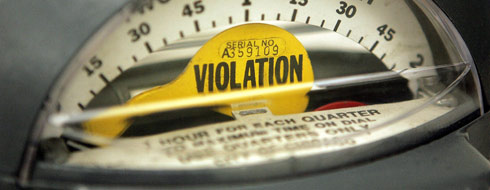
The judge apparently found the meter to be in contempt of court.

Lancaster, Pennsylvania District Judge Kelly Ballentine dismissed several of her own parking tickets and an expired registration ticket within the past year, according to court records.

“According to the state Judicial Conduct Board’s rules, district judges should disqualify themselves in proceedings where they are a party,” notes the news report.

Yes, I rather think that’s a good idea, don’t you?

It appears that Judge Balentine’s colleagues understand this not-so-fine point of conflict of interest principles and basic ethics: a check of court records with regard to all of the county’s district judges revealed that those who had parking or traffic tickets had another magisterial judge handle their cases at the district court level. Sometimes we hear objections to court proceedings in which a judge over-stepped his or her proper role and became de facto “judge, jury, and prosecutor.” A judge serving as judge, defendant and defense attorney, however, is much, much worse. Continue reading

A Radical Suggestion to Foster Tax Fairness

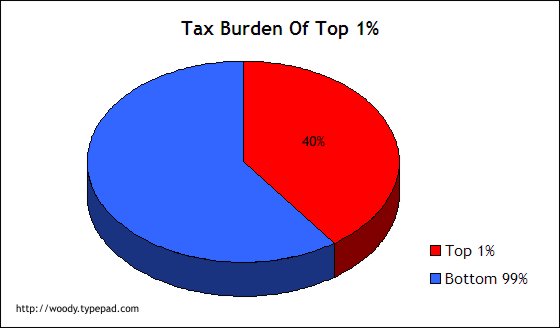
Maybe it should be more. But it is far from "unfair." That 99%, however...

The interminable and depressing negotiations over raising the debt limit have recently featured unseemly demagoguery from the President about making “millionaires and billionaires” pay their “fair share” in taxes. I have no ideological objection to raising tax rates on the richest Americans and even Americans like me; after all, as Willy Sutton pointed out when explaining why he robbed banks, “that’s where the money is,” and we have to pay our bills somehow. The fairness argument, however, is dishonest, and blatantly unfair.

It is unfair because the richest 1% of Americans pay close to 40% of the total tax revenue. Now, that 1% also have a lot of money, but they use a lot of that money to run businesses, create new products and services and hire employees. Maybe they should pay even more, and maybe they get too many tax breaks. To say that paying 40% of the total tax revenue is something to be ashamed of, however, is dishonest. Continue reading