Schadenfreude, Ethics, and Those Fanatics Inside Us All

NBC baseball blogger Craig Calcaterra recently raised the sensitive issue of sports fan Schadenfreude*, something that I have been afflicted with from time to time. The occasion was the recent injury to San Francisco Giants catcher Buster Posey in a particularly gruesome collision at home plate. His comments made me think about the obsessed and narrow personas in all of us, and how we should regard their occasional callousness.

Posey was the 2010 National League Rookie of the Year; he is also a cornerstone of the Giants’ recent success: the team is the reigning Major League Baseball World Champion. The collision with Florida Marlins’ Scott Cousins simultaneously broke Posey’s leg, ended his season, jeopardized the career of an exciting young player (players often return from such injuries permanently diminished) and dealt a serious blow to the Giants’ chances of returning to the World Series in 2011.  Reacting to a blogger who suggested that the injury caused most non-Giants fans to  give “a little fist-pump”… because “their team’s chances of dethroning the Giants as World Series champions just got a little bit better,” Calcaterra wrote… Continue reading

Gov. Mitch Daniels’ Self-Validating Decision

"My wife, may she always be right, but my wife right or wrong!"

“Simply put, I find myself caught between two duties. I love my country; I love my family more.”

Thus did Indiana Governor Mitch Daniels remove himself from consideration for the 2012 GOP presidential nomination, breaking the hearts of Mitt Romney haters everywhere. Seldom have eighteen words launched so much ethical analysis, or what passes for it in the media.

Washington Post columnist Ruth Marcus, for example, applauded the Governor’s priorities while accusing Daniels of “throwing his wife under the bus.” Her point was that Daniels did not have to make it so crystal clear that his wife vetoed his own desire to run, that he should have simply said that he declined, and leave it at that. Indeed, that would have been chivalrous and kind. For a public servant and politician, however, it would also have been dishonest and wrong. Just as the public needs to know why a public figure is running for president (Gingrich: Because he’s deluded….Trump: Because its good for his TV ratings…), it needs to know why a public figure is not. Continue reading

Murder House Ethics and the Validity of Feelings

We last visited the issue of the ethical selling of murder houses in February, when  the Jon Benet Ramsey house went on sale. I opined that even though Colorado doesn’t have a legal requirement that a seller must reveal the history of the house as long as it has no structural implications, there is an ethical obligation to let prospective buyers know about house-related events that might cause them to reconsider their decision to buy it:

“The truth is still this: there is something about the $2,300,000 house that makes it undesirable to a lot of prospects, and that means that even if the law doesn’t require the seller to tell interested house-hunters the story of the little dead girl in the basement, fairness and the Golden Rule do.”

The debate over this issue was unexpectedly intense. Ethics Alarms’ resident rational humanist “tgt” objected strenuously, writing,

“I don’t see how you can avoid the slippery slope question. Your basis is 50% of the population having a desire. Is that the cutoff? I think over 50% of people would prefer to live in a house where there hasn’t been child abuse. Go back a few years, and I bet a significant portion of the population would prefer to live in a house that had never had black occupants. Back in today’s world, more than 50% of the population doesn’t want to live in a haunted house. If a previous tenant thought the house was haunted, does the complete nonexistence of ghosts make not mentioning this a material representation? If an event is uncommon, does a realtor need to take a poll before deciding what is material and what isn’t?”

Karl Penny, however, bolstered my position:

“…the question is, does the realtor have an ethical obligation to fully reveal the history of this house. Well, the funny thing about behaving ethically is, it often requires us to act in ways that are not in our own immediate best interest… this may give a potential buyer a leverage point to negotiate a lower price for the house, to the detriment of the realtor, who could end up taking a lower commission as a result. No surprise, then, that the realtor would love to find a reason not to opt for full disclosure. But, if that realtor successfully conceals the house’s history from an actual buyer, one who would not have bought had they known otherwise? The realtor had a simple, human duty to disclose, even if it cost him money (and, yes, even if it cost me money, were I the realtor)….Jack’s right: this is Golden Rule time. If I am willing to treat with someone else in a way that I would not want anyone to treat with me, is that logically consistent (much less ethically consistent)? And would any of us want to live in the resulting society should everyone behave in that fashion?”

Now another house with a Hitchcock-worthy past is on the market: 9337 Columbia Boulevard in Silver Spring, Maryland, a state that also doesn’t require its realtors to disclose when a house has been the scene of a murder…or, in this case, three murders in the last decade. Continue reading

No Excuses and No Mercy For Lance Armstrong

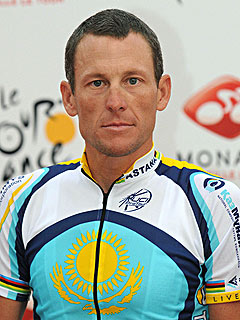
Sorry, Lance…good guys don’t cheat.

Back when Barry Bonds was still playing baseball, a sportswriter mused about why it was that everyone assumed  Bonds was a performance-enhancing drug cheater despite his protestations to the contrary, while most Americans and sports journalists brushed away similar allegations regarding Lance Armstrong. Both competed in sports with acknowledged steroid abuse problems; indeed, the problem in bicycle racing was presumed to be more pervasive than in baseball. (A few years later, with the banning of multiple Tour winners, the presumption became a certainty.) Both athletes had improbable late career improvements in their performance to reach previously unimaginable dominance in their respective sports. Both had to explain or deflect multiple credible accusations of cheating and circumstantial evidence that suggested that they were doping. Both claimed they had never failed drug tests, and there were good reasons to doubt the denials.

So why was Bonds a villain by consensus and Lance an untouchable hero? The sportswriter explored many theories (Apologies: I cannot locate the article. If someone can, please send it), among them the greater popularity of baseball over cycling, Bond’s startling physical transformation into a behemoth while Armstrong remained cyclist-sinewy,  Armstrong’s inspiring story as a cancer survivor, Armstrong’s philanthropic work,and the fact that Bonds, unlike Armstrong, was black. The biggest difference, however, and to the writer the key one, was that Armstrong acted the role of a hero, while Bonds refused to. Armstrong was friendly and accommodating, while Bonds was angry, intimidating and antagonistic. Armstrong seemed like someone who played by the rules, and who lived his ethical values. Bonds seemed like a rebel, one who wouldn’t hesitate to break the rules for his own benefit. In short, the public wanted Armstrong to be the hero he seemed to be, so they ignored the evidence linking him to performance-enhancing drugs.

After last Sunday, the disparate public perception of Bonds and Armstrong, always illogical, became unsustainable. Continue reading

Unethical Website of the Month: Cromwell and Goodwin

These lawyers do not exist.

Cromwell and Goodwin’s new website is a mystery. Nobody knows why it exists, or who created it. It appears to be the website of a law firm, if a somewhat language-challenged one. The problem: the law firm doesn’t exist. Its history is imaginary. Its partners do not exist. Its headquarters in New York at 221 E 18th St # 1 New York, NY 10003-3620 are vacant.

The firm, or whatever it is, claims to be 30 years old but only got around to launching  a website on March 19 of this year. A press release on a free publicity distribution service called PRLog.org about Cromwell & Goodwin’s involvement in an upcoming conference  regarding telecommunications consolidation projects in emerging markets also surfaced, for no discernible reason. The release referred to Joachim Fleury, a London-based Clifford Chance  partner, as “Global Head of Cromwell & Goodwin.”  Yet neither Clifford Chance, one of the largest law firms in the world, nor Fleury, who is real, knew anything about Cromwell & Goodwin when they were queried by reporters. Continue reading

The Attack of the Grievance Bullies Continues…on “Napoleon Dynamite”???

So...I guess "Tropic Thunder" is out of the question, right?

A bulletin from the Austin (Texas) Parks Foundation:

“The Austin Parks Foundation is canceling tonight’s (Wed, 5/25) showing of Napoleon Dynamite at Republic Square. A new movie will be shown next month. A number of people contacted us objecting to a word used by actors in the movie. We didn’t recall that this word was used and we did not mean to offend anyone. Our apologies for this as well as for the last minute cancellation.”

The PG movie, you see, about a maladroit teen, upset advocates and defenders of the mentally challenged, or whatever code words are deemed politically correct these days–I haven’t checked my “Offense-O-Meter” in the last couple days—because one of the characters uses the word “retarded” exactly once…not to describe someone who is actually laboring with a disability, mind you, but to insult his friend, as teenagers are wont to due, and as they were especially wont to do in the Eighties, when “retarded” was used the way my generation used “spaz.” In other words, there was no justification whatsoever for either the complaint or the movie’s cancellation. Continue reading

From Hero to Idol: Congratulations, Scotty McCreery!

Way back in March, long before the 2011 edition of American Idol had winnowed its hopeful singers down to the final thirteen, 17-year-old Scotty McCreery earned an Ethics Hero here by bravely taking responsibility for the mistreatment of another contestant in the group segment of the audition process at a time when the judges seemed to be in the mood to make someone pay for it. The incident has been forgotten, but it showed Scott to be a young man of unusual integrity and courage. Little did Ethics Alarms realize  that he was also the singer to beat, and nobody beat him. Last night, he was crowned the American Idol.

Fame and fortune changes people, as we all know, and too often for the worse. Still, McCreery’s prospects of holding on to his core values look strong, because his character looks strong, and everyone, whether or not they follow American Idol and whether or not they groove to Scotty’s milieu, Country-Western music, should applaud the entry of a talented and ethical young man into the popular culture.

Congratulations, Scotty. In March we knew you were good; we didn’t know you were this good.

Ethics Hero: Barry Bonds

I never thought it could happen.

The four words above rank near the top of my list of “Things I Will Never Think, Feel, or Write,” somewhere between “I love the New York Yankees” and “I’m skipping the ethics seminar because I don’t want to miss the finale of “Dancing With The Stars.”

Former San Francisco Giants slugger Barry Bonds has arranged to pay the college tuition for the children of Bryan Stow, the San Francisco Giants fan who was beaten into a coma outside Dodger Stadium on Opening Day. Both of his children are currently in grade school. By the time they are ready for college, it is estimated that the average tuition will be only slightly less than the national debt.

Barry can afford it, of course, but that is irrelevant. There is no way to spin this into anything but a profoundly kind and generous act of compassion toward a stranger. Bonds did not announce the pledge, or send out a press release. It was not an effort to bolster his public image in the wake of his recent conviction for misleading a federal grand jury regarding his use of steroids. He was not trying to change anyone’s opinion of his baseball controversies, and it is unlikely to. Bonds was just doing something extraordinarily generous, for a man and a family who have been struck by a terrible and senseless tragedy. Stow family attorney Thomas Girardi revealed yesterday that Bonds made the pledge to Stow’s son and daughter after visiting the family in the hospital on April 22. Bonds has said nothing about it.

I have been very critical of Barry Bonds’ conduct for many years, and there is much to criticize. None of that should reduce the praise and admiration due to him for this extraordinary act. Barry Bonds is an Ethics Hero. That’s all there is to it.

What happened on “Dancing With The Stars” last night?

Is Corporate Philanthropy Unethical? No, But It’s Important to Ask the Question

I gather not very many readers sample the links on Ethics Alarms, which is a shame. They contain a lot of different approaches to ethical issues, from many philosophical approaches. Well, heck…I use them , which is really what they are here for. One of the more original thinkers represented among the various sites is Jason Christopher Cockrell, author of The Worst-Case Scenario. It appears that he has abandoned blogging, which is a shame, but his last post, at the end of 2010, was full of surprises. In it, he offered an argument against corporate charity, something I have never heard anyone criticize on any level, except to say that there isn’t enough of it.

The theory behind corporate philanthropy is that it is a win-win for everyone involved. The corporation enhances its public reputation and visibility, improving employee moral and making investors proud to hold stock. Society benefits from substantial contributions that support everything from cancer research to Sesame Street to regional theater. It is hard to imagine what the charitable landscape would look like without corporate philanthropy, but the thought of eliminating it is sufficient to give any professional fundraiser hives. I know—both I and my wife were development officers for many years. Continue reading

Oxymoron Alert: “Ethical Cheating”

What will they think of next?

From Arthur M. Harkins, Associate Professor based in the Department of Organizational Leadership, Policy, and Development, University of Minnesota, and George Kubik, comes a scholarly paper that will have students cheering. Here is the abstract…you can buy the paper here.  Personally, I can tell where this is going, and I can think of more productive ways to spend my money.

Here is the abstract…a good workout for those of you who like to spot euphemisms, buzz words, and looming rationalizations:

Title:    “Ethical” cheating in formal education Continue reading