Is “Double-Dipping” Unethical? How?

"Throw one scoop away, you greedy, unethical bastard!"

“Throw one scoop away, you greedy, unethical bastard!”

Over at Trust Across America, Barbara Kimmel has painted a scarlet “U” on the interim superintendent of the Mahwah School District, who has a $167,000 contract as well as an $131,000 annual pension. She finds the woman’s justification for her extravagant enrichment at taxpayer expense through the practice of “double-dipping,” unethical, and is rankled by the woman’s justification, when she says, “I think it’s the way the system is set up. Greater people than me made that decision, I took advantage of it. ”  This is the epitome of unethical reasoning, Kimmel writes:

“As the Commander in Chief of a school district you are responsible for the “culture of the corporation.” Just remember what you said the next time a student shows up in your office and uses the excuse that “everyone else was doing it,” or when one of your faculty members chooses to use all their days off, leaving a classroom full of kids with no teacher.  After all, it’s the way the system is set up. And the NJ taxpayers- apparently they don’t factor in to your ethical barometer at all. You just “took advantage of it (them).”

The executive director of Trust Across America also finds this to be the perfect example of conduct that is legal but not ethical. Is it? I’m dubious, and I’m not comfortable condemning the interim superintendent’s conduct or even her words, though she could have stated her situation a bit less smugly.

Exactly what is unethical here? Is it… Continue reading

The Colin Kaepernick Tattoo Controversy: “Ick,” Not Ethics

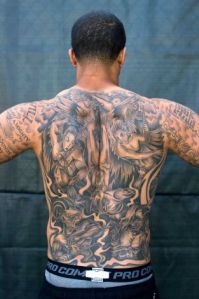
How can he pass with a back that looks like that?

How can he pass with a back that looks like that?

The new star San Francisco 49ers quarterback Colin Kaepernick is tattooed all over. Does this mean that he is unqualified to be a leader, a role model, an ethical exemplar, as NFL quarterbacks are supposed to be? The Sporting News’ columnist David Whitley argued in a column that indeed Kaepernick’s tattoos do mean that, and as you would expect, the number of coherent points he could mount in support of that position equaled exactly zero. He did, however, give everyone a terrific example of how people who don’t comprehend ethics make what they think are ethical arguments.

His column is about ethics, because ethics is central to leadership. Whitley believes that Kaepernick’s tattoos undermine his ability to lead by compromising the values he represents to those who must follow him. And those values that tattoos undermine are??? Well, Whitely doesn’t really explain that. He says that tattoos on a quarterback send the wrong message because prisoners get tattoos in the Big House. This is a man who is hostage to cognitive dissonance. Presumably if Stephen Hawking or Barack Obama showed a tat, he’d be fine with Kaepernick’s decorations. When I was kid, it wasn’t prisoners but sailors who we identified with tattoos. I knew a Pearl Harbor survivor with a big one—this neither convinced me that he was a rotter instead of a hero or made me want to get a giant anchor needled into my arm. Popeye had a tattoo, and we all loved Popeye. He also ate spinach. We didn’t. Continue reading

Lance Armstrong As The Status Quo: An Unethical Essay From An Ethics Expert

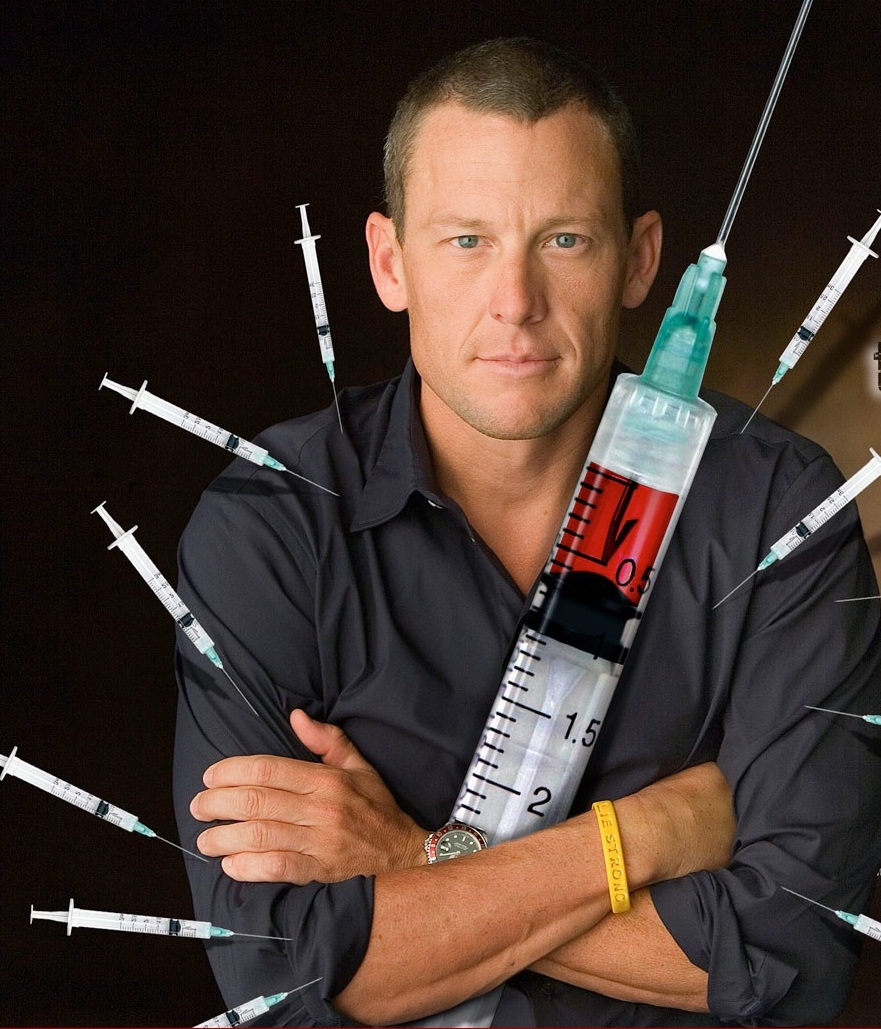
Don’t worry, Lance. Braden Allenby understands you. You were just ahead of your time, that’s all.

There are many things to learn from Prof. Braden Allenby’s Washington Post essay, “Lance Armstrong’s fall: A case for allowing performance enhancement,” none of which have anything to do with Lance Armstrong. Among the lessons:

  • “Everybody does it “really is the most seductive and sinister rationalization for unethical conduct.
  • Someone really shouldn’t write about sports ethics when they know nothing about sports.
  • If you only understand an author’s bias after reading the short biographical sketch at the end of the article, then he wasn’t responsibly correcting for his bias in his article.
  • When someone uses the worst of all rationalizations, the deplorable, “It’s not the worst thing,” neither their judgment nor their argument can be trusted.
  • Some ethics experts have appalling judgment in regarding ethics.

Allenby’s essay takes the position that all sports should allow athletes to take whatever performance enhancing drugs that become available, beginning with the tragedy of Lance Armstrong’s final disgrace as a cheater and corrupter of his sport. Seldom do you see an argument clothesline itself so quickly: here is Allenby’s opening sally:

“In the past month, cyclist Lance Armstrong has been stripped of his seven Tour de France titles. His commercial sponsors, including Nike, have fled. He has resigned as chairman of Livestrong, the anti-cancer charity he founded. Why? Because the U.S. Anti-Doping Agency and the International Cycling Union say he artificially enhanced his performance in ways not approved by his sport and helped others on his team do the same. This may seem like justice, but that’s an illusion. Whether Armstrong cheated is not the core consideration. Rather, his case shows that enhancement is here to stay. If everyone’s enhancing, it’s a reality that we should embrace.” Continue reading

The Ryan Soup Kitchen Photo: Everybody Does It, But It’s Still Unethical

In the early 1960s, as the Great Leap Forward led China into political, social and economic disasters, the opposition to Mao Zedong’s leadership grew; Chairman Mao’s reaction was to purge the party leadership of intellectuals and officials in what is now termed, “the Great Proletarian Cultural Revolution.”

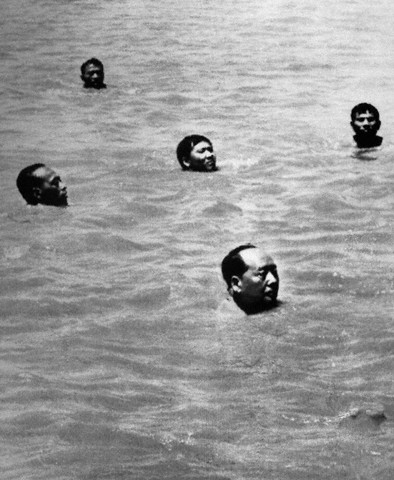
Mao Zedong’s hold on the leadership of China was shaky as he passed 70; even slaughtering more of his enemies and rivals wasn’t working. On July 16th 1966, Mao sought to debunk rumors that he was frail and ill by staging photographs of him vigorously swimming in the Yangtze River.  It was called, “The Swim Seen Round the World.” The Chinese press did its job, describing Mao’s cheeks as “glowing” and “ruddy,” his stroke steady and strong. “Our respected and beloved leader Chairman Mao is in such wonderful health!” one press report enthused.

In the West, however, there was more skepticism. Time reported that Mao swam “nearly 15 km in 65 minutes that day–a world-record pace, if true.” The photos of the swim, which showed an oddly solemn group of floating heads, were widely believed to have been doctored. As it turned out, the photos were real; Mao really did take a swim, though the event was staged, and nobody knows how long the swim lasted or how far Mao paddled. What are such photo ops? Are they deceptive? Are they ethical? Continue reading

Writers Writing About Ethics, Without Any

Sorry, can’t use you.

Writer Joe Konrath has written one of those blog posts about ethics that makes me want to defenestrate myself, a post that expounds on rationalizations as a substitute for ethical analysis because he is incapable of the latter, arriving at fatuous and misleading conclusions. Naturally his post was picked up and expounded upon by another blogger, Ben Galley, who has even launched an ethics-challenged website called Ethiks to promote similar ethics rot.

Both writers are holding forth about recent scandals in the publishing world, involving so-called “sock puppetry,” where a writer anonymously praises his own books on-line or trashes the work of competitors, and writers paying for positive reviews. Both are also laboring under juvenile ethical delusions, and obnoxiously so, among them:  that “everybody does it” is a valid excuse for cheating, that the fact that a critic of unethical behavior might engage in such behavior himself under certain conditions invalidates the ethical criticism, and that unethical people insisting that unethical conduct isn’t puts such conduct in a “grey area.” None of these is true; none of these is remotely true.

The ethically-clueless tenor of both posts can be gleaned from this section, by Galley:

“Ethics in life are a grey area. No less in the book industry. To borrow JA’s analogy, the claim of “I would never kill” goes out of the window pretty quickly when protecting your family against a murderous intruder. The line of ethics is never a straight one, often zig-zagging through a charcoal no-man’s land of right and wrong. The question is this: Where does the line lie for you? It’s nothing less than personal. Some people simply shrug at the thought of sock-puppetry. Others go a shade of red and grit their teeth. Sadly, we can write all the codes and edicts we like, the point is that not everyone will a) agree, nor b) abide.”

Let me see: wrong, wrong, irrelevant, wrong, not necessarily, no it isn’t, NO, it REALLY ISN’T, and so what?

Most ethical questions are not gray at all: these definitely aren’t. They are clear as clear can be. “Sock puppetry” is dishonest and unfair. An author paying for positive reviews, and a critic accepting payment from an author to review his work, is blatantly dishonest and a conflict of interest. There is no “gray” about it; they are just wrong. Anyone who draws the “line” anywhere else is wrong too. It doesn’t matter whether everyone agrees: those who don’t agree are unethical. So are those who can’t “abide.” Their unethical conduct doesn’t alter right and wrong.

Konrath’s piece wastes our time with a long argument claiming that unless one is as pure as the driven snow, not only can’t you call unethical conduct what it is,  the fact that you can’t calls into question whether the unethical conduct is really unethical at all. Here’s his “quiz,” which Konrath presents triumphantly as if it is a real brain-buster, when anyone with a modicum of honesty, decency and common sense should be able to score 100% without straining a neuron.

Here it is, with my answers in bold: Continue reading

The Ethics Corrupter-In-Chief

I wanted to stay far, far away from commenting on the Democratic National Convention in Charlotte, because I knew that the double standard of media scrutiny of the deceit and dishonesty there ( in contrast to the media’s adversary stance during the Republican convention) would drive me to drink if I thought about it long enough to write coherently. And so I shall stay away, except for this one infuriating topic, which is broader and more significant than the convention itself.

No political party that cares sufficiently about the ethical values of integrity and honesty, as well as responsible leadership, would feature Bill Clinton as its “rock star” speaker. That the Democrats did, and that the media and the public generally gave them a pass for doing so, confirms that Clinton’s corrupting influence on the American culture continues. Recent polls indicate that he is the most popular political figure in the country today, and Democrats will no doubt cite that as justification for inviting him to speak. To the contrary, it shows the damage that he has done to the values of the nation, and how wrong the Democratic party has been to aid and abet that damage.

Bill gave a good speech, as he usually does. There is no way to know how much of it he believes or meant, for Clinton is a recreational liar: he likes lying. He’s good at it, and he does it at every opportunity. In 2008, on The Ethics Scoreboard, the slower and more formal predecessor to this blog, I made Clinton the first (and as it turned out, sole) admittee to the David Manning Liar of the Month Hall of Fame, writing in part that… Continue reading

Bob Nightengale’s Rationalization Orgy

“OK, he got caught, but it doesn’t mean he isn’t still the BEST at Rubik’s Cube…”

I was interviewed on a radio news show early this morning, and one of the questions I was asked was whether what the host called “the decline of ethics in the country” could be reversed. I’m not convinced there has been such a decline, but if there is, it sure doesn’t help to have so many  journalists with big microphones displaying infantile analysis of ethics-related issues on a regular basis.

Today’s case was USA Today sportswriter Bob Nightengale, who took the occasion of the annual induction of new members into baseball’s Hall of Fame in Cooperstown this weekend to trot out nearly every rationalization and ethical invalid argument imaginable to explain why he would be voting for all the proven or suspected steroid cheats  for the Hall when their time comes:

“There, I said it. I will vote for Bonds. And Clemens. And Sosa. And Piazza. I’ll think about Bagwell. And will continue voting for Rafael Palmeiro, who tested positive in his final season when he reached 3,000 hits.”

And then come the rationalizations:

  • “Hey, it’s OK to admit racists, criminals, drunks and recreational drug abusers, but let’s not tarnish the sacredness of the Hall of Fame.” This is essentially a “there are worse things” argument with an overlay of ignorance and stupidity. This is a baseball Hall of Fame with very clear character requirements: “Voting shall be based upon the player’s record, playing ability, integrity, sportsmanship, character, and contributions to the team(s) on which the player played.” No other sports Hall of Fame has such standards: just wait for the fight over admitting Joe Paterno into the College Football Hall of Fame (O.J. is a member in good standing.). Continue reading

Boooo!

When we can’t even figure out what ethical conduct is, it’s hopeless.

Mitt Romney’s appearance before the NAACP this week gives us a classic and depressing example of how the collision of confirmation bias, an unprofessional news media, impenetrable partisanship and political cynicism not only obscure the truth, but make it literally—and I mean literally literally, not as Joe Biden uses the term, which is to mean figuratively—impossible.

Consider:

  • The media, in almost every case, highlighted the fact that Mitt Romney was booed by the NAACP audience when he swore to abolish “Obamacare.” Did you know that at one point in his speech, when Romney mentioned defending traditional—as in same sex—marriage, the audience applauded, and some stood? If you do, you only found out by digging into so-called “conservative media sources.” Why isn’t this more of a story than the booing? Why wasn’t at least part of the story? Isn’t that useful information? Why does the media want to show nothing but enmity between African-Americans and the Republican nominee? Why wouldn’t the fact that the audience was listening to the substance of his remarks and responding positively in some cases be significant?
  • The NAACP has criticized prominent Republicans for not accepting it invitations to speak, maintaining the fiction that this wholly owned  subsidiary of the Democratic Party is “bi-partisan,” as its charter falsely claims. Then when one of them accepts such an invitation, these gracious hosts boos him. Booing is bad manners at a baseball game; in this circumstance, it is infinitely worse. If Romney had advocated a return to Jim Crow or used a racial epithet, then maybe booing would be justified. He did not. He merely stated a policy position, repealing the Affordable Care Act, that audience members did not like. They boo him, and this indignity becomes the story, thanks to the media’s tunnel vision. Why would any Republican accept such an invitation? The NAACP has proved itself to be an unethical and abusive host. Continue reading

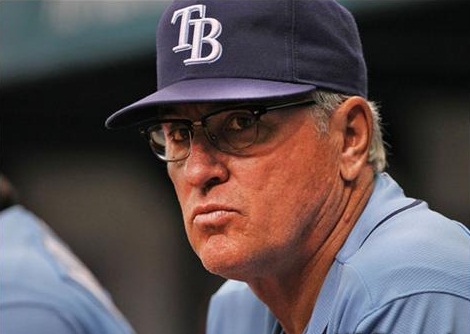
When Your Genius Is A Dunce: The Depressing Self-Outing of Rays’ Manager Joe Madden

I trusted you, Joe. You broke my heart..

Organizations and institutions tell us a lot about themselves by the individuals they hold up as exemplary. To cite an example much on my mind these days, the conservative blogosphere’s canonization of the late Andrew Breitbart, master of the intentional half-truth, makes me dubious about its reliability and integrity. On  the other side of the spectrum, the fact that so many Democrats, and especially Democratic women, worship Bill Clinton reflects horribly on their values and tolerance for hypocrisy. Now, in the wake of Roger Clemens’ well-deserved acquittal for denying under oath acts that he almost certainly did, we have strong confirmation that a prominent individual Major League Baseball holds up as exemplifying, in the immortal and irritatingly pretentious words of “Terence Mann” about that corn field in Iowa, “all that once was good and it could be again”* is in truth an Ethics Dunce, and a big one at that. His name is Joe Madden, the American League’s 2011 Manager of the Year, and I am disappointed and depressed. (Yes, I have named Joe an Ethics Hero in the past.) Continue reading

Recipe Rationalizations

Go ahead: tell him that recipes are trivial.

The Elizabeth Warren recipe plagiarism is turning into a fascinating study of whether objectivity and fairness can survive partisanship. So far, the results are depressing.

There is increasingly persuasive evidence that the recipes contributed by “Elizabeth Warren, Cherokee” to the cookbook “Pow Wow Chow” were not Native American recipes passed down over generations as Warren represented them, and that she 1) knew this and 2) intentionally misrepresented and disguised their origins while lifting them, barely altered, from other published sources. Faced with this, Warren supporters are falling back on classic rationalizations rather than accepting, reluctantly, the obvious import of the data: their candidate is an untrustworthy faker.

Howie Carr, the Boston radio talk-show host who initially uncovered the plagiarism in “Pow Wow Chow,” reveals more details of one of Warren’s apparent thefts in today’s Boston Herald. For her version of the recipe for “Herbed Tomatoes” that she lifted from the September 1959 edition of Better Homes and Gardens, Warren made a few strategic changes, Carr reports.  She cut one the “one-half teaspoon monosodium glutamate” from the ingredients ( “Apparently MSG was not available at the Muskogee Stop & Shop in 1856,” writes Carr) and also eliminated the option of using margarine rather than butter, since “I Can’t Believe It’s Not Buffalo Grease” was not on the shelves of her elusive Cherokee ancestors. This indicates an intent to deceive by Warren, in addition to her plagiarism.

Central to the defenses offered for Warren by Democrats are the following classic rationalizations: Continue reading