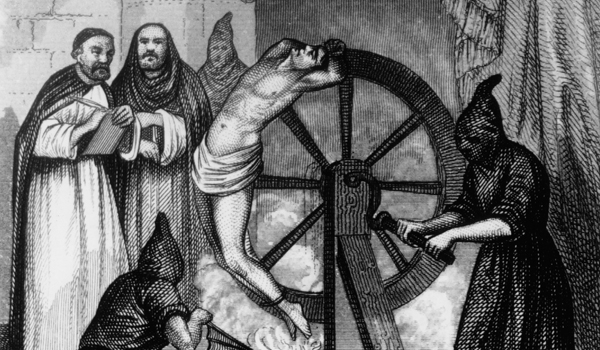
As I explained long ago, torture is already a human rights abomination forbidden by U.S. principles, values, tradition and culture. That does not mean, and has never meant, that the nation’s official and sincere opposition to torture as an ethical absolute must not be subject to a genuine existential exception. It does mean that an official policy that allows torture degrades the very reason for the nation’s existence.
This vital reason doesn’t even reach the fact that the United States has signed international treaties that state, unequivocally, that it deplores and rejects torture. That one is less complex; as I wrote about the Bush Administration’s doubletalk at the time…
Typically, the Administration is trying to finesse this uncomfortable fact by playing legalistic word games, requesting a “clarification” of what constitutes torture. This is intellectually dishonest, and blatantly so. The methods it wants to define as “something other than torture”…threatened drowning, cold room interrogations with subjects doused with water, beatings and other forms of assault and battery, obviously violate provisions of the Geneva Convention such as those requiring prisoners of war to be treated with “personal dignity” and “humanely,” and that they should not be subjected to “hardships and sufferings.” Meanwhile, torture is defined in Article 1 of the 1984 Convention as “any act by which severe pain or suffering, whether physical or mental, is intentionally inflicted on a person for such purposes as obtaining from him or a third person information or a confession.” Simulated drowning, by this definition, is torture, and passing some official “clarification” that declares otherwise won’t change that. Depriving prisoners of sleep and making them stand wet in 50 degree temperatures aren’t going to suddenly become “humane” either, nor will such treatment suddenly cease to cause “hardship” and “suffering.”
The United States exists on the ideal that it, unique among nations past and present, asserts and acts upon its original dedication to the values of human life, liberty and pursuit of happiness above all else. The United States’ identity is that of the Good Citizen, the hero, the trustworthy one. Of course that’s a high aspiration; of course we will fall short of it sometimes, of course such an aspiration appears arrogant and superior to others, and so what? Continue reading
 Ethics Alarms