Anderson Cooper vs. “Human Barbie”: A Double-cross Masquerading As Integrity

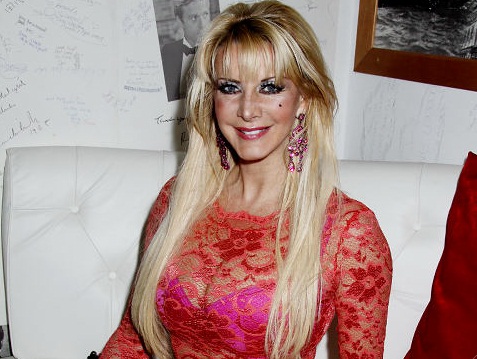
Sarah Burge, a.k.a “Human Barbie,” who actually contains more plastic than Plastic Barbie, who, come to think of it,  is quite possibly a better human being than “Human Barbie.” It’s complicated.

One of the wonderful things about the Internet is that somewhere out there is always someone who has seen through the fog of lies, spin, misrepresentations and conventional wisdom, and is writing about it. The first trick, of course, is finding such individuals, who may be part of the spin and confusion the very next day. The next one is getting the truth to as many people as possible.

When I heard that Anderson Cooper had kicked the plastic-surgery mutant named Sarah Burge off his show on the air, I was ready to give him an Ethics Hero award. Not only has Burge, who is known as “Human Barbie”, * indulged her pathological obsession with plastic surgery to spend almost a half-million dollars making herself look like the iconic Mattel doll, she is trying to make sure her daughters are similarly afflicted. She told Cooper she wants to botox her 15-year-old daughter, and she is setting up a trust for her 7-year-old so she can start mutilating herself when she turns 18.

Suddenly Cooper stopped the interview, saying, “I gotta be honest, I gotta just stop. I’m sorry. I try to be really polite to all my guests, but I just think you’re dreadful. I honestly don’t want to talk to you anymore.” Continue reading
Dear Alabama Farmers: Am I Sorry That You Are Inconvenienced By Enforcing The Law And No Longer Have Sufficient Illegal Immigrants To Exploit? No.

It continues to boggle my fairly unbogglable mind to see how many illegal immigration apologists and open-border advocates regard these kinds of stories as support for not enforcing immigration laws.

This is from a news item by Jay Reeves of  the Associated Press:

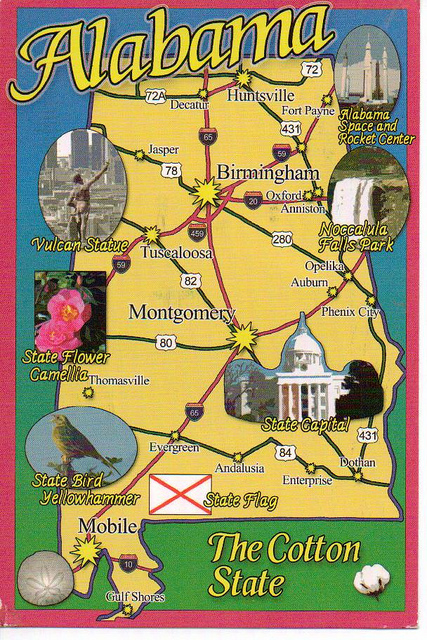
“Some Alabama farmers say they are planting less produce rather than risk having crops rot in the fields a second straight year because of labor shortages linked to the state’s crackdown on illegal immigration. Farmers interviewed by The Associated Press say they had no choice but to reduce acreage. They fear there won’t be enough workers to pick crops at harvest time. The crops are often picked by Hispanic migrants, both legal and illegal….” Continue reading

When A Corporation Trusts Too Much: The Saga of the Unlimited AAirpass

If you sell this guy a ticket to your all-you-can-eat buffet and he eats the table, is he at fault, or are you?

A strange subplot of the American Airlines bankruptcy is the saga of its unlimited AAirpass, a special deal offered by the airline in 1981. The company sold passes for a lifetime of free and unlimited First Class travel with no limitations at a price of $250,000. An additional $150,000 permitted AAirpass customers to buy one “companion ticket” that would let one person—anyone— accompany them on any flight, anywhere, again, for life.

Apparently eschewing competent market research—and you wondered why this airline went belly up?—American assumed that the lifetime luxury travel passes would be bought by corporations for their high-flying employees. But no; the purchasers were almost all very rich people with a lot of time on their hands. As designed, American got a quick influx of cash, but at an unacceptable and strangely unanticipated cost: the AAirpasses placed the company at the mercy of  few profligate travelers who exploited American’s carelessness to the edge of absurdity, thereby raising a fascinating ethical question: If someone lets you have the right to ruin them, is it ethical to do it? Continue reading

The Ethics Verdict on the Homeless Hotspot Project

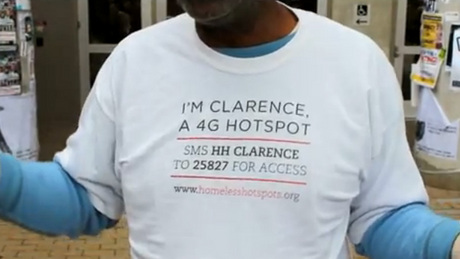
BBH Labs, the innovation unit of the international marketing agency BBH, hired members of the Austin, Texas homeless population to walk around carrying mobile Wi-Fi devices, offering high-speed Internet access in exchange for donations. Thirteen volunteers from a homeless shelter were hooked up to the devices, given business cards and put in shirts with messages that designated them as human connections. “I’m Rudolph, a 4G Hotspot” read the label on the homeless man on the New York Post’s front page with the lead, “HOT BUMS!

The Walking Hotspots—now there’s a new horror series for AMC when they run out of zombies— were told to go to the most densely packed areas of the South by Southwest high-tech festival in Austin, Texas, where the technology trend-devouring conventioners often overwhelm the cellular networks with their smart phones. Attendees were told they could go up to a Homeless Hotspot and log on to his 4G network using the number on his T-shirt. A two-dollar contribution to the homeless man was the suggested payment for 15 minutes of service. BBH Labs paid  the wired-up homeless $20 a day, and they were also able to keep whatever customers donated.

What BBH called its “charitable  experiment” ended yesterday with the conference, and with all participants seemingly thrilled. The “Homeless Hotspot” gimmick got nationwide publicity, thirteen homeless men made some money, and conference participants got great connectivity…so why were so many people upset? Continue reading

Kind and Exploitive: SNL Performs A Rare Ethical Unethical Act

Lindsay Lohan, when everything was possible, and the future was bright.

Tomorrow, Saturday Night Live is bringing back Lindsay Lohan as Guest Host. This a decision that defies ethical analysis. On one hand, it is certain to be a ratings winner, as the curious will tune in to see if Lohan has a meltdown, look prematurely aged by her various addictions, or does or says something that continues her five year-run of self-destructive behavior. Lindsay is almost finished with her court-ordered rehab and community service, but her status in show business could hardly be much lower. She is widely regarded as uninsurable, and a candidate for a relapse at any time. Since the lapsed child star last hosted SNL, she has stood trial for grand theft, been held in contempt of court, been sentenced to jail twice, and made the classic desperation career move of posing nude for Playboy, a last ditch tactic that 1) almost never works, and 2) is usually reserved for fading pop stars and marginal TV actresses in  their thirties, not a 25-year-olds.who should be in her career prime. If there ever was a ratings-motivated “let’s give the people a train wreck to gawk at” call, this was it. Continue reading

Facebook’s Weird Ethical Standards

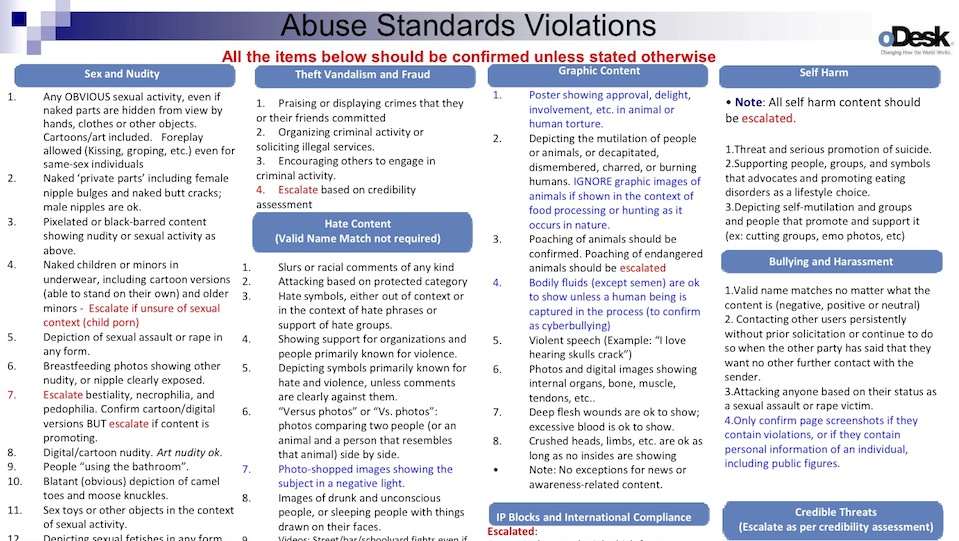
I know, they're too small to read. Never mind; they also don't make any sense

The idea of Gawker, a website that shares the ethical standards of the seamier denizens of “Rick’s” in “Casablanca,” doing a legitimate ethics expose gives me a brain cramp, but the gossip site has given a platform to a Facebook whistleblower, sort of.

I say “sort of,” because knowing Gawker, I wouldn’t be surprised to learn that he was paid to rat out his former employers-once-removed (he was hired by  Facebook’s outsourcing firm that handled his training—oDesk), making him ethically less of a whistleblower than a candidate for Gawker’s editorial board. The argument, I suppose, would be that a dollar an hour, which is what Gawker’s source says was his princely reward for doing Facebook’s dirty work, shouldn’t buy much loyalty and confidentiality, if any. Ethically, that’s false: you are obligated to abide by the terms of bad deals if you voluntarily agree to them. Practically speaking, it is true. A worker a company exploits is likely to harbor more animus than good will, and it isn’t the happy workers who blow whistles. Fine: neither Gawker’s source nor Gawker are ethically admirable. On to Facebook.

The whistleblower is Amine Derkaoui, a 21-year-old Moroccan who was recruited by an outsourcing firm to screen illicit Facebook content. This is what he was paid a dollar an hour for, which, when one considers the news reports flying around recently about how rich Mark Zuckerberg is, and after the company filed its record $100 billion IPO, seems unequivocally exploitive. His real exposé, however, involves what he was paid to do, which was to be Facebook’s censor. Derkaoui supplied Gawker with a bootleg copy of part of Facebook’s abuse standards, which lays out what the company believes is appropriate and what it believes should be banned from the web. Thus it is Facebook’s morality, revealing the ethical standards that the company embraces. Continue reading

Presenting: The Amazing Law Suit Where Everyone Is Unethical!

Twenty-eight-year-old Xuedan “Diana” Wang agreed to be an unpaid intern  at Harper’s Bazaar magazine, in order to build her resume and gain experience in a tough job market.  She worked up to 55 hours per week, and presumably got what she bargained for in exchange for her labor. Now, however, she is seeking full compensation for her time, arguing that the Hearst Corp, which owns Harper’s Bazaar, violated the federal Fair Labor Standards Act by letting her work for nothing. Her lawyers are also seeking class action status for her suit, which could eventually include hundreds of interns.

A high-profile class action suit on this issue is welcome, because for-profit companies using unpaid interns is an almost always unethical practice that is so easily and frequently abused that it needs to be banned. I wrote about this in 2010, when the Huffington Post’s management had the gall to auction off unpaid intern positions for up to $9,000–making interns pay them to be allowed to work for nothing. About the considerably less offensive practice of just having unpaid interns rather than making them pay for the privilege, I wrote… Continue reading

The Tragedy of Monica Lewinsky

At 21, Monica Lewinsky was charmed into an illicit sexual relationship by the President of the United States, a master charmer with a long record of similar dalliances. There are millions of extra-marital affairs in the U.S., but one involving the most powerful man in the country was certain to be at the center of historic media attention. Bill Clinton knew it, and he understood the risks. Monica Lewinsky did not and could not, and it was her life that was thrown tragically, permanently, off its tracks. Continue reading

5 Things PETA Doesn’t Understand About Ethics

Stay classy, PETA.

PETA—People for the Ethical Treatment of Animals— has announced that it is starting a porn website to attract attention to the plight of animals. Over on his Business Ethics Blog, Chris McDonald asks whether this means that PETA has “jumped the shark.” More so than offering Octomom money to put a billboard on her lawn advocating spaying pets so they won’t have litters like hers? More so than complaining that Punxsutawney Phil, the groundhog of Groundhog Day fame, should be replaced by a robot? I don’t think so. Besides, jumping a shark would be cruel to the shark.

The tunnel-visioned organization, well on its way to becoming a joke to the detriment of its abused animal constituency, has registered the domain name peta.xxx and plans to launch a pornography website in December that “draws attention to the plight of animals.” How will it do that, you ask? By using images of naked women performing  sex acts on men to attract viewers, and then making the audience observe graphic videos of animal abuse for the privilege of watching the graphic sex. “We try to use absolutely every outlet to stick up for animals,” says PETA spokesperson Lindsay Rajt, who adds that the organization wouldn’t use its “flashier tactics if we didn’t know they worked.”

Let’s put that right at the top of this list, entitled “5 Things PETA Doesn’t Understand About Ethics.” Continue reading

Ethics Bob Opens An Ethics Can of Worms, All Named “Nike”

Ethics Bob opens an ethics can of worms with his latest post, “Is It Ethical For Nike To Make It’s Shoes $4 a Day?” Among the worms, some older than dirt:

  • If workers agree to work for a given price, is the company’s obligation to pay them more?
  • Should any company pay less than a living wage for full-time work, whether or not desperate workers assent?
  • Is it better for a company to pay fair wages and go out of business because it can’t compete with competitors who pay less, than to keep creating jobs, products and wealth for investors by keeping the business profitable?
  • Is a US company justified in using local standards of fairness when it is doing business in a foreign country, rather than America’s ethical standards?
  • Can a company wash its hands of the arrangements made by its foreign contractors, no matter how unjust or exploitive?
  • Is it not per se unethical for a company like Nike to pay millionaire athletes obscene amounts of money for mere endorsements while it pays only $4 a day to the workers who make their shoes?

You can, and should, read Bob’s post here, and then we can argue about the above questions for the rest of our lives.