Clever! But Wrong: “Hoodies For Hobos”

Homeless advertisng

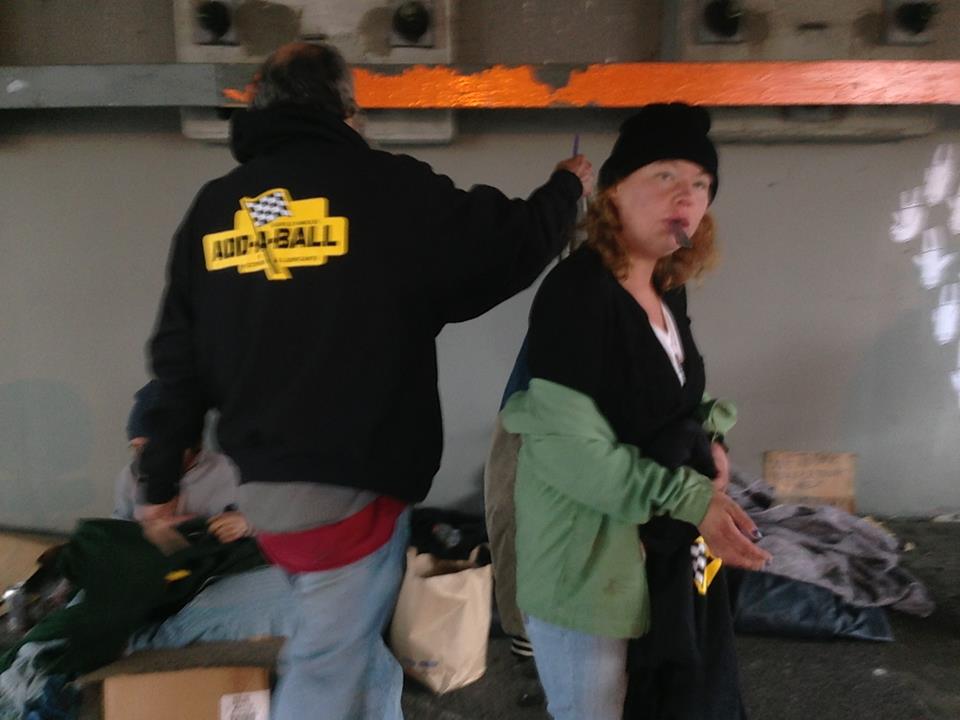
“Team ADD -A-BALL is proud to announce our new outreach program ‘Hoodies for Hobo’s’. All profits from sweatshirt and t-shirt sales go towards outfitting Seattle’s street people with some fresh gear. I will post a pic of every new bum we spruce up. Thanks everyone.”

—-Add-a-Ball owner Brad Johnsen, on his company’s Facebook page.

Yes, Brad, who casually refers to his walking billboards as “bums,” has what he sees as a perfect plan. Profits profits from all  T-shirt and apparel sales at Johnsen’s Seattle arcade will be used to outfit the city’s homeless “with some fresh gear,” all sporting the arcade’s name and logo. Everybody wins! He gets publicity and good will for this—wink, wink—“charity,” the homeless get spiffy new clothes, and he gets really cheap advertising.

So what if he robs the objects of his charity of their dignity, exploits them, and dehumanizes them into the equivalents of car bumpers? Hey, no plan is perfect! To his credit, sort of, Johnsen’s comments don’t exactly leave much room for doubts about his compassion and motives. “If it also encourages people to go play pinball and get drunk—all the better,” he says.

If he was interested in anything other than the cheap publicity…like, say, the welfare of the homeless, Johnsen would hand out clothes without the logo. I’m sure he wouldn’t understand why I say that. Or why paying the “bums’ who choose to wear the ones that advertise his business would be the ethical course, since it would compensate the homeless for their service and give them a sense of self-worth, rather than making them, in effect, unpaid sandwich-board wearers for the privilege of wearing a lousy hoodie.

I wonder how many people see nothing unethical Johnsen’s scheme. I’m a little afraid to find out.

[Addendum (4 PM 4/10/14): I should have mentioned in the original post that Kant would have agreed with me. This is a Categorical Imperative situation, using human beings as a means rather than an end: “Act in such a way that you always treat humanity, whether in your own person or in the person of any other, never simply as a means, but always at the same time as an end.”  The fact that the cynical ploy can be represented as a one that aims at clothing the homeless makes the label a little shaky, and I admit that the “Ick Factor” looms large here.]

________________________________

Pointer:  Drudge

Facts: Vocative


Caring Letter From A Child Star

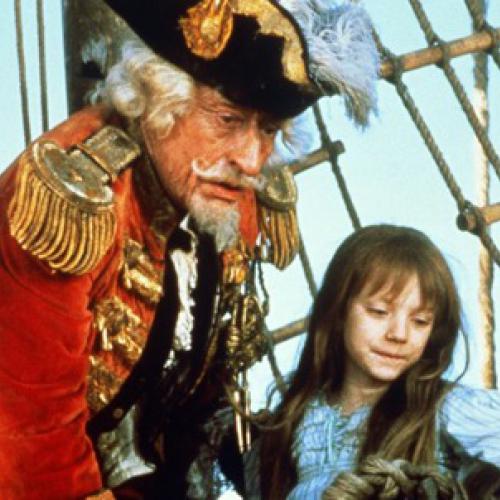
Sarah and the Baron.

Sarah and the Baron.

This remarkable letter is old—2005—but I just became aware of it, and it is an important document in the ongoing problem of the mistreatment of child performers.

I am a fan of film director (and Monty Python member) Terry Gilliam, and a great admirer of Canadian actress/director/political activist Sarah Polley. So naturally I love “The Adventures Baron Munchausen,” Gilliam’s epic fantasy that starred Polley when she was the tender age of 9, and gave one of the most impressive performances of any juvenile actress, ever. In 2005, Gilliam was filming another movie with a young star, and 17 years after working with him, Polley felt obligated to write this letter, which speaks for itself, and eloquently too:

Hi there, Terry.

Continue reading

Gift Horse Ethics: The Babe, The Splendid Splinter, and The Ethics Of Self-Promoting Virtue

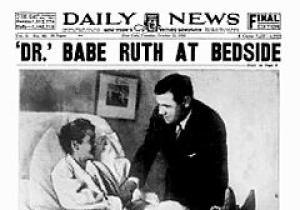
sick child and-babe-jpgBaseball slugger Babe Ruth was famous for visiting hospitals and orphanages to give kids a thrill. Babe always had reporters in too to record his noblesse oblige , of course. He was an orphan himself, and nobody should doubt the Bambino’s genuine dedication and generosity when it came to kids. He just wasn’t going to let his good deeds go unnoticed.

Other baseball greats, notably Ted Williams, made most of his visits without fanfare or publicity, and he didn’t tip off the press. “The Splendid Splinter” wasn’t visiting kids in cancer wards because he wanted his fans to know what a good guy he was. He did it because he wanted to make sick children feel better.

Was the Babe less ethical than Williams? Did his self=promotion take the ethical sheen off of his good deeds? This is the issue raised by the activities  of the  “Magician Prankster” who calls himself “Magic of Rahat” on YouTube and Twitter. He recently posted a video called “Homeless Lottery Winner” showing him playing  a prank on a homeless man, who ends up with $1,000. He is understandably grateful:

Slade Sohmer however, on HyperVocal, is hearing ethics alarms: Continue reading

“Killer Karaoke” And Cultural Corruption

In “Ricky’s Hawaii Vacation.” a famous episode of “I Love Lucy,” the Riotous Redhead was so desperate to win tickets for her neighbors (Fred and Ethel, or course) to accompany her and husband Ricky to Hawaii that she agreed to appear on a sadistic radio quiz show, in which the host, Freddie Freeman—played by the immortal Frank Nelson of Jack Benny skit fame (“Yyyyeeeeeeessssssss???”)—tortured his contestants with various indignities before awarding prizes. This was funny at the time, because it was a wild exaggeration of current TV quiz show programming. It was also funny, as with all slapstick, because the mayhem being inflicted was, the audience knew, part of a comedy skit and not real. A real Freddie using a contestant’s desperation for a prize as an excuse to degrade and humiliate her would have been unacceptably cruel…in the 1950’s.

Now, however, we have True TV’s new reality/game show, “Killer Karaoke.” It is a reality/game/ comedy show of shocking sadistic glee, the result of more than a half century of incremental slippage in standards of decency and public tolerance for cruelty. Take that episode of “I Love Lucy” and take it through a journey that includes stops at “Beat the Clock,” “Truth or Consequences,” “Let’s Make a Deal,” “Scare Tactics,” “Wipe Out,” “Fear Factor,” “Survivor,” the worst of the “let’s watch a human train wreck as desperate ex-celebrities beg for exposure and pay-checks” reality shows, and nightmare futuristic sci-fi movies like “The Hunger Games” and “The Running Man,” and “Killer Karaoke” is what you get.  The show has been hailed by TV critics as “brilliant.” I admit: it is difficult to watch it without laughing. So why are those ethics alarms going off in my head? Continue reading

Comment of the Day: “Jimmy Kimmel, Child Abuse, And Signature Significance”

(I am backed up three deep on the “Comments of the Day,” and I apologize to the deserving and patient commenters.)

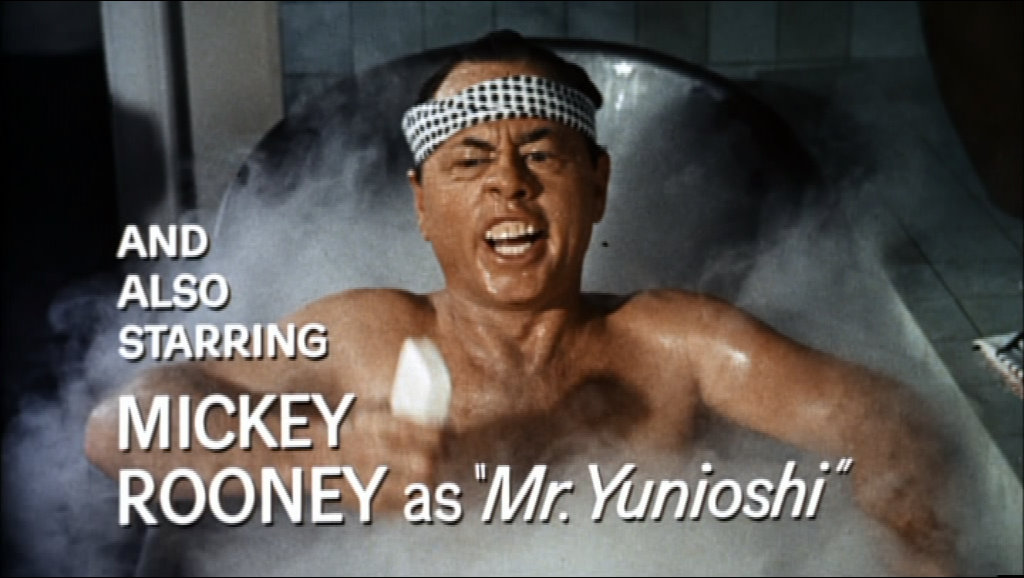
And who can forget Mickey Rooney's hilarious turn in that beloved American film masterpiece "Breakfast at Tiffany's"?

And who can forget Mickey Rooney’s hilarious turn in that beloved American film masterpiece “Breakfast at Tiffany’s”?

Alex Yuan raised an element of the revolting Jimmy Kimmel stunt discussed in my post, an extension of his penchant for using children as uncomprehending props for his often ugly comedy, that I glided right over: Why was showing a child suggesting that wiping out the Chinese was  a viable solution to national problems even considered fit for broadcast, when a similar comment about Jews, gays, Hispanics or blacks would be considered instantly taboo? Why doesn’t the ethics alarm sound when the minority being slurred or threatened is Asian?

Here is his Comment of the Day on the post, Jimmy Kimmel, Child Abuse, And Signature Significance:

It is interesting that you should mention political correctness because I can’t help feeling that in deciding it appropriate to air this segment, ABC – perhaps as a reflection of societal attitudes at large – is illustrating the alleged double standard against Asians when it comes to how topics concerning minorities and other protected classes are handled in public. Continue reading

Jimmy Kimmel, Child Abuse, And Signature Significance

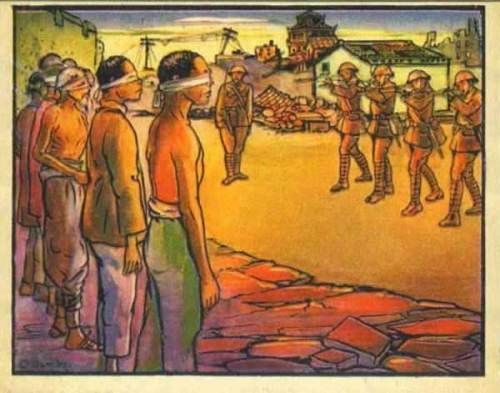
In Jimmy's defense, Japan thought "Kill the Chinese!" was funny too...

In Jimmy’s defense, Japan thought “Kill the Chinese!” was funny too…

What a surprise—Jimmy Kimmel did something despicable involving children.

This time, the smug and unethical-to-his-very-DNA ABC late night host may have also triggered an ethics train wreck. Perhaps at last the network and his tasteless, enabling viewers will finally conclude what has been obvious for years—that Jimmy is a cultural corrupter whose miserable methods and values should be rejected, condemned, and sent packing to an obscure corner of table TV!

Nah.

Kimmel’s latest hilarious stunt aired on Oct. 16, in a segment called “Kids Table,” where Funny Uncle Jimmy asks small children who have no idea what is going on or  that a creepy middle-aged man is luring them into saying things that will haunt them on Youtube until the day they die to comment on issues of the day. This time, Mirthful Machiavellian Jimmy caught comedy gold: when he asked a six-year-old how the U.S. could solve the $1.3 trillion trade imbalance, the giggling answer came back, “Kill everyone in China!”

Nice. Continue reading

Annals Of The Ethics Incompleteness Theorem: The Snuggle House And “The Dress Code Effect”

Awww! Who could object to a little snuggle?

Awww! Who could object to a little snuggle?

Almost any rule, low or ethical principle can be deconstructed using what I call border anomalies. The first time I was aware of it was as a Harvard freshman in the late Sixties, when all assumptions, good and bad, useful and not, were considered inherently suspect. The college required all students to wear jackets and ties to meals at the student union, and up until my first year, nobody objected. But that fall, my classmates set out to crack the dress code, so they showed up for meals with ties, jackets, and no pants, or wearing belts as ties, or barefoot. (Yes, there were a lot of future lawyers in that class.) Pretty soon Harvard gave up, because litigating what constitutes ties, jackets and “proper dress” became ridiculously time-consuming and made the administration look petty and stupid. Of course, there are good reasons for dress codes—they are called respect, dignity, community and civility—-but never mind: the dress code couldn’t stand against those determined to destroy them by sending them down the slippery slope.

If any rules are to survive to assist society in maintaining important behavioral standards, we have to determine how we want to handle the  effects described by  the Ethics Incompleteness Theory, which holds that even the best rules and laws will be inevitably subjected to anomalous situations on their borders, regarding which strict enforcement will result in absurd or unjust results. The conservative approach to this dilemma is to strictly apply the law, rule or principle anyway, and accept the resulting bad result as a price for having consistent standards. The liberal approach is no better: it demands amending  rules to deal with the anomalies, leading to vague rules with no integrity—and even more anomalies. The best solution, in my view, is to regard the anomalies as exceptions, and to handle them fairly, reasonably and justly using basic principles of ethics, not strictly applying  the rule or law alone while leaving it intact. Continue reading

The Strange, Conflicted, Unethical Holiday We Call Columbus Day

"Yes, it seems like a catastrophe now, but some day creatures called human beings will celebrate this day..."

“Yes, it seems like a catastrophe now, but some day creatures called human beings will celebrate this moment…”

What are we celebrating on Columbus Day, and is it ethical to celebrate it?

When I was a child, I was taught that we were celebrating the life of Cristoforo Columbo, popularly known as Columbus, who was convinced, against the prevailing skeptics of the time, that the Earth was round rather than flat, and in the process of proving his thesis, made the United States of America possible by discovering the New World in 1492. Virtually none of what we were taught about Columbus was true,  so what we thought we were celebrating wasn’t really what we were celebrating. Columbus wasn’t alone in believing the world was round: by 1492, most educated people knew the flat Earth theory was dumb. He blundered into discovering the New World, and by introducing Spain into this rich, virgin and vulnerable territory, he subjected millions of people and generations of them to Spain’s destructive and venal approach to exploration, which was, in simple terms, loot without mercy. The Spanish were like locusts to the Americas; South and Central America are still paying the priced today. Surely we aren’t celebrating Columbus’s complicity in that. Continue reading

Disaster Ethics: The D.C. Naval Yard Shooting

Twelve dead? This is great---we can make another push for gun control!!!"

“Twelve dead? This is great—we can make another push for gun control!!!”

About 10 minutes from where I live, unidentified gunmen have killed 12 people (one of the gunmen is also dead) in an unexplained rampage. The facts are still being sorted out, and at least one shooter is still at large as I write this, but already two predictable examples of unethical disaster and crisis response have been on display:

1.  Reflex anti-gun tragedy exploitation

Apparently from now until the Second Amendment is but a distant memory, some Democratic politicians and anti-gun zealots will use every gun-related tragedy as a springboard to lobby for more regulations, and the facts be damned. At this point, we have not been told why the attack took place, who the shooters were, whether it was a terrorist act or not, whether the killers were Americans, whether or not the weapons were obtained illegally and what kind of guns they were. Never mind: interviewed on the radio, D.C. Delegate Eleanor Holmes Norton, Congress’s non-voting member, immediately pointed out that with all the guns that are available in this country, it should be no surprise to anyone that tragedies like this occur. I’m sure she would have liked to have been able to claim that global warming also played a part, except that it is a cool day in Washington. Continue reading

When The Ethics Alarm Fails

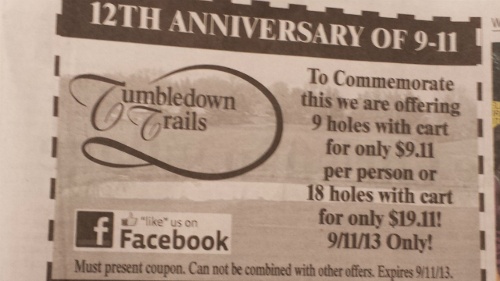
tumbledown-jpg

Or, in the alternative, you’re an idiot.

The owner of a Wisconsin golf course has apologized for using a national disaster and the deaths of nearly 3000 Americans as a commercial promotion. Apparently he has done this before and nobody complained. How is this possible? Isn’t this the very definition of exploitive, crass, and disrespectful? Has the golf course owner grown up with fond memories of November 22 sales and December 7 parades?

How could it be that nobody in his family or circle of friends or the golfers at the course alerted him that such a 9-11 promotion was tone-deaf? If I’m about to do something this stupid and wrong, I expect those around me to let me know before somebody, like me, gets hurt. The owner’s associates failed their obligations too: we need to help each other do the right thing, because everyone’s ethics alarms malfunction sometimes.

_______________________

Pointer: Althouse

Facts and Graphic:Channel 3000