Deval Patrick’s Indefensible, Terrifying Admission

Welcome to my nightmare...

Welcome to my nightmare…

It is 4:30 AM. I can’t sleep, and among the reasons are not, as you might think, the fact that my father died five years ago today and I miss him terribly, or that this is my birthday, and I am that much closer to my own death. No, the cause for my tossing in bed is that I read  Massachusetts Governor Deval Patrick’s comments on “Meet the Press” about the Michael Brown shooting (yes, those eleven Ferguson posts still weren’t enough) just before retiring, and they have been giving me nightmares.

What Patrick’s remarks suggest to me  is that this incident is quite literally driving Democrats, civil rights activists and African-Americans crazy, causing them to lose their grip on basic principles of ethics and democracy. Here is what Patrick said, in part, in his interview with Chuck Todd, who, incompetently, did not ask properly probing questions in response (falling over in a dead faint would have also been appropriate):

“Look, without knowing all the facts, of course I wanted to see an indictment. And mostly because I think a trial and the transparency of a trial would be good for the community. And because so many of us have the supposition that police officers are not going to be held accountable and not going to have to answer for the shooting of unarmed, young, black teenagers.”

I challenge any civil libertarian to defend this statement. Continue reading

Eleven Ferguson Ethics Posts In One!

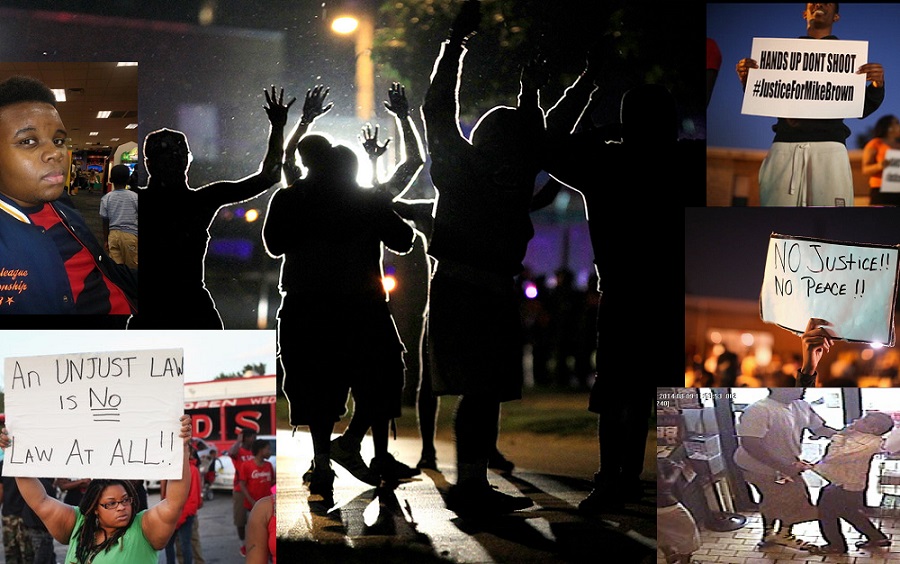
APTOPIX Police Shooting Missouri

There are too many ethics topics for me to cover adequately as it is. This is frustrating. That the Ferguson Ethics Train Wreck is generating ethics issues on a daily, even hourly basis creates a professional dilemma for me. I don’t want to appear obsessed with this mess; I’m not. I am really quite sick of it, and sick as well—and depressed—by the relentless stream of emotional, incompetent, and toxic opinions issuing from the news media, well-meaning but ignorant friends, and in some cases, professionals who appear overwhelmed by confirmation bias. One of my father’s favorite lines was “My mind’s made up, don’t confuse me with facts,” and I doubt that I have ever seen commentary on an event so dominated by that state of mind. Except, perhaps, the Trayvon Martin-George Zimmerman fiasco.

Allow me, then, to indulge in this compromise, while I wait for the entries in the Ethics Alarm contest to find the most unethical article, essay or blog post about Ferguson. Here are eleven points about the current Ethics Train Wreck that I would devote full posts to if I had the time and we lived in a Hell where Ferguson was the only thing going on. I may write full posts on a few of them yet, but meanwhile, here are shorter summaries that I hope you can use to enlighten some of your friends, relatives and associates afflicted with jerking knees….

1. We keep hearing that Officer Wilson is suspect and not credible because he expresses no remorse, and seems “cold.” This attitude projects the critics’ unjustified conclusions onto Brown, who doesn’t share them and shouldn’t. Why don’t interviewers point this out? If Brown was killed in self-defense, prompted by his own threats to the officer, Wilson shouldn’t be remorseful. Remorse means “deep regret or guilt for a wrong committed.” Wilson only did wrong if he shouldn’t have shot Brown, which is the assumption—an evidence-free assumption—of those who want him tried for murder. As for “cold”: Wilson’s whole life has been turned upside-down because a community and a substantial part of the nation have decided to make him pay the price for insensitive and poorly run police departments over decades and across the country. People are calling him a murderer based on political agendas. He’s supposed to respond to that warmly?

2. On ABC this morning, Jelani Cobb, a professor of African-American studies—and boy, are we learning a lot about the racist biases of that area of scholarship lately—pronounced the testimony of Wilson “fantastical” based on this statement: Continue reading

Ethics Dunce and Unethical Facebook Post of the Month: Elizabeth Lauten, Spokeswoman for Rep. Stephen Fincher (R-Tennessee)

Elizabeth Lauten, communications director for Republican Congressman Stephen Fincher, decided that she is authorized to give parental advice to First Offspring Sasha (13) and Malia (16) Obama. She was deeply troubled by the young ladies looking bored in photographs she saw online, so she posted this jaw-dropper on Facebook:

Facebook lecture

Wow. What a Thanksgiving feast of unethical features! Let’s see: Continue reading

Ray Rice’s Indefinite Suspension By The NFL Has Been Overruled On Appeal. GOOD!

You have to be fair to bad guys too, you see.

Ray Rice and sparring partner.

Ray Rice and sparring partner.

If you will recall, the NFL levied a paltry two game suspension on Baltimore Raven’s star last summer, following his guilty plea for knocking his then fiancée, now wife, colder than a mackerel with a punch in her face. Then security camera video of the punch, in a casino elevator, ended up on TMZ in September, and public outrage against the NFL’s casual approach to domestic violence became a public relations crisis for pro football, which has too many already.

In response, Commissioner Roger Goodell ordered a do-over, this time suspending the player indefinitely while Rice’s team, the Ravens, fired him. The NFL’s risible claim was that while Rice had admitted that he hit the love of his life so hard that he rendered her unconscious, they never suspected that he really, really hit her until they saw the video.

As I wrote at the time:

Sports stars who engage in criminal behavior should be penalized heavily by their teams and leagues, to leave no question about their special status as paid heroes and pop culture role models and their obligations to honor that status. Rice’s conduct was especially significant, given the prevalence of domestic abuse in this country. The NFL, however, had its shot, made its statement, disgraced itself and let him get off easy. Rice hasn’t done anything since then worthy of punishment. The league and Rice’s team should have to live with their initial decisions, no matter how much criticism they received for them. The overly lenient punishment should stand as symbolizing how outrageously tolerant society, and especially male dominated cultures like pro football, are of this deadly conduct. Treating the video as if it constituted new evidence of something worse is unfair and ridiculous: yes, you morons, this is what domestic abuse looks like!

Rice [I originally said “Peterson” here, getting my violent NFL players mixed up] appealed through the player’s union, and yesterday a judge agreed with him, the union, and me, writing:

“In this arbitration, the NFL argues that Commissioner Goodell was misled when he disciplined Rice the first time. Because, after careful consideration of all of the evidence, I am not persuaded that Rice lied to, or misled, the NFL at his June interview, I find that the indefinite suspension was an abuse of discretion and must be vacated…I find that the NFLPA carried its burden of showing that Rice did not mislead the Commissioner at the June 16th meeting, and therefore, that the imposition of a second suspension based on the same incident and the same known facts about the incident, was arbitrary…The Commissioner needed to be fair and consistent in his imposition of discipline….Moreover, any failure on the part of the League to understand the level of violence was not due to Rice’s description of the event but to the inadequacy of words to convey the seriousness of domestic violence. That the League did not realize the severity of the conduct without a visual record also speaks to their admitted failure in the past to sanction this type of conduct more severely.”

Yup. That just about covers it.

I think it’s overwhelmingly likely that the NFL’s lawyers advised the league that this would be the end result if they tried to punish Rice for the same act twice. The NFL decided that it was worth it to abuse its power and look like it was trying to end Rice’s career so after a successful appeal, it could say, “Well, we tried to do the right thing, and that mean old judge wouldn’t let us! Don’t blame us.”

Anyone who falls for that act is a fool. The real lesson of this ugly sequence is that the NFL’s culture doesn’t recognize right and wrong, or care about either. It’s only concern is TV ratings,  marketing and profits.


Ethics Alarms Contest: Pick The Most Unethical Column, Post Or Essay About The Ferguson Ethics Train Wreck

Stock up!

Stock up!

I realized that I needed to hold a contest after I heard two CNN experts discuss the relevance of Michael Brown’s marijuana use to the grand jury deliberations. One of them concluded that this was “disrespectful to Brown’s parents.” Of course, ensuring that grand jury proceedings embody proper respect for a victim’s parents, the accused’s parents, or anyone’s parents is not a legitimate concern for a prosecutor or a grand jury: the commentary was utter, incompetent, irresponsible, misleading and sentimental nonsense.

We are now being barraged by nonsense and worse as ideological pundits, journalists and bloggers desperately try to construct an argument that the decision not to indict Darren Wilson for murder was a blatant miscarriage of justice, proof of a rotten criminal justice system and persistent white racism. I don’t have either the time or the resistant vomit reflex to examine all of them, so let’s try to find the very worst through collective action.

Make your submission to this thread, and include a link, the source, the author, a representative quote, the ethical breaches you detect, which are likely to be from the group including honesty, fairness, responsibility, competence, and independent judgment. The only restriction is that posts from “The Daily Kos” and “Chimpmania” are not eligible for submission. I have seen a few awful posts from supporters of the grand jury’s decisions: send them in as well.

I’m almost afraid to see what we will end up with. For my first submissions, I offer two: Continue reading

Baby-Switching Ethics

The song from H.M.S. Pinafore tells the story amazingly well.

In Johannesburg, South Africa, a horrendous situation resembling the plot-resolving song from “H.M.S. Pinafore” may be reaching an unusual resolution for such cases—a sensible and ethical one. The families never suspected until one of the mothers underwent tests when her ex-husband refused to pay child support. One of the mothers wanted her biological child back, while the other wants to keep the child she had raised. A judge now has to decide.

The court asked the University of Pretoria’s Centre for Child Law to investigate and make a report n what would be in the children’s best interests. The experts’ answer: “The recommendation is that the children should stay with the parents who have raised them and should also be permitted to have contact with their biological parents.”

Exactly. Let’s hope that the court follows the recommendation, the only ethical one. Four years old is too old for this wrong to be set right without making it worse. What about three years old, though? Where do we draw that line? Furthermore, I am assuming that the two families are more or less equally fit, able and qualified to raise children. What if the investigation showed that one family was clearly more advantageous for a child: better educated parents with more resources and experience with children, living in a safer community? Then what would be the calculation of “the right thing”? The benefit of one child would be the detriment of the other, a zero sum game. In such a case, would fairness govern, rather than the best interests of the children? Why should one child be cheated out of the better life awaiting him, because of a nurse’s mistake? Fortunately, we don’t have those details, so we can make a confident abstract ethics judgement without confounding factors and issues. Continue reading

Watch “Blue Bloods”

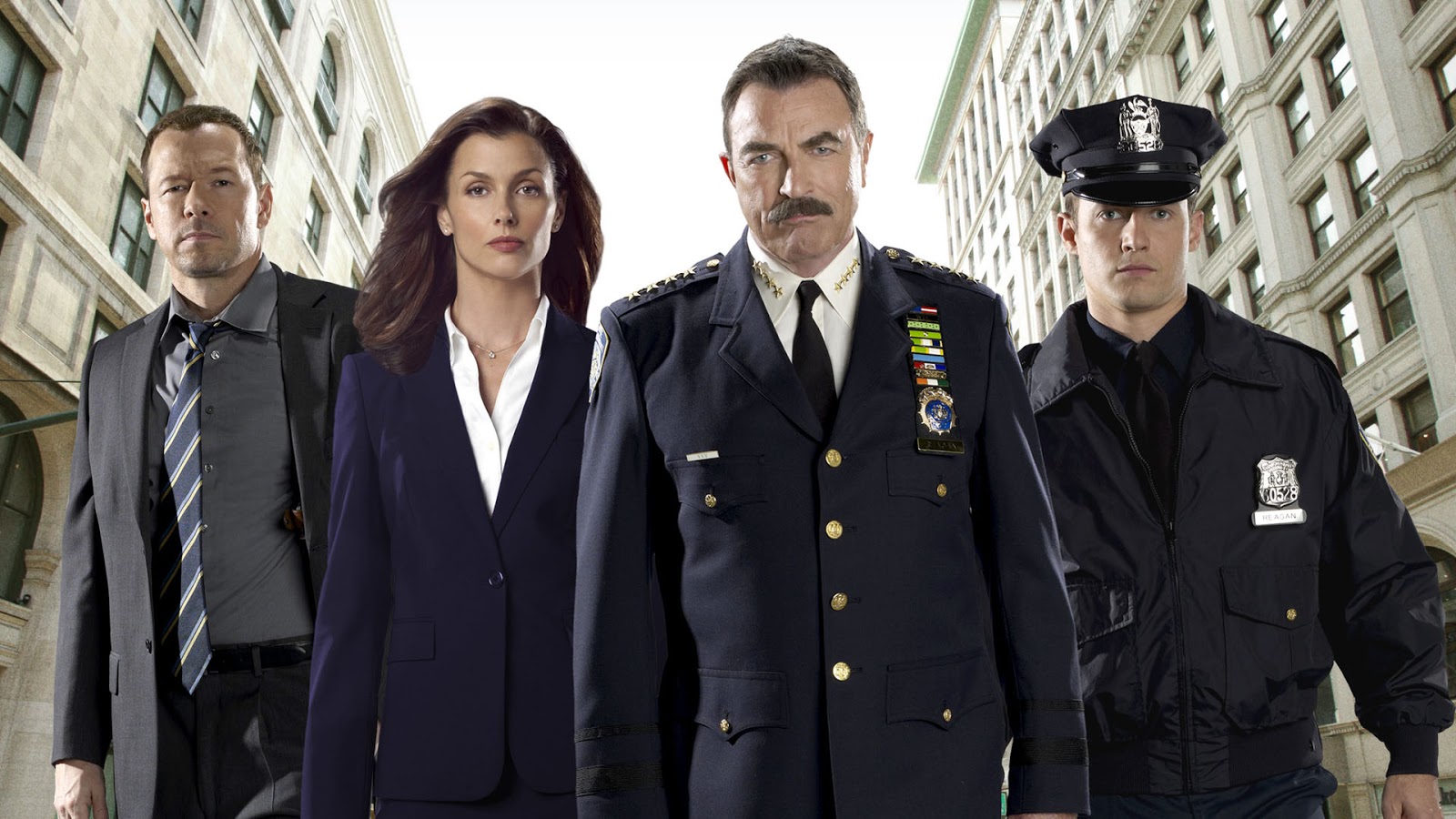
Blue Bloods

I owe Tom Selleck an apology. The long-time genial hunk, famous as “Magnum, P.I.” and notable in show business lore for missing the career opportunity of a lifetime when contractual obligations forced him to turn down the role of Indiana Jones in “Raiders of the Lost Ark,” has guided his CBS police series “Blue Bloods” to five seasons, exploring tough ethics dilemmas in virtually every episode, and usually doing it very well. For some reason, I’ve only cited the show a few times, once critically, and it deserves better. Netflix started streaming the show, and my wife has been watching about three a day. I really hadn’t been paying sufficient attention, or respect. It’s a wonderful ethics show, the best since “Star Trek, the Next Generation’s” hay day, and one of the very best ethics TV shows of all time.

Selleck plays fictional New York City police chief Frank Reagan. The show could be called “The Conflicts of Interest Family, ” because law enforcement is the family business, and Selleck’s large brood includes two sons, one a patrolman and the other a detective, under his command, and a daughter who is an assistant district attorney. Reagan delicately balances the jobs a father, mediator and boss, all while being given back-seat advice from his father, who is retired but was also a NYC police chief.

I have found myself thinking about how Selleck’s character would react to the Ferguson ethics train wreck. Police shootings have been frequent topics of episodes, as have political efforts to demonize police. Frank was a fan of New York’s controversial stop-and-frisk policy, and accusations of profiling do not reduce him to a mass of apologetic jelly. Meanwhile, he has forged a working relationship or trust with the City’s black mayor, whose loyalties to the black community, and more than a few dubious civil rights headline-seekers.

Selleck is a credentialed, if low-key, Hollywood conservative, and his show’s demographics are just short of Social Security territory.  It’s too bad: teachers should assign the show and discuss the episodes in class. The episode I wrote about earlier was an entire ethics course on its own, but hardly unique in the series: What should an undercover cop do when a child is imperiled in a burning building, and he is the only one who can get to the kid in time? If his photo is taken by the media that arrive on the scene, not only is his cover blown, but his life and family may be in danger. He hands off the child to his partner, who is the on photographed and becomes a hero. The city is clamoring for the Chief to decorate him as a hero. Naturally, the real rescuer is a Reagan.  Should the partner be willing to live a lie? Should the Chief deceive the public and preside over a fake ceremony to preserve an undercover operation that might bust the mob?  This was a memorable “Bluebloods” episode. but many reach this level of ethics complexity, and the duds are far and few between. This season the show has explored many ethics problems that have been debated in the news, such as campus rape, police body cameras, the “blue line,” news media bias, and others.

I apologize, Mr. Selleck. I have neglected your excellent efforts to present ethical dilemmas in law enforcement, leadership and parenting to the public in an intelligent, balanced, courageous and entertaining manner. Great job, on a great show. Please keep it up. I promise to pay closer attention.


It Appears Likely That Michael Brown Did NOT Have His Hands Up When He Was Shot… Now What?

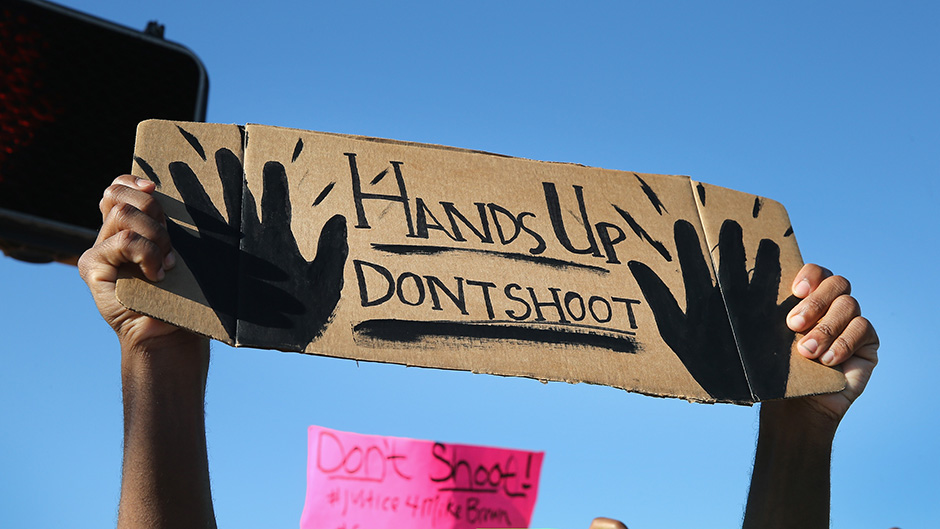
hands up

How does the culture, the news media, the civil rights  industry, and politicians determined to benefit by making African-Americans suspicious, paranoid, racist and, of course, lifetime Democrats, make amends for this? How do they undo the damage to mutual trust and American society?

Obviously they don’t. They don’t even try. In fact, all indications are that they will refuse to acknowledge that the entire, national effort to portray the tragic confrontation between Michael Brown and Officer Wilson as a race-triggered execution was based on a lie that was presumed to be accurate despite much reason to doubt it.

The original claim that Brown was shot and killed after putting his hands in the air came from his friend and partner in crime, Dorian Johnson. Johnson, who already had a record of lying to police, was with Brown prior to the August 9 confrontation, and had joined him in the petty robbery that occurred just before Brown’s arrest. In his TV interviews  after the shooting, Johnson said that Wilson shot Brown in the back, causing him to turn around with his hands up, pleading, ‘I don’t have a gun, stop shooting!’ Before the grand jury, Johnson, who admitted that he hid during the incident and later ran home to change clothes so he wouldn’t be identified, even elaborated and provided minute details to his fabrication, stating under oath that the shot in his back caused Brown’s body to “do like a jerking movement, not to where it looked like he got hit in his back, but I knew, it maybe could have grazed him, but he definitely made a jerking movement.” The forensic evidence showed that Brown was not shot in the back. Continue reading

Verdict: The Grand Jury Process Was Fair and Just

abstract door grand jury room

The accusations and complaints about the Darren Wilson grand jury just don’t hold up.

Criminal law professor Paul Cassell consolidates several issues raised in the comments here and in the news media in his excellent analysis in the Volokh Conspiracy, here.

Among the criticisms he addresses…

1. Using a Grand Jury Deviated from Normal Process.
2. The Grand Jury Took Too Long.
3. The Grand Jury Got Too Much Evidence.
4. The Grand Jury Operated in Secret.
5. The Grand Jury Was Exposed to Pressure.
6. The Grand Jury Did Something That Grand Juries Ordinarily Don’t Do.
7. The Grand Jury Misunderstood the Standard of Proof.
8. Robert McCulloch was Biased and Should Have Recused Himself.
9. The Grand Jury Evidence Shouldn’t Be Released.

He also echoes my conclusion about many of the protesters, as he ends his piece with this: Continue reading

Ethics Dunces, Ferguson Ethics Train Wreck Files, “Seriously Confused” Division: The Looters of Ferguson Market and Liquor

Ferguson Market

Ferguson Market and Liquor was looted last night, targeted by protesters demanding “justice” for Michael Brown.

I’d like someone to explain the logic of that act to me, please.  Please. That was the store where Michael Brown was captured on video shoplifting and assaulting a clerk prior to his fatal encounter with Officer Wilson.

How dare that store be robbed by an unarmed teen! No, that doesn’t work. How dare an employee be assaulted by a shooting victim! Hmmm…no, no, that’s stupid. How dare the business allow the media to mention its name in connection with the examination of whether Mike Brown was just a gentle giant who wouldn’t hurt a fly or intimidate a clerk!  That can’t be it, can it? Or is it, “Let’s honor Mike by really hurting that small business where he stole some blunts  and shoved that  little clerk!” Really?

What exactly is the theory of justice here? My mind is open, it really is. I so want to understand.

Absent a persuasive explanation, however, I must conclude that anyone who sees “justice” in punishing Michael Brown’s innocent victims, however the teen met his demise, no more understands the concept of justice than I understand string theory, and I have no interest at all in listening to such an individual’s theories, protests, or rants about a subject about which that they are not only embarrassingly ignorant, but deluded as well.

What they did is injustice. They don’t know the difference between injustice and justice, which tells me that neither they nor anyone allied with them, supporting them or sympathetic with them should be taken seriously or heeded.

And when we are told, “The police are biased against people who think looting a store is justice!,” I am compelled to answer,

“As well they should be.”