Ethics Dunce: Florida Highway Patrol

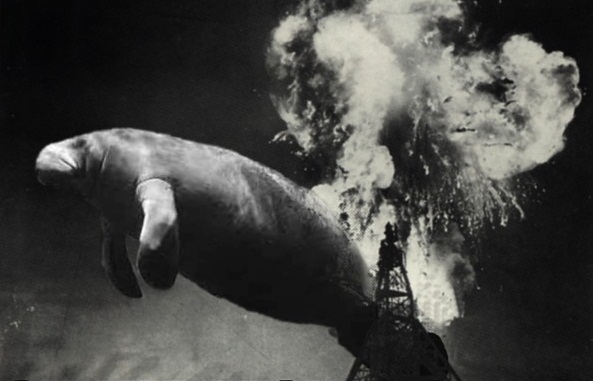
Huge Manatee

Do you recall the post last week about the brain-dead reaction of various website commenters to the Florida arrest prosecution of a man for harassing a manatee?

If they had been commenting about this incident, they would have been on firm logical and ethical ground.

Anthony Brasfield and his girlfriend shared a carefree, romantic interlude one Sunday morning in the parking lot of the Motel 6 on Dania Beach Boulevard, as they released a dozen red and silver mylar heart-shaped balloons and watched them rise, up, up, up into the air, then slowly float away, high and far, until they became tiny specks against the blue. They squeezed each other’s hands, smiled, and…got arrested by a Florida highway patrol state trooper on the spot.

Brasfield was charged with the environmental crime of helium pollution, under the Florida Air and Water Pollution Control Act.Aggravating the offense apparently was the fact that endangered marine turtle species and birds make their abode in John U. Lloyd State Park, about 1.5 miles east of the motel. The third-degree felony is punishable by up to five years in prison. Continue reading

Ethics Quiz: Judge Shecky’s Dilemma

"Here come de judge!"

“Here come de judge!”

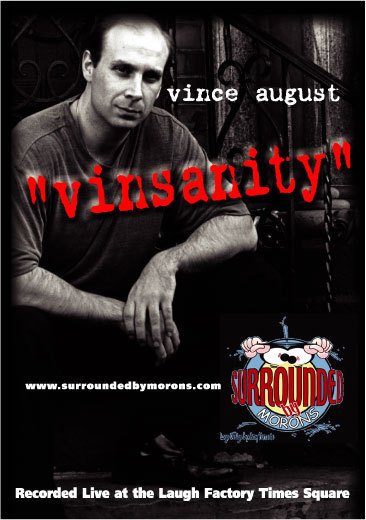
Vince A. Sicari is a municipal judge in South Hackensack, N.J. who moonlights as a stand-up comic, and a fairly successful one at that, named Vince August.

He is now sending his lawyer to argue before the New Jersey Supreme Court that he should be allowed to continue his night and weekend job, overturning a 2008 ethics ruling that for a judge to do stand-up creates  “an appearance of bias, partiality or impropriety or otherwise negatively affect the dignity of the judiciary,” in violation of the Judicial Conduct Code. The issue is complicated by the fact that municipal judges almost have to moonlight as something—they earn only $13,000 a year. Sicari argues that his comedian gigs generate the bulk of his income, and that the two careers are separate. He says doesn’t make jokes about his cases or lawyers, nor sensitive issues involving race and gender, and on the bench he is as serious as, well, a judge.

Thus, your Ethics Quiz of the Day gives you an opportunity to judge “Judge Shecky”:

Is it ethical for a judge to moonlight as a stand-up comic? Continue reading

And One More…UPDATE: “Cheated Out Of Their Final Bows: Hollywood Snubs Its Own At The Oscars…”

Yesterday I attempted in a small way to make up for the injustice perpetrated on their own by the Academy of Motion Picture sciences, by noting the passing of ten talented and worthy film actors who were unfairly and inexplicably left off the Oscar’s “In Memoriam” feature. I was afraid that I missed someone important, and sure enough, I did. And it was…

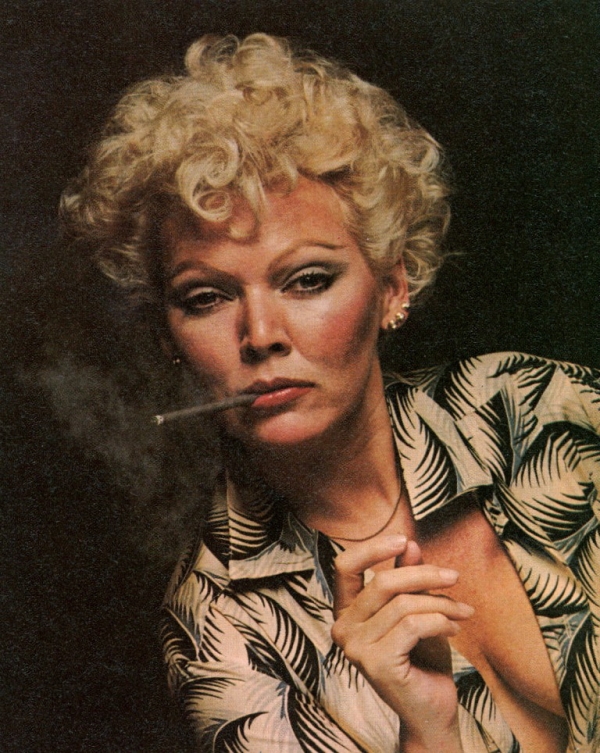
Susan Tyrell (1945-2012)

susan-tyrrell

Leaving out Tyrell was especially callous by the Academy (not that dissing the others was not), because, first of all, she was a previous nominee for Best Supporting Actress (for John Huston’s “Fat City,” made in 1972), and second, because Tyrell had battled courageously against multiple health issues while doggedly trying to pursue her craft.  In 2000, she lost both legs as a result of a rare blood disease, but stayed active, performing in seated roles and voice parts to the end. Susan Tyrell was an electric performer, a veteran of Broadway and Off-Broadway, fearless, quirky, and unforgettable.

Except, apparently, by her colleagues in Hollywood.

I’m sorry I missed you first time around, Susan.

Cheated Out Of Their Final Bows: Hollywood Snubs Its Own At The Oscars, And Worse Than Ever

Oscars

Once, the excuse that routinely issued from the Academy of Motion Picture Sciences when a significant film actor was omitted from the annual “In Memoriam” segment at the Oscars—“There just wasn’t enough time!”-–seemed almost plausible. It was still a lousy and dishonest excuse, don’t get me wrong: in a broadcast that routinely approaches four hours and wastes time like it is money in Washington, we are supposed to believe that there aren’t three seconds to give a proper send-off to the likes of Harry Morgan (last year) or Farrah Fawcett (the previous one)? That excuse won’t fly at all now, however, as some diabolical deal with the behind the camera members, the warped priorities of the Oscar show’s Broadway musical nerd producers, Neil Meron and Craig Zadan, and the final decisions regarding who would be featured in the movie industry’s public goodbye being made by, apparently, throwing darts at a dartboard combined to produce the most extensive and egregious snubs within memory.

This is a television broadcast and tailored for the public audience, after all. The Academy gives its technical awards in a separate private ceremony: wouldn’t that be the  place to bid a respectful farewell to the seemingly endless list of deceased publicity agents, make-up artists,movie executives and key grips whose completely unrecognizable faces and names were paraded before us last night, often with out of context quotes that made no sense at all? Then, guaranteeing that the “we ran out of time!” alibi would be risible, the segment’s editors chose a non-actor for the prestigious final place on the death list, composer Marvin Hamlisch, as an excuse to drag Barbra Streisand into the proceedings. I appreciate Hamlisch’s achievements, but his movie credits were not so extensive as to justify the honor (we are basically talking about one Academy Award-winning song, “The Way We Were,” and his arrangements of Scott Joplin’s music in “The Sting”), and the award show’s misbegotten “theme” of movie music was not sufficient justification to place a non-actor in the position of highest honor.

Meanwhile, the following actors, all who made significant contributions to American film in their careers, were cheated out of their final bow, and we, the film-going audience, were cheated of our chance to remember them, and say goodbye. It was a disgrace.

Ethics Alarms isn’t the Academy, but here, like last year, is its salute to the faces and careers Oscar forgot: Continue reading

The Oscar Nominee Truth Squad Goes After “Argo”

argo-poster

The ethics of using artistic license in films based on fact isn’t only being debated in the case of “Lincoln” as we approach the Oscar ceremonies: “Argo” is also under fire.

For some reason conservative radio hostess Laura Ingraham is fond of James Lipton, the unctuous host of PBS’s “Actor’s Studio” interview program. He sounds off frequently on her show, usually about films, and in his most recent gig was pontificating about the Academy Awards. Lipton seems to believe that bias is a condition one is helpless to adjust for: he kept announcing his preferences for various nominees based solely on their association with him or the Actor’s Studio, and explaining his choices by saying, “I’m biased, you see.”

Recognizing bias is just half the job, James. The other half is getting over it. Continue reading

Tales From The “Ick!” Files: If Luke Married Leia…

Luke and Leia

Emily Yoffe, who is not Ethics Alarms’ favorite advice columnist, gets one right at Slate—a weird one, but then, that’s the only kind of question she usually chooses to answer. If I had to bet, I’d place my money on this question being a fake. Emily acknowledges that possibility, but couldn’t pass this one up, and neither can I.

A loving husband who already knew that both he and his wife (it was virtually love at first sight when they met in college) were raised by lesbian parent couples who conceived via sperm donors found out that they both have the same donor to thank for their conception. Now he thinks “sister” every time he sees his spouse, and ask 1) what should he do? and 2) should he tell his wife that he has learned that they are half-siblings? Yoffe tells this poor guy to stop feeling guilty, and that he hasn’t done anything wrong. She also advises him to get some counseling, and to suck it up and tell sis about their dilemma….but not to reveal the secret to their kids, Anteater Boy and Tilly the Boneless. Continue reading

Picking Through The Wreckage of An Ethics Tesla Wreck

The wreck participants. Not pictured: the Tesla.

The wreck participants. Not pictured: the Tesla.

There was questionable ethical conduct galore in the recently-stilled ethics wreck sparked by a New York Times review of the new Tesla electric car, the Model S. Times reporter John Broder test drove the car from Washington, D.C., to Boston, using the  charging stations Tesla has opened along the way.  Broder’s Tesla ran out of juice, and the article concluded with a sad photo of the highly-anticipated Model S  on a tow truck. In short, it was not a positive review.

In response to the review, Tesla’s CEO Elon Musk called it a “fake” on Twitter, then wrote a rebuttal using the data logs of the vehicle Broder tested. Broder wrote a rebuttal to the rebuttal, and eventually the Times “public editor” (others would call her its ombudsman), Margaret Sullivan, was drawn into the battle, performing an investigation and concluding that…

“…I am convinced that [Broder]  took on the test drive in good faith, and told the story as he experienced it. Did he use good judgment along the way? Not especially. In particular, decisions he made at a crucial juncture – when he recharged the Model S in Norwich, Conn., a stop forced by the unexpected loss of charge overnight – were certainly instrumental in this saga’s high-drama ending. In addition, Mr. Broder left himself open to valid criticism by taking what seem to be casual and imprecise notes along the journey, unaware that his every move was being monitored. A little red notebook in the front seat is no match for digitally recorded driving logs, which Mr. Musk has used, in the most damaging (and sometimes quite misleading) ways possible, as he defended his vehicle’s reputation…People will go on contesting these points – and insisting that they know what they prove — and that’s understandable. In the matter of the Tesla Model S and its now infamous test drive, there is still plenty to argue about and few conclusions that are unassailable.”

Perhaps realizing that his vigorous defense of his car had triggered the Streisand Effect, Musk took to Twitter again, this time saying that the ombudsmadam’s article was “thoughtful” and that his faith in the Times was hereby restored. This put a nicely disingenuous spin on the whole episode.

Here is the final ethics tally: Continue reading

More “Lincoln” Criticism: What Does Spielberg’s Film and Ethics Alarms Have In Common?

lincoln crop

I won’t hold you in suspense, and no, it’s not that I expect or deserve any awards. What Steven Spielberg’s justly acclaimed historical drama and this blog have in common is being unfairly peppered with a presumptuous breed of complaint that nears the top of my all time “Unfair Criticisms List.”

Here, the complaint usually takes this form: “Why are you writing about Chex Mix labeling when [Pick ONE:] a) we’re about to give up our sovereignty and let anyone just break the law to come across the border? b) Fox news lies to the public every day? c) there are unethical things going on that I care about more ?” Regarding Lincoln, the favorite criticism in the media and on the web of late has been that in the process of showing the sausage-making and political maneuvers that allowed the 13th Amendment to become the law of the land, Spielberg neglected to show the evils of slavery, which, of course, if he were to do without risking the criticism (which he would get anyway) that he did so in a perfunctory and inadequate way, would require either lengthening the film to an unwatchable length, or cutting out significant portions of the story he chose to tell. This obnoxious complaint was brought to a full-throated crescendo by Tony Gittens, director of the Washington, D.C., International Film Festival, in today’s Washington Post. He writes:

“Steven Spielberg’s film “Lincoln” will probably walk away with this year’s Academy Award for best picture, and that would be unfortunate. As Post film critic Ann Hornaday pointed out , “Enslaved people and the terror they endured in the 19th-century South are never portrayed” in the film. Mr. Spielberg did not shy away from depicting the extent of man’s institutionalized cruelty in his moving “Schindler’s List.” Why not in “Lincoln”? Worse, the film ignores the contributions African Americans made toward their own liberation. Instead, they are portrayed as loyal Union soldiers and observers from the balcony as Congress debates their fate. This was simply not the case. From the moment they were brought to these shores, African Americans resisted their enslavement, spawning leaders such as Harriet Tubman and Frederick Douglass. In fact, at the time “Lincoln” takes place, Washington had a significant free black population, many of whom walked the streets in front of the White House. But this is not portrayed. “Lincoln” concludes with stalwart abolitionist Thaddeus Stevens, a white man, in bed with his compliant African American housekeeper. All of the dramatic political maneuvering we had just witnessed on the screen, the struggle of lawmakers to come to grips with how to help make right years of unjust legalized oppression — all of this is reduced to the conjugal relationship between two disparate individuals. Here, once again, “Lincoln” misses the point.”

No, Mr. Gittens misses the point, and it should be a hard point to miss. Continue reading

When The Going Gets Tough, The Tough Get Unethical, As A School Board Ponders The Profits of Child Labor

child laborWe learn about how seriously our institutions take their ethics when money gets scarce. States suddenly decided that ol’ devil gambling wasn’t so bad after all, once they realized that lots and lots of poor, desperate people without a lot of mathematical skills would fork over billions they needed to buy food with or save to move out of the ghetto in the hope of becoming a tycoon. I’m sure as soon as states realize that their legislators don’t have the guts to make the wealthy and powerful pay for lousy schools, more and more of them will get into the drug dealing business, like Colorado, and let the lives, families and businesses destroyed by the inevitable results of legal pot and cocaine become collateral damage.

Somewhere in between those irresponsible and cynical policy decisions way come ideas like this one, from the Prince George’s County Board of Education (in Maryland.) There is a new proposed policy in the perpetually corrupt Washington D.C. neighbor to make all work products created by teachers or students the intellectual property of the County, not the individual who created it: Continue reading

Dog Owner Ethics: The Suicide and the Pitcher

Does one of these nice creatures not belong in this picture? Ontario says yes. The correct answer is  no.

Does one of these nice creatures not belong in this picture? Ontario says yes. The correct answer is no.

Our life-changing events often become crises for our canine companions. In the news today: ethical  and unethical responses in such circumstances, by two individuals in the public eye.

The Unethical

Mindy McReady, the troubled country music star, committed suicide Sunday on the front porch of the home she shared with her boyfriend, who had recently committed suicide there as well. She apparently killed the couple’s dog before taking her own life. McReady’s friends insist that she didn’t kill the dog out of malice, but because she didn’t want to leave the dog alone. Granted, McReady deserves consideration and compassion, since her actions that day were not those dictated by a healthy or fully functioning mind. Still, I read of dog owners doing this a lot, and I’ve known a few—not committing suicide, but killing their dogs when they knew they wouldn’t be able to keep them any more, on the theory that the dog would be happier dead than with new owners. Continue reading