Comment of the Day: “Are Musicals Reviewed By Ignoramuses?”

WordPress, for only the second time in three years, was kind enough to include my recent post about Stephen Sondheim’s footnote lament that musicals were the only art form largely reviewed by incompetents. This has brought a lot of new visitors to Ethics Alarms, and I hope they are interested in ethics as well as musicals. One such new reader is a Prof. Ratigan, who apparently does some reviewing himself. Here is his Comment of the Day, on the Jan 3, 2013 post (Here’s something weird—last year’s Jan.3 post was also about Sondheim!) Are Musicals Reviewed By Ignoramuses?…

Two points. The first is the literacy issue. I think it’s interesting that it would appear that a good reviewer is either a novice or a master where everything in between is amateur. I’ve been reviewing movies for the past year (on a blog) and I’ve definitely felt that in my own stuff. The more movies I watched and connections I could draw, the more it became apparent how much I really needed to do to become proficient. I needed to read a lot more literature, read a lot more scripts, and watch a lot more movies. Otherwise, I would start to create a context but have a nagging feeling that the director/writer/actor (who are often scholars of film) might/probably know more than me and were doing something else. It seems that these musical reviewers aren’t expected to take the next step from reviewer to analyst. Continue reading →

Ethics Hero: Stanford Law Prof. Pamela Karlan, Pulling A McLuhan

One of the funniest moments in Woody Allen’s Academy Award-winning comedy “Annie Hall” is the classic scene in which Woody squelches a pompous know-it-all standing in line behind him at a movie theater. The man is holding forth on film criticism and finally begins pontificating on the theories of Marshall McCluhan, a Sixties media scholar most famous for the quote, “The media is the message.”  Woody acts out everyone’s fantasy who has had to listen to strangers blather on about topics they aren’t qualified to discuss by magically producing the real McCluhan to confront the man. “You know nothing of my work!,” McLuhan tells the shocked pedant.

Today Stanford law professor pulled a McCluhan on none other than George Will, who, she pointed out in a letter to the Washington Post, recently used her law review article to bolster his position by substantially misrepresenting—or misunderstanding–what it actually said:

“Mr. Will’s column distorted my Harvard Law Review article in details both large and small. Yes, the Framers of our Constitution intended to limit the federal government’s power to protect liberty. But they also crafted the new Constitution to empower the government to deal with critical problems. For much of our history, the Supreme Court recognized congressional resourcefulness as a source of our nation’s strength. By looking only to James Madison and 1787, Mr. Will ignored the post-Civil War 14th Amendment, which explicitly authorizes Congress to enforce guarantees of liberty and equality.

“As for my discussion of the court’s Citizens United ruling, I did not attack “spending by outside groups,” as Mr. Will wrote. Rather, I pointed out only that there has been a significant increase in such spending (much of it in forms that leave voters in the dark as to who bankrolled the messages they hear) and that reasonable people can disagree about whether this is good for democracy.

“Finally, for someone who prides himself on his linguistic precision, Mr. Will’s attack is particularly tone-deaf. “Disdain” means “scorn” or “contempt.” Nothing in my article expresses scorn or contempt for the court or for judicial review. I — like many other Americans, including some of their colleagues and many of their predecessors — simply disagree strongly with the approach some justices have taken and the conclusions they have reached in some recent cases.”

Take that, George! Continue reading →

A Compliant, Law-abiding and Unethical Murder House Sale

Immaterial

Immaterial

We last considered the issue of realtors sneaking murder houses by trusting purchasers nearly two years ago, when Jon Benet Ramsey’s home and place of death came up for sale. We had a knock down, drag out argument about it too. My position: while it might be legal for a seller not to disclose that a home was the site of a murder or worse (and in most places it is), and while many regard sensitivity on such matters mere superstition not worthy of serious respect, the seller and the realtor have an ethical obligation to inform  potential buyers when the property for sale is a murder scene As I wrote in the conclusion to the post about the Ramsey home:

“The truth is still this: there is something about the $2,300,000 house that makes it undesirable to a lot of prospects, and that means that even if the law doesn’t require the seller to tell interested house-hunters the story of the little dead girl in the basement, fairness and the Golden Rule do.”

This applies to the case at hand, where Pennsylvania’s Superior Court recently ruled that a murder-suicide occurring in a home is not a “material defect” that requires disclosure in that home’s sale. While a murder-suicide occurring in a house might be “psychological damage” to the property or its reputation, the court said, realtors don’t have to disclose it. Continue reading →

Some Ethics Observations On A Ridiculous Sean Hannity Segment

Last night, Fox New host and conservative radio talk show star Sean Hannity moderated what purported to be a debate on the topic of —guess what?— gun control on his cable TV show. The  guests were “civil rights attorney” Leo Terrell (I’ll explain the scare quotes in a second) and conservative lawyer Jay Sekulow. The two adversaries—and Hannity, who was hardly neutral—discussed The Journal News’ recent decision (Covered and criticized on Ethics Alarms) to publish the names and addresses of pistol permit holders in two New York Counties. The ensuing dialogue, if you can call it that, was painful to watch (but you’ll have to watch it to know what I’m referring to.)

Some observations on the miserable ethics of a nauseating episode: Continue reading →

Ethics Mess In Kansas: The Lesbians and the Sperm Donor

The parents in happier days

The parents in happier days

Auto mechanic William Marotta must rue the day he responded to a Craigslist ad placed by Angela Bauer and her life partner Jennifer Schreiner. They were seeking a sperm donor, for the obvious reasons, and he had sperm to donate. The trio then signed a contract in which all agreed that Marotta would have no rights to any child his sperm spawned, nor future responsibilities regarding the child’s care. Schreiner was artificially inseminated and conceived, making her the child’s mother, as Bauer stepped into the role of the child’s father. Exit Marotta forever, with thanks.

Or so he thought. Continue reading →

Now THIS Is Irresponsible Opinion Journalism

Oh, yeah, this will help a lot...

Oh, yeah, this will help a lot…

During the Ethics Alarms debates on various threads here about the response to the Sandy Hook Elementary shooting, the ever-reasonable commenter Ampersand wrote,

“I think that if you want a responsible discourse, you should seek out intelligent opposition and highlight it, rather than exclusively highlighting what you see as stupid and unethical opposition.”

I agree that this is usually a good course. The current public policy debate, however, isn’t being led or dominated by intelligent opposition to gun possession, but by emotion-driven, often hateful and hysterical diatribes from activists, demagogues and journalists who have decided that this, of all issues, is one that excuses them of their ethical obligation to be objective and to give views they don’t agree with due respect and fair analysis. Thus it is important to highlight the worst examples of these, not only because they are the most blatantly unethical (“Ethics Alarms,” you know) but also because it is dangerous to allow them to slant the discussion without calling attention to what’s wrong with them.

This brings us to the recent rant of Des Moines Register columnist Donald Kaul. Kaul is an extreme  progressive, which is hunky dory, and he is respected as a serious commentator from that side of the ideological spectrum. He also writes for a newspaper with a tradition of serious and professional reporting. He is not Dave Barry, Chris Rock, Ann Coulter or even Lawrence O’Donnell: he is not a jester, a performance artist, or a shameless firebrand.  Many reasonable people take what he says t0 heart.

Thus it is worthy of note that such a professional opinion journalist believes that it is appropriate to write a column that says things like this: Continue reading →

Unethical Quote of the Week: Howard Kurtz

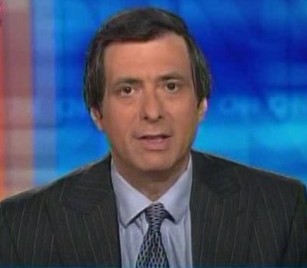
“Gun owners often say they want the government to leave them alone; why then are some clamoring for Gregory to be prosecuted?”

—-CNN Media ethics watchdog Howard Kurtz, in a column defending “Meet the Press” host David Gregory’s on-air violation of a D.C. gun law

Wait...WHAT???

Wait…WHAT???

This is quite a spectacle, a real time unraveling and self-discrediting of a media ethicist because of biases he either cannot resist or doesn’t detect. Kurtz’s core ethical fallacy in ridiculing calls for Gregory to be held to account for a knowing, intentional, blatant and broadcast breach of a criminal law is so obvious it is stunning that he cannot see it. Kurtz is arguing that the law shouldn’t be enforced against law-breaking journalists “practicing journalism,” because they are special and deserve to be privileged, and because journalism is so important that it trumps the law. This is offensive to fairness, equality and justice, but because Kurtz is himself a journalist, he cannot see how intrinsically unethical his position is. He cannot see the most basic conflict of interest of all, self-interest, in himself. Continue reading →

Ethics Dunce: Facebook

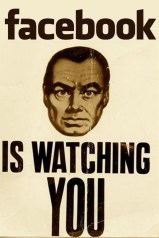
facebook-big-brotherLet us be clear that Facebook is not engaged in “censorship,” properly defined. Nor does Facebook infringe on the First Amendment by limiting, even severely, irrationally or based on political bias, what a user may post. Facebook can set whatever conditions for use of its services that it chooses. Facebook isn’t the government.

It should, however, set fair and reasonable conditions, and be capable of enforcing them without bias and in an even-handed fashion—if it wants to be the ethical entity it claims to be. This would also seem to be in the company’s best interest. If I think Facebook is going to swoop down and cancel my account because I dare to disagree with political correctness sanctioned by the Facebook management, I have better uses for my time. So do you.

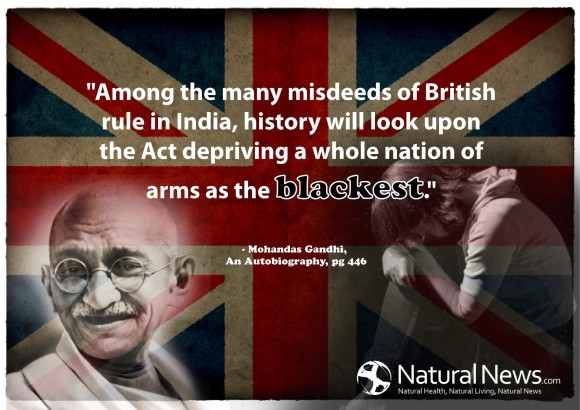
Thus it is puzzling to read that Facebook purged the account of Natural News for posting this:

Gandhi quote

Continue reading →

Comment of the Day: “Lisa Long’s Unethical, Despicable Bargain: Betrayal For A Blog Post”

turn-the-tablesOffering a pointed response to Lisa Long’s blog post about her emotionally-ill son and the suffering Long has endured, is new commenter Fixitsurprise. When I first read the post, I actually thought that she might be Lisa Long’s daughter, so to those like me whose faculties are still addled from too much eggnog and viewings of “A Christmas Story,” remember that Long’s post was titled, “I am Adam Lanza’s Mother.” Fixitsurprise is table-turning.

Here is Fixitsurprise’s Comment of the Day on “Lisa Long’s Unethical, Despicable Bargain: Betrayal For A Blog Post”:

“I am Lisa Long’s Daughter.”

“My mother labeled me as mentally ill when I was 12 to avoid taking on any responsibility for my issues. I was sent to mental hospitals. I was sent to a behavior modification facility. Countless doctors and lots of meds with horrible side effects. I was forced to sign a contract admitting I was mentally ill and promising to be on medication the rest of my life to get out of reform school. She wouldn’t rest until I had a diagnosis that absolved her. I yelled and screamed and acted out. I did so because I had no voice, no respect, and was not allowed to make any boundaries whatsoever. She gave me poetry that spoke of how she was a victim of my illness. She was public about her struggles. How hard it was to have me. I burned it but the words still haunt me to this day. I am an adult now with the perspective of 18 years of parenting my own child. We do need to change the conversation about mental illness in this country, but what Long ironically, and unintentionally points out, is that a big part of the conversation needs to be about the family dynamic. That parents contribute, that society contributes, and that no psychiatric professional and no prescription can heal the child of a mother with a victim complex.”

______________________

Graphic: Cascadesmurf

The Media’s Gun Control Ethics Train Wreck Gets Its Engineer: David Gregory

Gregory and clip

The blatant abandonment of journalistic ethics in U.S. mainstream media, well underway during its coverage of the 2012 election, finally exploded into a full-fledged ethics train wreck with television journalists’ astounding and shameless advocacy of tighter gun control laws following the Newtown elementary school massacre. Can anyone recall a previous public policy controversy in which so many telejournalists decided that it was appropriate, rather than to report on a story, to engage in full-throated advocacy for a particular position? I can’t. Rather than communicate relevant facts to their audiences and allow responsible and informed advocates for various positions to have a forum, one supposed professional journalist after another has become an openly anti-firearms scold, as if the need for new gun restrictions was a fact, rather than a contentious, and often partisan point of view.

It isn’t just the hacks, like Piers Morgan.  CNN anchor Don Lemon sounded like a candidate for office, and a rhetorically irresponsible one, when he exclaimed in one outburst, “We need to get guns and bullets and automatic weapons off the streets. They should only be available to police officers and to hunt al-Qaeda and the Taliban and not hunt elementary school children.” The reliably presumptuous Soledad O’Brien decided to reprimand Florida Republican Gov. Rick Scott when he refused to commit to seeking tougher gun laws in his state, telling him she hoped the gun conversation would become “meaningful” (that is to say, anti-gun ownership) before she was forced to “cover another tragedy.” In another interview, when a conservative academic argued for making guns more easily available among law-abiding citizens, O’Brien again turned advocate, telling him, “I just have to say, your position completely boggles me, honestly.”

Yes, well the fact that Soledad is “boggled” isn’t news: she’s easily boggled, and her opinion on gun control is no more worthy of broadcast than that of any random citizen on the street. Whether you agree with these amateur anti-gun zealots isn’t the point. Using their high-visibility positions as television reporters to expound on what they think are reasonable legislative initiatives isn’t their job, isn’t their role, is a direct violation of their duty of fair and objective reporting, and undermines effective public discourse. It’s unethical journalism.

Jumping into the engineer’s seat as this media ethics train wreck developed was “Meet the Press” host David Gregory. Part of the open agenda of the left-biased media is to demonize the National Rifle Association, which, again, is not their job, and is an unethical objective. Give the public the facts, let them hear the arguments, and allow them to come to an informed decision, not a media-dictated consensu constructed by people who are neither especially bright nor sufficiently informed, and who have no special expertise regarding guns and gun violence. Gregory, in full-anti-gun mode, brandished a gun magazine as a prop last Sunday to make a dramatic debating point against the vice-president of the National Rifle Association. In Washington, D.C., where “Meet the Press” is recorded, the magazine he held is illegal, and anyone apprehended while possessing one faces prosecution and jail time. NBC had been informed by D.C. police that Gregory could not use the magazine on the air, and Gregory went ahead and used it anyway.

He broke the law. Continue reading →