Welcome To The World Of “Expert Witnesses”

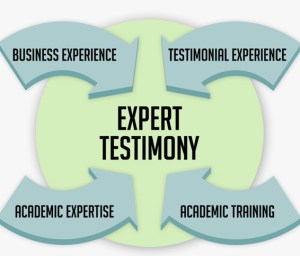
Then there’s the arrow that reads, “Willingness to say what we need to win the case.”

It doesn’t happen often, but it does pay well and can be interesting: occasionally I accept an engagement as a testifying ethics expert in a law suit. I have a rule, however, that surprisingly (or not) seems to come as a shock to many potential clients. They may be buying my opinion, but they are not necessarily buying the opinion they want. After I review the facts, documents and issues involved, I will render my opinion, but no promises. I won’t take a case unless I generally agree that the theory of the side hiring me is plausible, but after all the facts are in and I’ve done my analysis, if the case of the client whose lawyer hired me is weak, I will say so.

Strangely, some lawyers seem to have a problem with this, even when the expert insisting on integrity is an ethics expert. I am currently in settlement mode with a law firm that hired me to render my opinion regarding the billing submitted by another firm to the law firm’s client. Part of their argument, in claiming malpractice against the billing firm, was that its billing was excessive, unreasonable and inflated, a violation of  Rule 1.5 of the Rules of Professional Conduct governing lawyers. I reviewed the billing statements, and they could have been inflated—some of the methods of stating who did what work was vague, and there sure was a lot of work billed on the matter, by an astounding number of lawyers—-but I could only assess that to a level of certainty sufficient to be certain in my own mind, much less state it under oath, if I could examine what all that work produced. This the law firm that hired me refused to produce, perhaps because the time it would have taken me to review it thoroughly would have been very expensive. But how could I decide whether the amount of money billed for a product was unreasonable without being able to determine what the product was? I couldn’t. Thus my written opinion stated what I could say honestly and with authority: based on the billing statements and the materials I was allowed to review,  I could only speculate on whether the billing was proper or not. It was possible. More than that, I could not say.

The law firm was not happy, although they never spoke to me about it. The firm just settled the case, and never paid me. (My very reasonable fee for services was $6,000, and if you’ve ever spent much time reviewing legal billing statements, you would know that they got off cheap.) You see, it didn’t really want an ethics expert, or an independent expert, or an honest, informed, professional analysis. They wanted a pre-determined opinion, bought with cash, delivered to specifications. Well, they won’t get that from me.

Welcome to the world of “expert witnesses.”
 

Ethics Dunce: Mitt Romney

Mitt, Mitt, Mitt…

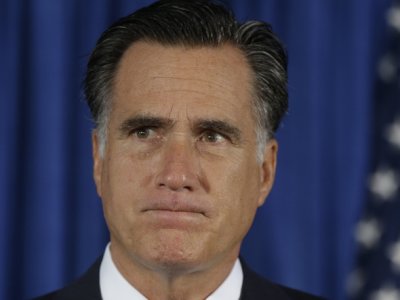
Ah, Mitt, Mitt. We know you’re disappointed. We know you don’t like to lose, especially when you feel smeared and misunderstood.We know its got to hurt.

There is only one way to lose a Presidential election, though, and it is to smile, say that the winner ran a tough campaign, that the people have spoken, that Americans are lucky to live in a democracy, and that’s it. Hell, Richard Nixon had this act down in 1960, when he lost to Mayor Daley, the Mob, Joseph P. Kennedy Sr, the Texas machine and JFK. He didn’t challenge the integrity of the process or the wisdom of the voters. He just resolved to fix his own Presidential election as soon as he had the chance.

But Mitt, for you to say, as you did yesterday, Continue reading

Quick Ethics Quiz….

I routinely edit blog comments for typos and minor grammatical mistakes, both to assist with clarity and reading and also as a Golden Rule exercise—I have typo issues myself, as regular readers well know.

This comment just turned up on Edward Carney’s Comment of the Day (from September of 2011) about flying the Confederate flag:

“I know what the confederate flag means. I am not racist. I wanted to show that I am not for whats going on in this country. Their is a lot of people like me.You cannot change history.You can make new history with it.”

I was tempted not to fix it (there are four errors) but I decided that would be unfair.

Should I have left it as it was?

Meet the Grants!

Hmmm…I wonder who’ll play Jennifer in the Lifetime movie?

If this developing story from Seattle was a Lifetime Network movie, I would regard it as proof positive that LMN was running out of plausible plots. Since it appears to be real, I regard it as proof positive that life is running out of plausible plots.

Meet the Grants. They make fun couple David Petraeus and Paula Broadwell look like Mike and Carol Brady.  Described as a Seattle “power couple”, he’s a successful lawyer, and she’s city prosecutor. He’s also an accused serial rapist.

Dan Grant faces seven charges of raping Chinese women working as massage therapists, and another charge for first-degree burglary. He has pleaded not guilty to all charges. The chances that there is sufficient evidence to charge a Seattle lawyer as a serial rapist and that the evidence is nonetheless erroneous are slim, as are the chances that the police would charge the husband of a prosecutor without an air-tight case. Still, the word alleged needs to be attached to all of this. This isn’t just alleged, however: a recently released search warrant shows that prosecutor Jennifer Grant moved her husband’s SUV from in front of the massage parlor where he allegedly raped one of the Chinese women to a location far away from both the parlor and the Grants’ home. Gee, thanks, honey! Now why would she do that? The Good Wife Prosecutor swears that she took no evidence from the SUV except a garage key card, but a search warrant affidavit indicates that police believed that the vehicle contained a knife, condom wrappers, phony police ID and DNA. Continue reading

Ethics Quiz: Elmo’s Problem

And now, Muppet ethics.

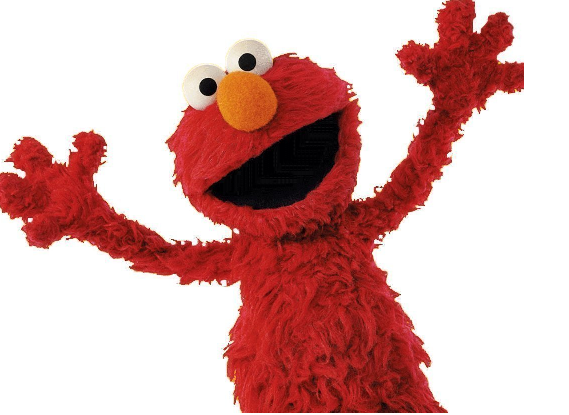
Sorry, Elmo.

Kevin Clash is the voice and operator of beloved Elmo, the cute lttle red monster  on “Sesame Street.”  A young man has accused Clash of molesting him when he was a teen.  Clah denies the allegations, claining that the relationship was between consenting adults. The Children’s Television Workshop says its investigation did not substantaite the accusation; nonetheless, Clash is being disciplined for says the show, is being disciplined for “inappropriate use of company email,” and is unlikely to have his hand in Elmo any time soon, if ever again. The alleged victim is probably not through with Clash, and this could get ugly.

Your Ethics Quiz challenge, should you choose to accept it, is this:

Assuming nothing illegal is proven regarding Clash’s sexual relationship with the accuser, and it remains a “he said/he said” dispute, should Clash remain the voice and puppeteer behind “Sesame Street’s” most innocent character? Continue reading

Comment of the Day: “The Idiot, the Ex, and the Consequences”

I’ve been remiss in posting “comments of the day” of late; it is not a reflection on comment quality, which has been excellent, but rather on my own distractions. Here is a new one at last, from new commenter Kathryn. It appeals to me because it nails the subtext of the original post, and like most Comments of the Day, takes the original topic to the next stage of analysis. I hope we hear more from her. Here is Kathryn’s Comment of the Day on the post, “The Idiot, the Ex, and the Consequences.”

“I am waiting, perhaps overly optimistically, for culture to catch up with information availability and develop new ways of handling privacy outside of responding to information when it is made public, regardless of the source or context for that information. Everyone says/does something particularly unwise/unwell/without grace during their life. Technology is getting to the point that these moments, rather than being forgotten or a story told among friends, are fairly permanently in the public record. (The Internet is public, whatever Facebook settings attempt to convince you.) Continue reading

The Idiot, the Ex, and the Consequences

Denise Helms, who will probably not look like this the next time you see her if she knows what’s good for her.

My position would usually be this: for an employer to use a privacy setting Facebook post as justification for firing an employee is unfair. That applies to vacation photos of an elementary school teacher holding a beer and looking bleery-eyed at a pub, a Sunday school teacher doing a strip tease at a bachelor party, and political posts of a radical, vulgar or offensive nature. Two factors can change the equation, though. Action may be justified if the posting reasonably calls into question the trustworthiness of the employee in his or her job duties, or if the posting becomes public, subjecting the employer to embarrassment or undermining the employee’s ability to do her job, as in the naked teacher cases.

Denise Helms, the idiot referenced in the title above, posted this on her Facebook page, intended only for her closest, presumably most racist or most idiotic friends:

Continue reading

Be Careful What You Wish For Dept.: “Occupy” May Finally Have a Plan, and Sure Enough, It’s Ethically Bats

Oh, yes,THIS is bound to work out well…

The core of my objection to Occupy Wall Street and its progeny was and is that it never had the discipline, cohesion or communications skills to make it clear what the “movement” really wanted to accomplish, other than generally blaming all the world’s ills on the wealthy and successful. This was the reason for its failure, though Occupy fans like to say that it “succeeded” by starting a national dialogue about corporate executive salaries and the growing disparity in income levels between the richest and the poorest Americans—as if that dialogue hadn’t been ongoing long  before the first sign went up in Zuccotti Park.

Now there are signs that the Occupy bitter-enders are hard at work launching a real, substantive effort with a specific goal, albeit and insane one: to bring down the financial system with a “debt strike.” ( In These Times headlined its story about this “You Are Not A Loan.” Pretty clever!) The idea is to refuse to pay back the interest or principal on outstanding debt, and to insist that all loans and interest  be forgiven, since the debt system is inherently corrupt and rigged to transfer wealth from the poor to the rich.

We shouldn’t have to expend a lot of argument on why this is unethical. People, companies and nations in serious debt reach that point because they spend more money than they have. They borrow money promising to repay, agreeing to pay an additional fee, interest, for the privilege of using money that doesn’t belong to them. The vast majority of debt is not amassed by desperate debtors who have to deal with the equivalent of Loan Shark Larry and risk broken legs or death unless they pay unconscionable fees. Most debt comes from wanting something before you can pay for it. While laws are in place to minimize predatory lending and to provide a safety net (in the form of bankruptcy) so people and companies don’t end up destitute and in debtor’s prison, essentially the system, like society itself, exists on trust, the cornerstone of all ethics.  Lenders give their money to trustworthy loan-seekers, and charge higher interest rates to those who they deem less trustworthy. That is fair. Continue reading

Are Employers Ethically Obligated Not To Take Advantage of Women’s Negotiation Choices?


Yet another career for Shatner—coaching female job-seekers.

A recent study of 2500 job seekers indicated that men are far more likely to negotiate salary and benefits in job situations where it has no been stated that the salary is negotiable.

I am not surprised. Running non-profit organizations with limited resources, I always ended up with primarily female staffs because women would accept a lower offer than men with similar qualifications. This meant that the women got the jobs for salaries their male competition turned down. This, in turn, may have effected their salaries for a long time to come, in subsequent jobs. Is this bias?

Clearly not. The negotiations between an employer and potential employee are ethical and the conditions are known. A skilled negotiator (I am personally incompetent at negotiating my own fee; in ProEthics, my partner handles all of that) will get a better deal; a poor or reluctant negotiator will get terms more advantageous to the employer. It is not bias if the most aggressive and effective negotiators happen to be men.  Continue reading

Porn and the NFL: In Search of A Biased Referee

With condoms, what, 2.5 X’s?

55% of California voters decided yesterday to make porn stars wear condoms on the job—good for their health, bad for the health of the state’s booming XXX film industry. It is a reasonable guess that injecting condoms into the proceedings will put California’s porn products at a significant competitive disadvantage, and also a reasonable guess that the voters who enacted the measure couldn’t care less. So legal enterprises may go bust, their employees may lose their careers, and consumers may lose a form of entertainment they crave because of the policy priorities of those who hold all three in low regard, and who are unlikely to apply any kind of balancing standard. It’s safer for all concerned to require condoms, that’s all. Porn companies, porn careers, porn lovers—who cares about what they want? Continue reading