“Pay-What-You-Can” Ethics

A live performance of Jules Feiffer's "Little Murders" at a regional theater in Arlington, Va. that holds "pay-what-you-can" performances over the periodic objections of its artistic director, me.

Toronto Star ethics columnist Ken Gallinger does a pretty good job today answering a query from a financially strapped theater-lover who feels guilty about attending “pay-what-you-can” professional stage productions. “…My husband says paying less than full fare takes advantage of the theatre company. Technically, we could pay the ticket price; we still have access to credit. And there are things we could cancel…What do you think?” asks the inquirer.

Gallinger explains the benefits to the company of not having a sea of empty seats facing the actors, and also how discount tickets have promotional value to theater companies. All true: the theater companies wouldn’t offer “pay-what-you-can” if they didn’t think it was in their companies’ long term interest. There are other benefits that Gallinger doesn’t mention. For example, the increased audience size still contributes to the average audience statistics that a non-profit company can use to seek advertisements and to argue for community foundation grants.

Even this wouldn’t cover the topic, however. “Pay-what-you-can” and other discount ticket programs are essential if theater companies are going to meet their own ethical obligations to the community, and if live theater is going to survive at all. The ticket prices at most large, established regional theaters are, in a word, unconscionable. Justifiable perhaps, since live theater costs more to produce than can be paid for by box office receipts, but still unconscionable. Continue reading

And May The Best Man Win

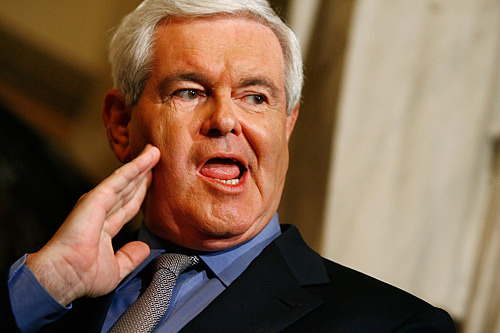
As of 1:20 AM, Newt Gingrich had not congratulated Mitt Romney on his Florida Primary win (clobbering Newt), nor did he offer the traditional congratulations to the winner in his concession speech.

I’ll grant Newt this: it isn’t as if he’s pretending to be what he’s not…gracious, fair, respectful, polite, humble, classy. I guess that represents a certain kind of integrity…the integrity to be a jerk, and to be open and unapologetic about it.

Ethics Quiz: Hair, Rules, School, and the Cancer Survivor

"I think this has gone far enough, son."

I’m really not picking on the schools, though I’m sure it looks that way. There have just been a wave of strange controversies lately in the halls of academe….like the travails of  J.T. Gaskins, 17, who is fighting with his charter school near Flint, Michigan.

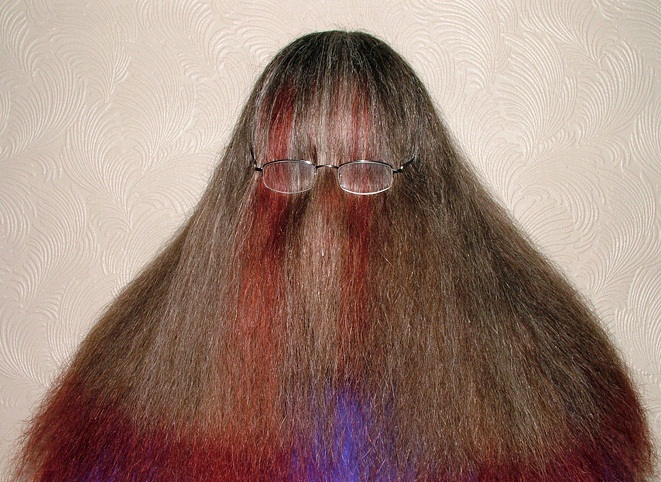
J.T. is a model student; in fact, he was honored on his high school’s “Wall of Fame” for perfect behavior. But he’s doing his school work from home these days after being suspended by the school governing board of Madison Academy in Burton, Michigan. The reason:  the length of his hair. J.T. is a leukemia survivor, and he decided over the holidays to grow out his hair, cut it all off and give it to a non-profit group called Locks of Love, which donates hairpieces to kids undergoing cancer treatments. He was inspired to get growing after learning that the sister of a family friend had cancer.

Gaskins’ long hair is violating school policy, however, and he was told to cut it, or go home. So home he went. “I fought cancer my entire life. I’m going to keep fighting this,” he said. “I’m not going to not give back just because my school says no.” Continue reading

Faculty Advisor? Principal?? Supervision??? Oversight???? HELLO?????

Joey knows just how you feel, Kenny. Except that he, unlike you, isn't real.

Eighteen-year-old Kenneth “Kenny” Clements, a graduate of Miami’s Ronald W. Reagan/Doral Senior High School, has filed suit against the school district because in February of 2011, when he was a senior, the Reagan Advocate published a story entitled “Teens Stay Quiet About STD’s”. The school paper’s front page story featured a photograph of Kenny with an “x” over his mouth, signifying that he was hiding his disease.

But Kenny didn’t have any sexually transmitted diseases, and he didn’t give his permission to have his photo used to suggest he did. After the article appeared, he says, his fellow students called him “STD Boy.”

This was obviously a cruel, unfair and irresponsible act by the students running the paper, but look at how irresponsibly professional journalists behave when they are drunk with the power of the press. This is why school newspapers must have diligent and competent supervision by adults, to prevent these kinds of things from happening….as they inevitably will without a cool head and an experienced hand at the rudder. Continue reading

Easy Question With A Sad Answer: If The New York Times Is The Nation’s Most Respected Newspaper, What Does The Patrick Witt Story Say About The State of American Journalism?

Patrick Witt, rapist. Well, accused rapist. OK, he was accused of something that might have been rape.All right, all right, we can't say what he is accused of or did, but he must be a bad guy, or we wouldn't be publishing this story about what some people say he did. Because the public has a right to know. Thank god for Freedom of the Press!

The jaw-dropping Patrick Witt story in Friday’s New York Times was heavy on my mind when I wrote yesterday’s post about the collapse of the news media’s ethical standards. I decided that it needed its own spotlight. When I read the piece about Yale’s former quarterback, what kept going through my mind was, “What does the Times think it’s doing?” I still can’t figure it out.

Reporter Richard Perez-Pena uses an anonymous complaint of sexual assault levied against Witt as justification for raising questions about a young man’s integrity and character and to undermine his reputation with innuendo, speculation and rumor. The article would be outrageous if it was written about a public figure. Publishing such a cruel and unfair attack on a relatively obscure student athlete defies all reason. Obviously, it is also bottom of the barrel journalism…from America’s premier newspaper. Continue reading

Ethics Hero: Wolf Blitzer

Watch out, Newt! It's SUPER-WOLF!!!

Once again Ethics Alarms finds itself in the sad position of calling conduct heroic that should be routine. Unfortunately, however, competent and responsible broadcast journalism isn’t routine, and if I was looking for a bold and quick-witted journalist to exceed the standard practice, it certainly wouldn’t be CNN’s plodding, timid and often befuddled Wolf Blitzer. Last night, however, as moderator of the latest GOP candidates debate, he did what few journalists ever have the confidence or courage to do: he challenged a politician on an absurd and hypocritical statement.

And yes, I confess…if Wolf fell slightly short of true Ethics Hero status by a couple of points, the fact that the politician involved was New Gingrich the Unethical put him over the top. If that be bias, so be it. Continue reading

Celebrity Encounter Ethics

You're welcome. But now I'll never know what Eddie Murphy is really like!

I run into a lot of celebrities when I travel. I assume everybody does who travels very often; I know that I am better at recognizing them than the average person because my celebrity knowledge spans multiple generations, I have a good memory for faces, and I have always watched way, way too much television. And it happened again today: I was having my usual battles with an airport self-service check-in kiosk, this one in Atlanta, when I realized that the traveler enduring similar annoyances (“We have no record of your itinerary. Please enter the code that we call something other than what it is called on your ticket receipt before you get frustrated and have to wait in line to speak with an agent, because you know that’s what is going to happen.”) was the young actress-singer, Raven-Symone.

She was traveling alone, and it seemed clear that nobody around us had any idea who she was. Strange: doesn’t everyone watch “The Cheetah Girls,” “Dr. Doolittle 2” and re-runs of “That’s So Raven” on the Disney Channel? The encounter immediately sent me into Marshall Celebrity Recognition decision mode: what is the ethical way to treat the rich and famous if you are insignificant and lowly, and close enough to assassinate them? Continue reading

Stephen Colbert’s Comedy Terrorism

This was a lesson for me. I fell into the trap of looking past unique unethical conduct because it resembled harmless conduct I had seen many times before, a close cousin of using “everybody does it” to excuse and invalidate the inexcusable. Thank goodness Washington Post columnist Colbert King was paying attention.

In King’s column today, he catalogues the activities of Comedy Central’s Stephen Colbert’s faux presidential run. I had already commented on Colbert’s gag earlier this week, but the target of my criticism was George Stephanopoulos, who devoted a ridiculous amount of time to a pointless interview with the comedian at the expense of real news. I assumed Colbert was just another in a long line of comedians who have used a presidential election year as a prop, and thus harmless….and I stopped paying attention to his antics. But as King ( his first name is pronounced KOHL-bert; the comedian’s name is Kohl-BARE) points out, Colbert has moved beyond satire into something akin to comedy terrorism, actively attempting to warp and influence the presidential selection process for laughs, and casualties be damned. King writes: Continue reading

Dear Banks: This Is Why Nobody Trusts You

I know I’ve been hard on the Occupy movement, but I don’t want to let the protesters think that I’m pals with all of their targets. Take the banks, for example.

The “waiting for the check to clear” scam engaged in by banks has always been annoying, but I now realize, thanks to bitter personal experience, that we have been fools to tolerate it. Once upon a time, before electronic transfers and computers, it really did take a check at least “five business days” to go from one bank to another, but the banks have held on to the fiction that nothing has changed, presumably to give them free use of our money while we patiently wait for the completion of transactions that have already been completed. Running a small business with perpetual cash-flow problems, the Marshalls constantly hectored our bank (then Wachovia, which bought it from American Security Trust, and there may have been another one in there somewhere) about speeding up the process, and in fact they did: our checks from clients often had money available to us within a day or two. That’s right—the bank let us use our own money while telling less long-standing, savvy, or persistent customers that the checks they deposited were taking almost a week to clear. Continue reading

Ethics Quiz: Disclosing Information We have A Right To Know But May Not Want To Know

Travel blogger Margie Goldsmith has a provocative post about a nightmare flight she experienced on American Airlines. You can read it here. The plane had one problem after another, all of which were

How much about what's happening in that cockpit do we really want to know?

described in terrifying detail by the captain, who cheerily informed them that:

  • The plane’s hydraulic system was leaking and had to be repaired
  • During the delay, the pilot was going to watch a video about how to take off from that airport, which was especially tricky.
  • The new plane the passengers were later moved to had been really foul-smelling, and needed to be completely cleaned and deodorized
  • The new plane’s hatch wouldn’t close properly, and..
  • They finally sealed it with duct tape, and were going to fly that way.

Goldsmith ends her story with this: “The next time I’m on a delayed flight and the Captain does not announce the reason for the hold-up, I think I’m going to be one happy passenger.”

Your Ethics Quiz for today poses this question:

“Is it more ethical for an airline pilot to detail all the problems an airplane is having in the interest of candor and full disclosure, or should he or she just deal with the problems and not increase passengers’ anxiety over matters that they neither understand nor can do anything about?Continue reading