“Ask Amy” Tackles A Classic—And Misses

Advice columnist Amy (of the syndicated column “Ask Amy”), was just asked one of those questions that every advice maven has to have in their files, with the perfect answer ready to go. If Amy had her answer prepared, it was  the wrong one.

The question was the deathless classic, “I just found out my husband has been having an affair with a married co-worker. Should I tell the other spouse?”

Amy gets it half right: she tells the reader that the other spouse has a right to know; that this is not a case of meddling because the reader is directly involved in the betrayal; and that not to make sure the other spouse learns the truth would now be abetting the deception. All true. BUT…

…Amy forgets the Golden Rule as it applies to the reader’s husband’s adulterous lover (yes, the rule still applies to busted wrongdoers) and the whistleblowers obligation to minimize needless harm. She tells the victimized wife to spill the beans to the victimized husband.

Wrong.

The adulterous wife deserves the opportunity to tell her husband herself. That would allow her to reveal the affair to her spouse with the least damage to the marriage, and providing that opportunity to her is kind and fair. Amy should have told her reader to contact her husband’s paramour and say this: “I will be calling your husband and telling him about your relationship with my husband in three days. You should tell him the truth yourself, and then all he needs to say to me when I call is, ‘Yes, she told me.’ But if you haven’t told him, he’ll hear it all from me.

File it away, Amy, and get it right the next time.

Romney, Firing, Leadership, and Ethics Bob’s Lament

Yes, yes, firing people is one thing Donald Trump does well too. Shut up.

Ethics Bob Stone sent in a comment late last night that I replied to, but that I think deserves more discussion, on several points. Responding to my Ethics Hero designation for Ron Paul for coming to his adversary’s defense over Romney’s now infamous remark about firing people, Bob wrote:

“…I think Romney’s “I like to fire people”–even taken IN context–displays an inner heartlessness. I know about creative destruction, and I myself have taken actions to lay off people, and even fired a couple face-to-face. I did what needed to be done. No apologies.

“But did I like it? I HATED it.

“Romney’s comment seems of a kind with his strapping the family dog on his car roof for a 500-mi trip, or his advocacy of breaking up families to deport the parent or child who’s illegal. Gingrich was right.”

There are several issues here, some minor. Continue reading

Ethics Hero: Rep. Ron Paul

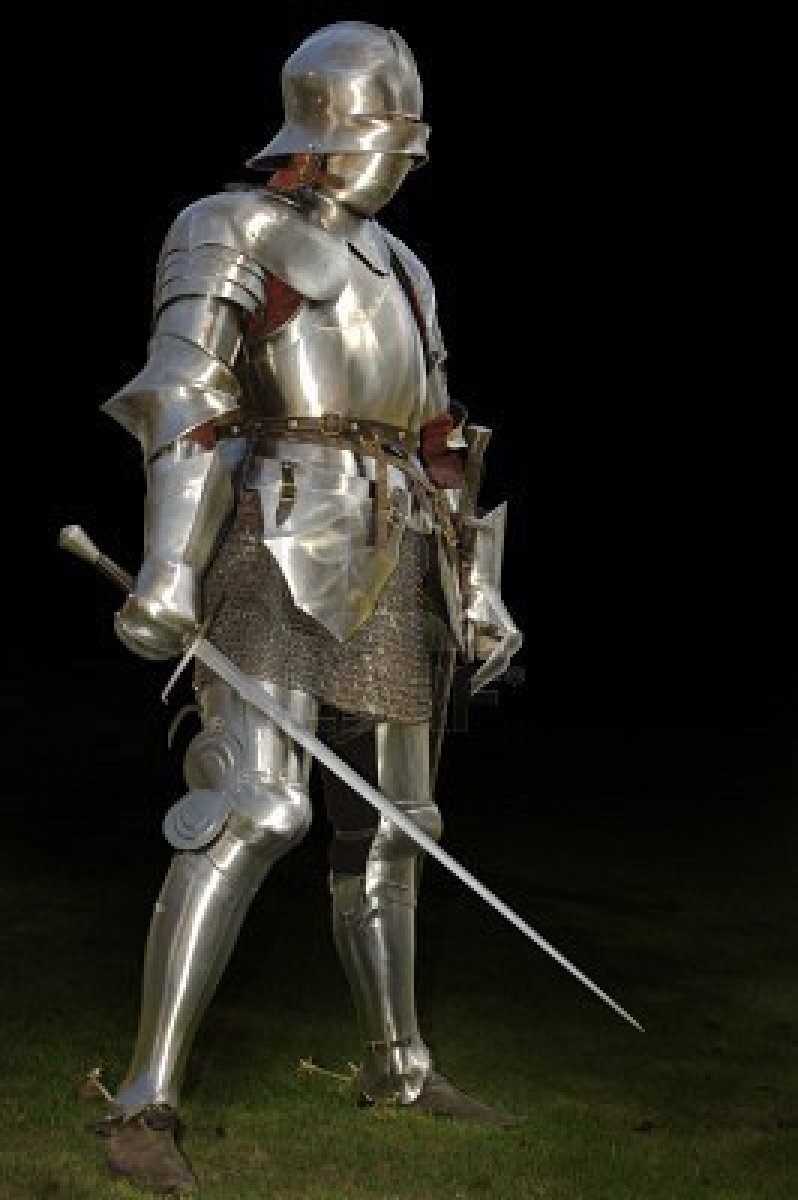
The identity of Mitt Romney's knight in shining armor was a surprise, but it shouldn't have been.

Ron Paul is, to engage in understatement, unusual, and often in a good way. How many politicians, for example, will actively defend their adversary in a campaign  right before a critical vote? Yet that’s what Ron Paul did, defending Mitt Romney, his main competition for the GOP presidential nomination, after Romney had blooped a line that will undoubtedly haunt him for a long time. “I like being able to fire people who provide services to me,” Romney had said. “You know, if someone doesn’t give me the good service I need, I want to say ‘You know, I’m going to go get someone else to provide that service to me.” It was predictable that the line would be truncated and taken out of context, and it was…by the press, by Jon Huntsman, by Rick Perry. It will surely be used against Romney by President Obama, who has adopted the position that people should be able to hold on to jobs whether they do them well or not— Eric Holder and Janet Napolitano, for example. But Paul would have none of it, saying,

“I think this is just typical politics and they’re unfairly attacking him on that issue,” Paul said outside a polling place at Webster School in Manchester. “He never literally said what they say he said. They’re taking him way out of context.”

Paul also defended Romney’s history as CEO at Bain Capital, the subject of a new attack video by Newt Gingrich, as an example of the free market working properly. “You save companies, you save jobs when you reorganize companies that are going to go bankrupt,” Paul said. “They [the critics] don’t understand.” Continue reading

Ethics Quiz: Is This Racism, or Just Business?

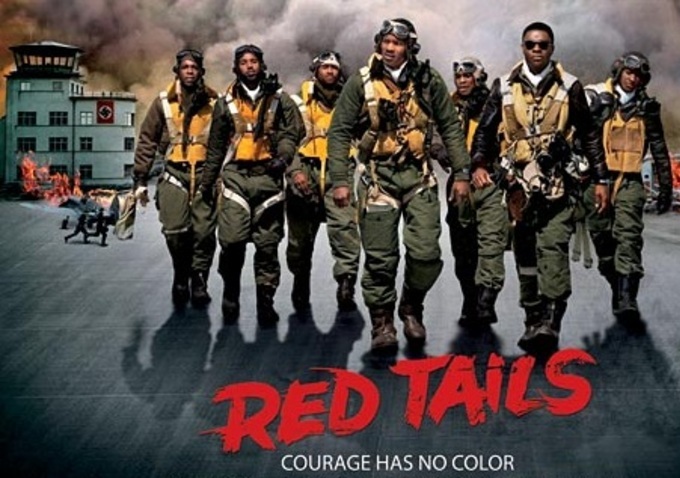
The Mother Jones headline is designed to provoke a gasp: George Lucas: Hollywood Didn’t Want To Fund My Film Because Of Its Black Cast.

The headline is literally accurate. Lucas tells the magazine that he had trouble finding backers for “Red Tails,” his upcoming film about the fabled Tuskegee airmen, because the studios told him that films without white protagonists didn’t draw a wide enough audience, especially overseas, to make his film a good investment for them. Presuming that the film-makers know their business—and presuming their real reason for rejecting Lucas was not that the movies he’s produced lately were god awful, —Lucas’s story raises this Ethics Alarms Ethics Quiz Question, which you may answer if you dare:

Is a studio that refuses to fund a movie with an all-black cast engaging in racism, or just practicing business responsibly? Continue reading

The Knight Scale

I love extremes, especially the bottom of the barrel. Once we can agree on the worst of the worst, everything else can be ranked from there. I was once in a community theater production of “Sugar,” the stage musical version of “Some Like It Hot,” that was so hilariously messed-up that I was excited about it; I was certain that it would finally set the elusive rock bottom for the worst theatrical production of all time. For example, the actress playing the Marilyn Monroe part had gained about 40 pounds during rehearsals, and the actor playing the tap-dancing gangster was recovering from a heart attack, and could barely move. Sadly, the show was cancelled before it could open. I’ve seen a lot of dogs since then, but nothing close to the disaster that “Sugar” would have been.

<sigh>

This is why I am so grateful for Los Angeles Times blogger Christopher Knight’s demented post claiming that a satirical cartoon above (first published on the right-wing blog Gateway Pundit) is “baldly racist.” Continue reading

Ethics Quiz: Sydney’s Expressive Yearbook Photo

My high school was never like this.

The photo above, believe it or not, was submitted to the Durango (Colorado) High School Yearbook as the senior photo of one Sydney Spies. The yearbook staff rejected it as inappropriate, and young Sydney is crying foul, saying that her First Amendment rights have been violated. Opinions differ on what message her photo was intended to convey. Suffice it to say that “Well, it’s late! I think I’ll go finish my algebra homework, read the Wall Street Journal and turn in!” is not one of the popular options.

Your Question in this week’s Ethics Quiz: Which party is in the wrong here? Continue reading

Comment of the Day on “The NAACP’s ‘Gotcha!’ Games”

"GOTCHA!"

An exchange between a spirited newcomer to Ethics Alarms, Roger, and me led to this Comment of the Day by Proam [ whom I keep meaning to ask whether his screen name is pronounced “Proam, ” and in “foam,” or “Pro-Am” } Here is his complex take: I’ll have a response at the end. Proam’s Comment of the Day on “The NAACP’s “Gotcha!” Games” :

“My $.02: the NAACP’s and Roger’s objections to what Santorum said are valid “gotchas.”

“It matters neither what Santorum really meant, nor what is the sum of Santorum’s character and values (call that his “heart”). What he uttered (“blacks”), insofar as how it matters to certain recipients, is off-putting and alarming, regardless of its timing, place, vehemence, or other quality, and therefore must matter to all recipients. It was worse than “lazy;” it betrayed a lack of sensitivity that others have (and are justified and deserving in having) about a matter of justice. It only takes one word – even part of one word; even no words at all but some other fleeting sound or sight, like a raised eyebrow – for one to make oneself clear, even clearer than ever had been intended, or than ever could be communicated with many words. Continue reading

The NAACP’s “Gotcha!” Games

Somewhere there must be advocates for the African-American community who realize that the practice of lying in wait for white politicians to make a mis-phrased or politically incorrect statement and then pouncing on them with indignant press releases charging racial insensitivity is counter-productive, feeding mistrust on all sides and tempting many on the political right to just by-pass issues of concern to blacks as a lost cause with a hopelessly biased audience. Somewhere—but not in the NAACP, which has relied for decades on playing “gotcha!” games to flex its PR muscles and appeal to its most racially polarized core. I remember poor Ross Perot speaking to the group in 1988, and being pilloried for referring to an his all-black audience once as “you people.” Of course, Perot was appearing with the expectation that he would explain what a Perot presidency would do to address the problems of African-Americans, a group he was not a member of,  yet the completely self-explanatory and accurate, if clumsy, “you people” was attacked as patronizing and vaguely racist.

Now GOP presidential candidate Rick Santorum is under fire by the NAACP for this statement: “I don’t want to make black people’s lives better by giving them somebody else’s money; I want to give them the opportunity to go out and earn the money.” Continue reading

The Third Annual Ethics Alarms Awards: The BEST of Ethics 2011

Why is the The Best in Ethics 2011 only about 33% the size of the “Worst”?

This troubles me. My objective is not to be negative. The problem, I think, is that ethical conduct is still much more common than unethical conduct, and it is usually less controversial to identify: most of the time, good ethics is self-explanatory. All of us learn more from mistakes and misdeeds, our own and those of others, than we do from meeting societal standards. Most of what Ethics Alarms does is to try to identify unethical conduct, what was wrong with it, why it happened, and how we can discourage it.

Which is all well and good, but I still would like to make 2012’s Ethics Alarms  more positive year than this one, if possible. Help me, will you, find more topics involving good ethics, so next year’s Best list can hold its own with the Worst.

Here are the 2011 Ethics Alarms Awards for the Best in Ethics:

Most Important Ethical Act of the Year: Acquitting Casey Anthony. The Florida jury charged with deciding if Casey Anthony murdered her daughter faced the ire of a lynch mob-minded public that wanted the unsympathetic Anthony convicted, based on suspicious conduct and a dubious explanation,  but the evidence just wasn’t there. Thus the courageous twelve upheld the American values of fairness, objectivity, and justice under the law. It is interesting that the most ethical act of the year also sparked some of the most unethical arguments of the year, by too many citizens who benefit from our nation’s ideals without comprehending them. Continue reading

The Admirable Mr. Sondheim

And an ethical hat it is, too!

Readers who are not interested in the art of lyric writing and the mechanics of constructing a Broadway musical should probably avoid the second and final installment of Stephen Sondheim’s chronicle of his creative life, “Look, I Made a Hat.”  They will be missing something important nonetheless: a rare example of truly ethical memoirs.

As in his first volume, “Finishing the Hat,” America’s pre-eminent composer-lyricist for the stage reveals himself as a gentleman, an adult, and a thoroughly ethical human being, and does so not by proclaiming his virtues, but by demonstrating them in his writing. He is not uncritical, but always fair and kind. He accepts personal responsibility for projects that failed, and is generous with giving credit for projects that were successful. There is no false modesty in Sondheim about his own skills and achievements, but neither does he seem to overvalue them or seek his reader’s admiration by blowing his own horn.

The line Sondheim walks in both books is fine, and he walks it finely. For example, I initially thought his decision to only criticize the techniques of other lyricists who are dead was a cowardly one, but upon reading both books it is clear that the decision was motivated by kindness. Sondheim takes the craft of lyric-writing very seriously, and his integrity would not allow him to censor a critical observation regarding a colleague’s work when he believed the criticism was illuminating and had merit. Realizing how hurtful a critique from someone of his reputation and accomplishments could be, Sondheim restricted his frank and (mostly)  fair assessments to writers beyond wounding. If Jerry Herman isn’t grateful, he should be. Continue reading