Bully Ethics: Lessons From “Casey the Punisher”


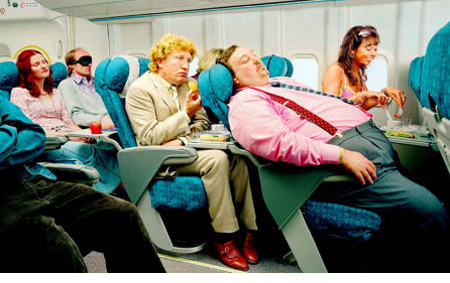
Go get him, Ralphie!

The YouTube video of the tormented 16-year-old Australian student who provides a surprise ending to a 12-year-old bully’s fun at his expense by suddenly slamming the younger boy to the ground—breaking the bully’s ankle in the process— has set off an international debate that could help clarify some important ethical dilemmas regarding bullying, or muddle them further.


The video shows a heavy teen, one who classmates say has been bullied by other children for years, enduring repeated punches by a smaller student as his humiliation is being videoed for posterity. Then, emulating Ralphie’s sudden rage against the evil Scut Farkus in one of “A Christmas Story’s” iconic scenes, he suddenly fights back…and how. Continue reading

Six Tell-Tale Signs of Biased News Stories

Ethics critic. Really.

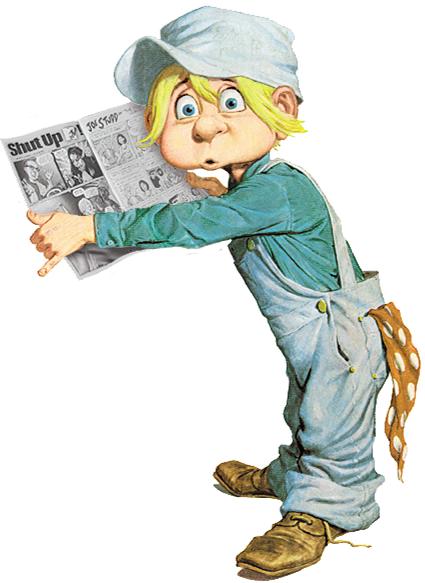
If you know “Cracked” at all, you probably remember its as Mad Magazine’s not-quite-as-funny competitor in the juvenile humor magazine market.  But yesterday’s rip-off humor rag is today’s clever website, and this week it unveiled a clever and useful article about the various ways print journalists slant the news. I have written about many of them, but Cracked writer C. Corville has done a thorough, perceptive, and entertaining job, identifying a couple I had missed. And she’s right.

Cracked’s “6 Subtle Ways The News Media Disguises Bullshit As Fact” are, in reverse order:


6. Weasel Words

5. Implying Without Saying

4. Burying Inconvenient Facts

3. Biased Photos

2. The Active Voice

1. Guessing the Motives Instead of Reporting the Facts

Excellent work. I recommend it highly.

The SATs: Flat Learning Curve=Unfair Questions

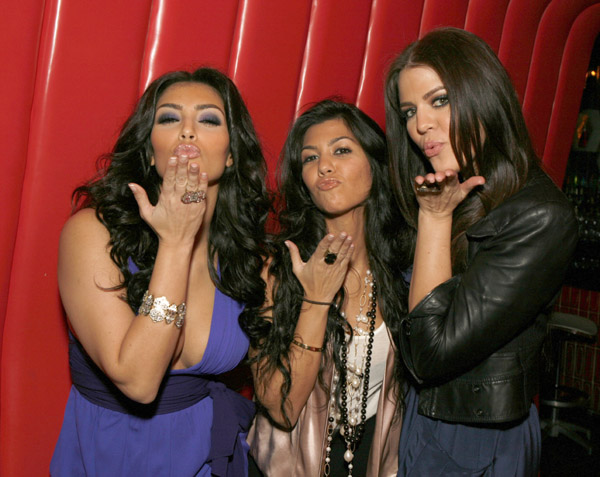
The secret to acing your SATs? Know your Kardashians!

After all the anger, debate and controversy in the Sixties over affirmative action and the Scholastic Aptitude Tests, with the case finally being made to the public’s satisfaction that including test questions  based on cultural references likely to be unfamiliar to African-Americans or lower-income students (such as, famously, questions about yachting) negatively affected their test scores, wouldn’t you think that it would have been thoroughly understood by the people who make up the SAT scores that questions with a cultural bias were inherently unfair and incompetent questions?

Here is the prompt for the essay question in the SAT test given to high school students across the country last week : Continue reading

Nuclear Crisis Ethics

Meltdown! Radiation! Mutations! Well, I guess that's all we have to know.

I just heard, for the twelfth time, Sen. Joe Lieberman telling “Face the Nation” that the United States should put the brakes on nuclear energy plant construction “right now until we understand the ramifications of what’s happening in Japan.” Meanwhile, the anti-nukes crowd is out in full force, seeing Japan’s crisis as their opportunity to scare the bejesus out of the public, which is nervous about nuclear energy anyway since they know nothing about it, other than that something bad happened at Three-Mile Island, the Russians had a catastrophe at Chernobyl,  Jane Fonda made that scary movie, “The China Syndrome,” where they shot Jack Lemmon— “And don’t they make bombs with that nuclear stuff?”—and the fact that Homer Simpson works for a nuclear plant that creates three-eyed fish and is run by that evil old Montgomery Burns. Continue reading

Comment of the Day:”Yes Julea,You Have A Right To Your Beliefs; You Just Don’t Have A Right…”

An Ethics Alarms heartfelt thank you and “I owe you one!” to Ethics Sage, for cutting to the other core ethical point about what was wrong with Julea Ward’s refusal to counsel a gay student, and why she should have been dismissed from the university course as a consequence. It wasn’t just failure of responsibility, which my post was fixated on, but also failure of caring, compassion, and our shared duty as human beings to help each other even if our religion encourages us to regard those human beings as immoral.

Ethics Sage shows his handle ain’t just horn-blowin’ with this Comment of the Day, on the post “Yes Julea,You Have A Right To Your Beliefs; You Just Don’t Have A Right…”

“Julea Ward’s refusal to counsel a gay student is despicable on many levels. What if the student’s life had been threatened and he went to counseling to get some advice? How can anyone not act to help a person in that kind of situation or others we can think of that may or may not have anything to do with being gay? By refusing to counsel the gay student, Ward failed miserably not only to meet the requirements of the course but to act as a human being with compassion for another.”

Yes Julea,You Have A Right To Your Beliefs; You Just Don’t Have A Right To A Job That Your Beliefs Won’t Let You Do. Why Is This Not Obvious?

There are some issues where conservatives are just ethically, logically and legally misguided, and the issue of exercising “religious conscience” in the course of performing specific duties and services is one of them.

Julea Ward was dismissed for failing to meet the requirements of her course when she  refused to counsel a gay student while studying counseling at Eastern Michigan University. Ward later sued, saying that she told her supervisor at EMU she believes homosexuality is immoral and being gay is a choice, and that she could not in good conscience counsel a gay client. A federal court dismissed the case in July, but Ward’s lawyers have asked the U.S. Court of Appeals for the Sixth District to step in. She claims that her right to worship as she pleases is being infringed. Continue reading

The Tears of Keith Ellison

The grand drama at Rep. Peter King’s Congressional hearings investigating the radicalization of American Muslims last week was provided by Rep. Keith Ellison, who broke down crying while telling the story of a Muslim-American hero, Mohammed Salman Hamdani, who rushed to lower Manhattan on the morning of Sept. 11, 2001 to assist in rescue efforts, and died in the collapse of the World Trade Center. Ellison said:

After the tragedy some people tried to smear his character solely because of his Islamic faith. Some people spread false rumors and speculated that he was in league with the attackers only because he was Muslim. It was only when his remains were identified that these lies were fully exposed. Mohammed Salman Hamdani was a fellow American who gave his life for other Americans. His life should not be defined as a member of an ethnic group or a member of a religion, but as an American who gave everything for his fellow citizens.

I found the performance odd and vaguely troubling, and now that I’ve thought about it for a few days, I know why. The statement by Ellison, who converted to Islam, and the tears that accompanied it, raise a few ethical issues, beginning with the Ethics Alarms standard, “What’s going on here?” Continue reading

Comment of the Day: “Why NPR’s Wrongs Don’t Make James O’Keefe Right”

Rick comments on my ethics verdict regarding the most recent James O’Keefe “sting,” this one exposing a biased NPR exec and an ethically-weak NPR fundraiser: Continue reading

Unethical Quote of the Week: CNBC Financial Analyst Larry Kudlow

We've all been there, Larry. Still sounded awful, though.

The human toll here looks to be much worse than the economic toll, and we can be grateful for that.”

CNBC’s financial guru Larry Kudlow, discussing the economic implications of the Japanese earthquake and its aftermatha legitimate topic—while giving an instructive demonstration of how tunnel-vision and focus on one objective above all else can disable an ethics alarm, momentarily, or even permanently.

The quote speaks for itself, but here are a few comments: Continue reading

Why NPR’s Wrongs Don’t Make James O’Keefe Right

James O'Keefe, Ethics Corrupter

And the NPR Ethics Train Wreck continues

Between union hysteria in Wisconsin, carnage in Libya, and tsunamis, the fact that James O’Keefe’s fake Muslim billionaire act exposed more NPR integrity issues was drowned out by shouting, gun shots and water. In fact, the second victim of O’Keefe’s sting may have taught us more about NPR than the first.

In the surreptitious audiotape of  NPR’s continued encounters with the fake potential big bucks donor, NPR’s director of institutional giving, Betsy Liley, is heard advising the supposedly wealthy Muslim donor how the network could help “shield” his group from a government audit if it accepted the $5 million he was offering. It seems pretty clear from the tape that this was not what the sting was set up to prove: what the “Muslim donor” really wants is to get a promise from NPR that it will slant the news content the his way if the gift is big enough. Liley stood her ground on this core journalistic principle admirably—so much for the claim that George Soros bought NPR’s advocacy with his recent gift—but fell into another trap of her own making.

NPR spokeswoman Dana Davis Rehm said in a statement that Liley’s comments on the tape “regarding the possibility of making an anonymous gift that would remain invisible to tax authorities is factually inaccurate and not reflective of NPR’s gift practices. All donations—anonymous and named—are fully reported to the IRS. NPR complies with all financial, tax, and disclosure regulations.” That’s undoubtedly correct; Liley was not merely ethically wrong but also literally wrong, for what she was suggesting almost certainly couldn’t happen. However, the fact that she would say such a thing believing it could happen, or think it was acceptable if it did happen, or try to acquire a large donation by persuading a donor to believe it could happen, all point to the one conclusion: NPR’s culture is ethically compromised, and the organization’s leadership has failed to meet its obligations to create an ethical culture  there. The sting is more disturbing than the earlier one that caught an outgoing NPR executive taking extreme partisan positions that belied NPR’s position that it is objective and unbiased. The comments of Ron Schiller just confirmed what many, including me, thought was already apparent in the tone of NPR’s work. I had also always assumed, however, that the place was professionally and ethically run (excepting the tendency to fire employees for expressing politically incorrect opinions on Fox News).

So this settles it, right? O’Keefe is a hero?

No, he’s not. James O’Keefe, in fact, is an ethics corrupter, an individual who weakens the public’s ethics by encouraging it to accept his dubious values. Continue reading